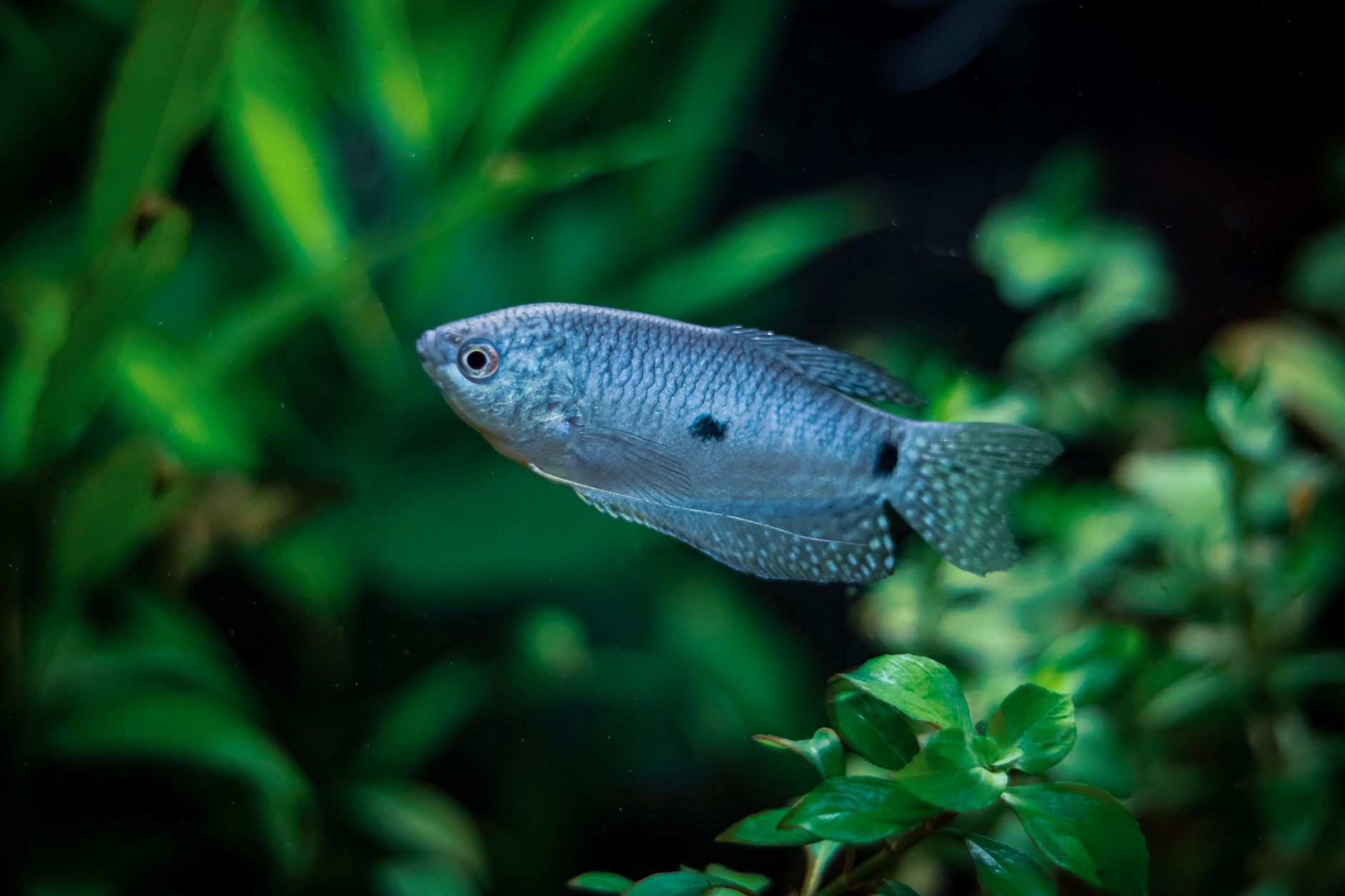
Pearl gouramis are one of the most beautiful and peaceful labyrinth fish for a freshwater community tank. Adult fish reach 4 to 5 inches, and their pearl-like spots and orange throat make them a centerpiece. Many fishkeepers choose them over smaller or more aggressive gouramis because of their calm temperament. But they need specific care to thrive. This guide covers tank size, diet, compatibility, and maintenance. Aqueon offers reliable care sheets that match the advice here.
Before buying, understand their natural habitat. Pearl gouramis come from slow-moving, heavily vegetated waters in Southeast Asia. They have a labyrinth organ that lets them breathe atmospheric air. This means they can survive in low-oxygen water, but clean water still matters. A properly cycled tank is critical. Check our aquarium nitrogen cycle guide before adding any fish. Also compare with dwarf gourami care if you want smaller options.
Tank size is often misunderstood. A young pearl gourami may look small, but adults reach 4 to 5 inches. A 20-gallon long tank is the minimum for one fish. A 30-gallon or larger tank is better for a pair or a community setup. Cramped quarters increase stress and aggression, even in this peaceful species. Start with a reliable heater and filter. See best aquarium heaters and best aquarium filters.
This guide walks through each care step. You will learn exact water parameters, feeding routines, compatible tank mates, and warning signs of illness. Follow these steps and pearl gouramis can live five to seven years. If you are new to the hobby, also review best beginner fish tanks. Let’s start with the foundation: the right tank setup.
What You’ll Need
- 20-gallon or larger aquarium
- Heater
- Gentle filter or sponge filter
- Liquid water test kit
- Seachem Prime or water conditioner
- Live or silk plants and driftwood
- High-quality flake or pellet food
- Frozen or live food supplements
How Do You Care for Pearl Gouramis?
- Choose a 20-gallon or larger tank with a secure lid
Pearl gouramis need room to swim and establish small territories. A single adult can live in a 20-gallon long, but I recommend 30 gallons or more for a group or community. The extra water volume dilutes waste and keeps parameters stable. A longer footprint is better than a tall tank. These fish spend time in the middle and upper levels, but they appreciate horizontal swimming space. If you plan to keep multiple pearl gouramis, use 10 extra gallons per additional fish as a starting point.
Invest in a quality heater and filter. Pearl gouramis prefer 77 to 82 degrees Fahrenheit. Choose a filter with gentle flow because these fish come from slow waters. A hang-on-back filter with an adjustable flow works well. I like a filter rated for at least the tank volume, and I add a sponge pre-filter to protect their long pelvic fins. Check our list of best aquarium filters before buying. A reliable heater is equally important.
A secure lid is mandatory. Pearl gouramis are labyrinth fish and may dart to the surface for air. They can jump when startled or during courtship. Even a small gap can lead to a fish on the floor. Use a glass canopy or a tight-fitting lid. This also reduces evaporation and helps maintain temperature stability. Avoid open-top setups unless you can cover every opening.
Place the tank away from direct sunlight and drafts. Sunlight encourages algae blooms and can cause temperature swings. Drafts from doors or windows make your heater work harder. A level, sturdy stand is essential because a 30-gallon tank weighs over 250 pounds when full. Set up the tank and run it empty for at least 24 hours to check for leaks before adding substrate and water. For more general care guidance, Aquarium Co-Op has helpful free articles.
- Cycle the tank fully before adding pearl gouramis
Pearl gouramis are hardy, but they cannot handle ammonia or nitrite spikes. A fishless cycle is the safest method. Add a source of ammonia and test the water until ammonia and nitrite read zero and nitrate appears. The cycle usually takes four to six weeks. Review our how to cycle a fish tank guide for exact instructions. Skipping this step causes new tank syndrome and easily kills fish. Never rely on bottled bacteria alone to instantly cycle a tank.
Target water parameters for pearl gouramis are pH 6.5 to 8.0, hardness 5 to 20 dGH, and temperature 77 to 82 degrees Fahrenheit. They tolerate a range but not sudden swings. Use a liquid test kit, not test strips, for accurate readings. The API Freshwater Master Test Kit is a solid choice. Test weekly at first, then every other week once the tank stabilizes.
Water changes keep nitrate in check. I recommend changing 25 percent of the water every week or two, depending on stocking and plant density. Use a gravel vacuum to remove uneaten food and waste. Always treat tap water with a conditioner like Seachem Prime before adding it. Match the replacement water temperature to the tank to reduce stress. More detail is in our water change guide.
Many people assume labyrinth fish do not need filtration because they breathe air. That is false. Their waste still produces ammonia. A cycled filter and regular maintenance are non-negotiable. Carbon is optional. I prefer biological media and fine sponge for mechanical filtration. Avoid strong current. If your filter output is too strong, baffle it with a sponge or direct the flow toward the glass.

- Add plants, driftwood, and floating cover
Pearl gouramis come from shady, plant-filled streams. Recreate that environment and they will show richer colors and natural behaviors. Start with a fine gravel or sand substrate. Add driftwood and rounded rocks to create sight breaks. Tall plants like Amazon sword, Vallisneria, and Java fern work well. Floating plants such as water lettuce or frogbit provide the dappled light these fish love.
Floating plants matter more than many keepers realize. Pearl gouramis build bubble nests among floating cover. It also reduces stress by dimming bright aquarium lighting. If you do not want live plants, use silk plants and floating plastic plants. But live plants help remove nitrate. Our best aquarium plants for beginners guide lists easy options. Avoid sharp decor that can damage their delicate pelvic fins.
Leave open swimming space in the middle and top. A densely planted back and sides with an open front works well. Pearl gouramis are not true schoolers, but they enjoy exploring. Males may chase each other during breeding. Having multiple hiding spots breaks up line of sight and prevents bullying. For a pair, add at least three distinct visual barriers.
Use subdued to moderate lighting. Pearl gouramis appear more confident under dimmer light. If you use bright lights for plant growth, add floating plants to soften the light. A standard day/night cycle of 8 to 10 hours is enough. Too much light leads to algae and can make these naturally shy fish hide constantly. A timer solves this.

- Offer a varied diet of flakes, pellets, and frozen foods
Pearl gouramis are omnivores with a preference for small invertebrates in the wild. In an aquarium, they accept nearly every prepared food, but variety is key. A high-quality tropical flake or small pellet can serve as the staple. Look for foods with whole fish or insect meal as the first ingredient. Avoid cheap fillers like wheat and soy. Feed once or twice per day, only what they can eat in two minutes.
Supplement with frozen and live foods at least two or three times per week. Bloodworms, brine shrimp, daphnia, and blackworms are excellent choices. These foods boost color, encourage breeding, and provide enrichment. You can also offer blanched vegetables such as zucchini or spinach occasionally. Pearl gouramis are not picky, but a monotonous diet causes fading colors and poor health.
These fish feed from the surface and midwater. Their small, upturned mouths are not built for bottom feeding. Use floating or slow-sinking foods. If you keep bottom dwellers like corydoras catfish, add sinking pellets for them separately. Overfeeding is a common mistake. Uneaten food rots and causes ammonia spikes. Remove any food after a few minutes.
Juvenile pearl gouramis need smaller foods and more frequent feedings. Feed fry-sized flakes or crushed pellets three times per day. Adult fish can handle one feeding per day, but I prefer two smaller feedings. Fast them one day per week to support digestion. Consistent, high-quality feeding is one of the easiest ways to prevent disease.
- Pair pearl gouramis with peaceful, similarly sized fish
Pearl gouramis are among the most peaceful gouramis, but they can still be stressed by aggressive or nippy fish. Choose tank mates that are calm, not fin nippers, and prefer similar water conditions. Good options include harlequin rasboras, cardinal tetras, neon tetras, and harlequin rasboras. Small catfish like panda corydoras also work well. These fish occupy lower and middle levels, reducing competition.
Avoid fast or aggressive species. Tiger barbs, many cichlids, and large danios might nip the pearl gourami’s long pelvic fins. Bettas and dwarf gouramis can also cause conflict. Male pearl gouramis may fight each other, especially without space. Keep one male with two or more females to reduce aggression. But do not overcrowd. A 30-gallon long can work for a small group in a species-only tank.
Invertebrates can work with some caution. Amano shrimp and larger cherry shrimp usually do fine if the tank is well planted. Small shrimp may become food. Snails like nerite or mystery snails are safe. Avoid very small fish that could fit in a pearl gourami’s mouth, such as tiny fry or micro rasboras. While pearl gouramis are not aggressive predators, they may eat very tiny tankmates if given the chance.
Quarantine all new fish before adding them to the main tank. A separate 10-gallon quarantine tank prevents disease outbreaks. Observe new fish for at least two weeks. This is especially important if you keep pearl gouramis with livebearers like mollys that may carry different parasites. Compatibility is about behavior, size, and health. Plan your stocking list before buying any fish.
- Keep a weekly maintenance schedule and test water regularly
Consistency matters more than perfect water. Pearl gouramis tolerate a range of parameters, but they suffer from sudden changes. Stick to a routine. Write down your weekly tasks: feed, test, change water, clean glass. I use a simple notebook or phone app. A regular schedule helps you spot problems before they become emergencies.
Weekly water changes of 25 percent are a good baseline. If your tank is heavily stocked, increase to 30 percent. Use a gravel vacuum to remove detritus from the substrate, but avoid uprooting plants. Clean the filter media only when flow decreases, and never replace all media at once. Rinse mechanical media in old tank water, not tap water. The beneficial bacteria in your filter and nitrogen cycle need stability.
Test water before every water change, not after. This shows the true levels before dilution. Record ammonia, nitrite, nitrate, pH, and temperature. If nitrate climbs above 40 ppm, increase water change frequency or reduce feeding. If ammonia or nitrite is present at any level, do an immediate water change and find the cause. A liquid test kit is more reliable than strips.
Inspect your fish during feeding. Look for frayed fins, white spots, rapid breathing, or clamped fins. Early detection saves lives. Pay attention to their unique pelvic fins. These long feeler-like fins can be damaged by sharp decor or aggressive tank mates. If you see damage, isolate the cause. For common parasites like ich, review our how to treat ich in aquarium guide. Regular maintenance and close observation go hand in hand.
- Identify diseases early and act quickly
Pearl gouramis are generally hardy, but they are not immune to disease. The three most common issues are ich, fin rot, and bacterial infections. Ich appears as small white spots like salt grains. It often follows stress from temperature swings or poor water quality. Fin rot causes ragged, decaying fins. Bacterial infections can cause red streaks, ulcers, or bloating.
Quarantine is the first response for most contagious diseases. Move sick fish to a separate tank if possible. For ich, raise the temperature gradually to 82 degrees Fahrenheit and use an ich treatment. Follow the product instructions exactly. Remove carbon from the filter during medication. For fin rot, improve water quality first. Many mild cases heal with clean water and reduced stress.
Prevention beats treatment. Maintain stable parameters, feed a varied diet, and do not introduce sick fish. Stress weakens a pearl gourami’s immune system. Common stressors include aggressive tank mates, bright lighting, loud noises, and rapid water changes. If your fish hides constantly or refuses food, assess the environment. A stressed fish is more likely to get sick.
Some problems are not infections. Constipation can cause bloating and buoyancy issues. A one-day fast and a small amount of daphnia or shelled pea may help. Freshwater fish can also develop parasites like gill flukes, which cause rapid breathing and scratching. A broad-spectrum anti-parasitic may be needed. When in doubt, consult an experienced fishkeeper or aquatic veterinarian. Aqueon also offers helpful care sheets and disease guides.
- Breed pearl gouramis by lowering water level and raising temperature
Pearl gouramis are bubble nest breeders. A male builds a nest of bubbles among floating plants. To trigger spawning, raise the temperature to about 80 degrees Fahrenheit, lower the water level to 6 to 8 inches, and feed live foods heavily. A separate breeding tank of 15 to 20 gallons works best. Add plenty of floating plants or a piece of foam for the nest.
Introduce a well-conditioned female with a mature male. The male will display and may chase the female. This is normal, but provide hiding spots so she can escape. When ready, the pair will embrace under the nest and release eggs and sperm. The male gathers the eggs and places them in the bubble nest. After spawning, remove the female immediately. The male guards the nest until fry hatch.
Eggs hatch in 24 to 30 hours. The fry remain in the nest for another few days while they absorb their yolk sacs. Once free-swimming, remove the male as well. Feed infusoria or commercial liquid fry food for the first week. Then introduce baby brine shrimp and finely crushed flake food. Perform small daily water changes using a sponge filter to protect the tiny fry.
Breeding pearl gouramis is rewarding but requires extra time and equipment. Do not attempt it in a community tank because other fish will eat the eggs or fry. Use a dedicated tank with a gentle sponge filter. Maintain warm, clean water with low flow. If you want more specific help with related species, check our dwarf gourami care guide. Many of the same principles apply.

Red Flags & Warnings
- 🚨 Never keep pearl gouramis in unheated bowls or tiny tanks. They need stable 77 to 82 degree Fahrenheit water and at least 20 gallons as adults. Cold water or ammonia spikes cause early death.
- 🚨 Do not use a strong current. Pearls come from slow streams and still waters. A powerful filter outlet stresses them and can damage their long pelvic fins. Baffle strong flow.
- 🚨 Avoid male-male aggression. Two male pearls in a small tank will fight constantly. Keep one male with multiple females, or provide a 40 gallon or larger tank with heavy sight breaks.
- 🚨 Quarantine every new fish. Pearl gouramis can carry or catch diseases from new arrivals. Two weeks in a separate 10-gallon quarantine prevents wiping out your main tank.
- 🚨 Never add medications without testing water first. Some treatments harm labyrinth fish or crash the nitrogen cycle. Remove carbon, follow dosing, and monitor ammonia.
- 🚨 Do not keep them with fin nippers. Tiger barbs, serpae tetras, and some danios will shred their pelvic fins. This causes infection and stress.
Frequently Asked Questions
What size tank do pearl gouramis need?
A single adult needs at least 20 gallons. A pair or small community should have 30 gallons or more. A longer tank is better than a tall one because pearl gouramis swim horizontally and need surface access.
What do pearl gouramis eat?
Feed high-quality tropical flakes or small pellets as a staple. Supplement two or three times per week with frozen or live bloodworms, brine shrimp, daphnia, and blackworms. They also accept blanched vegetables occasionally.
Are pearl gouramis aggressive?
No, they are one of the most peaceful gouramis. Males can be territorial toward each other, especially during breeding. Provide space and sight breaks. Avoid aggressive tank mates.
Can pearl gouramis live with bettas?
Generally no. Bettas may see the gourami’s flowing fins as a threat or rival. Even without direct fighting, both labyrinth fish compete for surface space. A larger tank with heavy plants may work, but it is risky.
How long do pearl gouramis live?
With proper care, they live five to seven years. Stable water parameters, a varied diet, and low stress are the most important factors.
Do pearl gouramis need a heater?
Yes. They are tropical fish and need 77 to 82 degrees Fahrenheit. A reliable heater keeps the temperature stable. Sudden drops cause stress and disease.
What Should You Remember?
- Tank size: Provide at least 20 gallons for one pearl gourami and 30 or more gallons for a pair or community.
- Water parameters: Keep pH 6.5 to 8.0, hardness 5 to 20 dGH, and temperature 77 to 82 degrees Fahrenheit.
- Diet: Feed a varied mix of high-quality flakes, pellets, and frozen or live foods two to three times weekly.
- Aquascape: Use floating plants, driftwood, and visual barriers to reduce stress.
- Tank mates: Choose peaceful fish and avoid fin nippers like tiger barbs.
- Maintenance: Change 25 percent of the water weekly and test parameters with a liquid test kit.
This article is for general information only and is not a substitute for professional veterinary or aquarium specialist advice. Always research the specific needs of your fish and consult an expert before making care decisions.