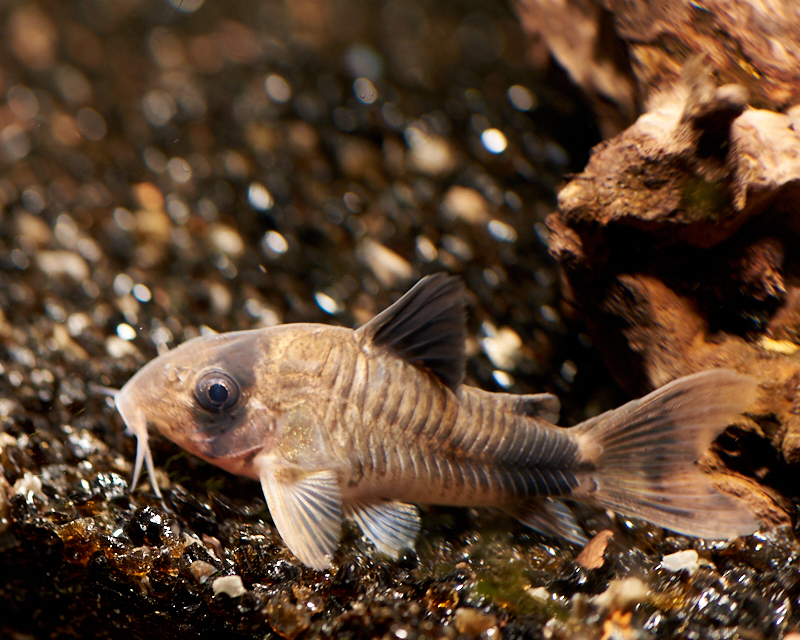
Panda corydoras are one of the easiest ways to add movement to the bottom of a peaceful community tank. These small catfish come from the upper Amazon basin in Peru. They have a pale pink or cream body with a bold black band over each eye, a black dorsal fin patch, and a black spot at the tail base. Most adults stay right around 2 inches long. Because they are social, they do best in groups. If you have kept other cory species, you already know the basics. If not, this corydoras catfish care guide is a good starting point.
The panda corydoras is often labeled as a beginner fish, but it still has specific needs. Cooler water, soft substrate, and stable parameters matter more than most new keepers expect. Seriously Fish notes that these fish come from clearwater and blackwater habitats with soft, acidic water. That background shapes how you set up the tank. It also means you should avoid warm, hard, or heavily polluted water. A little attention upfront prevents most barbel infections, stress hiding, and appetite loss.
Tank size, diet, and compatibility are the three areas where keepers make mistakes. A panda cory is small, but it is active and needs floor space. It also needs sinking food, not just leftovers. And it cannot live with aggressive fish that claim the lower level. Understanding the aquarium nitrogen cycle explained also matters before you add fish. This guide walks through the exact setup, feeding, and maintenance routine for 2026.
Below you will find seven detailed steps for keeping panda corydoras healthy. You will also see warnings to avoid common failures. The goal is not just survival. The goal is a lively group that spawns, explores, and displays the classic panda pattern. Let’s start with the tank itself, because the right footprint prevents more problems than any other choice.
What You’ll Need
- 20-gallon long aquarium or larger
- Sponge filter or hang-on-back filter
- Adjustable aquarium heater
- Fine sand substrate
- API freshwater master test kit
- Sinking catfish pellets
How Do You Care for Panda Corydoras?
- Choose a 20-Gallon Long Tank or Larger
A 20-gallon long tank is the practical minimum for a group of six panda corydoras. The long version has more floor space than a standard 20-gallon high. Bottom dwellers care about swimming area, not height. A 30-inch by 12-inch footprint gives a small group room to forage. If you want eight to ten pandas, use a 29-gallon or 40-gallon breeder. More floor space cuts stress and makes it easier to maintain water quality. The best beginner fish tanks can help you compare footprints and gear.
Many keepers think a 10-gallon tank is enough because the fish are small. That logic fails with corydoras. They are constantly active and produce waste. A 10-gallon also swings parameters faster. Aquarium Co-Op often recommends a 20-gallon long as the entry point for small cory schools. This size allows enough dilution for nitrates and room for a proper sand bed. A small tank with six fish forces you to do larger, more frequent water changes.
Pick a tank with a secure lid but low to moderate flow. Panda corydoras do not need intense current, but they like clean water. A Check the sponge filter on Amazon works well because it provides gentle flow and biological filtration. A hang-on-back filter rated for a 20-gallon also works if you baffle the output. The key is enough surface area for beneficial bacteria without pushing the fish around.

- Set the Right Water Parameters and Temperature
Panda corydoras do best in water that mimics their natural range. Keep the temperature between 72 and 77 degrees Fahrenheit. The pH should stay between 6.0 and 7.5. Soft to moderately hard water with a general hardness of 2 to 12 dGH is acceptable. Avoid temperatures above 80 degrees for long periods. Heat stress shortens lifespan and makes fish more prone to disease.
Stability is more important than chasing a perfect number. Test new water before every change. An Check the API freshwater master test kit on Amazon gives you fast readings for pH, ammonia, nitrite, and nitrate. If your tap water is hard or alkaline, do not chase pH with chemicals. Instead, use driftwood, Indian almond leaves, or RO water mixed with tap water. The article on how to lower pH in an aquarium explains safe methods.
Acclimate new fish slowly. Float the bag for 15 minutes, then add small amounts of tank water over 30 to 45 minutes. This reduces shock from differences in pH and temperature. After that, net the fish out and discard the bag water. Never pour store water into your tank. New fish also need a dimly lit tank on day one to feel safe.
- Use Soft Sand Substrate and Safe Décor
Sand is the single best substrate for panda corydoras. In the wild, they sift fine sand through their mouths and gills. Sharp gravel or rough pebbles scrape their barbels. Once barbels are damaged, bacterial infections often follow. Use a smooth, fine sand such as pool filter sand or aquarium sand. A depth of one to two inches is enough.
Add driftwood, smooth river rocks, and hardy plants. These give cover and reduce stress. Panda corydoras are not plant eaters, so most species are safe. Java fern, anubias, and cryptocoryne work well in low to moderate light. The best aquarium plants for beginners can give you more ideas. Plants also help use up some nitrate and provide hiding spots.
Avoid sharp decorations with narrow gaps. A panda cory can wedge itself into a bad spot when startled. Rinse sand and décor before adding them. Place décor first, then add sand around the base so fish cannot dig under heavy rocks. Leave open sand patches for feeding. A mix of cover and open space matches their natural behavior.

- Start with a Properly Cycled Tank
Never add panda corydoras to an uncycled aquarium. Ammonia and nitrite spikes damage their gills and barbels quickly. A fishless cycle builds the beneficial bacteria you need before fish arrive. The process usually takes four to six weeks. Follow the steps in how to cycle a fish tank if you are new. A cycled tank converts ammonia to nitrite and then to nitrate.
Even small amounts of ammonia, around 0.25 ppm, can cause visible stress in corydoras. They may breathe fast, sit still, or refuse food. Test the water daily during cycling. You know the tank is ready when it can process 1 to 2 ppm of ammonia to zero ammonia and zero nitrite within 24 hours. Nitrates should stay under 20 ppm before you add fish.
After cycling, add fish slowly. Start with the panda corydoras if they are the only planned bottom dwellers. This gives the biological filter time to adjust to the new waste load. If you already have fish, quarantine newcomers separately. A hospital or quarantine tank prevents new disease from reaching the main system. This is important because corydoras are sensitive to many medications.
- Feed a Varied, Sinking Diet
Panda corydoras are omnivores that feed on the bottom. They will not compete well for food at the surface. Offer high-quality sinking catfish pellets or wafers as the main diet. Check the sinking catfish pellets on Amazon to see readily available options. Feed once or twice daily, but only as much as they can eat in two to three minutes.
Add frozen foods two or three times per week. Bloodworms, brine shrimp, daphnia, and cyclops all work well. You can also offer live blackworms or tubifex if sourced from a trusted supplier. Variety prevents nutrient gaps and triggers natural foraging. Avoid feeding only freeze-dried foods, which can expand in the gut if not soaked first.
Uneaten food breaks down and raises ammonia. This is why how often to change aquarium water matters after feeding. Use a feeding dish or place food in the same spot to monitor intake. Remove any leftovers after 30 minutes. If your other fish eat the sinking food before the pandas get it, feed after lights out. A dim tank gives the corydoras time to find the food.

- Select Peaceful Tank Mates
Panda corydoras need peaceful tank mates that leave the bottom alone. Small tetras, rasboras, and pencilfish are ideal. Neon tetras and harlequin rasboras occupy the middle and upper levels. They add color without competing for sinking food. Cherry barbs, celestial pearl danios, and small rainbowfish can also work.
Other small corydoras species make good companions. Sterbai corydoras, pygmy corydoras, and salt and pepper corydoras have similar needs. Just give each group enough floor space and count them separately. Do not mix cory species that look too similar if you want to preserve breeding lines. Dwarf shrimp and snails are generally safe, though a hungry cory may eat baby shrimp.
Avoid large cichlids, aggressive barbs, and territorial bottom dwellers. Even peaceful fish like a betta can be a gamble. Some bettas ignore corydoras; others chase them. If you try this mix, provide dense plants and monitor feeding. Also avoid fast, nippy fish like tiger barbs and some danios. The panda cory is slow to flee and has no defense. Keep it with calm, small species.
- Maintain Water Quality with Weekly Changes
Weekly water changes keep panda corydoras in peak condition. Change 25 to 30 percent of the water every week. Use a gravel vacuum, but hold it slightly above the sand. You want to remove debris without sucking up the sand. If you use a bucket, treat tap water with a dechlorinator before adding it. Keep the new water close to tank temperature.
Test nitrate before each change. If nitrate is above 20 to 30 ppm, increase the volume or frequency. A good best aquarium heaters-2026 helps maintain stable temperature between changes. Many heaters also have a guard that prevents fish from resting against hot surfaces. Stable temperature and low nitrate reduce stress and disease.
Do not rely on filter cleaning to replace water changes. Rinse filter media in old tank water, not tap water, every two to four weeks. This preserves beneficial bacteria. Replace mechanical media only when it falls apart. A consistent schedule is more important than a perfect one. Mark water change day on a calendar and stick to it.
Red Flags & Warnings
- 🚨 Never keep fewer than six panda corydoras together. Solitary or paired pandas hide, stop eating, and become prone to disease.
- 🚨 Do not use sharp gravel or rough substrate. Damaged barbels invite bacterial infections and make feeding difficult.
- 🚨 Avoid aggressive or boisterous tank mates. Fast fish will grab food before the corydoras and may nip fins.
- 🚨 Quarantine all new fish for two to four weeks before adding them to the display tank. This prevents ich, parasites, and bacterial outbreaks.
- 🚨 Do not let ammonia or nitrite rise above 0 ppm for any reason. Even a short spike causes red gills and labored breathing in panda corydoras.
- 🚨 Never feed floating flakes as the only diet. Panda corydoras will starve while middle-water fish eat everything.
Frequently Asked Questions
How many panda corydoras should I keep together?
Keep at least six panda corydoras together. A group of eight to ten is better and leads to more natural behavior. They are schooling fish and feel safe when they can forage as a group.
What size tank do panda corydoras need?
A 20-gallon long tank is the minimum for a group of six. More fish need a 29-gallon or 40-gallon breeder. Floor space matters more than total gallons.
Can panda corydoras live with bettas?
Sometimes, but it depends on the betta. A calm betta may ignore them, while a territorial one will chase. If you try this, use a 20-gallon long with plants and monitor feeding.
What do panda corydoras eat?
They eat sinking pellets, wafers, and frozen foods. Bloodworms, brine shrimp, daphnia, and blackworms are good choices. Feed once or twice daily in small amounts.
Do panda corydoras need sand?
Yes, soft sand is best. It allows them to sift food and protects their barbels. Sharp gravel can cause wounds and infections.
What temperature do panda corydoras need?
Keep them between 72 and 77 degrees Fahrenheit. The pH should be 6.0 to 7.5. Avoid long periods above 80 degrees, which causes stress.
What Should You Remember?
- Tank size: Use a 20-gallon long tank or larger for a group of at least six panda corydoras.
- Water parameters: Keep the temperature at 72 to 77 degrees Fahrenheit and pH between 6.0 and 7.5.
- Substrate: Choose fine sand over gravel to protect barbels and allow natural sifting.
- Cycle first: Fully cycle the tank before adding panda corydoras. Ammonia and nitrite must be 0 ppm.
- Diet: Feed sinking pellets and frozen foods. Do not rely on floating flakes or leftovers.
- Tank mates: Pick small, peaceful fish like neon tetras and harlequin rasboras. Avoid aggressive bottom dwellers.
- Maintenance: Change 25 to 30 percent of the water weekly and test nitrate to keep it low.
This article is for general information only and is not a substitute for professional veterinary or aquarium specialist advice. Always research the specific needs of your fish and consult an expert before making care decisions.