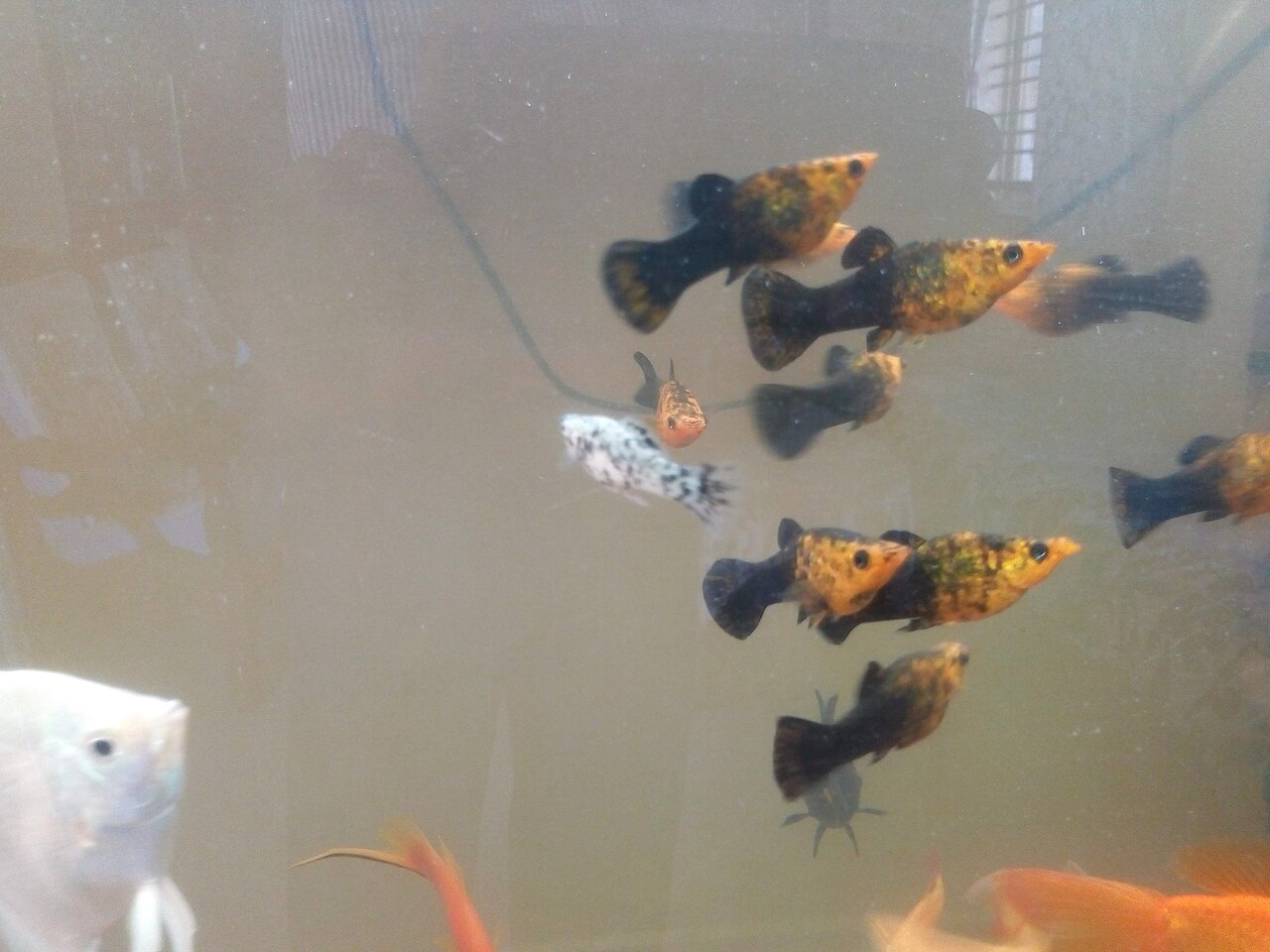
Mollies are one of the most recognizable freshwater fish in the hobby. They are active, personable livebearers that come in black, dalmatian, balloon, sailfin, and golden color forms. Many beginners pick them because they seem hardy and easy, but they have specific care requirements that are often overlooked. If you are new to fishkeeping, mollies can be a good starter fish, but only when you match their hard water and space needs. Start by reviewing our best fish for beginners guide to see how mollies compare with other beginner-friendly species.
The biggest mistake people make with mollies is treating them like any soft-water tropical fish. Mollies are native to coastal freshwater, brackish, and even marine environments across the Americas. This background means they do best in hard, alkaline water. Aqueon’s care guidance recommends keeping mollies in water that stays between 75 and 82 degrees Fahrenheit, with a pH of 7.5 to 8.5. Unlike many tetras and South American cichlids, mollies thrive at higher pH and mineral levels. Soft, acidic water can weaken their immune systems and lead to shimmies and skin infections.
Mollies also need more swimming room than their adult size suggests. A common 10-gallon tank is too small for a group, and the fish will show stress through nipping and hiding. They are social and should be kept in groups, so floor space and filtration matter. For community setups, mollies mix well with other hard-water livebearers like platies and swordtails. Still, you need to choose tank mates carefully because mollies can be pushy at feeding time and males can harass females if ratios are off.
This 2026 guide walks through the full molly care process step by step. You will learn how to set up a stable tank, feed a balanced diet, perform maintenance, and spot health problems before they spread. Whether you keep black mollies in a planted 29-gallon or sailfins in a species-only setup, the rules stay consistent. Mollies reward keepers who take water chemistry seriously and who plan for their livebearer fry.
What You’ll Need
- 20-gallon or larger aquarium
- aquarium heater
- hang-on-back or sponge filter
- water test kit
- aquarium substrate
- aquarium salt (optional)
- high-quality flake and frozen foods
- siphon and bucket
How Do You Care for Mollies?
- Choose the Right Tank Size and Setup
Start with a 20-gallon long or larger for your first group of 3 to 4 mollies. A 29-gallon is even better because it gives more horizontal swimming room. Mollies are active and do best with space to dart and graze. Avoid bowls and 10-gallon tanks. A single molly may survive in a 10-gallon, but it will be stunted and stressed. If you need equipment ideas, see best beginner fish tanks.
Filtration should be strong but not blasting. Mollies produce a lot of waste and graze constantly, so a hang-on-back or sponge filter rated for the next tank size up works well. Add a heater set to 78 degrees Fahrenheit to start. Use a substrate of sand or fine gravel. Coarse gravel can trap food and make it hard for mollies to sift. Live plants like java fern and anubias tolerate hard water and provide cover.
Leave open swimming lanes along the front and middle. Use driftwood and rock to create sight breaks, but do not overfill the tank. Mollies use plants and hardscape to escape chasing males and fry. Before adding any fish, plan where the heater and filter will sit. This setup work connects directly to the next step, which is dialing in water parameters.

- Set the Right Water Parameters
Get a water test kit before buying fish. Use a reliable heater, and compare options in our best aquarium heaters guide. Mollies need 75 to 82 degrees Fahrenheit, a pH of 7.5 to 8.5, and hard water. Test GH and KH too. Aim for GH between 12 and 25 dGH. Use crushed coral or aragonite in the filter to raise hardness if tap water is soft. Do not use chemical pH adjusters daily; they swing parameters.
I recommend the API Freshwater Master Test Kit for reliable readings. Check the API Freshwater Master Test Kit on Amazon. This kit covers pH, ammonia, nitrite, and nitrate. Test your tap water before choosing mollies. If your tap is very soft and acidic, consider adding crushed coral or using remineralization products. Stable hardness prevents molly shimmies.
Some keepers add aquarium salt to molly tanks, but it is not required for freshwater mollies. Add salt only if tank mates and plants can tolerate it. Start with 1 tablespoon per 5 gallons if you choose salt, and do not top off with saltwater when water evaporates. Salt does not evaporate, and over time it can build to harmful levels. This step sets the stage for a safe nitrogen cycle.
- Cycle the Tank Before Adding Mollies
Mollies are hardy, but they still need a fully cycled aquarium. Ammonia and nitrite burn gills and cause long-term damage. Use our how to cycle a fish tank guide to complete a fishless cycle before you buy any molly. Fishless cycling uses pure ammonia or fish food to grow beneficial bacteria. It takes 4 to 6 weeks, but it is the safest way to start.
During the cycle, test ammonia, nitrite, and nitrate every other day. You want 0 ppm ammonia, 0 ppm nitrite, and less than 20 ppm nitrate before adding fish. If you already have mollies in an uncycled tank, do daily water changes and use a water conditioner that detoxifies ammonia. Do not rely on bottled bacteria alone. It can help, but water changes are the real fix.
The nitrogen cycle is the backbone of molly keeping. Once the tank is cycled, the filter media becomes home to the bacteria that process waste. Never replace all filter media at once. Rinse it in old tank water, not tap water. A cycled tank makes every future step easier because water quality issues are less frequent. Next, focus on how you feed your group.
- Feed a Varied Omnivore Diet
Mollies are omnivores that graze on algae and biofilm all day. A high-quality vegetable-based flake or pellet should be the staple. Supplement with blanched zucchini, spinach, and spirulina flakes. Feed small amounts 2 to 3 times per day, only what they can eat in 2 minutes. Overfeeding leads to bloat and fouled water. For more feeding ideas, Aquarium Co-Op has helpful guide content, but start with simple veggie staples.
One good prepared food is Omega One Veggie Rounds. Check the Omega One Veggie Rounds on Amazon. These sinking rounds give mollies something to graze on without floating at the surface. You can also offer frozen brine shrimp, daphnia, and bloodworms once or twice a week. Livebearers need some protein, but too much protein can cause digestive issues and fatty liver. Keep plant matter at the core of the diet.
Feed less on the day before a water change, and skip feeding one day per week if fish look bloated. Mollies will also eat soft algae from the glass, but do not rely on that to meet their needs. If you have live plants, some nibbling is normal. Add hardy plants like java fern or anubias, but be prepared for occasional grazing.
- Pick Compatible Tank Mates
Mollies are peaceful, but they can outcompete slow fish for food. Good tank mates include other livebearers like platies, swordtails, and guppies. Keep them in groups with more females than males. Avoid fin nippers like tiger barbs, and do not keep mollies with fish that need very soft water, such as discus or many tetras. The most reliable rule is to choose fish that prefer the same hard, alkaline water.
Platies and swordtails are probably the easiest companions. They come from similar water and have similar diets. Cories can work if your water is not too hard, but some cory species prefer softer conditions. If you keep mollies in brackish water, only choose brackish-tolerant tank mates. Do not mix mollies with aggressive cichlids like convicts or flowerhorns. The molly’s long fins and active swimming make it a target if aggression exists.
When adding new fish, rearrange decorations to break up territory. Introduce tank mates after the molly group is settled and eating well. A quarantine tank is strongly recommended for any new fish. Compatibility is not just about aggression. It is about matching temperature, pH, and feeding speed. The next step covers maintenance, which becomes more important as you add more fish.

- Perform Regular Maintenance and Water Changes
Regular water changes keep nitrates low and replenish minerals that mollies need. Change 25 percent of the water every week using a gravel vacuum. For larger or heavily stocked molly tanks, change 30 percent twice a week. Use a water conditioner to remove chlorine and chloramine. The frequency matters because molly tanks often run a heavy bioload from fish and fry.
While vacuuming, focus on the substrate and any dead plant leaves. Uneaten food breaks down into ammonia, so do not overfeed and remove leftovers with a turkey baster after 5 minutes. Test nitrate weekly. If nitrate is above 40 ppm before a water change, increase the volume or frequency. More tips are in our how often to change aquarium water guide.
Avoid changing filter media and doing a deep tank clean in the same week. This can remove too much beneficial bacteria and cause a mini-cycle. Rinse mechanical media in old tank water, not tap water. Keep a consistent schedule, and your mollies will show good color and active behavior. Regular maintenance also helps you spot early signs of illness, which we cover next.
- Watch for Health Issues and Breeding Behavior
Mollies are prone to ich, fin rot, and a stress condition called shimmies. Shimmies looks like the fish is swimming in place with clamped fins. It usually comes from poor water quality, low temperature, or soft acidic water. If you see spots like salt grains, treat for ich quickly. Quarantine any sick fish in a separate tank if possible.
Livebearer females give birth to free-swimming fry every 4 to 6 weeks. A heavily pregnant molly will have a dark gravid spot near the anal fin and a boxy belly. If you do not separate fry, adults may eat them. Provide dense floating plants like hornwort for fry to hide. Overpopulation can happen fast, so have a plan for rehoming or a grow-out tank.
Do not treat the whole tank with medications unless you know the problem. Many fish medications contain copper, which is harmful to plants and invertebrates. Check water parameters first. Most molly health issues trace back to water quality. If you need treatment guidance, follow a proven ich protocol, but first confirm the diagnosis.

- Acclimate New Mollies Slowly
New mollies can die from sudden changes in temperature, pH, or hardness. Float the bag in the tank for 15 minutes to equalize temperature. Then use drip acclimation. Run airline tubing from the tank into a bucket with the new fish and a slow drip of tank water. Over 45 to 60 minutes, the water in the bucket should mostly be tank water.
Never pour pet store water into your display tank. It may carry ammonia, pathogens, or medications. After acclimation, use a soft net to transfer the mollies. Dim the lights for the first few hours. This reduces stress and gives existing fish less reason to chase the newcomers.
Watch for signs of shock after adding: rapid breathing, clamped fins, or hiding near the surface. If the tank is properly cycled and parameters are stable, most mollies settle within a day. Offer a small amount of food the next morning when they come out. Slow acclimation is the best way to protect your investment and keep the group healthy.
Red Flags & Warnings
- 🚨 Never keep a group of mollies in a 10-gallon tank. It stunts growth, spikes ammonia, and leads to aggression and disease.
- 🚨 Do not keep mollies in soft, acidic water. A pH below 7.0 or very low hardness can cause shimmies, clamped fins, and skin infections.
- 🚨 Avoid adding aquarium salt unless you know every tank mate and live plant can handle it. Salt does not evaporate and can accumulate.
- 🚨 Do not overfeed mollies. They are grazers, but excess food causes bloat, fatty liver, and high nitrates.
- 🚨 Always quarantine new fish for at least 2 weeks. Mollies can carry ich, velvet, and internal parasites without obvious symptoms.
- 🚨 Be ready for fry. A single female can produce dozens of fry monthly, so have a plan before the tank becomes overcrowded.
Frequently Asked Questions
How many mollies should I keep together?
Keep at least 3 to 4 mollies, with two or three females for every male. A 20-gallon long is the minimum for a small group, and larger groups need 29 gallons or more.
Can mollies live in freshwater without salt?
Yes. Mollies can live in fresh, hard, alkaline water. Some keepers add aquarium salt, but it is optional. The key is stable pH between 7.5 and 8.5 and adequate minerals, not salinity.
What is the ideal tank size for mollies?
A 20-gallon long is the minimum for a small group. A 29-gallon or 40-gallon breeder is better if you plan to keep fry or add compatible tank mates.
What do mollies eat?
Mollies are omnivores. Feed a vegetable-based flake or pellet as the staple, plus blanched zucchini, spinach, and occasional frozen brine shrimp or bloodworms.
Are mollies aggressive?
They are usually peaceful, but males can constantly chase females. Keep more females than males. Mollies may also outcompete slow, shy fish for food.
How long do mollies live?
With proper care, mollies live 3 to 5 years. Stable water parameters, a varied diet, and regular water changes help them reach the upper end of that range.
What Should You Remember?
- Tank size: Use a 20-gallon long or larger for a small molly group.
- Water parameters: Keep temperature at 75 to 82 degrees Fahrenheit and pH from 7.5 to 8.5.
- Hardness matters: Mollies need hard, alkaline water; soft water causes shimmies.
- Diet: Feed algae-based staples plus occasional protein foods.
- Compatibility: Choose peaceful, hard-water tank mates and keep more females than males.
- Maintenance: Change 25 percent of the water weekly and test for nitrates.
- Breeding: Expect livebearer fry, and have hiding spots or a grow-out plan.
This article is for general information only and is not a substitute for professional veterinary or aquarium specialist advice. Always research the specific needs of your fish and consult an expert before making care decisions.