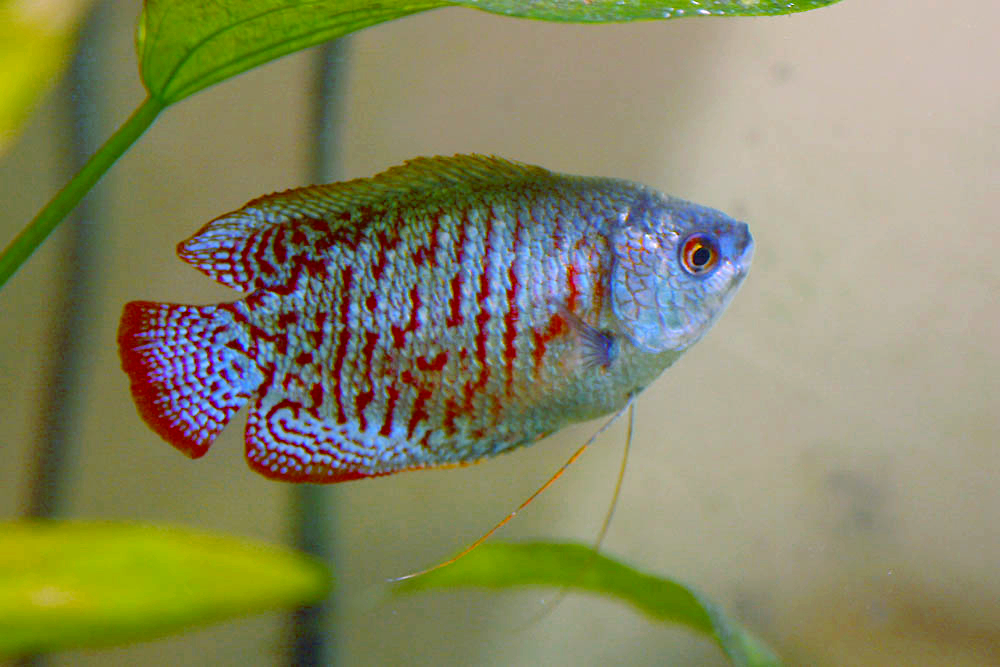
Dwarf gouramis (Trichogaster lalius) are popular freshwater fish known for vivid colors, small adult size, and relatively peaceful nature. They grow to about 2 to 3 inches, which makes them suitable for nano and community tanks. But they need more than a tiny bowl. To keep them healthy, you must understand their specific tank size, diet, and social behavior. If you are new to fishkeeping, review best fish for beginners before you choose a first species. This guide is a complete care walkthrough.
Many first-time keepers choose dwarf gouramis for a planted community tank. Their bright blue and red coloration stands out against green plants. However, dwarf gouramis have a reputation for health issues, especially dwarf gourami iridovirus. You can reduce problems with clean water, a proper diet, and careful tank mate selection. Healthy dwarf gouramis are active and colorful. This article explains each requirement step by step.
Water parameters matter more than many beginners assume. Dwarf gouramis are labyrinth fish, which means they can breathe air from the surface, but they still need clean, warm, and stable water. They tolerate a range of pH values, but sudden changes cause stress. You also need a gentle filter because they dislike strong current. The following steps cover tank size, cycling, water chemistry, feeding, compatibility, and maintenance. A calm environment keeps these fish at their best.
By the end of this guide, you will know how to choose and cycle a tank, what to feed, which tank mates work, and how to spot early disease. Keep the water stable and the environment calm, and dwarf gouramis can live for three to five years. Let’s begin with the first step: a proper tank and aquascape. The right setup prevents many common problems before they start.
What You’ll Need
- 10-gallon or larger aquarium
- Adjustable aquarium heater
- Gentle hang-on-back or sponge filter
- API Freshwater Master Test Kit
- Seachem Prime water conditioner
- Aquarium siphon and bucket
- Live or silk plants and driftwood
- High-quality flake, pellet, and frozen foods
How Do You Care for Dwarf Gourami?
- Set up a 10-gallon or larger planted tank
Choose a tank of at least 10 gallons for a single dwarf gourami. If you plan a small group or a community tank, use a 20-gallon long or larger. These fish reach about 2 to 3 inches as adults. A larger water volume dilutes waste and gives males space to establish territories. The extra space also reduces stress and aggression.
Add substrate, plants, and hardscape before filling. Dwarf gouramis feel safest when they have floating plants, driftwood, and caves. Live plants like java fern, anubias, and water sprite work well. You do not need carbon dioxide injection. Beginners should review best aquarium plants for beginners for low-maintenance options. If you prefer silk plants, they also create cover without extra maintenance.
Choose a gentle filter. A sponge filter or a hang-on-back filter with adjustable flow is best. Dwarf gouramis dislike strong current because they naturally live in slow-moving waters. Position the filter outlet so it does not push fish around. Add a heater before cycling. A 50-watt adjustable heater usually works for a 10-gallon tank.
Aquascape with open swimming areas. Dwarf gouramis swim near the top and middle. Leave open space at the surface for them to breathe air. Dense planting near the back and sides provides retreats. This setup helps reduce stress and aggression later.

- Cycle the aquarium before adding dwarf gourami
A new tank must be cycled or it will harm fish. The nitrogen cycle develops beneficial bacteria that convert ammonia to nitrite and then to nitrate. You can read how to cycle a fish tank for a full walkthrough. Use a liquid test kit to track levels. Add an ammonia source or fish food to start the cycle.
Dwarf gouramis are sensitive to ammonia and nitrite. Even small amounts burn gills and cause stress. Use Check the API Freshwater Master Test Kit on Amazon to measure ammonia, nitrite, nitrate, and pH. Do not add fish until ammonia and nitrite read 0 ppm and nitrate is under 20 ppm.
Cycling takes three to six weeks. Add bottled bacteria if desired. Be patient. A fish-in cycle with dwarf gourami is possible but risky. It requires daily water changes and careful testing. A fishless cycle is much safer for a sensitive species.
Once the cycle is complete, acclimate dwarf gourami slowly. Float the bag for 15 to 20 minutes, then add small amounts of tank water every 10 minutes for another 30 minutes. This prevents shock from sudden water chemistry changes.
- Keep water parameters stable at 72-82°F and pH 6.0-7.5
Dwarf gouramis are tropical fish and need warm water. Keep temperature between 72°F and 82°F, ideally 77°F to 79°F. Use a reliable adjustable heater. Aqueon’s care resources recommend stable tropical conditions for labyrinth fish like dwarf gouramis. Stable temperature is more important than hitting an exact degree.
Maintain pH between 6.0 and 7.5. Water hardness can be 4 to 10 dGH. They can adapt, but avoid rapid shifts. Test pH weekly. If you need to adjust, do it slowly. Review best aquarium heaters to find a unit that holds temperature steady. I have used adjustable heaters with success.
Use a heater with a thermostat. A quality heater prevents temperature swings. Check the Eheim Jager heater on Amazon. Place it near water flow. Use a separate thermometer to verify actual temperature, not just the dial.
Remember that labyrinth organs mean they surface for air. Keep the air above the water warm and humid. A tight-fitting lid reduces temperature difference between water and air. This prevents damage to the labyrinth organ.

- Feed a varied omnivore diet on a consistent schedule
Dwarf gouramis are omnivores. They eat insects, larvae, algae, and plant matter in the wild. In aquariums, provide a quality micro pellet or flake as a staple. Choose foods with protein as first ingredients. Avoid overfeeding.
Feed small amounts two times per day. Only give what they can eat in one to two minutes. Remove uneaten food. Overfeeding leads to bloating and poor water quality. Dwarf gouramis have small stomachs and will continue eating if food is available.
Add variety with frozen or live foods like daphnia, brine shrimp, bloodworms, and mosquito larvae. Feed these two to three times per week. You can also offer blanched vegetables like zucchini or spinach occasionally. Do not rely on dry food alone.
Soak freeze-dried foods before feeding to prevent air ingestion. Dwarf gouramis can bloat if they gulp air at the surface. A varied diet supports color and immune function. Consistent small meals are better than one large feeding.
- Choose peaceful tank mates and manage dwarf gourami aggression
Dwarf gouramis are generally peaceful, but males can be territorial with each other. Never keep two males in a small tank. A single male with one or two females works, but a 20-gallon or larger tank is better. Without females, a single dwarf gourami may still be fine.
Good tank mates include small tetras like neon tetras, harlequin rasboras, and corydoras catfish. Avoid fin nippers like tiger barbs and active or aggressive species such as large cichlids. Bettas are not recommended because both are anabantoids and may fight.
Dwarf gouramis can be shy at first. Provide plant cover. If you keep multiple gouramis, add them at the same time and watch for chasing. Rearranging decor can break up territories. A 20-gallon long tank with sight breaks reduces aggression.
Some dwarf gouramis are more assertive than others. Observe during feeding. If one fish hides constantly or has torn fins, remove it to a separate tank. Compatibility depends on individual temperament, not just species.
- Perform weekly water changes and monitor for disease
Change 20 to 30 percent of the water every week. Use an aquarium siphon to vacuum the substrate. This removes uneaten food and fish waste. Regular changes keep nitrate low and replenish minerals. Stable water quality is the best disease prevention.
Always treat tap water with a dechlorinator. Check Seachem Prime on Amazon. It removes chlorine and chloramine and detoxifies ammonia. Match the new water temperature to the tank before adding. Add water slowly to avoid shocking fish.
While changing water, check fish for signs of disease. Watch for white spots, clamped fins, loss of color, or labored breathing. Red streaks, swollen abdomen, or sitting at the bottom are red flags. Dwarf gouramis are especially prone to dwarf gourami iridovirus, which has no cure. Look for lethargy, bloating, and sores.
If you see ich, raise temperature gradually to 82°F and treat with ich medication. Read how to treat ich in aquarium for details. Remove sick fish to a quarantine tank when possible. Never medicate the main tank unnecessarily.

- Quarantine new fish and observe long-term behavior
Quarantine every new fish for at least two to four weeks before adding it to the main tank. This prevents introducing diseases and parasites. A simple 10-gallon quarantine tank with a sponge filter and heater works. No substrate makes cleaning easier.
Observe new dwarf gouramis for signs of illness. Many imported dwarf gouramis carry iridovirus. A fish can look healthy for weeks before showing symptoms. Quarantine reduces risk to established fish. If possible, buy from a local breeder or reputable store. Ask about their supplier.
In the main tank, spend a few minutes each day observing behavior. A healthy dwarf gourami explores the tank, swims near the top and middle, and eats eagerly. Hiding all day, gasping at the surface, or flashing against objects indicates stress or disease. Test water immediately if behavior changes.
Dwarf gouramis can live three to five years with good care. Stable conditions and good food matter most. Avoid sudden changes. The final step is continuous: monitor, maintain, and adjust as needed. Continue learning by comparing with larger relatives like pearl gouramis.
Red Flags & Warnings
- 🚨 Never keep two male dwarf gouramis in a tank smaller than 20 gallons. They will chase, nip, and stress each other.
- 🚨 Do not add dwarf gouramis to an uncycled tank. Ammonia and nitrite spikes can kill them quickly.
- 🚨 Avoid sudden temperature swings. Keep a reliable heater and thermometer, and match new water temperature during changes.
- 🚨 Do not keep dwarf gouramis with fin nippers like tiger barbs or with aggressive fish such as large cichlids.
- 🚨 Watch for dwarf gourami iridovirus. Symptoms include bloating, lethargy, sores, and loss of color. There is no proven cure, so quarantine new fish.
- 🚨 Do not overfeed. Dwarf gouramis bloat easily, and excess food pollutes the water.
Frequently Asked Questions
What size tank do dwarf gouramis need?
A single dwarf gourami needs at least a 10-gallon tank. If you plan to keep a pair or a small group, use a 20-gallon long or larger. More space reduces aggression and keeps water quality stable.
What do dwarf gouramis eat?
Dwarf gouramis are omnivores and do well on a staple of high-quality micro pellets or flakes. Offer frozen or live foods like brine shrimp, daphnia, and bloodworms two to three times per week. You can also give blanched vegetables occasionally. Feed small portions twice a day.
Can dwarf gouramis live with bettas?
It is not recommended. Both are labyrinth fish and males can be territorial. Bettas may see dwarf gouramis as rivals, and dwarf gouramis may nip betta fins. Keep them in separate tanks unless you have a very large, heavily planted aquarium.
Are dwarf gouramis aggressive?
Dwarf gouramis are generally peaceful, but males can be territorial with each other. They may chase other fish during breeding or if space is limited. Provide plants and sight breaks, and avoid keeping two males together.
How long do dwarf gouramis live?
With good care, dwarf gouramis typically live 3 to 5 years. Stable water parameters, a varied diet, and low stress help them reach their full lifespan. Poor water quality and iridovirus can shorten their lives.
What are the signs of dwarf gourami disease?
Common signs include lethargy, clamped fins, loss of color, bloating, sores, and gasping at the surface. Dwarf gourami iridovirus is a major concern and has no cure. Quarantine new fish and maintain clean water to reduce risk.
What Should You Remember?
- Tank size: Keep a single dwarf gourami in at least a 10-gallon tank, and use a 20-gallon long for pairs or small groups.
- Water parameters: Maintain 72°F to 82°F, pH 6.0 to 7.5, and ammonia and nitrite at 0 ppm.
- Diet: Feed a varied diet of quality flakes or pellets, plus frozen or live foods two to three times per week.
- Compatibility: Choose peaceful tank mates like small tetras, rasboras, and corydoras. Avoid fin nippers and aggressive species.
- Maintenance: Change 20 to 30 percent of the water weekly and test parameters regularly.
- Quarantine: Isolate new fish for 2 to 4 weeks to prevent disease outbreaks.
- Disease watch: Learn the signs of dwarf gourami iridovirus and act fast if you see lethargy or sores.
This article is for general information only and is not a substitute for professional veterinary or aquarium specialist advice. Always research the specific needs of your fish and consult an expert before making care decisions.