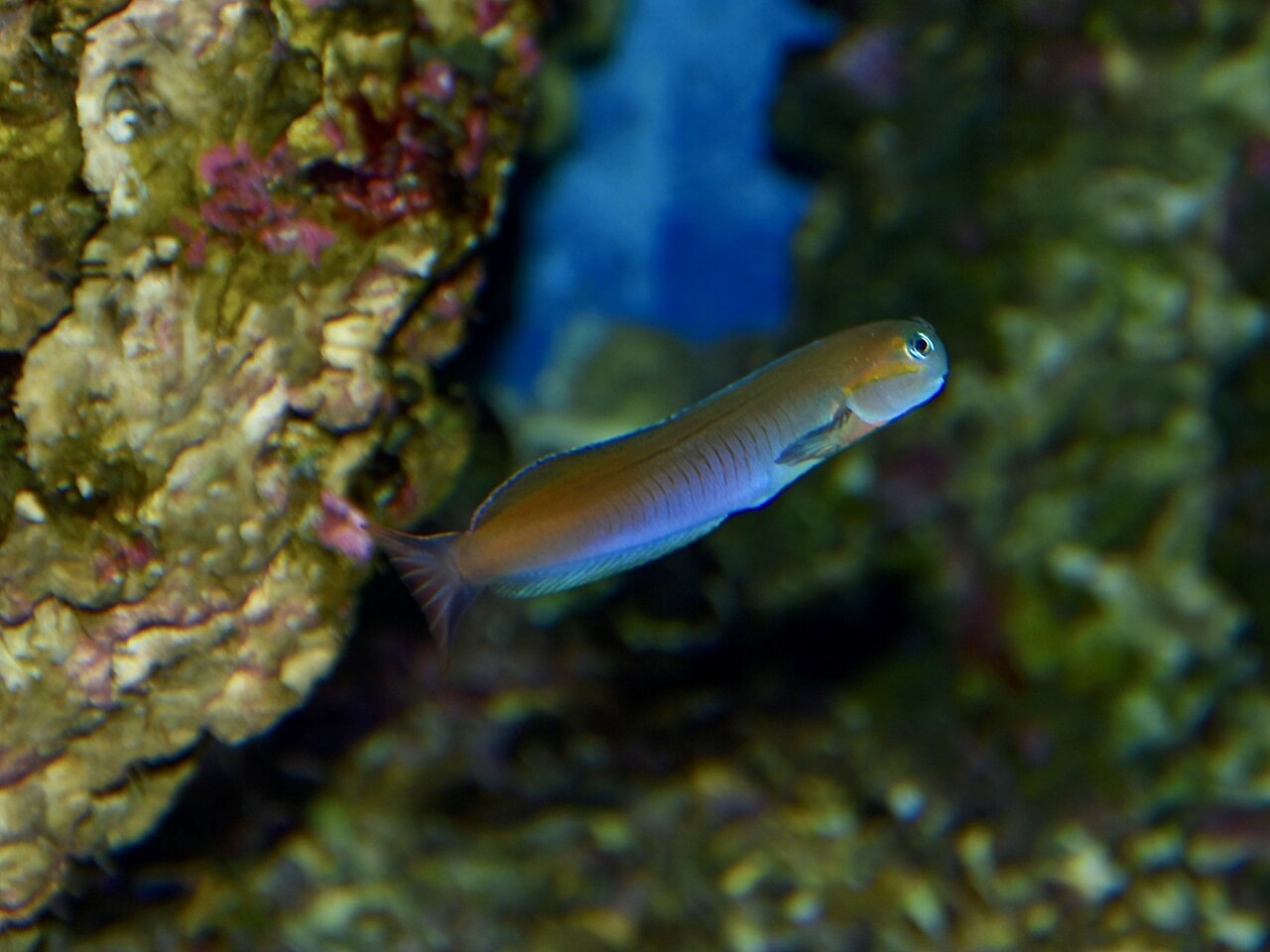
The Midas Blenny (Ecsenius midas) is one of the best saltwater fish for aquarists who want personality without a huge tank. This golden-yellow fish swims with a curious eel-like motion and often perches on rockwork. Before you bring one home, you need to understand its care requirements. A stable, mature aquarium matters more than any single piece of gear. If you are new to marine setups, review the aquarium nitrogen cycle explained before adding any fish. The nitrogen cycle, live rock, and water changes are the foundation of success.
Many keepers compare the Midas Blenny to the lawnmower blenny but the two have different diets and personalities. The Midas Blenny is less of a dedicated algae eater and more of a planktivore. It still grazes on microalgae and film, but it needs meaty marine foods too. This species does well in reef tanks and fish-only systems. It stays small enough for a modest aquarium while adding constant movement and bright color. It is a great choice for intermediate saltwater keepers.
Tank size, water chemistry, diet, and compatibility are the four main pillars of Midas Blenny care. The fish is hardy once settled, but poor water quality or a bad tank mate can stress it quickly. Stress leads to disease, hiding, and refusal to eat. For equipment guidance, look at the best aquarium filters for 2026 and best aquarium heaters for 2026. Live rock and a secure lid are just as important as the heater and filter.
According to LiveAquaria, the Midas Blenny is a hardy, reef-safe fish that adapts well to captive life. It originates from the Indo-Pacific and often lives in rocky outcroppings. This guide walks through each care step so you can provide a suitable home. You will learn how to set up the tank, feed the fish, pick tank mates, and prevent common problems. By the end, you should feel confident about keeping this gold-colored fish healthy.
What You’ll Need
- 30-gallon or larger aquarium
- Heater and thermometer
- Protein skimmer or quality filter
- Live rock or dry rock
- Secure lid or mesh screen
- Saltwater test kit
- Marine fish food
How Do You Care for a Midas Blenny?
- Choose a Tank of at Least 30 Gallons
Choose a tank of at least 30 gallons for a single Midas Blenny. Some sellers list 20 gallons as the minimum, but 30 gallons gives more stable water and room for live rock. Adult Midas Blennies reach 4 to 5 inches long. A 30-gallon tank is 36 inches long, which allows natural darting and perching behavior. If you plan to keep several peaceful fish, start with a 40-gallon or larger system. Check the Fluval Sea Evo 32 gallon aquarium on Amazon. This size works well for a single blenny with a few small tank mates.
Why 30 gallons? Midas Blennies produce moderate waste. Small tanks swing in temperature, salinity, and nitrate faster than larger systems. Those swings cause stress. The fish may stop eating, hide constantly, or become sick. A narrow 10 or 20 gallon tank leaves little room for rockwork. The fish likes to dart from rock to rock and retreat into a cave. A 30 gallon tank provides both swimming and territory space.
A common mistake is buying a tiny tank and planning to upgrade later. Saltwater fish do not handle that as well as some freshwater fish. Ammonia and nitrite spikes are more dangerous in a small aquarium. Before buying any tank, make sure you have a proper stand and enough space. The next step explains how to stabilize that new tank before adding the blenny.

- Stabilize Water Parameters Before Adding the Fish
Stabilize water parameters before you add the fish. Midas Blennies need saltwater with a temperature between 72 and 78 degrees Fahrenheit. Specific gravity should stay between 1.020 and 1.025. The pH should be between 8.1 and 8.4. Ammonia and nitrite must read zero. Nitrate should stay below 20 ppm. Use a reliable saltwater test kit before you ever buy the fish. A good kit covers pH, ammonia, nitrite, and nitrate.
A new tank must be fully cycled. That means beneficial bacteria have colonized the filter media and live rock. If you are new to marine cycling, read how to cycle a fish tank. Cycling often takes four to eight weeks. Do not rush this step. Add an ammonia source and wait for the nitrogen cycle to establish. The Midas Blenny will not tolerate ammonia or nitrite in a fresh tank.
Stable temperature matters more than an exact number. Fluctuations of more than a couple degrees can stress the fish. Use a quality heater and a thermometer. In warm climates, you may need a cooling fan. Also check salinity after water changes. Top-off water should be fresh water, not saltwater. Evaporation raises salinity if you do not replace it.
This step connects to habitat setup. Once the tank is cycled and stable, you can arrange rockwork and hiding places. A steady environment helps the fish settle quickly. Skip this step and the fish may hide, breathe heavily, or refuse food.
- Add Live Rock, Caves, and a Secure Lid
Add live rock, caves, and a secure lid before the fish arrives. Midas Blennies are rock dwellers. They need plenty of crevices to retreat into. Use live rock or dry rock to build caves and overhangs. The fish will perch on rock ledges and dart into holes when startled. Provide at least one cave per fish. If you keep other small fish, add multiple hiding spots. The blenny will claim a favorite hole and defend it lightly from other blennies.
The tank must have a tight-fitting lid or mesh screen. Midas Blennies are strong jumpers. They can launch out of an open aquarium when frightened or excited. A gap around filter lines or heater cords is enough for an escape. Use a screen top or glass canopy with no large openings. This is one of the most important pieces of equipment for this species.
Many aquarists make the mistake of placing rockwork too tight against the back glass. Leave a small gap so you can clean the glass and retrieve the fish if needed. Arrange rock so it is stable. A falling rock can crack the tank or crush fish. Use epoxy or acrylic rods for large structures. Moderate water flow is fine, but the blenny should have low-flow areas to rest.
In a reef tank, live rock also supports microfauna. The blenny may pick at these tiny organisms between meals. This natural grazing helps with digestion. Let the tank mature for a month or two after cycling. A mature tank has more pods and algae film for the fish to snack on.

- Feed a Varied Omnivorous Diet
Feed a varied omnivorous diet. The Midas Blenny is an omnivore with a strong preference for meaty foods. In the wild it feeds on zooplankton and small crustaceans. In the aquarium, offer a mix of marine flakes, pellets, frozen mysis shrimp, brine shrimp, and finely chopped seafood. Check the Omega One marine flakes on Amazon. Feed small amounts once or twice per day. The fish will also graze on algae film and detritus.
Do not rely on algae alone. Many keepers think blennies eat only algae, but the Midas Blenny is different. It can become thin if only given nori or vegetable matter. Include meaty items at least a few times per week. Frozen food should be thawed and rinsed. Avoid overfeeding because uneaten food raises nitrate.
Some individuals learn to eat from the water column. Others prefer food that sinks near their perch. Observe your fish during feeding. If it ignores floating food, try sinking pellets or placing frozen food near its cave. A turkey baster can target feed. This reduces competition from faster tank mates. All fish should get enough food, but blennies are not aggressive feeders.
Variety prevents nutritional deficiencies. Rotate between different frozen and dry foods. Supplement with spirulina flakes occasionally. A healthy Midas Blenny has a rounded belly and bright golden color. If you see a sunken belly or pale color, increase food frequency and check water quality. This step supports the next one because well-fed fish are less likely to nip at corals or bother tank mates.
- Choose Peaceful and Reef-Safe Tank Mates
Choose peaceful and reef-safe tank mates. Midas Blennies are generally peaceful but can be territorial with other blennies. Keep only one per tank unless you have a confirmed mated pair. Do not combine a Midas Blenny with similar-shaped fish like the bi-color blenny unless the tank is very large. They may fight over the same rockwork. Instead, choose peaceful community fish that occupy different zones.
Good tank mates include clownfish such as the ocellaris clownfish, firefish gobies, royal grammas, and small wrasses. These fish do not compete heavily for the same holes. Avoid large or aggressive fish. Damsels, large dottybacks, triggers, and big angelfish may harass the blenny. Also avoid fish that eat small fish, like frogfish or large groupers.
In a reef tank, the Midas Blenny can live with corals and most invertebrates. It may occasionally nip at small polyp stony corals if underfed. This behavior is not common but can happen. The fish does not bother snails, shrimp, or crabs. A cleaner shrimp or hermit crab crew is safe. The blenny may even use a shrimp burrow as a resting spot.
The best approach is to add the blenny after the tank has settled. Aggressive fish should be added last. This gives the blenny time to find a territory. Monitor the first week for chasing. If another fish constantly chases the blenny, you may need to remove one. Compatibility matters as much as tank size.
- Maintain Water Quality with Regular Upkeep
Maintain water quality with regular upkeep. Midas Blennies tolerate average reef conditions but not poor water. Perform a 10 to 20 percent water change every two weeks. Use a gravel vacuum to remove detritus from the substrate. Replace the removed saltwater with freshly mixed saltwater at the same temperature and salinity. This keeps nitrate low and replenishes trace elements. For a refresh on water changes, see how often to change aquarium water.
Test the water weekly for the first few months. Track ammonia, nitrite, nitrate, pH, and alkalinity. Write down the results. If nitrate climbs above 20 ppm, increase water changes or reduce feeding. A protein skimmer helps export waste, especially in a reef tank. Check the Reef Octopus protein skimmer on Amazon. A skimmer is not mandatory on a 30 gallon fish-only tank but it does help.
Clean the filter media every few weeks in old tank water. Do not rinse it in tap water. Chlorine and chloramine kill beneficial bacteria. Also check the heater and powerhead for buildup. A clean filter runs more efficiently. The best aquarium filters for 2026 guide lists good options for saltwater.
Consistency matters more than perfection. Small, frequent water changes are better than large, rare ones. Sudden large changes can shock the fish. Mark a schedule on your calendar. This prevents nitrate creep and keeps the tank stable. The next step covers health signs that tell you if your maintenance is working.
- Watch for Common Health Issues and Stress Signs
Watch for common health issues and stress signs. A healthy Midas Blenny is active, curious, and golden yellow. It perches on rocks and swims with a wavy motion. Watch for clamped fins, rapid breathing, or hiding for days. These are early stress signs. Stress often comes from poor water quality, aggression, or improper diet. Check the water first. Then watch interactions with tank mates.
Blennies are prone to marine ich and external parasites. Symptoms include white spots, scratching against rocks, and cloudy eyes. Use a quarantine tank for all new fish before adding them. This prevents introducing disease. If your blenny gets ich, do not dump copper medication directly into a reef tank. Copper can kill invertebrates and live rock. Instead, use hyposalinity or a separate hospital tank. For more on ich, read how to treat ich in an aquarium.
Blennies can also suffer from nutritional deficiencies. A fish fed only flake food may develop a pinched stomach or faded color. Add vitamins to frozen food occasionally. Garlic extract can stimulate appetite. If the fish stops eating for more than three days, investigate water quality and tank mates. A healthy fish rarely refuses food for long.
Observe the fish during feeding and at night. Nocturnal behavior is often different. The Midas Blenny may tuck into a hole and go pale at night. This is normal. Do not confuse it with illness. Daytime hiding is more concerning. Consistent observation is the best way to catch problems early.

- Provide Ongoing Enrichment and Stable Routine
Provide ongoing enrichment and a stable routine. Midas Blennies are intelligent and curious. They benefit from a stable routine and a varied environment. Feed at the same times each day. Keep the lighting schedule consistent. You can rearrange rockwork occasionally, but do not do it too often. The fish needs time to establish territory. A sudden aquascape change can cause short-term stress.
Enrichment can come from live rock, new foods, and peaceful tank mates. Some keepers mount a small mirror outside the tank for a few minutes. The fish may display but do not leave it too long. More natural enrichment comes from pods and algae in a mature tank. If you want to boost pod populations, add a refugium. The blenny will hunt between feedings.
Regular maintenance keeps the environment clean, but do not overclean. Leave some algae film on the back glass or rock. The blenny will graze on it. If you scrub every surface, the fish loses a natural food source. The same applies to live rock. A completely sterile tank is not the goal. Stability and some natural growth are better.
Finally, enjoy the fish. The Midas Blenny has a unique personality and often recognizes its owner. It may swim to the front glass when you approach. This makes it one of the most rewarding small saltwater fish. With proper care, it can live five years or more. The work you put into setup, feeding, and maintenance pays off in a colorful, active fish.
Red Flags & Warnings
- 🚨 Never leave the tank uncovered. Midas Blennies jump and can escape through small gaps.
- 🚨 Do not keep two Midas Blennies in the same tank unless you have a mated pair. Same-species aggression is common.
- 🚨 Avoid copper-based medications in a reef tank. Copper can kill live rock and invertebrates.
- 🚨 Quarantine all new fish for at least four weeks before adding them to the display. This prevents marine ich and other diseases.
- 🚨 Do not rely on algae alone for food. Midas Blennies need meaty marine foods or they may slowly starve.
- 🚨 Never add a Midas Blenny to an uncycled tank. Ammonia and nitrite spikes can be fatal.
Frequently Asked Questions
What size tank does a Midas Blenny need?
A single Midas Blenny needs at least a 30-gallon tank. This size gives enough swimming room and rockwork territory. Larger tanks are better if you keep multiple peaceful fish together.
Can a Midas Blenny live in a reef tank?
Yes, Midas Blennies are considered reef safe. They may occasionally nip at small polyp stony corals if underfed, but this is uncommon. They do not bother shrimp, snails, or crabs.
What should I feed a Midas Blenny?
Feed a varied omnivorous diet with marine flakes, pellets, frozen mysis shrimp, and brine shrimp. Include meaty foods several times per week. The fish also grazes on algae film and microfauna.
Are Midas Blennies aggressive?
They are generally peaceful but can be territorial toward other blennies and similar-shaped fish. Keep one per tank unless you have a mated pair. Choose peaceful tank mates from different zones.
Do Midas Blennies jump out of tanks?
Yes, they are strong jumpers. Always use a tight-fitting lid or mesh screen. Check for gaps around filter lines and heater cords.
How long do Midas Blennies live?
With good care, a Midas Blenny can live five years or more. Stable water quality, a varied diet, and low stress are the keys to a long lifespan.
What Should You Remember?
- Tank size: Use at least a 30-gallon tank with plenty of rockwork for a single Midas Blenny.
- Water parameters: Keep temperature 72 to 78 degrees Fahrenheit, pH 8.1 to 8.4, and nitrate below 20 ppm.
- Diet: Feed a mix of marine flakes, pellets, frozen mysis, and brine shrimp. Do not rely on algae alone.
- Compatibility: Choose peaceful fish like clownfish and firefish. Avoid aggressive species and other blennies.
- Security: Always cover the tank. Midas Blennies jump and can escape through small gaps.
- Maintenance: Change 10 to 20 percent of the water every two weeks and test parameters regularly.
- Observation: Watch feeding behavior and color daily to catch stress or disease early.
This article is for general information only and is not a substitute for professional veterinary or aquarium specialist advice. Always research the specific needs of your fish and consult an expert before making care decisions.