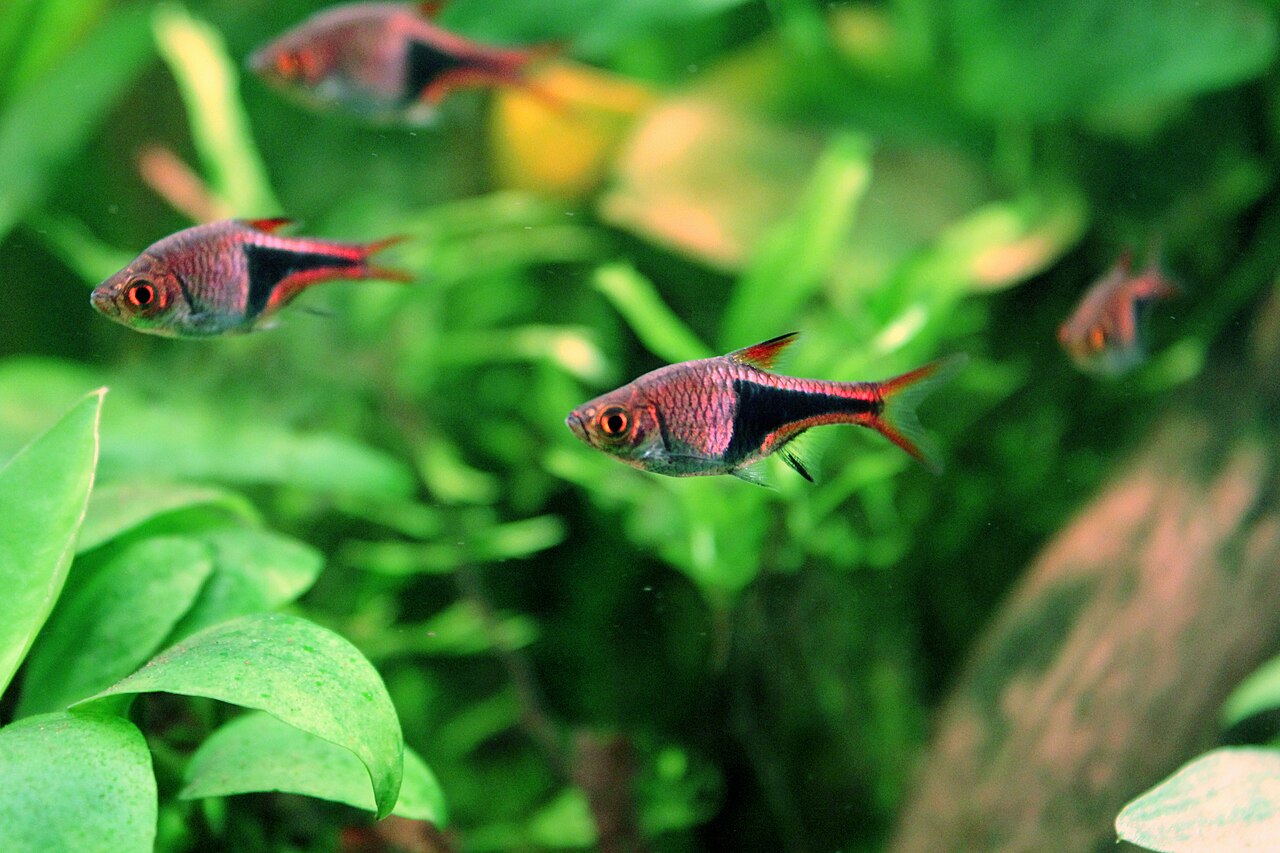
Harlequin Rasboras (Trigonostigma heteromorpha) are among the most popular schooling fish in the freshwater hobby. They stay small, show a distinctive black triangular patch, and add constant motion to the middle and upper levels of a planted tank. They are often recommended for beginners, but they still need a properly set up aquarium. A school can live for five years or more when water conditions stay stable. If you are comparing first setups, our best beginner fish tanks guide can help you choose the right foundation.
The biggest misconception is that a small fish can live in a tiny bowl. Harlequin Rasboras are active swimmers and need horizontal space. A 10-gallon tank is the practical floor, but a 20-gallon long is better for a full school. Before adding fish, your tank must complete the aquarium nitrogen cycle explained to avoid dangerous ammonia spikes. Once cycled, the tank becomes a safer, more stable home.
This guide follows the same approach used by trusted sources like Aqueon and Aquarium Co-Op, but every tank is slightly different. You will see exact water parameters, feeding routines, and tank mate picks. For planted tank ideas, see our best aquarium plants for beginners list. The goal is a healthy, active school rather than a single stressed fish.
What You’ll Need
- 10-gallon or 20-gallon long tank
- Sponge filter or hang-on-back filter
- 50-watt adjustable heater
- Thermometer
- Full-spectrum LED light
- API Freshwater Master Test Kit
- Water conditioner or dechlorinator
- Gravel vacuum
- Fish net
- Live or frozen micro foods
- Plants and driftwood
How Do You Care for Harlequin Rasboras?
- Set up a planted 10-gallon or larger tank
Start with a tank that gives the school room to swim. A 10-gallon tank is the practical minimum for 6 to 8 fish. A 20-gallon long is better for a group of 10 to 12 because it offers more horizontal space. Harlequin Rasboras mostly use the middle and upper water column. They rarely hug the bottom, so length beats height. You can compare good starter options in our best beginner fish tanks guide.
Add a gentle filter, a reliable 50-watt heater, and a full-spectrum LED light. A sponge filter or hang-on-back filter with adjustable flow works well. Avoid strong currents that push these small fish around. Place the heater near the filter outflow to spread warmth evenly. Keep a thermometer on the glass so you can check daily. If you prefer planted tanks, start with java fern, anubias, cryptocoryne, or water sprite. Our best aquarium plants for beginners list has details.
Use fine gravel, sand, or aqua soil as substrate. Dark substrate makes the rasbora’s orange and black wedge stand out. Add driftwood or Indian almond leaves for a soft blackwater look, but leave open swimming lanes. A cluttered tank stresses schooling fish because they need room to dart. That said, some floating plants at the surface help diffuse light and make them feel secure.
Set up the tank at least a week before you plan to add fish. This allows plants to settle and equipment to run. You can also check for leaks and temperature fluctuations. Once the hardscape is in place, start the cycling process. A stable setup before fish arrives prevents most early problems.

- Cycle the tank before adding fish
Never add Harlequin Rasboras to an uncycled tank. Ammonia and nitrite are toxic, and rasboras are sensitive even to low levels. Use a fishless cycle with pure ammonia or fish food. Follow our how to cycle a fish tank guide to build the beneficial bacteria first. This process usually takes four to six weeks.
After the cycle, test the water with a liquid kit. Look for 0 ppm ammonia, 0 ppm nitrite, and less than 20 ppm nitrate. Aqueon recommends stability over chasing perfect numbers. If you need to adjust pH, do it slowly over several days. Our how to lower pH in aquarium guide covers safe, natural methods.
Add fish in small groups over several weeks. A sudden spike in bioload can overwhelm the bacteria you just grew. Quarantine new arrivals for two to four weeks if you can. A separate 5-gallon or 10-gallon quarantine tank is enough. You can observe new fish for ich, velvet, or internal parasites before they join the display.
Never use soap or chemical cleaners in a fish tank. Rinse new equipment with warm water only. If you need to clean decor, use a dedicated bucket and brush. Maintain separate tools for the fish tank to avoid cross contamination.
- Maintain stable water parameters
Harlequin Rasboras tolerate a range, but stability matters most. Keep the temperature between 72 and 79 degrees Fahrenheit. Use a reliable adjustable heater like the Check the 50-watt aquarium heater on Amazon. pH should stay between 6.0 and 7.5, with soft to moderately hard water. Rapid swings in either direction cause stress.
Test the water weekly for at least the first two months. Use a liquid kit like the API Freshwater Master Test Kit for accurate readings. Ammonia and nitrite should always read zero. Nitrate should stay below 20 to 25 ppm. If your tap water is very hard or alkaline, blend it with reverse osmosis water.
Place the heater near the filter outflow so warm water circulates evenly. Small tanks cool off faster than large tanks. A failed heater can kill fish overnight, so a heater controller adds an extra layer of safety. Avoid placing the tank near windows, doors, or vents where temperatures swing.
Harlequin Rasboras do not demand blackwater, but they appreciate mild tannins. Indian almond leaves or driftwood release tannins slowly. This can lower pH slightly and add a natural tea color. That is normal and not a sign of dirt. For more on adjusting water chemistry, see the how to lower pH in aquarium guide.

- Feed a varied, small-particle diet
Harlequin Rasboras are micro predators in the wild. They eat small insects, crustaceans, and zooplankton. In the aquarium, feed a quality micro pellet or crushed flake as the staple. Fluval Bug Bites Tropical Formula is small enough for their mouths and has protein they need. Feed only what they can eat in two minutes.
Variety keeps colors bright and fish active. Add frozen or live foods like daphnia, baby brine shrimp, cyclops, and bloodworms two to three times per week. You can culture daphnia or brine shrimp at home, or buy frozen cubes from a local fish store. Two small feedings per day are better than one large feeding.
Remove uneaten food after a few minutes. Leftover food breaks down into ammonia and lowers water quality. If bottom feeders share the tank, use sinking pellets for them, but do not overfeed. For more on keeping water clean, see our how often to change aquarium water guide. Overfeeding is the most common cause of cloudy water in rasbora tanks.
Occasional spirulina flake can add plant matter, but rasboras are not heavy algae eaters. You can also offer finely chopped blanched vegetables, but most hobbyists stick to prepared micro foods. Keep food in a cool, dry place, and replace it every six months because vitamins degrade.
- Choose peaceful tank mates
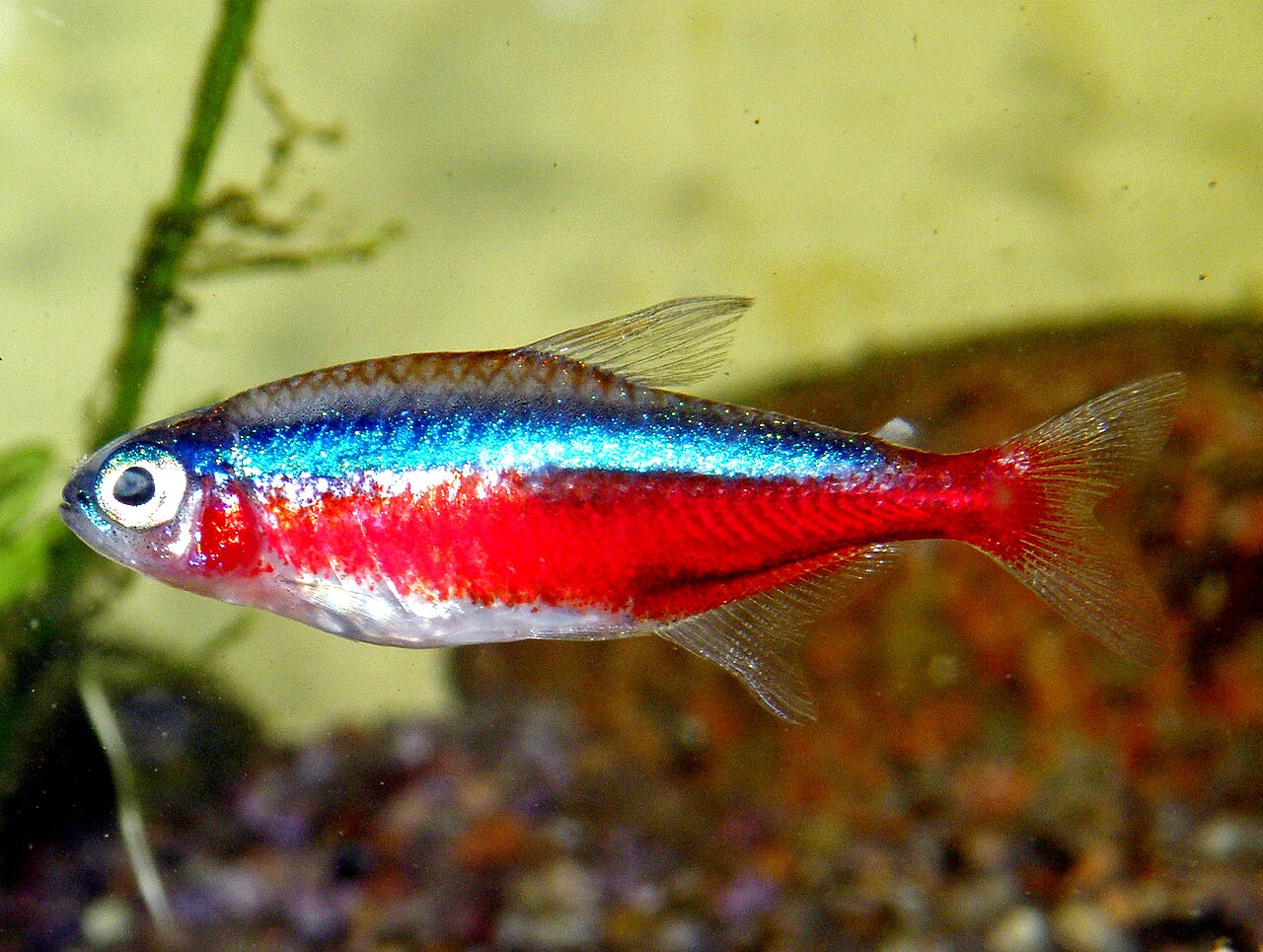
Harlequin Rasboras are peaceful schooling fish. They mix well with other small, non-aggressive community fish. Good choices include neon tetras, cardinal tetras, corydoras catfish, and dwarf gouramis. These species occupy different tank levels, so competition stays low.
Avoid large or nippy fish. Tiger barbs will nip fins, and large cichlids may eat rasboras. Most angelfish grow large enough to view them as food. A betta can work in a heavily planted 20-gallon tank, but have a backup plan if it becomes territorial. Our betta fish care guide explains safe introductions.
Keep Harlequin Rasboras in a group of at least 8, ideally 10 to 12. A larger school reduces stress and shows more natural behavior. When adding tank mates, consider each species’ adult size and bioload. Add two to three fish at a time and observe for chasing or hiding.
Shrimp and small snails are usually fine with adult rasboras. Cherry shrimp and amano shrimp will likely be ignored, but tiny shrimplets may get eaten. If you want to breed shrimp, set up a separate tank or provide dense moss cover.

- Perform regular water changes and maintenance
Change 20 to 30 percent of the water every week. Use a gravel vacuum to remove waste from the substrate. Treat tap water with a dechlorinator before adding it back. Match the new water temperature to the tank to avoid shocking the fish. For a sample schedule, read our how often to change aquarium water guide.
Rinse filter media in removed tank water, not tap water. Chlorine kills the beneficial bacteria that process waste. Replace disposable cartridges only when they are falling apart. Better yet, upgrade to reusable sponge or bio media. Our best aquarium filters roundup covers options for rasbora tanks.
Wipe down the glass and prune plants as needed. Remove dead leaves before they rot. Check the heater and filter during each water change to catch problems early. Look for leaks, loose hoses, or a stuck heater. Consistent maintenance prevents most diseases and keeps the tank looking clean.
Keep a log of water test results and feeding schedules. This helps you spot trends before problems appear. If nitrate creeps up, increase water change size or frequency. If pH drops too low, stop adding tannins and check your KH. Small, consistent changes beat large emergency corrections.
- Monitor health and encourage spawning
Healthy Harlequin Rasboras are active and hold their fins open. Watch for clamped fins, rapid breathing, white spots, or a loss of color. Many health problems trace back to poor water quality or a school that is too small. If you see white spots, start treatment quickly with a proven ich remedy. Our how to treat ich in aquarium guide outlines safe steps.
Harlequin Rasboras spawn in soft, warm water with broad-leaved plants. They place eggs on the underside of leaves rather than scattering them. To encourage breeding, feed live foods heavily for a week, raise the temperature slightly, and lower the water level. Remove adults after spawning to protect the eggs.
Most hobbyists keep rasboras for their looks and behavior, not breeding. Still, a healthy planted tank may produce fry without extra effort. Fry are tiny and need infusoria or liquid fry food until they can take baby brine shrimp. Grow them in a separate tank until they are large enough to join the school.
Do not use medications unless you know the problem. Some treatments are harsh on scaleless fish and plants. Start with a large water change and observation. If symptoms persist, use a broad-spectrum medication in a quarantine tank rather than the display tank.
Red Flags & Warnings
- 🚨 Do not keep Harlequin Rasboras in an uncycled tank. Ammonia and nitrite spikes can kill a whole school within days.
- 🚨 Never add all fish at once. A sudden bioload increase can crash a new cycle and stress the rasboras.
- 🚨 Avoid large or aggressive tank mates. Fish like tiger barbs or large cichlids will chase and eat these small rasboras.
- 🚨 Do not feed large pellets or oversized food. Harlequin Rasboras have small mouths and can choke or ignore food, which pollutes the water.
- 🚨 Quarantine new fish before adding them to a display tank. One sick fish can introduce ich or velvet to the whole school.
- 🚨 Do not skip water changes because the water looks clear. Dissolved waste still builds up and lowers pH dangerously.
Frequently Asked Questions
Can Harlequin Rasboras live in a 5-gallon tank?
No, a 5-gallon tank is too small. They need a 10-gallon tank at minimum, and a 20-gallon long is better for a school of 10 or more. Small tanks concentrate waste quickly and restrict their active swimming.
How many Harlequin Rasboras should be kept together?
Keep at least 8 together. They are schooling fish and become stressed in groups smaller than 6. A larger group of 10 to 12 shows more natural behavior and better color.
What do Harlequin Rasboras eat?
They eat small meaty foods. Feed micro pellets or crushed flakes daily, and add frozen or live daphnia, baby brine shrimp, or bloodworms several times a week. Remove uneaten food within a few minutes.
Are Harlequin Rasboras good with shrimp and snails?
Adult Harlequin Rasboras are safe with snails and most shrimp. They may eat tiny baby shrimp, but adult cherry shrimp and amano shrimp are usually ignored.
How can you tell male and female Harlequin Rasboras apart?
Males are slightly smaller and slimmer with a sharper black wedge. Females are rounder in the belly and often a bit larger, especially when full of eggs. The differences are subtle outside breeding season.
Why are my Harlequin Rasboras pale or hiding?
Pale color and hiding usually point to stress from poor water quality, aggressive tank mates, or a group that is too small. Test the water, increase the school size, and check for signs of disease.
What Should You Remember?
- Tank size: Use at least a 10-gallon tank, but a 20-gallon long is better for a full school.
- School size: Keep at least 8 Harlequin Rasboras to reduce stress and encourage natural behavior.
- Water parameters: Maintain 72 to 79 degrees Fahrenheit and pH 6.0 to 7.5 with zero ammonia and nitrite.
- Diet: Feed micro pellets plus frozen or live daphnia, baby brine shrimp, and bloodworms.
- Compatibility: Choose peaceful tank mates like tetras, corydoras, and dwarf gouramis.
- Maintenance: Change 20 to 30 percent of the water weekly and rinse filter media in tank water.
- Quarantine: Isolate new fish for two to four weeks before adding them to the display tank.
This article is for general information only and is not a substitute for professional veterinary or aquarium specialist advice. Always research the specific needs of your fish and consult an expert before making care decisions.