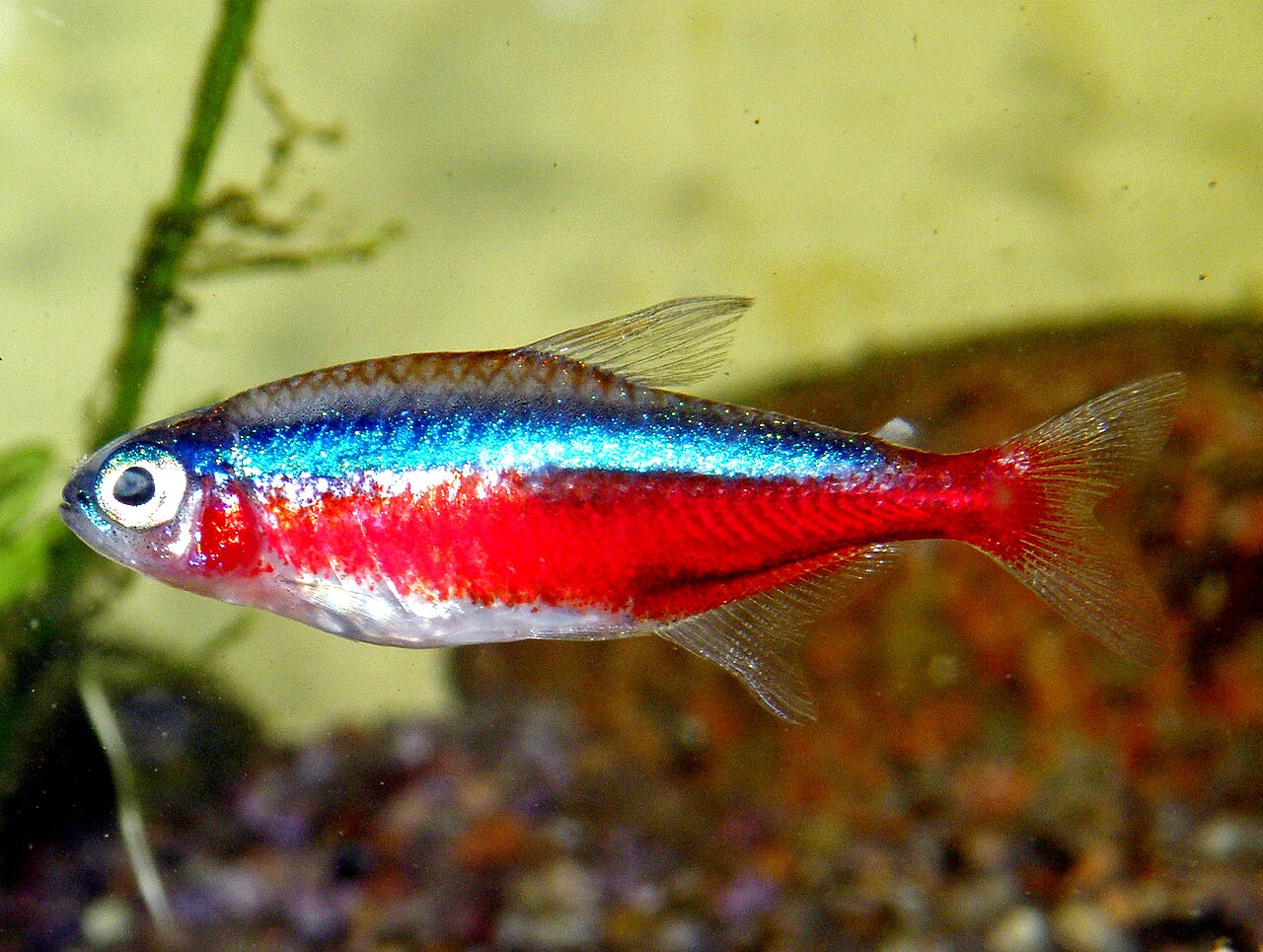
Cardinal tetras (Paracheirodon axelrodi) are among the most recognizable freshwater fish in the hobby. Their vivid blue stripe and full red lower body create a moving ribbon of color in a planted aquarium. Many aquarists confuse them with neon tetras, but cardinals have a longer red band that extends across most of the lower body. This guide covers tank size, diet, water conditions, and compatible tankmates. If you are new to schooling fish, check the neon tetra care guide for a close comparison before you decide.
Cardinals come from the upper Orinoco and Negro river basins in South America. These waters are soft, acidic, and often stained brown by tannins from decaying leaves. Replicating those conditions reduces stress and encourages bright coloration. Before adding any fish, make sure you understand the aquarium nitrogen cycle explained so harmful ammonia and nitrite do not spike. A stable tank is the foundation of long-term cardinal tetra health.
The right setup does not have to be complex. A 20-gallon long tank, a gentle filter, a reliable heater, and plenty of plants will support a strong school. Cardinal tetras are small, reaching about 2 inches as adults, but they are active and need horizontal swimming space. You will also want a tight-fitting lid because startled tetras can jump. Start with the basics and build from there.
Many keepers choose cardinals as a first schooling fish because they are hardy once settled. Still, they are sensitive to sudden changes in water chemistry, especially during the first few weeks. This guide walks through the exact steps to set up, stock, and maintain a healthy group. We will also point out common mistakes that lead to losses. With the right setup, cardinal tetras can live four to five years in captivity.
What You’ll Need
- 20-gallon long aquarium
- Adjustable aquarium heater
- Gentle filter, sponge or hang-on-back
- Liquid water test kit
- Driftwood or Indian almond leaves
- Fine-grained flake or micro pellet food
How Do You Care for Cardinal Tetras?
- Set Up a 20-Gallon Planted Tank
Start with the tank. Adult cardinal tetras reach about 2 inches in length, but they are active swimmers that need horizontal room. A 20-gallon long tank is the practical minimum for a school of eight to ten fish. The longer footprint gives the group space to dart and display natural schooling behavior. A standard 10-gallon can work temporarily, but it limits stocking and makes water parameters harder to keep stable. If you are still choosing a setup, read our best beginner fish tanks guide to compare options.
Add plants and hardscape. Java fern, Anubias, and Amazon sword are easy choices. Floating plants like frogbit or Salvinia help diffuse lighting and make cardinals feel secure. Driftwood and Indian almond leaves release tannins that soften water and create the darker look these fish prefer. A reliable heater keeps the water stable. Check the aquarium heater on Amazon before you set up the tank.
Choose a gentle filter. Cardinal tetras come from slow-moving waters, so a strong powerhead can exhaust them. A sponge filter or a hang-on-back filter set to low flow works well. Provide some open swimming space in the front and plant cover in the back. This layout reduces stress and brings out the most color.

- Use Soft, Acidic Water with Stable Parameters
Cardinal tetras need soft, acidic water. In the wild, they live in blackwater streams where pH often sits between 4.6 and 6.2. Hardness should be low, roughly 2 to 6 dGH. The temperature should stay between 73 and 81 degrees Fahrenheit, with 78 degrees Fahrenheit as a good target. Aqueon notes that stable parameters matter more than chasing a single perfect number.
Test your source water before buying fish. If your tap water is hard and alkaline, you may need to mix it with reverse osmosis water. You can also use Indian almond leaves, driftwood, or a commercial blackwater extract to lower pH gradually. Avoid chemical pH adjusters that swing quickly. Read our guide on how to lower pH in an aquarium for safe methods.
Use a liquid test kit to monitor pH, ammonia, nitrite, and nitrate. Test strips are convenient but less reliable. Check the liquid water test kit on Amazon if you need one. Once the tank is set up, do not add cardinals until the nitrogen cycle is complete.

- Cycle the Tank Before Adding Cardinals
Cardinal tetras are sensitive to ammonia and nitrite. A new tank must be fully cycled before any fish go in. The nitrogen cycle grows beneficial bacteria that convert ammonia into nitrite and then into less toxic nitrate. Without this cycle, waste builds up fast and burns gills. Our aquarium nitrogen cycle explained guide breaks down the process in detail.
Fishless cycling is the safest method. Add a pure ammonia source to an empty tank, then wait for bacteria to colonize the filter and substrate. This usually takes four to eight weeks. You can speed it up with bottled bacteria, but do not rely on chemical shortcuts alone. Aquarium Co-Op recommends testing daily during the cycle so you can see the ammonia spike fall and nitrite rise.
Only add cardinal tetras when ammonia and nitrite read 0 ppm. Nitrate should be below 20 ppm before stocking. Do a large water change before adding fish to lower any accumulated nitrate. Rushing this step is the most common reason new cardinal tetras die within the first week.
- Introduce a School of at Least 8 to 10 Cardinals
Cardinal tetras are schooling fish. A group of fewer than eight will stay stressed, hide constantly, and may refuse to eat. Aim for at least eight to ten fish in a 20-gallon long. If you have more space, a group of twelve to fifteen looks even better and spreads out aggression. They do not fight much, but a larger school makes each fish feel safer.
Quarantine new fish before adding them to your display tank. A separate 10-gallon quarantine tank lets you watch for ich, fungus, or parasites for two to four weeks. Cardinal tetras are often wild-caught, so quarantine is especially important. You can also treat with medication in quarantine without harming plants or invertebrates in the main tank.
Acclimate slowly. Float the bag for 15 minutes, then drip water from the tank into the bag over 30 to 45 minutes. Turn the tank lights off for the first few hours after release. This reduces shock. If you already keep neons, you can follow similar stocking advice in our neon tetra care guide.
- Feed a Small, Varied Diet Twice a Day
Feed small foods twice a day. Cardinal tetras have tiny mouths, so standard flake pieces may be too large. Crush flakes between your fingers or choose micro pellets designed for small tetras. Check the micro pellets on Amazon for a clean, dry option. Their diet should be varied.
Offer live or frozen foods a few times per week. Baby brine shrimp, daphnia, cyclops, and mosquito larvae are excellent. Frozen foods are convenient and less likely to introduce disease than live foods. You can also feed finely chopped bloodworms occasionally. Variety improves color and encourages natural foraging behavior.
Feed only what the fish eat in about two minutes. Uneaten food sinks, rots, and produces ammonia. If food reaches the bottom, you are feeding too much. A fast day once a week can help prevent digestive issues. Still, do not starve new arrivals. Watch them at feeding time to make sure every fish gets a share.

- Choose Peaceful Tankmates
Choose peaceful tankmates. Cardinal tetras do best with other small fish that tolerate soft, acidic water. Good options include rummy nose tetras, harlequin rasboras, and corydoras catfish. Small dwarf cichlids like Apistogramma can work in a large enough tank, but watch for territorial behavior during breeding. Our harlequin rasbora care guide offers another schooling option.
Avoid large or aggressive fish. Angelfish may eat adult cardinal tetras, especially as they grow. Read our angelfish care guide to understand why these cichlids are poor tankmates for small tetras. Tiger barbs and other nippy species can shred fins. Even peaceful-looking fish that grow too large will stress cardinals simply by occupying the upper water column.
Keep the tank lightly stocked. A 20-gallon long with ten cardinals, six corydoras, and a small school of rasboras is about right. More fish means more waste and more competition. Cardinal tetras are shy eaters, so avoid fast-moving tankmates that will outcompete them for food.
- Maintain Water Quality with Weekly Upkeep
Perform a 25 to 30 percent water change each week. Use a siphon to remove waste from the substrate and replace it with dechlorinated water that matches the tank temperature. Sudden changes in pH or hardness can shock cardinal tetras, so prepare water in a bucket before adding it. Our how often to change aquarium water guide explains how to build a schedule.
Clean the filter only when flow slows down. Rinse filter media in old tank water, never under the tap, to preserve beneficial bacteria. If you use a sponge filter, squeeze it gently in a bucket of tank water. Replace disposable cartridges sparingly, or switch to reusable media. Read our best aquarium filters for 2026 guide to find a reliable option.
Test the water weekly for ammonia, nitrite, nitrate, and pH. Watch the fish for signs of stress like clamped fins, pale color, or rapid breathing. Stable, clean water is the best prevention for disease. If you notice problems, act quickly. A consistent maintenance routine keeps cardinal tetras bright and active for years.
Red Flags & Warnings
- 🚨 Never add cardinal tetras to an uncycled tank. Ammonia and nitrite spikes damage gills and can kill the whole school within days.
- 🚨 Avoid hard, alkaline water. A pH above 7.0 and high mineral content cause chronic stress, dull color, and shorter lifespans.
- 🚨 Do not keep cardinal tetras with angelfish, tiger barbs, or large cichlids. These fish may eat or harass them.
- 🚨 Quarantine new fish for at least two weeks. Wild-caught cardinals often carry parasites that can spread to your display tank.
- 🚨 Do not overfeed. Uneaten food rots and raises ammonia, which is especially dangerous in a small, soft-water tank.
- 🚨 Match new water to tank water during changes. Sudden pH or temperature swings cause shock faster than poor water quality.
Frequently Asked Questions
What size tank do cardinal tetras need?
A 20-gallon long tank is the best minimum for a school of eight to ten cardinal tetras. A smaller tank can work temporarily but makes stable water parameters harder to maintain.
Can cardinal tetras live with neon tetras?
Yes, cardinal tetras and neon tetras can share a tank. They may school together, but cardinals need slightly warmer, softer water, so choose a setup that suits both.
What temperature do cardinal tetras prefer?
Keep the water between 73 and 81 degrees Fahrenheit. A stable 78 degrees Fahrenheit is the sweet spot and encourages activity and feeding.
Are cardinal tetras sensitive to water changes?
Yes, they are sensitive to sudden shifts in pH, hardness, and temperature. Change 25 to 30 percent weekly and always match new water to the tank.
What should I feed cardinal tetras?
Feed small crushed flakes, micro pellets, and live or frozen foods like baby brine shrimp, daphnia, and cyclops. Offer food twice a day in tiny portions.
How long do cardinal tetras live?
With clean, stable water and a good diet, cardinal tetras typically live four to five years. Some may reach six years in ideal conditions.
What Should You Remember?
- Tank size: Use a 20-gallon long tank for a school of at least eight to ten cardinal tetras.
- Water parameters: Keep water soft and acidic with a pH of 4.6 to 6.2 and a temperature of 73 to 81 degrees Fahrenheit.
- School size: Add at least eight fish. A larger group reduces stress and shows natural schooling behavior.
- Diet: Feed small, varied foods twice daily and remove uneaten food within a few minutes.
- Tankmates: Choose peaceful, soft-water species like rasboras, corydoras, and small tetras.
- Maintenance: Change 25 to 30 percent of the water weekly and test parameters often.
This article is for general information only and is not a substitute for professional veterinary or aquarium specialist advice. Always research the specific needs of your fish and consult an expert before making care decisions.