Many new fishkeepers test their aquarium water and panic when pH reads 7.8 or 8.0. The first rule is simple: most freshwater fish tolerate a range better than they tolerate sudden change. A stable pH that is slightly high usually beats a rapid drop to the exact number shown in a care sheet. Before you add any product or leaf, learn the safe ways to lower pH in an aquarium and what works long term. The goal is not a single magic number, but a stable range your fish can thrive in.
Your water’s pH is tied to KH, the carbonate hardness that buffers pH. If KH is high, pH resists change. That is why some home remedies fail. According to Aquarium Co-Op, stable pH is more important than hitting an exact value. This guide covers natural and commercial options, from Indian almond leaves to reverse osmosis. You will also learn how to avoid the biggest mistake: dropping pH too fast and harming the aquarium nitrogen cycle.
The methods below work for freshwater tanks, planted tanks, and soft water species. Some methods are better for small tanks, others for large systems. You do not need every item. Pick one or two methods, apply them slowly, and test daily. A 20-gallon community tank with livebearers may not need lower pH at all. But a 40-gallon discus tank often does. Use the guide to match your setup and avoid changing parameters your fish already like.
We will cover test kits, natural botanicals, driftwood, peat, CO2 injection, and commercial buffers. Each step explains what to do, why it matters, and how to avoid common mistakes. Start with data, not guesswork. The target is a stable pH range that matches your fish, not a chase for a magic number. When you finish, you will have a safe, repeatable process for adjusting pH without stressing your aquarium.
What You’ll Need
- API Freshwater Master Test Kit
- KH test kit
- Thermometer
- Clean bucket
- Indian almond leaves or alder cones
- Mopani driftwood or peat moss
- Reverse osmosis unit or distilled water
- Seachem Acid Buffer or API pH Down
- Water conditioner
How Do You Lower pH in an Aquarium?
- Test Your Current Water Parameters First
Before adding anything, test both tap water and tank water. Use a liquid test kit. The API Freshwater Master Test Kit measures pH, ammonia, nitrite, and nitrate. Test strips can work, but liquid kits are more accurate. Fill a clean test tube, add the pH reagent, and read the color under good light. Also test KH because KH controls how much pH will resist lowering. Without a KH number, you are guessing.
Record the pH of your tap water after it sits for 24 hours. Tap pH often changes as CO2 off-gasses. A sample may read 7.0 from the tap but rise to 8.0 after a day. That rise tells you your water has enough KH to buffer pH. If tank water is 8.0 and tap settled water is 8.0, the pH problem is from your source water, not your tank. If tank water is lower, something in the tank already lowers pH.
Test at the same time of day because pH shifts between morning and night in planted tanks. Plants and algae consume CO2 during light hours, so pH rises. At night, respiration adds CO2, so pH falls. A reading at 7.8 in the morning and 7.2 at night is normal. Do not react to one reading. Look for a daily trend over two or three days.
Aqueon’s water care guidance reminds keepers that pH is logarithmic. A change from 7.0 to 6.0 is ten times more acidic, not one unit. That is why small numeric drops matter. If your KH is below 3 dKH, pH can shift quickly. If KH is above 8 dKH, natural methods will work slowly. Use these numbers to choose your next step carefully. For more detail on water quality issues, read Aqueon before starting.
If ammonia or nitrite is present, fix that before pH. Lowering pH in an uncycled or stressed tank can make ammonia less toxic temporarily, but it can also stall the cycle. Read how to cycle a fish tank before major water changes. This step sets your baseline. Without good data, every other step is a roll of the dice.

- Identify Your Fish and Plant pH Needs
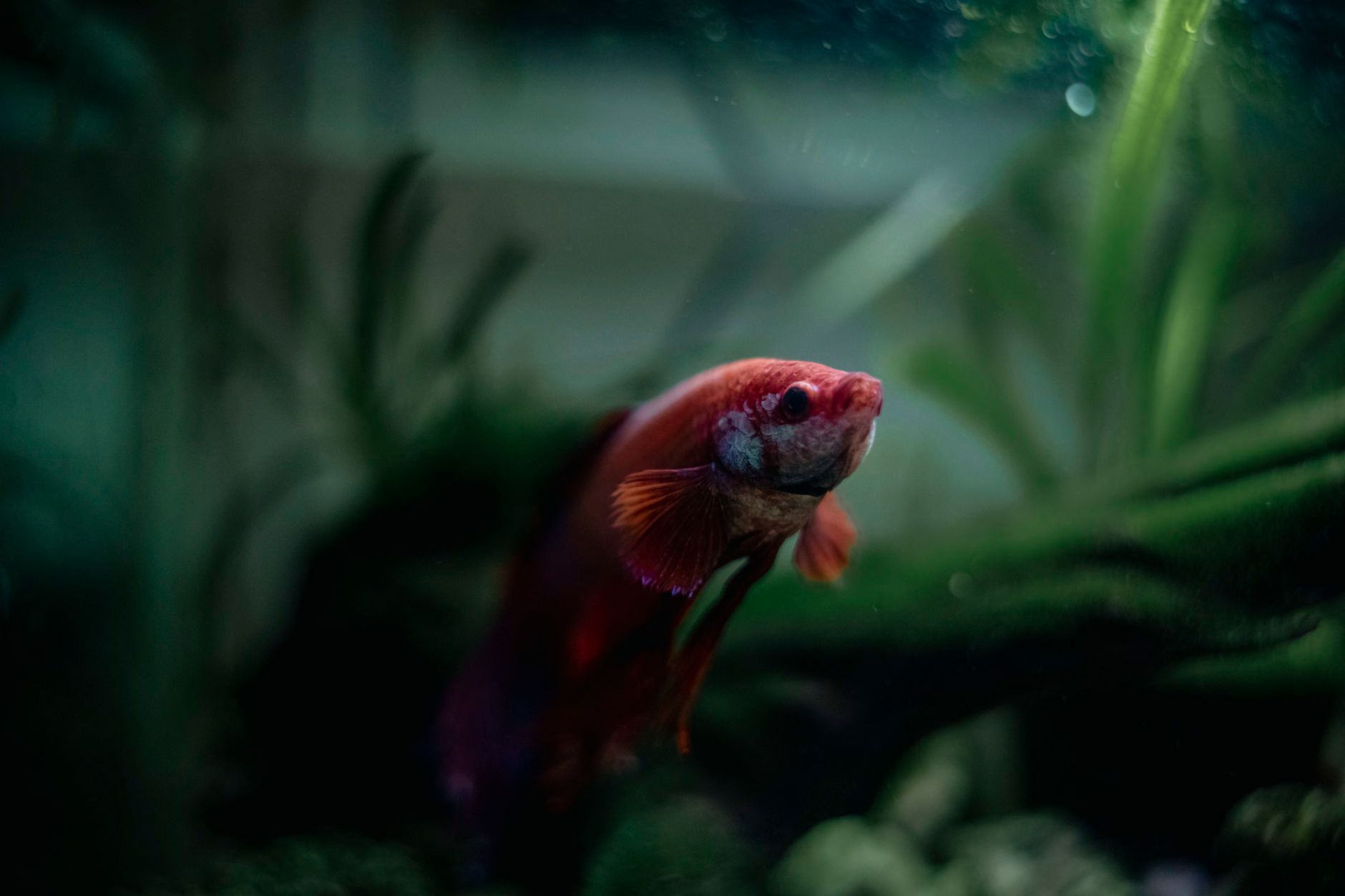
Different fish evolved in different water chemistry. A betta fish care guide may list a wide range of 6.5 to 8.0, but wild bettas prefer soft acidic water. Neon tetras and cardinal tetras prefer 5.5 to 7.0. Discus often need 6.0 to 7.0. African cichlids prefer 7.8 to 8.6 and should not be forced into acidic water. Match methods to the species in the tank.
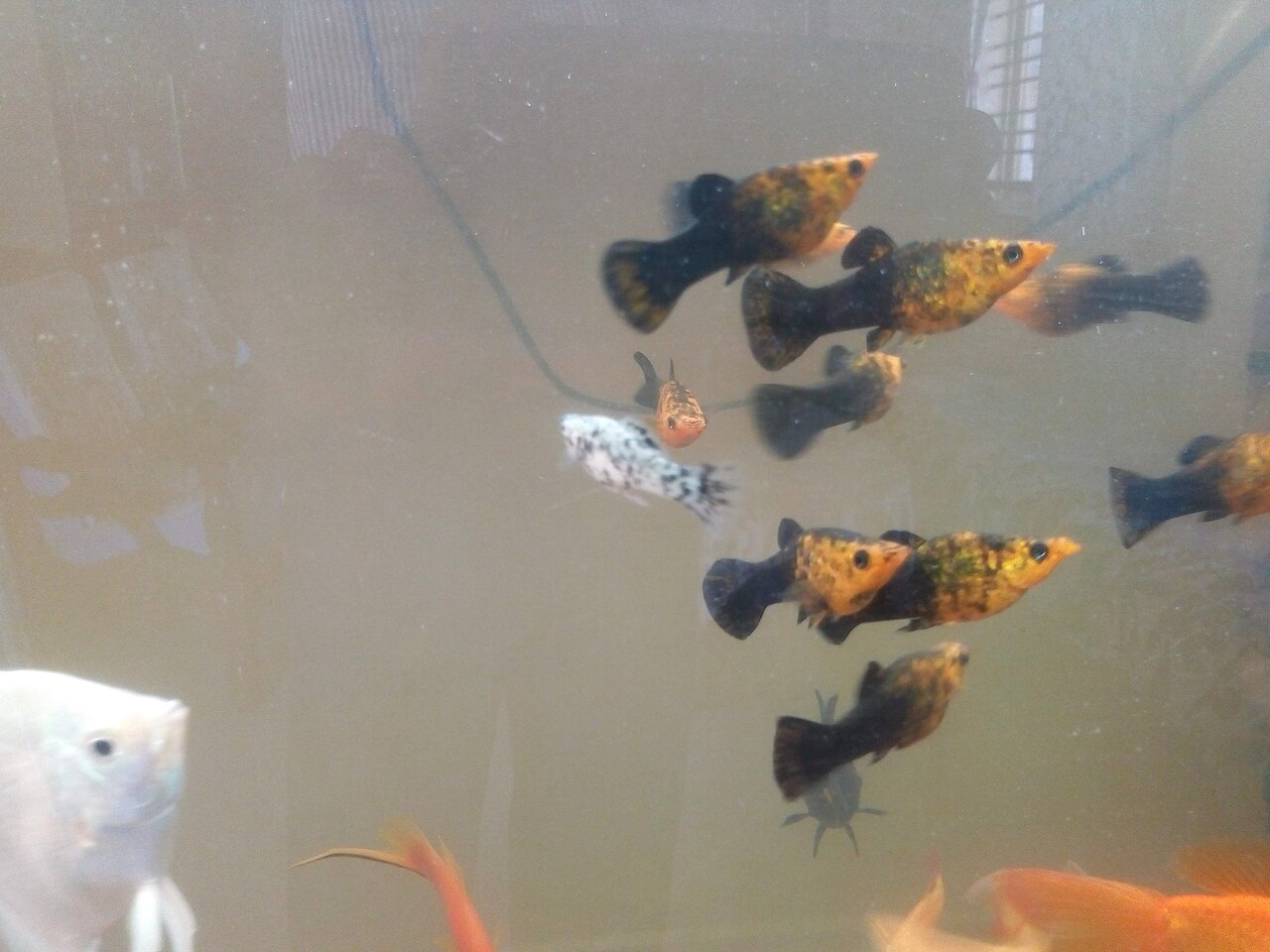
Even within a community tank, target the fish with the narrowest needs. A 55-gallon tank with angelfish and tetras can do well at pH 6.8. A 20-gallon livebearer tank with platies and guppies does not need lower pH. If your fish are thriving and breeding, do not change pH. Most captive bred fish tolerate a wider range than wild caught species.
Plants also affect pH. Fast growing stems and floating plants consume CO2 during light hours, which can raise pH. At night the reverse happens. If you run CO2 injection, pH will be lower while CO2 is running. Decide whether you are lowering pH for fish, plants, or both. A planted tank may do well at pH 6.8 to 7.2 with moderate CO2.
Look up your exact species before choosing a number. Write down the acceptable range for each fish. If the ranges overlap, aim for the middle. If they do not overlap, do not try to keep those fish together. This step prevents you from forcing a pH change that one fish cannot handle. It also tells you how far you need to go. A change from 8.0 to 7.4 is very different from a change from 8.0 to 6.0.
- Choose the Right pH-Lowering Method for Your Tank
The safest natural methods for lowering pH are botanicals, driftwood, peat, and reverse osmosis water. Botanicals like Indian almond leaves release tannins and humic acids. Driftwood does the same over months. Peat moss in a filter bag adds organic acids. RO water dilutes minerals and KH. Commercial buffers work faster but require careful dosing. Pick one method first. You can combine methods after you see how your water responds.
For a small tank under 20 gallons, Indian almond leaves or a small piece of mopani driftwood often lower pH by 0.3 to 0.5 over a week. For a larger tank, peat in the filter or an RO unit is more practical. A 75-gallon tank may need frequent botanicals or a plumbed RO system. Do not start with a chemical pH down product unless your KH is very high and you have a specific soft water species.
Each method has trade-offs. Leaves and driftwood tint water brown. Peat also stains and can clog filter floss. RO water requires a unit and remineralization. CO2 injection only lowers pH while gas is running. Commercial buffers can overshoot if dosed wrong. Think about maintenance you will actually do. Natural tannins are low effort but slow. RO gives control but adds plumbing.
Do not mix pH lowering methods without a plan. Adding acid buffer plus leaves plus CO2 can cause pH to crash below 6.0 overnight. Fish gills and kidneys are sensitive to large swings. If your tap water is liquid rock with a KH above 12 dKH, natural botanicals may barely move pH. In that case, RO dilution is the better starting point. For a tank that needs very soft water, check the discus care guide for target numbers. Test KH first, then choose one method and stick with it until you see stable results.
- Prepare and Add Natural pH-Lowering Materials
Start with clean, aquarium-safe materials. Boil Indian almond leaves for 5 to 10 minutes to remove surface debris and help them sink. Soak new driftwood in a bucket for one to two weeks, changing water every few days. This removes excess tannins and leaches out some organics. For peat, use pure sphagnum peat moss without fertilizers or additives. Place it in a fine mesh bag inside your filter. Do not use garden center peat that may contain pesticides.
Add botanicals slowly. For a 10-gallon tank, start with one medium Indian almond leaf or a small alder cone. For a 55-gallon tank, start with three to five leaves or two medium cones. Too much organic matter can reduce oxygen as it decomposes and make the water overly dark. You can always add more next week. You cannot easily remove the effect once it is soaked in. Start low and observe.
Place driftwood where water flows through it. A 12-inch piece of mopani driftwood in a 40-gallon tank may lower pH by 0.3 to 0.5 over several weeks. If you already have a strong filter, the tannins spread evenly. Rinse the wood after soaking and monitor pH every two days. If pH drops too fast, remove the wood and do a small water change. The staining is harmless, but the pH shift is not.
Peat moss is potent. Start with a golf ball sized amount in a filter bag for a 20-gallon tank. Replace or remove it after one week if pH falls below your target. Peat can also lower KH over time because the acids consume carbonates. This makes future pH swings easier. Test KH weekly when using peat long term. This method works best when you also know your starting hardness.

- Use Reverse Osmosis or Distilled Water for Dilution
The most predictable way to lower pH in hard tap water is dilution with reverse osmosis (RO) or distilled water. These waters have nearly zero minerals and very low KH. Mixing them with tap water reduces carbonate hardness proportionally. A 50/50 mix of tap and RO water typically cuts KH in half. If your tap KH is 8 dKH, a 50/50 mix gives about 4 dKH, which makes pH easier to move.
For a 20-gallon water change, replace 10 gallons of tap water with 5 gallons tap and 5 gallons RO. Do this gradually over several changes. Do not switch a tank to pure RO water because fish need some minerals for osmoregulation. Most freshwater fish do best with at least 2 to 4 dKH and some GH. Remineralize if you use mostly RO.
RO units cost more than botanicals but pay off in the long run. A typical 4-stage RO system can produce 50 to 100 gallons per day. Store RO water in a food-safe container. Do not add RO water directly to the tank in large amounts. Small water changes spread the change over days. This method is ideal for discus keepers and soft water planted tanks. For a schedule that supports stable parameters, follow how often to change aquarium water.
If you use distilled water from jugs, check the label for added minerals. Some distilled water has electrolytes for taste. You can use a TDS meter to confirm near 0 ppm. Mix it with tap water before adding to the tank. This avoids thermal shock and lets you match temperature. Heat the mix to within 2°F of the tank before adding.

- Apply Commercial pH-Lowering Products Gradually
Commercial products like Seachem Acid Buffer or API pH Down can lower pH in minutes. They work best in soft or moderate KH water. In high KH water, they may not work as expected because carbonates fight the acid. Always dose less than the label suggests first. The company instructions often assume a certain KH and volume. Your tank may respond faster or slower.
For example, Seachem Acid Buffer converts KH to CO2 and lowers pH. Start with one quarter of the recommended dose for your tank volume. Mix the powder or liquid in a cup of tank water first. Pour it near filter outflow, not directly onto fish. Wait one hour and retest pH. If pH has not moved enough, wait at least 24 hours before adding more.
Never use household acids like vinegar, lemon juice, or citric acid. These are not safe as long term pH controls. They cause rapid swings and can harm fish gills and beneficial bacteria. They also do not provide stabilizing minerals. Commercial aquarium buffers are formulated with the right acids and buffers. That said, even commercial buffers can crash pH if you overdose.
If you keep shrimp or scaleless fish like corydoras catfish, be extra careful with acid buffers. These animals are sensitive to sudden chemistry changes. Use half doses and test twice daily. If pH drops more than 0.3 in one hour, do a small water change with dechlorinated tap water to pull it back. This step is for keepers who need a controlled nudge, not a quick fix.
- Monitor pH Daily and Adjust Slowly
While lowering pH, test once per day at the same time. Write down pH, KH, and temperature. Fish behavior also gives clues. If fish gasp at the surface, clamp fins, or hide, stop the process and test ammonia and nitrite. A pH change can stress fish even if the number looks fine. Slow is safe. A drop of 0.2 per day is plenty for most tanks.
If pH drops more than 0.4 in 24 hours, do a 10 to 20 percent water change with dechlorinated tap water. This will dilute whatever is lowering pH and raise it slightly. Then remove some of the tannin material or reduce the CO2. The goal is not to reverse the entire change, just to slow it down. Your fish need time to adjust.
For betta tanks, test before every change. Bettas are hardy but prolonged pH swings weaken their immune system. For community tanks, a weekly log helps you spot trends. If pH swings between 6.4 at night and 7.2 during the day with CO2, that is normal. But if the baseline drifts downward each day, your method is too strong.
Temperature also affects pH readings and fish metabolism. Warmer water holds less CO2 and can lower pH. A 5°F increase can change pH by 0.1 or more in some setups. Keep the tank at a stable temperature with a reliable best aquarium heaters 2026 unit. Do not change temperature and pH at the same time. One variable at a time.
- Maintain pH Stability with Water Changes and Buffers
Lowering pH is only half the work. The real goal is stable pH. Your tap water will keep adding back KH and high pH during water changes. If you use RO water, stick to the same mix ratio every time. If you use peat or botanicals, replace them before they exhaust. Sudden removal of tannins can cause pH to rise. Consistency beats precision.
A 10 to 20 percent water change every week helps remove organic acids that can accumulate. If your tank pH drifts lower over time, it may be from decomposing waste. Regular maintenance prevents pH crashes. Vacuum the substrate and clean filter media in old tank water. This keeps the nitrogen cycle strong and pH stable.
If your tap water pH changes seasonally, test before each water change. Some municipal water systems adjust pH in winter or summer. A change from 7.2 to 8.0 in your tap can shock a soft water tank. Let tap water age for 24 hours with an air stone. This off-gasses CO2 and reveals the true pH. Then adjust your mix or additives accordingly.
For a 55-gallon tank with tetras and gentle fish, a stable pH between 6.5 and 7.0 works well. Do not chase 6.5 if your tap holds 7.4 without RO. Stability plus good nutrition and clean water matters more than an exact pH number. Log your readings and make one small change at a time.

Red Flags & Warnings
- 🚨 Never lower pH by more than 0.3 per day. Fast drops damage gill membranes and can kill fish.
- 🚨 Do not use vinegar, lemon juice, citric acid, or other household acids. They are not buffered and can crash pH.
- 🚨 High KH will resist natural pH lowering. Test KH before expecting results. You may need RO water instead of leaves.
- 🚨 Remove botanicals or peat gradually. Sudden removal can spike pH upward, which is just as dangerous.
- 🚨 Do not combine CO2 injection with acid buffers without daily testing. pH can drop below 6.0 overnight.
- 🚨 Never pour liquid chemicals directly onto fish. Mix products in a separate cup of tank water first.
Frequently Asked Questions
What is the fastest safe way to lower pH in an aquarium?
The fastest controlled method is a commercial acid buffer dosed in small amounts. Start with a quarter dose, mix it in a cup of tank water, and test after one hour. Reverse osmosis water also works but requires mixing. Do not chase a fast drop because rapid change harms fish.
Can I use vinegar or lemon juice to lower my aquarium pH?
No. These are unbuffered household acids that can cause sudden pH crashes and stress fish. They do not provide stable KH or long term control. Use aquarium-specific products, botanicals, or RO water instead.
Will driftwood lower pH in my aquarium?
Driftwood can lower pH slowly over weeks by releasing tannins and organic acids. A 12-inch piece of mopani driftwood in a 40-gallon tank may drop pH by 0.3 to 0.5. Results depend on KH and water flow. Boil or soak it first to reduce excess staining.
How much Indian almond leaf should I use per gallon?
Start with one medium Indian almond leaf per 10 gallons of water. For stronger effect, use one per 5 gallons, but add gradually. Monitor pH daily and remove leaves if pH drops too much. Boiling leaves first helps them sink.
Does lowering pH affect the nitrogen cycle?
Yes. Beneficial bacteria slow down below pH 6.0 and can stall the cycle. Test ammonia and nitrite during any pH adjustment. If you must lower pH in a cycling tank, do it very slowly. A cycled tank with pH above 6.5 remains stable.
How often should I test pH while lowering it?
Test once per day at the same time while making changes. If using CO2 or acid buffers, test twice per day. Record pH and KH. After pH stabilizes, test before and after weekly water changes.
What Should You Remember?
- Test first: Measure pH and KH before adding anything. You need the KH number to pick a method.
- Slow changes only: Drop pH by no more than 0.2 to 0.3 per day. Fast swings kill fish.
- Match the fish: Research your species because a betta tolerates a wider range than a discus.
- Natural methods work: Indian almond leaves, driftwood, and peat lower pH but take days or weeks.
- RO water dilutes hardness: Mix tap with RO water to cut KH and lower pH predictably.
- Avoid household acids: Vinegar and lemon juice crash pH and stress fish.
- Maintain stable pH: Regular water changes and consistent mix ratios keep pH from bouncing.
This article is for general information only and is not a substitute for professional veterinary or aquarium specialist advice. Always research the specific needs of your fish and consult an expert before making care decisions.