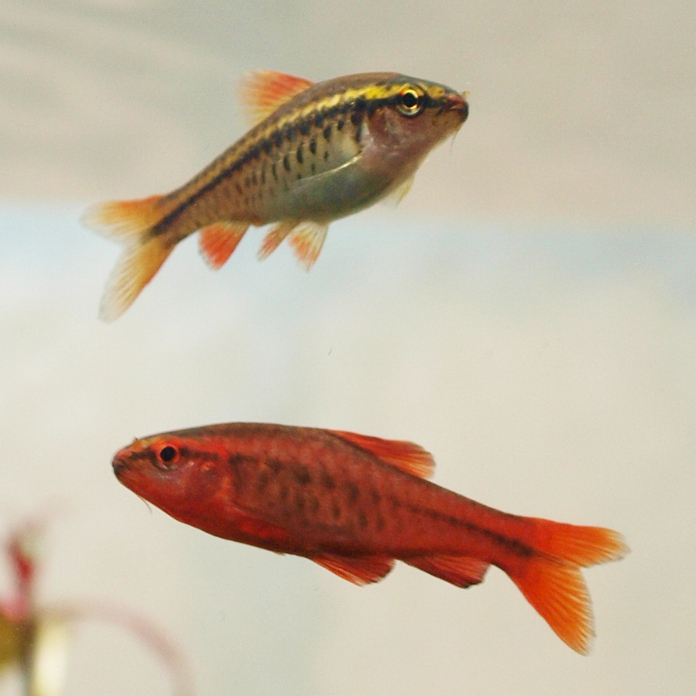
Cherry barbs are one of the most underrated freshwater fish for community tanks. They stay small, rarely bother other fish, and the males turn a brilliant red when they are comfortable. Unlike some bright fish that hide all day, cherry barbs stay visible and active. Their calm nature makes them a solid choice for many beginners. If you want a colorful schooling fish that will not tear up plants or chase tank mates, this species deserves a closer look. See our best fish for beginners guide for other easy options.
The species comes from slow moving streams and shaded pools in Sri Lanka. These habitats have leaf litter, overhanging plants, and gentle water flow. Recreating that feel in a home aquarium reduces stress and helps males show their best red. A well planned tank also prevents common issues like dull color, hiding, and disease. Before you add fish, understand the nitrogen cycle. We cover the full process in our aquarium nitrogen cycle explained article.
Cherry barbs grow to about 2 inches long. They live for 4 to 7 years with good care. That is a long time for a small fish, so a stable setup matters. The good news is they are not demanding. You do not need a huge tank or perfect water. Still, they need warmth, clean water, and company. This guide walks through each part of cherry barb care, from choosing the right tank to feeding and pairing them with other fish.
Many keepers ask the same thing. Can cherry barbs live with shrimp? Are they really peaceful? Do they need a heater? The answer to most of those questions comes down to proper setup and group size. A small group in a cramped tank will feel stressed. A larger group in a planted tank will show natural behavior. Follow the steps below and you will have a healthy, colorful school.
What You’ll Need
- 20-gallon long aquarium
- Aquarium heater
- Gentle filter (sponge or hang-on-back)
- API Freshwater Master Test Kit
- Fine gravel or sand substrate
- Live plants and driftwood
- High quality micro pellets and frozen foods
- Gravel vacuum and water conditioner
How Do You Care for Cherry Barbs?
- Set Up a 20-Gallon Long Tank with Soft Substrate
Cherry barbs are active but small. A group of six needs at least a 20-gallon long tank. The long shape gives them more horizontal swimming room than a tall tank. A 10-gallon can work temporarily, but it makes a group feel cramped. More space means better color and less chasing. For tank options, see best beginner fish tanks.
Choose a fine gravel or sand substrate. In the wild, cherry barbs sift loose material and pick at small food items. Sharp or rough gravel can irritate their barbels and bellies. Sand is easy for them to move. Dark sand or natural gravel also helps their colors stand out. A black background can make males look even more red.
Add a sponge filter or hang-on-back filter with gentle flow. Cherry barbs do not like strong current. High flow stresses them and forces them to hide. Place the filter output against the glass or add a baffle. Include some smooth rocks and driftwood. These features create broken lines of sight and make the fish feel safe.
Before you buy plants, think about hiding spots. Cherry barbs like planted tanks but they do not need dense jungle. A few broad leaf plants, some stem plants, and a cave or two work well. Good beginner plants include java fern and anubias. See best aquarium plants for beginners for low light options.

- Cycle the Tank Before Adding Cherry Barbs
Never add cherry barbs to an uncycled tank. A new filter needs time to build beneficial bacteria. Those bacteria convert ammonia into nitrite and then nitrate. Cherry barbs are hardy, but ammonia burns their gills fast. A fish-in cycle can work, but it is more work. Do a fishless cycle first. See how to cycle a fish tank for the full schedule.
Use a liquid test kit to track ammonia, nitrite, and nitrate. Check the API Freshwater Master Test Kit on Amazon. You want ammonia at 0 ppm, nitrite at 0 ppm, and nitrate under 20 ppm before adding fish. According to Aqueon, a fully cycled aquarium keeps fish healthier and reduces stress. Test daily during the cycle. Do water changes if ammonia or nitrite spike above 1 ppm.
Cycling takes about 4 to 6 weeks. Some methods use pure ammonia or fish food. Others add bottled bacteria. All methods need patience. Once the cycle is done, add your cherry barbs slowly. Start with the whole group at once if the tank is cycled for a full bioload. Do not add one fish and wait days. Cherry barbs settle in faster as a group.
- Keep Water Warm, Soft, and Stable
Cherry barbs come from tropical streams. Keep the temperature between 72 and 79 degrees Fahrenheit. A reliable heater prevents swings. Aim for 75 to 77 degrees as a stable middle point. Check the Eheim Jager Aquarium Heater on Amazon. This heater is adjustable and fits most 20-gallon setups. Use a separate thermometer to check the reading.
The ideal pH range is 6.0 to 7.5. Cherry barbs tolerate slightly acidic to neutral water. Hardness can be soft to moderately hard, around 5 to 15 dGH. Sudden pH changes are worse than a slightly off value. Acclimate new fish slowly with the drip method over 30 to 45 minutes. This gives them time to adjust to your tank water.
Do not chase a perfect number with chemical buffers. Stability matters more. Weekly small water changes keep parameters steady. If your tap water is very hard, consider mixing with reverse osmosis water or using driftwood to soften it gradually. Learn how to adjust safely in how to lower ph in aquarium. Test the water every week and after any change.
- Feed a Varied High Quality Diet
Cherry barbs are omnivores. They eat small insects, plant matter, and zooplankton in the wild. In a tank, offer a mix of micro pellets, crushed flakes, and frozen or live foods. A high quality micro pellet can be the base. Check Hikari Micro Pellets on Amazon. Feed once or twice a day.
Only offer what they can eat in two minutes. Cherry barbs have small mouths. Overfeeding fouls the water and leads to bloating. Good fresh options include baby brine shrimp, daphnia, and cyclops. Frozen bloodworms are fine once or twice a week. You can also feed blanched spinach or zucchini. Remove uneaten vegetables after a few hours.
Color in male cherry barbs improves with good nutrition. Foods that contain astaxanthin or spirulina can enhance red. But do not overload the diet with color food. Balance matters. A varied menu also supports immune health. If you keep cherry barbs with bottom feeders, use sinking pellets for the bottom crew at night. This prevents competition at feeding time.

- Choose Peaceful Tank Mates and Proper Group Size
Cherry barbs are schooling fish. Keep at least six, but eight to ten is better. In larger groups, males display to each other instead of harassing one female. A lone cherry barb will hide and lose color. Two or three will bicker. Six is the minimum, not the ideal. For a 20-gallon long, eight is a comfortable number.
Good tank mates include small tetras, rasboras, corydoras, and peaceful dwarf cichlids. Try neon tetra care guide species. Bottom dwellers like corydoras catfish care guide work well. Cherry barbs stay in the middle and top levels. Bottom fish use the lower space. This spread reduces stress.
Avoid aggressive or fin nipping species. Tiger barbs, many cichlids, and large predatory fish will bully cherry barbs. Also avoid very tiny shrimp. Cherry barbs may pick at baby shrimp. Adult amano shrimp and larger neocaridina are usually left alone. Watch for slow moving fish with long fins. Bettas and angelfish can be targets if a male cherry barb gets too curious.
Introduce new fish gradually. Quarantine new arrivals for two to four weeks before adding them to the main tank. This protects your school from disease. If you want a community centerpiece, use a peaceful gourami or a small ram. Just make sure the tank is large enough for all territories.
- Add Plants, Dim Lighting, and Hiding Areas
Cherry barbs are more confident in planted tanks. Floating plants like water sprite or frogbit dim the light and make them feel safe. Broad leaf plants give males a place to display. Stem plants create backdrops. If live plants feel hard, start with java moss and anubias. These need low light and little care. See best aquarium lighting 2026 to pick a suitable fixture.
Place plants along the back and sides. Leave an open swimming lane in the front middle. This design lets you see the fish while giving them cover. Add a few smooth caves or coconut hides. Cherry barbs do not hide all day, but they need a retreat. This is especially important when they are new or if another fish chases them.
Use subdued lighting. Bright lights wash out their color and encourage algae. A timer that runs 6 to 8 hours per day works well. If you have live plants, choose a light with adjustable intensity. Start with lower light and increase only if plants need it. Too much light often causes algae and nervous fish.

- Change Water and Clean the Tank Weekly
Weekly water changes keep nitrate low and minerals balanced. Change 25 to 30 percent of the water every week. Use a gravel vacuum to remove waste from the substrate. Cherry barbs produce a regular amount of waste. In a 20-gallon tank, skip a week only if the tank is understocked and heavily planted. Still, a small weekly change is safer.
Always treat tap water with a dechlorinator before adding it. Chlorine and chloramine harm gills and kill beneficial bacteria. Match the new water temperature to the tank. Pour it in slowly to avoid startling the fish. If you need guidance on frequency, read how often to change aquarium water.
Clean the filter media only when flow slows. Do not replace all media at once. Rinse it in old tank water, not tap water. This keeps the beneficial bacteria alive. Wipe the glass lightly with an aquarium safe pad. Do not use soap or household cleaners. Small consistent upkeep prevents big problems later.
- Watch for Stress, Disease, and Breeding Behavior
Healthy cherry barbs are active and colorful. Males chase each other in short bursts, but no fish should hide constantly or gasp at the surface. Check for white spots, torn fins, or rapid breathing. These can signal ich, fin rot, or poor water quality. See how to treat ich in aquarium if you spot white dots.
The most common cause of disease is stress from poor water or crowding. Before adding medication, test the water and do a partial water change. Many minor problems disappear with clean water. Quarantine any sick fish if possible. Use medications carefully. Some treatments can harm plants or invertebrates. Read the label and remove carbon from the filter when required.
Cherry barbs are easy to breed if you want to try. Condition males and females with live foods. Use a separate breeding tank with fine plants or spawning mops. After eggs are laid, remove the adults. The eggs hatch in about 24 to 36 hours. Fry need infusoria or liquid fry food at first. Raise them in a mature tank with lots of hiding spots.
Red Flags & Warnings
- 🚨 Never keep a single cherry barb or a group smaller than six. Small groups become stressed, lose color, and may nip fins.
- 🚨 Do not add cherry barbs to an uncycled tank. Ammonia and nitrite spikes can kill them within days.
- 🚨 Avoid strong water flow. High current exhausts these fish and forces them into corners.
- 🚨 Do not keep cherry barbs with aggressive or fin nipping species like tiger barbs or large cichlids.
- 🚨 Quarantine new fish before adding them to your main tank. New arrivals can introduce diseases that wipe out your school.
- 🚨 Do not overfeed. Uneaten food rots, spikes ammonia, and causes bloating.
Frequently Asked Questions
How many cherry barbs should I keep together?
Keep at least six. A group of eight to ten is better in a 20-gallon long or larger. Larger groups reduce stress, improve color, and spread out chasing behavior. A lone cherry barb will hide and often refuse to eat well.
What size tank do cherry barbs need?
A 20-gallon long tank is the recommended minimum for a group of six to eight. A 10-gallon can temporarily house a small group, but it limits swimming space and causes water quality swings. Bigger tanks allow more stable parameters and more tank mates.
Are cherry barbs good community fish?
Yes. Cherry barbs are peaceful and rarely bother other fish. They do best with similarly sized calm fish like small tetras, rasboras, and corydoras. Avoid aggressive or fin nipping tank mates. Keep them in a proper group to reduce any minor chasing.
What do cherry barbs eat?
Cherry barbs are omnivores. Feed a mix of high quality micro pellets, crushed flakes, and small frozen or live foods. Offer baby brine shrimp, daphnia, and occasional blanched vegetables. Feed once or twice a day in amounts they can finish in two minutes.
How can I tell male and female cherry barbs apart?
Males are bright red with a slimmer body. Females are tan or yellowish with reddish fins and a rounder belly. The difference is easiest to see when fish are mature and comfortable. During breeding, males become more intensely red and may have dark markings.
How long do cherry barbs live?
With proper care, cherry barbs live 4 to 7 years. Stable water conditions, a varied diet, and low stress help them reach the upper end of that range. Avoid overcrowding and keep water clean weekly.
What Should You Remember?
- Group size: Keep a school of at least six cherry barbs, preferably eight to ten.
- Tank size: Use a 20-gallon long tank for a group to provide horizontal swimming space.
- Water parameters: Maintain 72 to 79 degrees Fahrenheit and a pH of 6.0 to 7.5.
- Diet: Feed a varied mix of micro pellets, frozen foods, and occasional vegetables.
- Compatibility: Choose peaceful fish like tetras and corydoras. Avoid fin nippers and aggressive species.
- Maintenance: Perform a 25 to 30 percent water change every week to keep nitrate low.
- Observation: Watch for bright red males, active swimming, and normal breathing as signs of health.
This article is for general information only and is not a substitute for professional veterinary or aquarium specialist advice. Always research the specific needs of your fish and consult an expert before making care decisions.