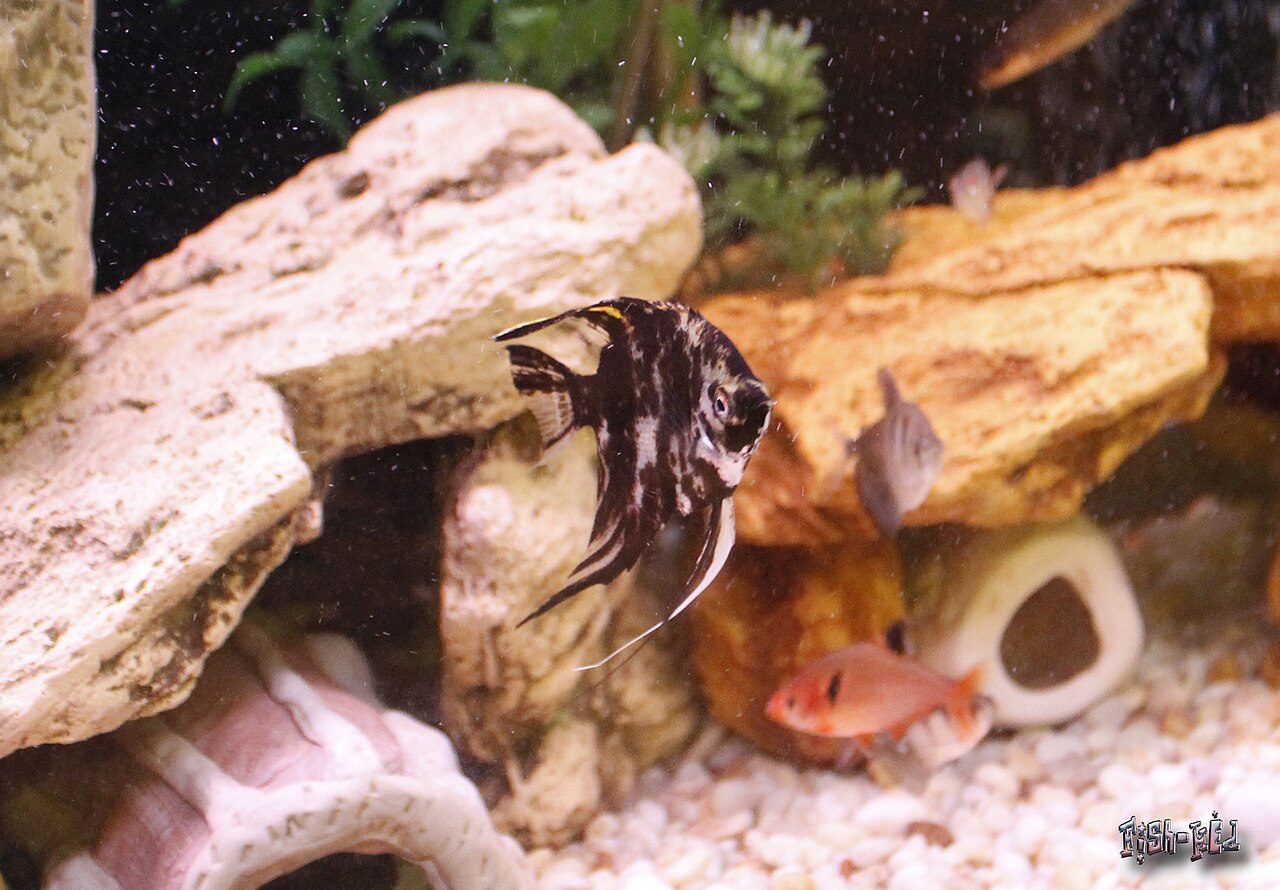
Angelfish are one of the most recognizable freshwater fish in the hobby. Their tall, triangular bodies and long trailing fins make them stand out in any planted tank. Still, new keepers often underestimate how much space and attention these cichlids need. A pair may look small at the store, but adult angelfish can grow up to 6 inches long and 8 inches tall. Before you bring one home, you need to plan the right environment from day one. Proper care begins with understanding the aquarium nitrogen cycle explained so your tank can handle their waste.
This guide covers tank size, water parameters, diet, and compatibility. We will also talk about common mistakes such as keeping angelfish in bowls, feeding only flakes, or adding fin-nipping tank mates. The good news is that angelfish are hardy when their basic needs are met. The catch is that they are cichlids, not passive community fish. They can become territorial, especially while breeding. That means your stocking choices matter just as much as your water changes.
You will find detailed steps below to set up, cycle, stock, feed, and maintain an angelfish tank. Each step includes why it matters and what to watch for. We also include warnings about aggression, disease, and water quality. Use this as a practical reference, from your first tank setup to long-term care. Many trusted sources such as Aqueon offer useful care summaries, and we will point to their guidance where relevant.
What You’ll Need
- 20-gallon high or larger aquarium
- Filter rated for twice tank volume
- Adjustable heater
- Thermometer
- Water conditioner
- Liquid test kit
- Gravel vacuum
- Decor and live plants
How Do You Care for Angelfish?
- Choose a 20-gallon long tank or larger
Angelfish are tall fish, so vertical space matters more than footprint alone. A single adult angelfish needs at least a 20-gallon high tank, but a 29-gallon tank is far better for a pair. If you plan to keep a small group of five or six, start with a 55-gallon tank. Many keepers buy a 10-gallon starter kit and then wonder why their angelfish looks cramped. The extra height gives fins room to grow without folding against the glass. It also gives shy fish a place to retreat. Filtration is the next piece. Angelfish produce a moderate amount of waste, and tall tanks can have low surface area for gas exchange. Choose a filter rated for at least twice the tank volume. A hang-on-back filter such as an AquaClear model works well for most 20 to 55 gallon setups. You can check current options in our best aquarium filters 2026 guide. Sponge filters are fine too, but they may not move enough water in a deep tank by themselves. Heating is non-negotiable. Angelfish come from warm Amazon tributaries and need stable temperatures. Use an adjustable heater with a guard to prevent burns if a fish rests against it. For a 20 to 29 gallon tank, a 100 watt heater usually holds the range. Larger tanks may need two heaters placed at opposite ends. Add a digital thermometer to track the actual temperature daily. Substrate and decor matter for behavior. Angelfish do not dig heavily, so fine gravel or sand works well. Add driftwood, broad-leaved plants such as Amazon swords, and a few smooth rocks. These structures break sight lines and reduce stress. Still, leave open swimming space in the middle and top of the tank. A heavily cluttered bottom can trap uneaten food and make maintenance harder.

- Cycle the tank fully before adding angelfish
Cycling is the most important step for any new tank, and angelfish are sensitive to ammonia and nitrite. A fishless cycle takes four to six weeks but protects your fish from burns and stress. You add an ammonia source, wait for beneficial bacteria, and then confirm that both ammonia and nitrite read zero. Use the how to cycle a fish tank guide to follow the process step by step. Never rely on pet store water or quick-start products alone. During cycling, keep the filter running at all times. Beneficial bacteria live mainly in filter media, not in the water column. If you turn off the filter for more than a few hours, the bacteria can die and cause an ammonia spike. Test the water every other day with a liquid test kit such as the API Freshwater Master Test Kit. You can check the API Freshwater Master Test Kit on Amazon to ensure accurate readings. Strip tests are convenient, but liquid tests are more reliable for a new cycle. Do not add angelfish until the cycle can process about 2 parts per million of ammonia to zero within 24 hours. Then perform a large water change to lower nitrates before stocking. The final nitrate level should be below 20 parts per million for young angelfish. If you rush this step, your fish may show red gills, gasping, or clamped fins within days. Take your time. A slow cycle prevents most early deaths.
- Set water parameters like their Amazon home
Angelfish are tropical fish that need warm, soft, and slightly acidic water. Keep the temperature between 78 and 82 degrees Fahrenheit. The pH should sit between 6.5 and 7.5, with a general hardness below 10 degrees. Sudden shifts cause more problems than slightly imperfect readings. If your tap water is very hard or alkaline, you may need to blend it with reverse osmosis water. According to Aqueon, stable parameters matter more than chasing exact wild values. Use a water conditioner such as Seachem Prime on every new bucket of tap water. This removes chlorine, chloramine, and detoxifies low levels of ammonia for up to 48 hours. Do not skip dechlorination, even for small top-offs. Chlorine burns gills and can kill the beneficial bacteria you worked to grow in step two. If your pH runs high, there are safe methods to lower it slowly without causing stress. Test weekly after the cycle. Record temperature, pH, ammonia, nitrite, and nitrate. Ammonia and nitrite should stay at zero, while nitrate should remain under 40 parts per million for adults. If nitrate climbs, step up water changes or add live plants. Fast-growing stems and floating plants help consume nitrate. Still, they cannot replace water changes in a heavily stocked cichlid tank.
- Select peaceful, tall-tank-safe tank mates
Angelfish are cichlids, but they usually do well with calm schooling fish that ignore their fins. Good choices include rosy tetras, lemon tetras, and corydoras catfish. Corydoras stay near the bottom and do not nip, so they are one of the best companions for angelfish. You can find more details in our corydoras catfish care guide. Avoid small fish such as neon tetras if your angelfish are large enough to eat them. Angelfish will eat anything that fits in their mouth. Do not keep angelfish with fin nippers. Tiger barbs, serpae tetras, and some danios will shred the long ventral and dorsal fins. This causes stress, fin rot, and secondary infections. Also avoid slow fancy guppies and small shrimp unless you accept that they may become food. Large peaceful fish such as adult platies or mollies can work in a bigger tank, but watch for competition at feeding time. If you want to keep multiple angelfish, a group of five or six in a 55-gallon or larger tank spreads aggression. Still, pairs may form and defend a corner. Have dense plants and driftwood to break sight lines. Never keep just two angelfish in a small tank. The dominant one will bully the weaker fish constantly. If breeding aggression becomes severe, use a tank divider or move the pair to their own 20-gallon breeding tank.

- Feed a varied omnivore diet
Angelfish are omnivores that need both protein and plant matter. A high-quality cichlid or angelfish pellet can form the base. Feed once or twice a day, only what they can eat in about two minutes. Overfeeding is a common cause of bloat and dirty water. A good staple like Hikari Angelfish Pellets provides vitamins and color support. Pair it with frozen or live foods for better growth. Offer variety each week. Bloodworms, brine shrimp, daphnia, and mysis shrimp are excellent treats. Blanched zucchini, spinach, or spirulina flakes add plant fiber. Young angelfish do well with small frequent feedings, while adults can eat once daily. Always thaw frozen food before feeding. A sudden cold lump can shock a fish that bites it. Watch for signs of diet problems. A sunken belly may mean internal parasites or underfeeding, while a swollen belly often points to overfeeding or constipation. If your angelfish ignores food for more than two days, check water quality first. Then consider offering live food to trigger a feeding response. Remove uneaten food after five minutes to keep ammonia low.
- Change water and maintain equipment weekly
Weekly maintenance keeps nitrate low and replenishes minerals. Change 20 to 30 percent of the water every week for a lightly stocked angelfish tank. Larger or breeding tanks may need twice-weekly changes. Use a gravel vacuum to remove waste from the substrate without disturbing the biological filter. For step-by-step timing, see our how often to change aquarium water guide. Clean your filter media in old tank water, not tap water. Tap water chlorine kills bacteria. Rinse mechanical sponges only when flow slows down. Replace chemical media if fading, but never all media at once. Angelfish are sensitive to cloudy water caused by bacterial blooms after a media swap. If you need to replace a filter cartridge, run a new sponge alongside the old one for two weeks. Inspect your heater, filter, and thermometer weekly. A stuck heater can cook a tank quickly. A failed filter kills fish in a few hours. Keep a backup sponge filter and an extra heater if you keep multiple tanks. Also wipe down algae from the glass before water changes, then siphon it out.

- Quarantine new fish and plants
Quarantine prevents disease from entering your display tank. A new angelfish may carry ich, gill flukes, or bacterial infections without showing symptoms. Set up a simple 10 to 20 gallon quarantine tank with a sponge filter and heater. Observe the fish for at least two to three weeks. Treat only if symptoms appear. Never medicate malformed or stressed fish as a preventive. Aquarium plants can also introduce snails, algae, and disease. Rinse new plants and consider a brief dip if you use chemicals. Quarantine live plants for one week if possible. This matters because angelfish swim near plants constantly. Chemical residues on some plants can irritate their skin and fins. When you introduce quarantined fish, use a drip or float method. Float the sealed bag for 15 minutes, then add small amounts of tank water every five minutes for 30 minutes. This slowly matches temperature and chemistry. Use a net to transfer the fish, and discard quarantine water. Watch for flashing, clamped fins, or white spots during the first week.
- Monitor aggressive behavior and breeding
Angelfish behavior changes as they mature. They may become territorial, especially when ready to breed. A bonded pair will clean a flat surface, such as a leaf or slate, and defend it. This is normal, but constant chasing can injure other tank mates. Keep an eye on torn fins and hiding fish. If one fish cannot eat, move it to another tank or add a divider. Breeding angelfish is a rewarding part of care. The parents fan the eggs and guard the fry. Still, young pairs sometimes eat their first few spawns. Do not be discouraged. If you want to raise fry, remove eggs to a separate tank with an air stone and methylene blue to prevent fungus. Feed fry with infusoria, then baby brine shrimp. Do not disturb a spawning pair too much. Large water changes during spawning may trigger breeding but can stress parents. Lower the water flow and keep lighting consistent. Over time, you will learn each fish’s personality. Angelfish recognize their keepers and often beg for food at the front glass. If white spots appear, consult how to treat ich in aquarium for early treatment steps.
Red Flags & Warnings
- 🚨 Never keep angelfish in a bowl or 10-gallon tank. A 10-gallon is too short for adult fins and causes stress.
- 🚨 Do not add angelfish to an uncycled tank. Ammonia and nitrite will burn their gills within days.
- 🚨 Avoid fin nippers like tiger barbs and serpae tetras. They will shred angelfish fins and invite infections.
- 🚨 Do not overfeed. Uneaten food rots, raises ammonia, and causes bloat in angelfish.
- 🚨 Quarantine new fish before adding them to your display. A single sick fish can spread ich to your angelfish.
- 🚨 Never use hot tap water or untreated water for water changes. Chlorine and heavy metals harm angelfish and kill beneficial bacteria.
Frequently Asked Questions
How big do angelfish get?
Adult angelfish can reach 6 inches long and 8 inches tall including fins. Some veil varieties grow even taller, so plan vertical tank space accordingly.
What is the minimum tank size for angelfish?
A 20-gallon high tank is the minimum for one adult, but a 29-gallon tank is better for a pair. A 55-gallon or larger tank handles a small group of five or six.
Can angelfish live with neon tetras?
It is risky. Large angelfish may eat neon tetras because they fit in their mouths. Choose larger tetras such as lemon tetras or rosy tetras instead.
What do angelfish eat?
They eat high-quality pellets, flakes, frozen bloodworms, brine shrimp, daphnia, and blanched vegetables. Offer both protein and plant matter for balanced nutrition.
How can you tell if angelfish are breeding?
A pair will clean a flat surface, become territorial, and chase other fish away. Eggs may appear on a leaf, slate, or filter intake.
How often should you change angelfish tank water?
Change 20 to 30 percent of the water weekly for a lightly stocked tank. Heavily stocked or breeding tanks often need twice-weekly changes.
What Should You Remember?
- Tank size: Provide at least 20 gallons for one angelfish and 55 gallons for a group.
- Water parameters: Keep temperature between 78 and 82 degrees Fahrenheit and pH between 6.5 and 7.5.
- Diet: Feed varied pellets, frozen food, and plant matter once or twice daily.
- Tank mates: Choose peaceful schooling fish and corydoras, and avoid fin nippers.
- Maintenance: Change 20 to 30 percent of water weekly and test parameters regularly.
- Quarantine: Isolate new fish and plants for two to three weeks before adding them.
- Behavior: Watch territorial behavior, especially among spawning pairs.
This article is for general information only and is not a substitute for professional veterinary or aquarium specialist advice. Always research the specific needs of your fish and consult an expert before making care decisions.