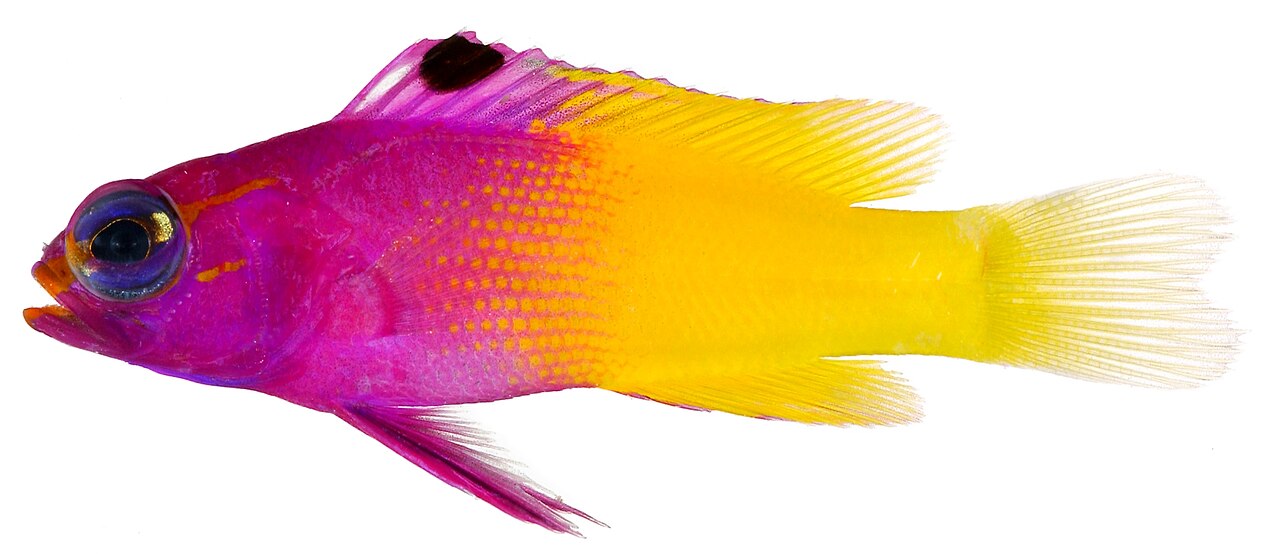
The royal gramma (Gramma loreto) is one of the most striking beginner saltwater fish you can buy. Its front half is vivid purple and its back half is bright yellow. That color split makes it easy to identify. Most royal grammas stay under 3 inches long. They are hardy, reef safe, and full of personality. Still, they are not a fish you can drop into any tank. They need stable water and enough rockwork. According to LiveAquaria, this species adapts well to captivity when given proper cover and a peaceful environment. For new saltwater keepers, this is one of the best fish for beginners.
This fish comes from tropical reefs in the Caribbean. It spends most of its time near the seafloor, hovering around caves and crevices. When it feels threatened, it darts into a hole and may swim backward into the rock. You need to recreate that kind of structure in your aquarium. Many first-time owners confuse the royal gramma with the royal dottyback. The dottyback looks similar but is much more aggressive. Knowing which fish you have matters for compatibility.
This guide covers tank size, water chemistry, feeding, compatibility, and long-term health. You will learn how to set up a safe and stress-free home for this fish. We will reference Aqueon general aquarium care advice for water quality. We will also cover common mistakes that lead to hiding, refusal to eat, or aggression. The goal is a healthy royal gramma that lives five years or more. That said, success starts before you ever bring the fish home.
Royal grammas are not demanding eaters. They are also tough enough to forgive minor beginner errors. The catch is that poor tank setup or aggressive tankmates can still cause serious problems. Follow the steps below in order. You will give your fish the best possible start. Let’s begin with tank size and aquascape.
What You’ll Need
- 30-gallon or larger aquarium with a secure lid
- Heater and thermometer
- Live rock or dry rock for caves and overhangs
- Saltwater test kit and refractometer
- Protein skimmer or quality filtration
- Meaty frozen foods and small marine pellets
How Do You Care for Royal Gramma?
- Choose a 30-Gallon Tank with Rocky Cover
A single royal gramma needs at least a 30-gallon tank. That size gives the fish enough territory and keeps water parameters more stable. A smaller tank can work for a juvenile, but adults will become stressed. The fish grows to about 3 inches long, but its territorial behavior demands more room than its size suggests. If you plan to keep a pair or a small community, a 40-gallon or larger tank is better. Use the best beginner fish tanks guide to compare options.
The tank should have a secure lid. Royal grammas are not known as big jumpers, but any startled fish can leap. A tight-fitting mesh or glass lid prevents accidents. You should also choose a location away from direct sunlight and drafts. Consistent temperature matters more than the exact number. A stable tank is easier to maintain.
Put the tank on a sturdy stand that can hold the total weight. Saltwater weighs about 8.5 pounds per gallon. A 30-gallon tank with rock and sand can weigh well over 300 pounds. Do not use household furniture that was not designed for aquariums. This setup choice connects to the next step: cycling the water before you add fish.
- Cycle the Tank and Lock In Stable Water Parameters
Royal grammas need a fully cycled tank. Ammonia and nitrite must be zero before any fish goes in. The aquarium nitrogen cycle explained article covers how beneficial bacteria convert waste. You can cycle with a fishless method using pure ammonia or a pinch of fish food. Test the water every day until ammonia and nitrite spike and then drop to zero. That process usually takes four to six weeks.
Stable parameters matter more than chasing perfect numbers. Keep water temperature between 72 and 78 degrees Fahrenheit. The ideal range is 74 to 76 degrees. Maintain pH between 8.1 and 8.4. Keep specific gravity between 1.020 and 1.025. Aqueon recommends testing regularly and making small adjustments instead of large corrections. Use a reliable refractometer and a liquid test kit. Check the API Saltwater Master Test Kit on Amazon.
A heater and a thermometer are essential. Place the heater near a water flow source so heat spreads evenly. Sudden temperature swings can weaken a royal gramma’s immune system. This step is not exciting, but it prevents most new tank problems. Once the cycle is complete, you can start building the rockwork.

- Build Caves, Overhangs, and Dim Hiding Spots
Royal grammas are cave dwellers. They need several dark hiding spots to feel safe. Use live rock or dry rock to build arches, overhangs, and small caves. The fish will claim a favorite hole and defend a small area around it. Provide at least three separate hiding spots. That way the fish can move to a new spot if it feels threatened. Without enough cover, a royal gramma may stay hidden all day or become stressed.
Stack the rock securely. You can use aquarium-safe epoxy or reef cement to hold pieces together. A rock collapse can injure fish or crack the tank. Leave open swimming space in front of the rockwork. Royal grammas hover and dart more than they cruise long distances. A wall of rock along the back glass works well. This setup also creates microhabitats for pods and other small organisms.
Do not place the rock too close to the glass where you cannot clean it. Leave enough room for a gravel vacuum or algae scraper. The rockwork also affects water flow. Good flow helps remove waste from crevices. If you plan to keep corals, choose lighting after the rock is placed. That way you can position lights over the corals without shadows from the rock.

- Pick Peaceful Tank Mates and Stock in the Right Order
Royal grammas do best with peaceful community fish. Good choices include ocellaris clownfish, firefish gobies, banggai cardinalfish, blennies, and small wrasses. Avoid large aggressive fish such as triggers, groupers, and large dottybacks. Also avoid other basslets and fish with a similar body shape unless the tank is very large. The royal gramma may fight with royal dottybacks or other grammas. The clownfish ocellaris care guide gives more detail on one compatible tankmate.
Stocking order matters. Add the royal gramma last if possible. This reduces territorial behavior because the fish does not have an established cave to defend. If you add it first and then introduce peaceful fish, the gramma may chase newcomers near its hole. Another strategy is to add all fish at once, but only after quarantine. This spreads aggression and prevents one fish from claiming the whole tank.
Watch for body language after new fish are added. A royal gramma will open its mouth wide and flare its gills as a threat display. That behavior is normal if it happens near its cave. But if the fish chases tankmates across the whole tank, you may need to rearrange the rockwork. Moving the rocks resets territorial boundaries. Here’s the thing: compatibility depends as much on layout as it does on species.
- Feed a Meaty Diet in Small Portions
Royal grammas are carnivores. In the wild they eat small crustaceans and zooplankton. Offer a varied diet of frozen mysis shrimp, brine shrimp, chopped krill, and small marine pellets. Feed once or twice a day. Give only what the fish can eat in about two minutes. A healthy royal gramma will dart out of its cave to grab food and then retreat.
Do not rely on flake food alone. Flakes can work as an occasional supplement, but meaty frozen foods keep colors bright and the fish active. You can soak food in a vitamin supplement once a week. Avoid overfeeding. Uneaten food breaks down and fuels algae. This is especially important in a small tank. Check the Hikari Marine S Pellets on Amazon if you want a high-quality pellet option.
New royal grammas may hide and refuse food for the first day or two. That is normal. Turn off strong flow during feeding to help the fish find food. If the fish still refuses food after three days, try live brine shrimp or garlic-soaked food. The smell can stimulate appetite. Once the fish is eating, you can return to a regular schedule.
- Maintain Water Quality and Watch for Disease
Weekly water changes of 10 to 20 percent keep nutrients low. Use a gravel vacuum to remove uneaten food from rock crevices. Test ammonia, nitrite, nitrate, and pH every week for the first few months. Once the tank matures, you can test every two weeks. The how often to change aquarium water guide explains a schedule that works for most tanks.
Royal grammas are hardy, but they can get marine ich, Brooklynella, or bacterial infections. Watch for white spots, heavy breathing, clamped fins, or loss of color. The earlier you catch a disease, the easier it is to treat. Use a quarantine tank if you need medication. Many treatments are not safe for invertebrates or live rock. Our how to treat ich in aquarium article covers safe treatment steps.
Do not skip water changes because the tank looks clean. Dissolved waste is invisible. High nitrate can cause stress and faded color. Keep a log of your test results. That way you can spot trends before they become problems. This routine connects to the final step: long-term health and quarantine habits.
- Quarantine New Arrivals and Plan for Long-Term Care
Always quarantine new fish for at least two to four weeks. Use a separate 10-gallon tank with a simple sponge filter, heater, and PVC pipe for hiding. This lets you observe for disease before the fish enters your display. A royal gramma may look healthy at the store but still carry parasites. The stress of shipping can cause problems to appear. Quarantine is the cheapest insurance in this hobby.
Acclimate the fish slowly after quarantine. Float the bag to match temperature for 15 minutes. Then drip acclimate for about 30 to 45 minutes. This prevents osmotic shock from differences in salinity. Do not dump store water into your display tank. It may contain medications or pathogens. Use a net to transfer the fish gently.
Over the long term, royal grammas can live five years or more with good care. Keep the tank stable and avoid unnecessary changes. Rearrange rockwork only when absolutely necessary. Feed a consistent diet and maintain your equipment. A healthy royal gramma will be active, colorful, and visible near its cave. If you see constant hiding, check water quality and tankmate aggression. That’s the key to lasting success.
Red Flags & Warnings
- 🚨 Do not keep two royal grammas in a tank under 75 gallons unless you have a confirmed mated pair. They will fight.
- 🚨 Avoid housing a royal gramma with dottybacks, hawkfish, or other basslets. Similar body shapes trigger aggression.
- 🚨 Never use copper-based medications in a display tank with live rock, corals, or invertebrates. Use a quarantine tank.
- 🚨 Always quarantine new fish for two to four weeks before adding them to your display.
- 🚨 Do not let salinity or temperature change quickly. Small, frequent adjustments are safer.
- 🚨 Watch for bullying from established fish. If you add a royal gramma to an existing tank, rearrange rockwork first.
Frequently Asked Questions
How big of a tank does a royal gramma need?
A single royal gramma needs at least 30 gallons. A 40-gallon or larger tank is better if you plan to keep other fish. The extra space reduces territorial stress.
Is a royal gramma reef safe?
Yes, royal grammas are generally reef safe. They do not bother corals. They may eat very small ornamental shrimp, but most keepers have no issues.
What does a royal gramma eat?
Royal grammas eat meaty foods like mysis shrimp, brine shrimp, chopped krill, and small marine pellets. Feed small portions once or twice a day.
Can a royal gramma live with clownfish?
Yes, ocellaris clownfish and most other clownfish species get along with royal grammas. Make sure the tank is large enough and has separate hiding spots.
How long do royal grammas live?
With stable water quality and a good diet, royal grammas can live five years or more in captivity. Some reports reach seven years.
How can I tell a royal gramma from a royal dottyback?
Royal grammas have a black spot on the front of the dorsal fin and a more rounded body. Royal dottybacks are more elongated, have a pale spot, and tend to be more aggressive.
What Should You Remember?
- Tank size: Give a single royal gramma at least 30 gallons with rockwork.
- Water parameters: Maintain 72 to 78 degrees Fahrenheit, pH 8.1 to 8.4, and specific gravity 1.020 to 1.025.
- Diet: Feed meaty foods like mysis shrimp, brine shrimp, and small marine pellets.
- Compatibility: Choose peaceful tankmates and avoid other basslets or aggressive fish.
- Reef safe: Safe with corals, but watch very small ornamental shrimp.
- Quarantine: Always quarantine new fish for two to four weeks before adding them.
This article is for general information only and is not a substitute for professional veterinary or aquarium specialist advice. Always research the specific needs of your fish and consult an expert before making care decisions.