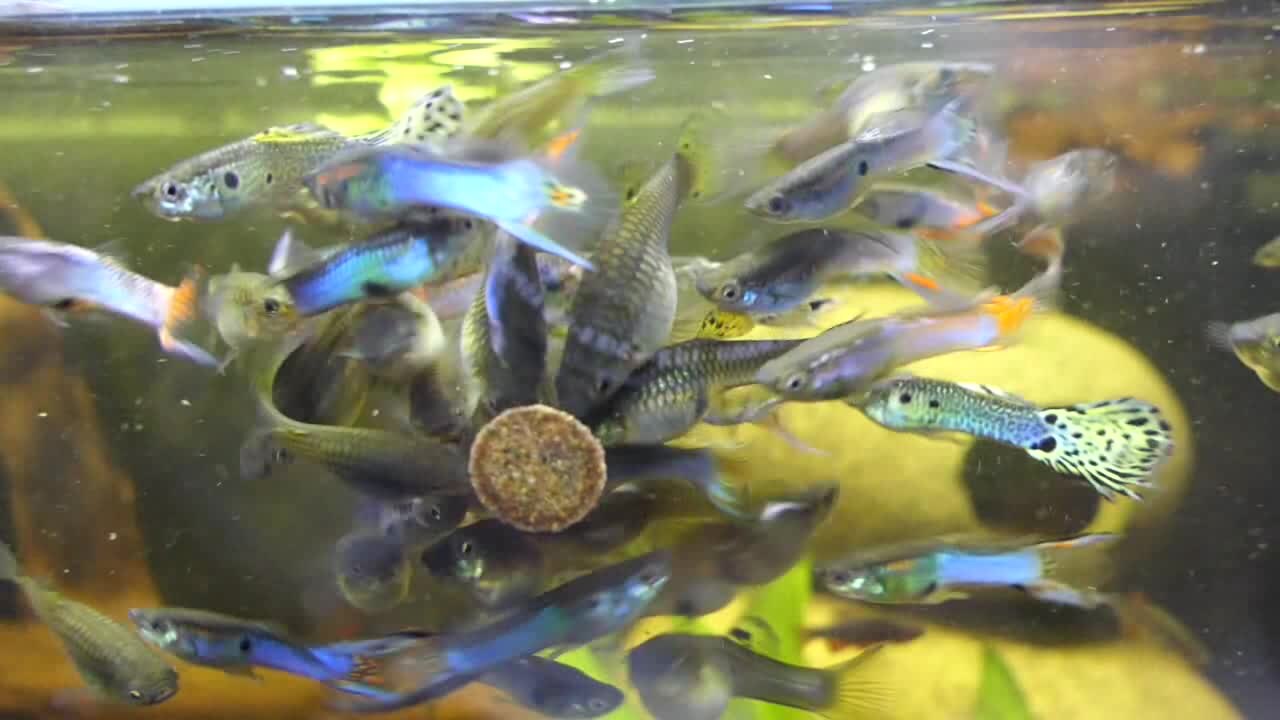
Guppies are among the most recognizable freshwater fish in the hobby. Their bright tails, active swimming, and beginner-friendly reputation make them a top choice for new tanks. But caring for guppies well takes more than adding them to a bowl. You need the right tank size, stable water parameters, and a proper diet. This guide from AquariumLab walks through the full 2026 care process. We will also point you toward trusted resources such as Aqueon and Aquarium Co-Op. Guppies can live for two to three years when kept correctly.
One common mistake is starting too small. A 1-gallon jar might look cute, but it will foul quickly and stress your fish. In this guide, you will learn why a 10-gallon tank gives guppies the space they need. You will also see how to cycle your aquarium before stocking. If the nitrogen cycle is new to you, start with our guide to the aquarium nitrogen cycle. Cycling before adding fish prevents ammonia spikes that kill guppies.
Guppies are livebearers, meaning they give birth to free-swimming fry. This trait makes them fun to keep, but it also means your tank can fill up fast. Live plants and hiding spots help fry survive and reduce stress. For ideas, see our list of the best aquarium plants for beginners. With the right setup, guppies reward you with constant activity and color. You can also keep them with other peaceful community fish.
What You’ll Need
- 10-gallon or larger aquarium
- Adjustable heater
- Sponge or hang-on-back filter
- Liquid water test kit
- Water conditioner
- Gravel vacuum
- Thermometer
- Quality fish food
- Live or silk plants
How Do You Care for Guppies?
- Set Up a 10-Gallon or Larger Tank
Start with a tank that holds at least 10 gallons for a small group of three to five guppies. A larger tank is even better because it dilutes waste and gives fry hiding room. Aquarium Co-Op recommends a 10-gallon tank as a practical minimum for beginners. The shape matters less than water volume. A long tank provides more horizontal swimming space, which guppies use constantly.
You will need a heater, a filter, and a light. For filtration, a sponge filter or hang-on-back filter works well for guppies. A sponge filter is gentle and safe for fry. You can check sponge filters on Amazon. A heater keeps the water stable between 74 and 82°F. Use an adjustable heater rather than a preset one. Pair it with a reliable thermometer.
Test your tap water before filling the tank. A liquid test kit gives accurate readings for pH, ammonia, nitrite, and nitrate. The API Freshwater Master Test Kit is a common choice. You can find more beginner tank recommendations in our guide to the best beginner fish tanks. Add a lid because guppies sometimes jump.
Use a water conditioner to remove chlorine and chloramine before adding any water.

- Cycle the Aquarium Before Adding Guppies
Cycling builds beneficial bacteria that convert toxic ammonia into less harmful nitrate. Without a cycle, guppies can die within days from ammonia poisoning. You have two main options: fishless cycling with pure ammonia or fish food, or fish-in cycling with very careful monitoring. Fishless cycling is safer and faster for beginners.
To fishless cycle, add a source of ammonia to the empty tank. Test the water daily. You will see ammonia rise, then nitrite, then nitrate. The process usually takes four to six weeks. Aqueon’s care resources explain that this bacterial colony lives on filter media and substrate, not in the water itself.
Do not rush this step. Adding guppies before the cycle finishes causes stress and often death. If you already have fish, perform a fish-in cycle with frequent small water changes. Always use dechlorinated water. Once the tank reads zero ammonia and zero nitrite with some nitrate, it is ready.
A cycled filter should never be rinsed under tap water. Chlorine kills the bacteria. Squeeze filter media in old tank water during water changes instead.
- Match Guppy Water Parameters
Guppies tolerate a pH range of 6.8 to 7.8, but they do best in stable water between 7.0 and 7.5. The temperature should stay between 74 and 82°F. Sudden swings are more dangerous than a value slightly outside the ideal range. Use a heater and thermometer to keep the temperature consistent day and night.
Hard water with moderate mineral content helps guppies thrive. They come from streams with some dissolved minerals. If your tap water is very soft, you can add a mineral supplement or crushed coral in a mesh bag. Test your water before making adjustments. For more on pH adjustments, see our guide on how to lower pH in an aquarium.
Aquarium Co-Op often points out that stable parameters beat perfect numbers. Guppies can adapt to a pH of 7.8 or 6.8 if it remains steady. Avoid chasing pH with chemicals. Large, sudden changes stress guppies and can lead to disease.
Adult guppies grow to about 1.5 to 2.5 inches long. Males are smaller with large colorful tails. Females are larger and rounder. This adult size, combined with their activity level, means they need enough swimming room.
- Feed a Varied, High-Quality Diet
Guppies are omnivores. They need both plant and animal matter in their diet. A high-quality tropical flake or micro pellet can serve as the base. Look for foods with whole fish or shrimp meal as one of the first ingredients. Avoid foods heavy in wheat or soy fillers.
Feed small amounts two or three times per day. Only offer what your guppies can eat in about two minutes. Overfeeding pollutes the water and causes bloating. Guppies always act hungry, but that does not mean they need more food. A fasting day once a week can help digestion.
Supplement the staple with frozen or live foods like brine shrimp, daphnia, and bloodworms. These protein-rich foods bring out color and encourage breeding. You can also offer blanched vegetables such as zucchini or shelled peas. Remove uneaten produce after a few hours.
Fry need smaller foods. Crushed flakes, baby brine shrimp, or commercial fry food work well. Feed fry several small meals per day if you plan to raise them.

- Choose Compatible Tank Mates
Guppies are peaceful community fish. They do best with other small, non-aggressive species. Good tank mates include mollies, platies, swordtails, corydoras catfish, and small tetras. For more on mollies, see our molly care guide. Avoid fin nippers like tiger barbs or fish large enough to eat guppies.
Do not keep guppies with bettas unless the tank is large and heavily planted. Bettas may see a male guppy’s colorful tail as a rival. Even peaceful bettas can turn aggressive. Cichlids are also a poor choice because they often bully guppies.
Guppies prefer to be in groups. Keep at least three females for every male to reduce harassment. A group of six or more spreads out social behavior. If you keep only males, you can avoid breeding but may see some chasing.
Invertebrates like cherry shrimp and snails are safe with guppies. They help clean leftover food. Shrimp may become a snack for larger guppies, but most adult shrimp do fine. Provide plants and moss for them to hide.
Quarantine any new fish for two to four weeks before adding them to your guppy tank. This prevents introducing diseases like ich or velvet into an established setup.
- Maintain Water Quality with Weekly Changes
Change 25 to 30 percent of the water every week. Use a gravel vacuum to remove waste from the substrate. Replace the removed water with dechlorinated tap water that matches the tank temperature. Regular changes remove nitrate, dissolved organics, and hormones that can stunt growth.
Test the water weekly with a liquid kit. Ammonia and nitrite should always read zero. Nitrate should stay below 20 to 40 ppm. If nitrate climbs faster, increase the frequency or size of water changes. Overdue water changes are a common cause of guppy illness.
Do not replace filter media at the same time as a large water change. That can remove too much beneficial bacteria. Rinse mechanical media in old tank water only. Clean the filter only when flow slows down.
Check your heater and filter during water changes. Wipe away algae from the glass if you want. Avoid soap or chemicals anywhere near the tank. A clean tank supports bright colors and active behavior.

- Watch Behavior and Spot Health Problems Early
Spend a few minutes each day watching your guppies. Healthy guppies swim actively, hold their fins open, and come to the front at feeding time. Lethargy, clamped fins, or hiding can signal stress or disease. Early detection gives you the best chance to treat problems.
Common guppy diseases include ich, fin rot, and velvet. Ich shows up as white spots on the body and fins. If you see white spots, act quickly. Our guide on how to treat ich in an aquarium walks through safe treatment steps. Raising the temperature slightly and adding aquarium salt can help, but research first.
Fin rot causes ragged or dissolving fins. It usually comes from poor water quality or injury. Start treatment with large water changes and consider an antibacterial medication if it worsens. Always remove carbon from the filter when using medications.
Quarantine sick fish in a separate tank when possible. This protects the rest of your group. Use a dedicated net and bucket for the hospital tank. Wash your hands after working in any aquarium.
- Manage Guppy Breeding and Fry
Guppies breed easily. A female can store sperm for months, so a single mating can produce multiple batches of fry. She can give birth every 30 days, with 20 to 50 fry per drop. If you keep males and females together, expect babies.
To manage breeding, you can keep only males, only females, or use a separate breeding tank. A breeder box can work for short periods but is not ideal for long term. If you want to raise fry, provide dense plants like java moss or floating plants for cover.
Adult guppies often eat their own fry. Dense plants give the fry a place to hide. You can also move the female to a separate tank before she gives birth, then remove her after. Feed fry crushed flake or baby brine shrimp several times a day.
Overpopulation can crash your water quality quickly. Do not rely on the adults to control the fry. Have a plan for the extra fish. Many local fish stores accept juvenile guppies. You can also give them to other hobbyists.
Selective breeding can create interesting colors and tail shapes. But line breeding requires careful record keeping and culling. For most beginners, letting nature take its course is simpler and still rewarding.
Red Flags & Warnings
- 🚨 Never add guppies to an uncycled tank. Ammonia spikes can kill them within days.
- 🚨 Do not overfeed. Uneaten food rots and causes ammonia and nitrite spikes.
- 🚨 Avoid keeping male guppies with long-finned fish like bettas. Fins may be nipped or the betta may attack.
- 🚨 Do not use untreated tap water. Chlorine and chloramine destroy beneficial bacteria and harm fish.
- 🚨 Quarantine all new fish and plants. One sick fish can infect the entire tank.
- 🚨 Do not chase perfect pH with strong chemicals. Rapid swings stress guppies more than a stable value outside the ideal range.
Frequently Asked Questions
How many guppies should be kept together?
Keep at least three guppies together. A ratio of one male to two or three females works best if you want to reduce stress and harassment. A group of six or more spreads out social behavior. For a small group, a 10-gallon tank is the practical minimum.
What size tank do guppies need?
A 10-gallon tank is the minimum for a small group of three to five guppies. Larger tanks are more stable and give more room for fry. Avoid bowls and jars under 5 gallons. Guppies stay small at 1.5 to 2.5 inches, but they are active swimmers.
What do guppies eat?
Guppies are omnivores and do well on high-quality tropical flakes or micro pellets. Supplement with frozen or live foods like brine shrimp, daphnia, and bloodworms. Feed two or three small meals per day, only what they can eat in two minutes. Blanched vegetables can be offered occasionally.
What temperature do guppies need?
Keep guppy tanks between 74 and 82°F. A stable temperature between 76 and 80°F is ideal for most setups. Use an adjustable heater and a thermometer. Avoid sudden temperature swings.
Can guppies live with bettas?
It is risky. Bettas may see a male guppy’s colorful tail as competition and attack. A heavily planted 20-gallon tank can reduce aggression, but there is no guarantee. It is safer to keep them in separate tanks.
How often do guppies have babies?
Female guppies can give birth about every 30 days. Each drop can produce 20 to 50 fry. A female can store sperm and have several batches after one mating. You need a plan for fry if you keep males and females together.
What Should You Remember?
- Tank size: Start with a 10-gallon or larger tank for a small guppy group.
- Water parameters: Maintain 74-82°F and pH 6.8-7.8 with stable conditions.
- Diet: Feed a varied diet of flakes, pellets, and frozen foods in small portions.
- Tank mates: Choose peaceful community fish and keep a proper male-to-female ratio.
- Maintenance: Perform 25-30% weekly water changes and test water regularly.
- Health: Watch for clamped fins, white spots, and lethargy, and treat early.
This article is for general information only and is not a substitute for professional veterinary or aquarium specialist advice. Always research the specific needs of your fish and consult an expert before making care decisions.