Reef safe is the most overused phrase in the saltwater hobby. It gets printed on tank labels, repeated in forum threads, and treated like a warranty. It is not one. A reef safe fish is a fish that will not eat your corals, pick at your clam mantles, or swallow your cleaner shrimp, and the honest version of that sentence ends with the words most of the time. The exceptions show up at 2 a.m. when a fish you have owned for a year develops a taste for zoanthids. Stocking order matters here too. If you set the tank up properly and let the aquarium nitrogen cycle finish before you add livestock, you avoid the ammonia spikes and disease outbreaks that kill far more reef fish than any coral nipper ever will.
Look at the numbers before you look at the fish. Marine tanks are a small slice of total aquarium ownership, but the money spent per tank runs well above freshwater. Our 2026 fishkeeping statistics breakdown covers how many US households keep fish and why the saltwater share keeps climbing. The practical result is a bigger market for captive bred stock, and that matters. Wild caught specimens arrive stressed, often carrying parasites, and sometimes refuse to eat for a week or more. LiveAquaria’s species profiles flag every fish with a reef compatibility rating. Read that flag alongside the care sheet, not instead of it.
Temperature stability is the parameter nobody brags about and everybody gets wrong. A reef tank should sit between 76°F and 78°F, with specific gravity of 1.024 to 1.025, pH of 8.1 to 8.4, and carbonate hardness between 7 and 9 dKH. Aqueon’s aquarium care reference covers tank sizing and heater ratings for exactly this reason: a heater rated for a 40-gallon freshwater tank will struggle in a 40-gallon reef once a return pump, a skimmer, and an LED fixture are all adding heat to the same water. Oversize the heater, then run it on a controller. Our roundup of the best aquarium heaters covers the models that hold a set point within half a degree.
Here is the method behind the six picks below. Each fish was scored on five things: the minimum tank volume a single adult needs, how large it grows, what it eats and whether that diet overlaps with coral tissue, how it behaves toward tankmates, and whether captive bred stock is easy to find. Six species made the cut. They range from a 10-gallon nano candidate to a 100-gallon herbivore, and every one of them comes with at least one real downside that the store tag leaves out.
How Do the Top Options Compare?
| Fish | Best For | Min Tank | Temp | pH | Adult Size | Starter Gear |
|---|---|---|---|---|---|---|
| Ocellaris Clownfish | First reef fish | 20 gal | 75-78°F | 8.1-8.4 | 3 in | Check price |
| Royal Gramma | Nano cave dweller | 20 gal | 72-78°F | 8.1-8.4 | 3 in | Check price |
| Bicolor Blenny | Algae control in small tanks | 10-30 gal | 72-78°F | 8.1-8.4 | 4 in | Check price |
| Banggai Cardinalfish | Peaceful captive bred pair | 30 gal | 72-78°F | 8.1-8.4 | 3 in | Check price |
| Firefish Goby | Quiet nano tank | 10-20 gal | 72-78°F | 8.1-8.4 | 3 in | Check price |
| Yellow Tang | Herbivore for large tanks | 100 gal | 72-78°F | 8.1-8.4 | 8 in | Check price |
Reef safe describes typical behavior, not a guarantee. Individual fish vary, and a specimen that ignores coral for two years can start nipping in year three. Tank sizes and temperatures above are minimums and typical ranges for adult fish, not targets for juveniles. Salinity for every species listed should sit at 1.024 to 1.025 specific gravity. Check current listings before you buy, since availability shifts with season and collection rules.
1. Ocellaris Clownfish , Best first reef fish for a 20-gallon tank
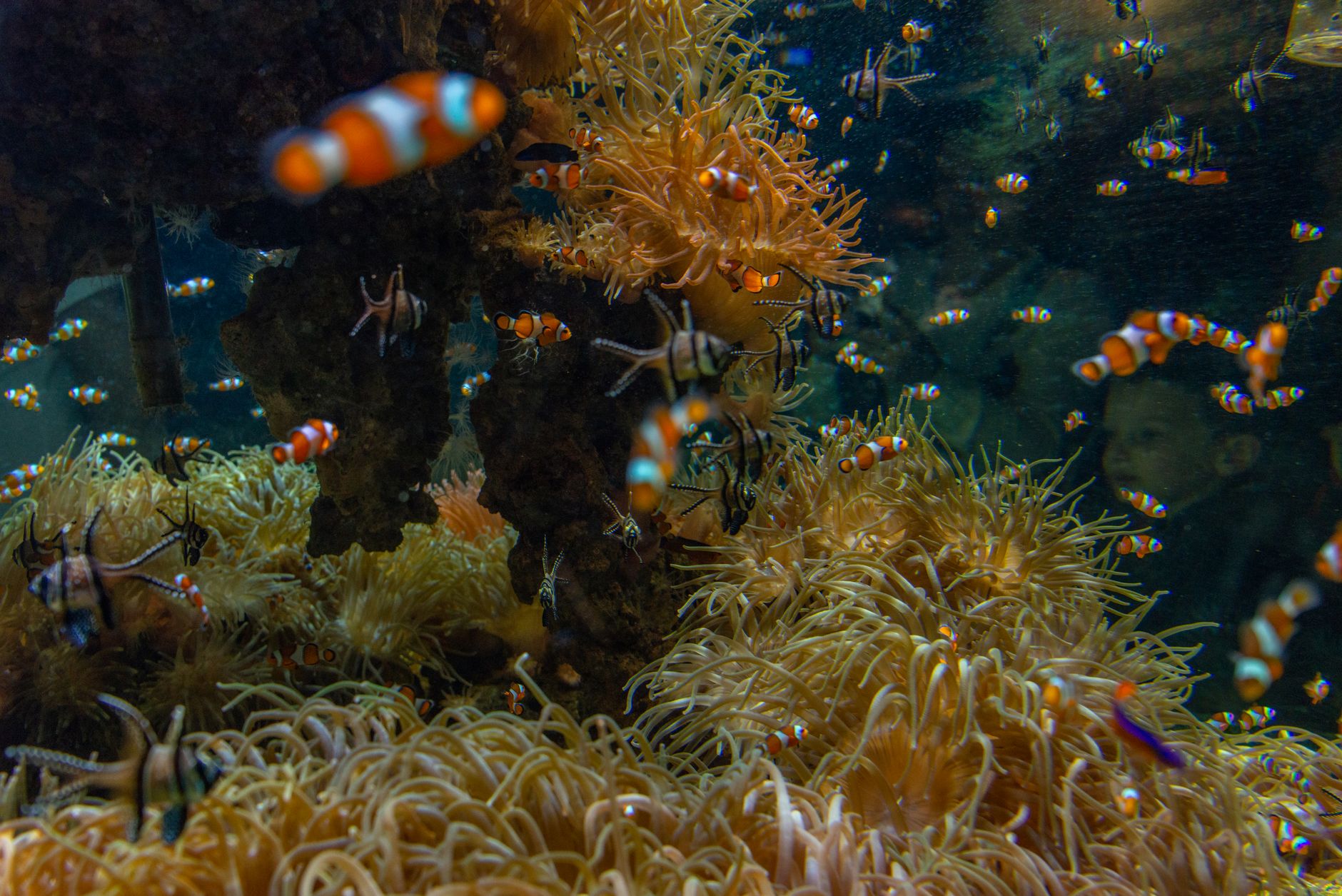
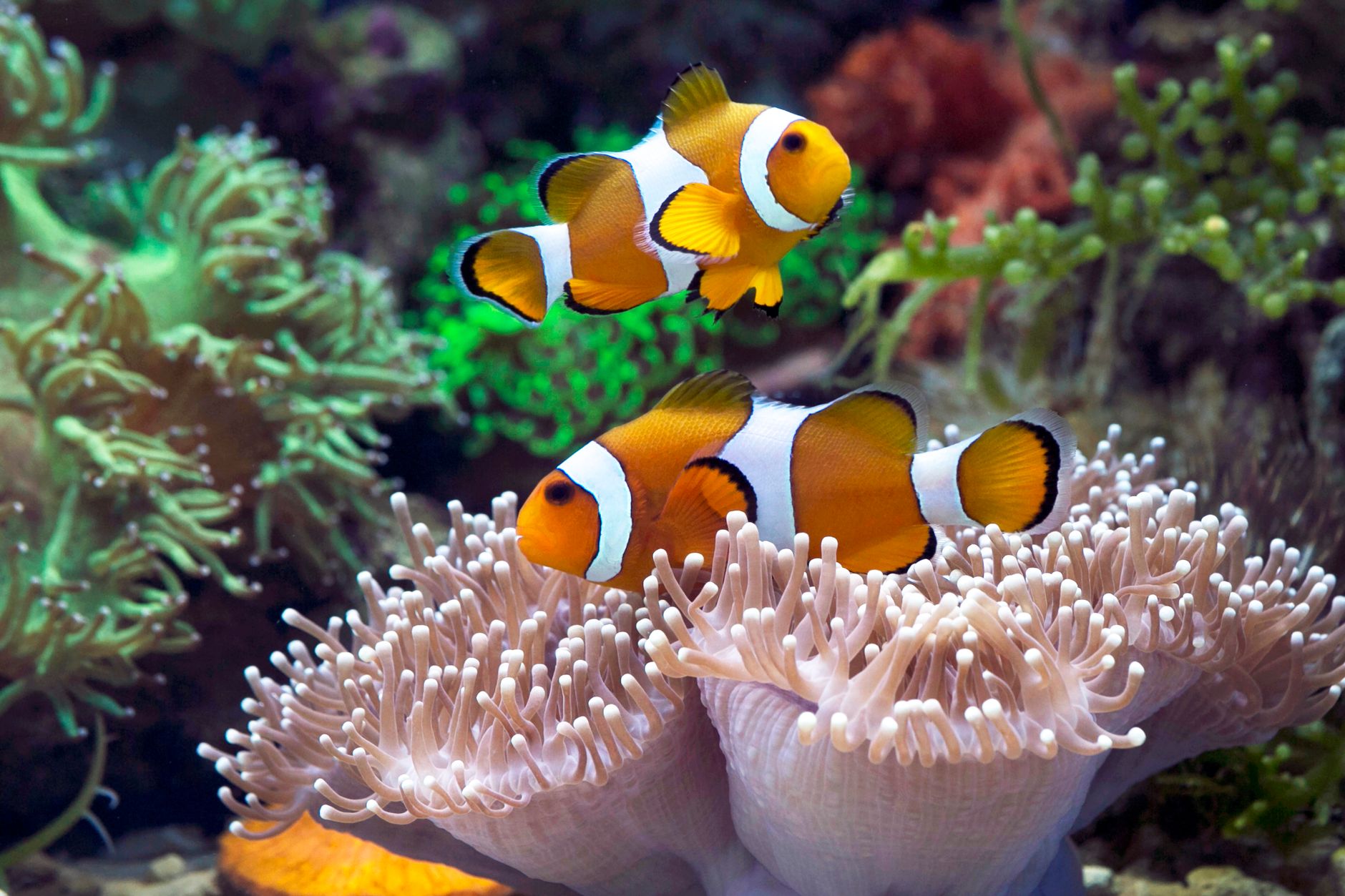
The ocellaris clownfish is the default first fish for a new reef tank, and that reputation is earned. Nearly every specimen in the trade is captive bred, which means it already eats frozen mysis, pellets, and flake food on day one. Wild caught fish often refuse food for a week. A single clownfish is fine in a 20-gallon tank, and a bonded pair fits the same footprint. Adults reach about 3 inches, and they handle 75°F to 78°F with pH 8.1 to 8.4 and specific gravity of 1.024 to 1.025. Our full ocellaris clownfish care guide covers acclimation, feeding, and pairing in detail.
Coral safety is not the issue with this species. Appetite is not the issue either. Behavior is. Every clownfish is born male, and the largest, most aggressive fish in a group becomes female. That female will defend a two-foot territory against anything, including your hand and including fish twice her size. In a 20-gallon tank she can make life miserable for a firefish or a gramma that shares the rockwork.
The second surprise is hosting. A clownfish without an anemone adopts the next best thing, which is often a torch coral, a hammer coral, or a large toadstool leather. Constant rubbing irritates the coral and can keep its polyps closed for weeks. Some keepers run a clownfish pair with soft corals and never see a problem. Others watch a healthy torch colony slowly stop opening because a 3-inch fish decided it was home. Plan for that possibility before you buy the pair.
If the setup is a bare nano cube, a small all-in-one tank saves shelf space and plumbing work. Check the nano AIO reef tank kit on Amazon.
Key strengths:
- ✅ Hardy and forgiving: captive bred ocellaris tolerate small temperature and salinity slips that kill wild caught fish.
- ✅ Tiny footprint: a bonded pair is comfortable in a 20-gallon long with live rock and moderate flow.
- ✅ Easy diet: accepts frozen mysis, pellets, and flake without any training period.
- ✅ Readily captive bred: nearly every store specimen is tank raised, so wild collection pressure is minimal.
- ✅ Does not eat coral tissue, clam mantles, or ornamental shrimp.
- ❌ Territorial once mature: a female clownfish will chase fish twice her size inside a small tank.
- ❌ Hosting behavior can smother a torch, hammer, or toadstool coral that the fish chooses as a surrogate anemone.
- ❌ Sexing is impossible at purchase: buy two juveniles and hope they pair, or pay for a confirmed pair.
Who it’s for: A beginner setting up a 20-gallon reef who wants one hardy, colorful fish that will not touch coral.
2. Royal Gramma , Best cave dweller for a 20-gallon nano reef
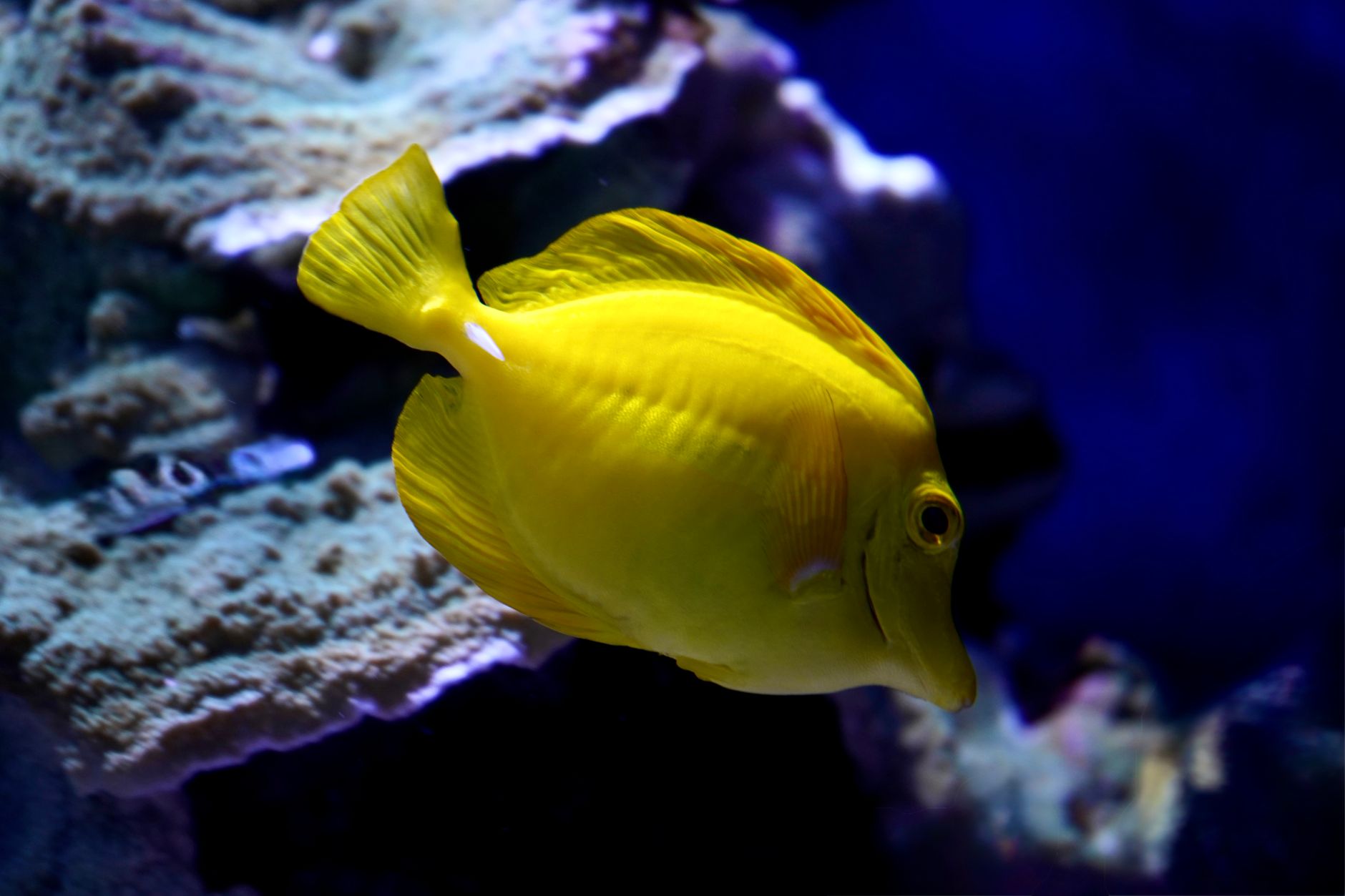
The royal gramma is a Caribbean basslet with a two-tone paint job that no photograph quite captures: front half purple, back half yellow. It stays small at about 3 inches, needs a 20 to 30-gallon tank, and tolerates the same 72°F to 78°F range as the rest of the fish on this list, with pH 8.1 to 8.4 and specific gravity of 1.024 to 1.025. It eats frozen mysis, brine shrimp, and small pellets, and it ignores coral completely. That combination makes it one of the few genuinely small reef fish that also looks exotic.
The interesting part is where it lives. In the wild this fish hangs upside down under reef ledges, and it does the same in a home tank. Give it a cave with an overhang and it will claim that spot for years. Give it a bare rock wall and it will hide in the back corner and look like a purple streak for the rest of its life. Aquascape first, add the fish second. Our royal gramma care guide covers the rockwork shapes these fish prefer.
Aggression is limited but real. A gramma will chase another basslet, a dottyback, or a second gramma out of its cave system, and it does not care if the tank holds only 20 gallons. One gramma per tank is the safe rule. Two only works in a 75-gallon or larger system with lots of rock and separate cave structures. Against clownfish, blennies, and cardinals it is a model citizen and rarely causes trouble.
They jump when startled, though not as reliably as firefish. A tight fitting lid solves the problem and costs almost nothing compared to replacing the fish. Given that grammas can live past five years in captivity, the lid is a smart purchase on day one.
Key strengths:
- ✅ Small adult size: 3 inches means it fits a 20-gallon nano reef without crowding.
- ✅ Ignores coral entirely, including soft corals, LPS, and SPS.
- ✅ Bright two-tone coloration that stands out against dark live rock.
- ✅ Eats a wide range of frozen and prepared foods with no live food requirement.
- ✅ Hardy and long lived when the tank stays stable.
- ❌ Aggressive toward other basslets, dottybacks, and any second gramma in the same tank.
- ❌ Needs caves and overhangs; a bare rock structure leaves it hidden and stressed.
- ❌ Can jump when startled, so an open top tank is a real risk.
Who it’s for: A keeper with a 20-gallon or larger tank who wants a colorful, coral-safe cave dweller and can aquascape around it.
3. Bicolor Blenny , Best algae grazer for 10 to 30-gallon reefs
A bicolor blenny is half dark brown, half orange-yellow, and it earns its keep. This is a herbivore that grazes film algae and filamentous algae off live rock all day. A 10-gallon tank with established rock can support one. A 30-gallon gives it room to patrol. Adults reach about 4 inches, so a 10-gallon is a genuine floor rather than a comfortable fit. Temperature sits at 72°F to 78°F with pH 8.1 to 8.4. The bicolor blenny care guide covers what to feed once the rock stops producing algae.
Unlike most blennies, this one spends its day hopping between perches, backing into holes, and watching you scrub the glass. It is one of the few reef fish with genuine personality that also stays small. It accepts dried seaweed sheets, spirulina pellets, and frozen herbivore blends, so keeping it fed is simple once the tank’s natural algae supply runs out. That usually happens within four to six months in a clean system.
Here is the honest downside, stated plainly. Some bicolor blennies nip at SPS polyps, and a few develop a taste for clam mantles. It is not the species norm, but it happens often enough that you should not drop one into a tank built around acropora or a prized maxima clam without watching it for the first month. If you want a blenny that is safer around SPS, look at the lawnmower blenny instead. It grazes algae aggressively and almost never touches coral.
They can also be pushy toward other blennies and small gobies that share their rock. In a 10 or 20-gallon tank, one blenny is the limit, and it should go in after the rock has matured and grown some algae.
Key strengths:
- ✅ Does real work: grazes film and hair algae off rock and glass every day.
- ✅ Small adult size of about 4 inches fits a 10 to 30-gallon tank.
- ✅ Accepts dried seaweed, spirulina, and frozen herbivore food once natural algae runs low.
- ✅ Ignores coral on most specimens and never bothers ornamental shrimp.
- ✅ Interactive personality and constant perching behavior make it fun to watch.
- ❌ Some individuals nip SPS polyps or clam mantles, so it is a risk in a stony coral tank.
- ❌ Needs established live rock with algae growth, which means a brand new dry rock tank is a poor first home.
- ❌ Can be aggressive toward other blennies and small gobies sharing its rock.
Who it’s for: A keeper with a mature 10 to 30-gallon tank who wants an algae grazer with personality and does not keep delicate clams or acropora.
4. Banggai Cardinalfish , Best peaceful captive bred centerpiece for a 30-gallon
Banggai cardinalfish look like something designed for a poster: silver body, black vertical stripes, white spots, and long trailing fins. They reach about 3 inches, tolerate 72°F to 78°F, and want pH 8.1 to 8.4. A 30-gallon tank suits a pair. The species is listed as endangered in the wild, and collection pressure in Indonesia has been heavy for decades, so buy captive bred stock. Captive bred cardinals eat frozen mysis and pellets immediately, while wild caught fish frequently starve in a new tank. Our Banggai cardinalfish care guide explains the behavior differences you will see in the first week.
Behaviorally they are the calmest fish on this list. They hover in the water column, move slowly, and never bother coral or shrimp. They also mouthbrood, and a pair that spawns will carry eggs in the male’s mouth for roughly three weeks. That is a genuinely interesting thing to watch happen in a home tank, and it happens more often than most keepers expect.
The catch is cardinals versus cardinals. Two males in the same tank will fight, and in a small system one of them usually dies. A single fish is fine. A confirmed pair is fine. Three or more is a gamble unless the tank is large with broken sight lines and separate territories. They are also crepuscular feeders in the wild, so feed them near lights-out for the first week to encourage a feeding response.
Moderate flow and shaded zones under ledges suit them better than a bare, brightly lit tank. Over time a captive bred pair will swim in the open all day. Wild caught specimens tend to keep hiding.
Key strengths:
- ✅ Extremely peaceful: ignores coral, shrimp, and every tankmate that leaves it alone.
- ✅ Captive bred stock eats frozen and prepared food from day one.
- ✅ Distinctive striped pattern and flowing fins that stand out in any reef tank.
- ✅ Mouthbrooding pairs give keepers something genuinely rare to observe.
- ✅ Stays at about 3 inches, so a 30-gallon tank is a real long-term home.
- ❌ Males fight to the death in small tanks, so stocking beyond a single fish or a confirmed pair is risky.
- ❌ Wild caught specimens are still widely sold and frequently refuse food in captivity.
- ❌ Prefers shaded areas and moderate flow, which limits placement in a high-light SPS tank.
Who it’s for: A keeper with a 30-gallon or larger tank who wants a calm, captive bred fish that will not disturb coral or shrimp.
5. Firefish Goby , Best quiet nano reef fish for a 10-gallon tank
The firefish, sometimes sold as the fire goby or magnificent dartfish, is the fish people photograph. White body, purple front, yellow tail, and a long dorsal spine that flicks up and down as it swims. It maxes out around 3 inches, works in a 10-gallon nano tank with a lid, and needs the usual 72°F to 78°F plus pH 8.1 to 8.4 and specific gravity of 1.024 to 1.025. It eats small frozen foods and tiny pellets, and it never touches coral.
Two things about this fish matter more than everything else. First, it jumps. Not occasionally, and not only when chased. Firefish jump when a shadow crosses the glass, when a pump kicks on, and when nothing at all happens. A rimless tank without a screen lid is a slow-motion loss. Put the lid on before the fish goes in the water. Check the aquarium screen lid on Amazon.
Second, it is shy. A new firefish may hide in the rock for a week and only come out at feeding time. That is normal. What is not normal is a firefish that stays hidden for a month, which usually means a tankmate is bullying it. Clownfish, damsels, and dottybacks are the usual suspects. A firefish does best with grammas, cardinals, and other quiet species that ignore it completely.
Keep one unless the tank is at least 40 gallons. Two firefish in a nano tank will fight, and the loser hides until it starves. That outcome is common and easy to avoid, which is why this species is best treated as a single showpiece rather than a group.
Key strengths:
- ✅ Fits a 10-gallon nano reef at a maximum adult size of about 3 inches.
- ✅ Completely ignores coral, clams, and shrimp.
- ✅ Hardy once settled and accepts small frozen foods and pellets.
- ✅ Striking coloration and swimming behavior make it a focal point in a small tank.
- ✅ Peaceful with grammas, cardinals, and other quiet tankmates.
- ❌ Jumps through the smallest opening, so an unscreened rimless tank is not an option.
- ❌ Extremely shy at first and can hide for a week or longer after introduction.
- ❌ Bullied easily by clownfish, damsels, and dottybacks, and will starve rather than compete for food.
Who it’s for: A nano reef keeper with a covered 10 to 20-gallon tank and peaceful tankmates who wants one standout, coral-safe fish.
6. Yellow Tang , Best herbivore for tanks 100 gallons and up
The yellow tang is the classic herbivore for a large reef, and it does a job no bottle of algae treatment can match. A single tang grazes hair algae and film algae off rock and glass all day. Adults reach about 8 inches, and that number drives everything else about the species. Minimum tank size is 100 gallons, with 125 or more being a better target. Temperature runs 72°F to 78°F, pH 8.1 to 8.4, and the tank needs strong flow plus open swimming room. Diet and setup details are in our yellow tang care guide.
Feeding is the part people underestimate. Once a tang cleans the rock, it needs a steady supply of nori, spirulina, and frozen herbivore food. Two or three nori feedings a week is a minimum, not a treat. Tanks that rely on algae alone end up with a thin, pale fish showing head and lateral line erosion within a year. That condition is dietary and largely preventable with consistent feeding.
Aggression is the other half of the story. Yellow tangs bully other tangs, rabbitfish, and anything with a similar oval body shape. Adding one last, after the tank has matured and other fish have claimed territory, reduces the damage. Adding a second tang of any species to a 100-gallon tank is a fight, not a partnership, and one of the two usually ends up hiding in a corner.
Wild collection from Hawaii has been restricted for years, and captive bred yellow tangs are now available from several suppliers. They cost more and grow more slowly, but they arrive eating prepared food and adapt to captivity faster. For most reef keepers that tradeoff is worth it. A tank this size also needs a heater rated for 150 gallons or more, since the return pump, skimmer, and lighting all add heat. Check the aquarium heater on Amazon.
Key strengths:
- ✅ Outstanding algae control that keeps hair algae off rock and glass without chemicals.
- ✅ Completely reef safe around coral, clams, and shrimp.
- ✅ Long lived, with healthy specimens reaching 20 years or more in captivity.
- ✅ Captive bred stock is now available and adapts to prepared food quickly.
- ✅ Bold color and constant grazing make it the centerpiece of a large tank.
- ❌ Needs a 100-gallon minimum, and anything smaller is a welfare problem rather than a tight fit.
- ❌ Aggressive toward other tangs, rabbitfish, and similarly shaped fish.
- ❌ Heavy eater that adds significant waste load, so filtration and water changes must keep up.
Who it’s for: An experienced keeper with a 100-gallon or larger reef who wants a hard-working, coral-safe herbivore as a centerpiece fish.
Frequently Asked Questions
What does reef safe actually mean?
It means the fish typically ignores coral tissue, clam mantles, and ornamental shrimp. It is a behavior average, not a guarantee. Individual fish vary, and a specimen that behaves for two years can start nipping corals in year three.
What is the best reef safe fish for a 10-gallon tank?
A single firefish goby or a single bicolor blenny is the honest limit for a 10-gallon nano reef. Both stay under 4 inches and ignore coral. A 10-gallon tank cannot hold a clownfish pair plus tankmates without aggression problems.
Are clownfish reef safe?
Yes. Ocellaris and percula clownfish do not eat coral. The problem is hosting, where a clownfish adopts a torch or hammer coral and rubs against it until the polyps stay closed. A mature female can also bully small tankmates in a nano tank.
Do reef safe fish still need quarantine?
Yes. Reef safe describes diet and coral behavior, not disease resistance. Four weeks in a 10-gallon observation tank with a sponge filter catches ich and velvet before they reach a stocked display.
How many fish can I keep in a 40-gallon reef tank?
Four to six small fish is realistic, assuming live rock, a working skimmer, and a mature biofilter. That could be a clownfish pair, one royal gramma, one bicolor blenny, and one Banggai cardinalfish.
Why is my reef safe fish nipping at my coral?
Hunger is the usual cause. Fish that are underfed graze on whatever is available, and coral polyps are food. Feed frozen mysis and nori more often, then watch for a week. If the nipping continues, the fish has to go back to the store.
What Should You Remember?
- Reef safe is a spectrum, not a label: most species ignore coral until they do not, so watch every new addition closely for the first two weeks.
- Match the fish to the tank, not the tank to the fish: a yellow tang needs 100 gallons minimum, and no amount of nori changes that number.
- Captive bred stock wins on survival: tank raised Banggai cardinals and ocellaris clownfish eat prepared food from day one, while wild caught fish often starve.
- Buy the mesh lid before the firefish: that species clears a rimless tank in one jump, usually within the first month.
- Stable parameters beat perfect numbers: hold 76-78°F, pH 8.1-8.4, and 1.024-1.025 specific gravity steady rather than chasing a textbook value.
- Quarantine everything wet: four weeks in a 10-gallon observation tank prevents the outbreak that wipes out a fully stocked reef.
This article is for general information only and is not a substitute for professional veterinary or aquarium specialist advice. Always research the specific needs of your fish and consult an expert before making care decisions.