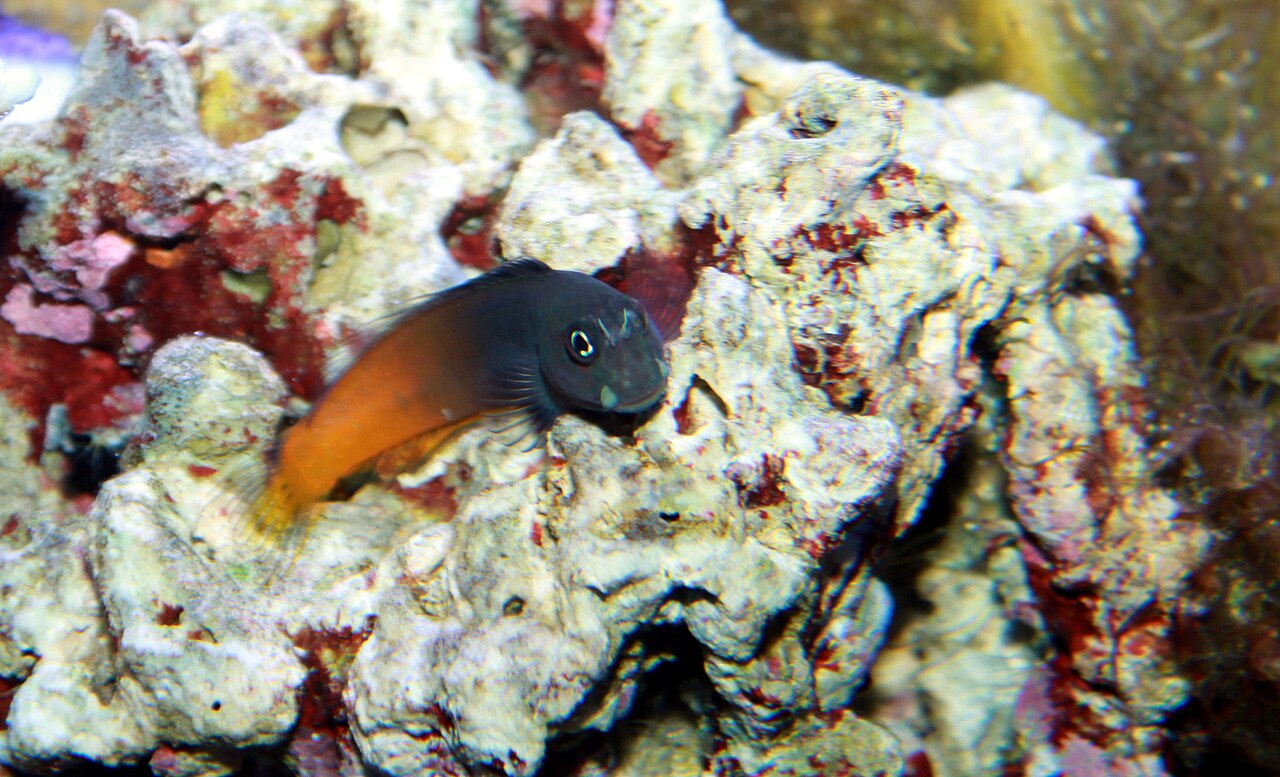
The bi-color blenny (Ecsenius bicolor) is a small saltwater fish that brings personality to a reef or fish-only tank. Its front half is dark blue to brown, while the rear half is bright yellow to orange. That two-tone look makes it easy to spot. Still, this fish needs more than a splashy appearance. It asks for a stable home with plenty of rockwork and a well-managed diet.
Many new keepers choose the bi-color blenny because it stays small, usually under four inches long. It perches on live rock and watches the tank. The fish darts out to grab food and then retreats to a favorite crevice. This behavior is fun to watch but it also means the fish feels stress without proper hiding spots. Before you bring one home, set up the tank the right way.
A bi-color blenny can live for several years in captivity with good care. Water quality matters more than most people expect. The fish is sensitive to ammonia and nitrite spikes. That is why you should only add one after the aquarium nitrogen cycle is complete. You should also plan for a balanced saltwater environment that meets its specific temperature, pH, and salinity needs.
This guide covers tank size, diet, compatibility, and daily care for the bi-color blenny. We will walk through the steps in order so you can build a reliable routine. Experienced reef keepers often use this fish as a way to add movement without risking corals. The catch is that this species sometimes nips at certain corals or clam mantles when hungry. Pay attention to feeding and tank mate choices.
What You’ll Need
- 30-gallon or larger saltwater aquarium
- 20-30 lbs live rock
- tight-fitting lid or mesh screen
- reliable aquarium heater
- protein skimmer or strong filtration
- sand substrate
- marine salt mix
- refractometer or hydrometer
- API Saltwater Master Test Kit
- seaweed clip
- frozen and dry marine foods
How Do You Care for a Bi-Color Blenny?
- Understand the bi-color blenny’s natural behavior
The bi-color blenny comes from Indo-Pacific reefs where it lives among coral rubble and rocky crevices. It rarely swims in open water for long. Instead, it hops from perch to perch and uses holes as bolt-holes. This is why live rock is not a decoration. It is the fish’s main requirement. Aquarium Co-Op notes that many blennies need rockwork to feel secure. LiveAquaria also lists the bi-color blenny as a moderate care species because of its specific habitat needs.
Most bi-color blennies stay under four inches long. They are active during the day and rest at night. The fish often perches near a favorite cave and watches for food. It may also dart out to inspect you when you walk by. This bold nature makes it a fun addition. But that boldness can turn into stress if the tank is too small or too bare. Provide many broken lines of sight so the fish can retreat.
Socially, this species is peaceful toward most fish but can be territorial around other blennies or similar bottom dwellers. Do not keep two bi-color blennies in a small tank. They may fight over the best rock holes. They also sometimes nip at small polyp stony corals or clam mantles. You can reduce that risk with regular feedings. Still, if you keep prized tridacnid clams, think twice. The blenny’s natural grazing instinct can become a problem.
Once you see the species as a rock-dwelling grazer, the rest of the care plan makes sense. You will focus on live rock, stable water, and mixed feeding. You will also choose tank mates that do not compete for the same shelters. A mature biological filter is essential. It keeps ammonia and nitrite at zero while the blenny settles in.
- Set up the right tank size and aquascape
Start with a 30-gallon tank or larger for one bi-color blenny. Some sources list 20 gallons as a bare minimum, but 30 gallons gives more stable water and room for rockwork. The fish needs horizontal swimming space near the bottom. A long tank is better than a tall one. The bi-color blenny reaches about three to four inches as an adult. That size means a 30-gallon tank can support it and a few peaceful tank mates with proper filtration.
Build the rock structure before adding fish. Use cured live rock or dry rock that you cycle properly. Create caves, overhangs, and narrow slots. The blenny likes to back into a hole with only its head showing. Place some rock near the front glass if you want to see the fish often. It will perch there once it feels safe. Leave open sand areas for other bottom dwellers and for the blenny to hop across.
Use a tight-fitting lid or mesh screen. Bi-color blennies are known jumpers when startled. A small gap near the filter or heater is enough for them to escape. Many keepers lose this fish because they forget to cover the tank. The lid also reduces evaporation and helps keep temperature stable. Choose a lid that allows gas exchange but blocks the fish from launching out.
Add a reliable heater and a powerhead for moderate flow. The bi-color blenny does not need extreme current. It does need well-oxygenated water. You can choose a quality aquarium heater sized for your tank volume. Filtration can be a canister, hang-on-back, or sump system. For help picking one, see this guide to the best aquarium filters. A protein skimmer improves water quality in most saltwater tanks but is not strictly required in a fish-only setup.

- Maintain stable water parameters
Bi-color blennies tolerate a fairly standard reef environment. Keep the temperature between 72 and 78 degrees Fahrenheit. The pH should stay between 8.1 and 8.4. Salinity can range from 1.020 to 1.025 specific gravity. Stability matters more than hitting one exact number. Large swings stress the fish and weaken its immune system. Aqueon advises regular testing to catch problems before they turn serious.
Ammonia and nitrite must both read zero. Nitrate should stay under 20 ppm, and lower is better. Use a liquid test kit rather than test strips for accuracy. The API Saltwater Master Test Kit covers pH, ammonia, nitrite, and nitrate. Test weekly at first. Once the tank is stable, you can test every two weeks, but check alkalinity and calcium monthly if you keep corals.
Do partial water changes of 10 to 20 percent every two to four weeks. Match the new saltwater to the tank temperature and salinity before adding it. Sudden changes can make the blenny hide for days. If you need more detail on water change frequency, see this guide on how often to change aquarium water. Consistency is the real secret. The fish will show better color and appetite in stable conditions.
A reliable heater matters because room temperature often drops at night. Use a heater with a built-in thermostat or pair one with a temperature controller. Check the heater regularly for cracks or salt creep. If the heater fails in winter, the tank can swing several degrees in a few hours. That is enough to bring on ich or cloudy eyes. So treat the heater as essential safety gear, not an afterthought.
- Feed a balanced diet
The bi-color blenny is an omnivore with a strong leaning toward algae. In the wild, it grazes on microalgae and small invertebrates. In captivity, it accepts most prepared foods, but variety keeps it healthy. Offer marine-based flakes or pellets, spirulina, nori, mysis shrimp, brine shrimp, and finely chopped seafood. Rotate at least two or three food types each week. This helps prevent nutritional gaps. This care plan differs from the lawnmower blenny care guide because the bi-color blenny eats more meaty foods.
Use a nori clip or seaweed sheet holder to provide dried marine algae. Clip a small piece of nori to the glass or rock near the blenny’s favorite perch. The fish will learn to come to the clip. Replace uneaten nori after 24 hours. A simple nori clip with a suction cup works well. Some blennies also graze on live rock between meals. That natural behavior helps keep the tank clean.
Feed small amounts once or twice per day. A single bi-color blenny only needs a few bites per feeding. Overfeeding pollutes the water and can drive up nitrate. Watch the fish’s belly. A healthy blenny should look slightly rounded but not bloated. If it ignores food for more than a day, check the temperature and water quality. Stress often shows up as a lost appetite before any visible spots.
Do not rely on leftovers alone. In a new or very clean tank, there may not be enough natural algae to sustain the fish. That is when people see it nipping at coral or clam mantles. The link between hunger and coral nipping is strong. Feed enough algae-based foods and offer meaty items only as a supplement. This reduces the chance that the blenny treats your corals as a salad bar.

- Select compatible tank mates
A bi-color blenny does best in a peaceful community tank. Good tank mates include clownfish, cardinalfish, royal grammas, firefish gobies, and small wrasses. These species tend to ignore the blenny’s rock perching behavior. They also do not compete heavily for the same crevice territory. You can learn more about peaceful options in this clownfish ocellaris care guide. It covers one of the most common companions.
Avoid aggressive or highly territorial fish. Large dottybacks, damselfish, hawkfish, and most triggers can bully the blenny. The blenny may hide constantly and refuse to eat. That leads to slow weight loss. In a small tank, even a semi-aggressive fish can become a problem. Choose tank mates that stay under five inches and have calm feeding styles. This reduces competition at feeding time.
Be cautious with other blennies and similar bottom dwellers. Two blennies often fight unless the tank is very large with many separate rock piles. Gobies and dragonets are usually fine because they use different parts of the tank. Still, watch for chasing around the rockwork. If one fish blocks the other from leaving its cave, you may need to separate them.
Reef compatibility is usually good, but it is not absolute. Many bi-color blennies will not harm corals. Others may pick at clam mantles, SPS polyps, or fleshy LPS corals. If you want a reef tank, keep the fish well fed and provide algae. Observe the first two weeks closely. If it nips a coral repeatedly, you may need to move either the fish or the coral. The fish is not considered fully reef safe by every source.
- Introduce the bi-color blenny to the tank
Quarantine any new fish before adding it to the main display. A separate 10-gallon quarantine tank works for a bi-color blenny. Observe the fish for two to four weeks. Watch for rapid breathing, spots, fin damage, or refusal to eat. Treat any disease in quarantine, not in the main tank. Medications like copper are dangerous in reef systems with invertebrates.
Acclimate the fish slowly once quarantine is done. Float the bag for 15 minutes to equalize temperature. Then drip acclimate the fish for 30 to 45 minutes. Add a small amount of tank water to the bag or bucket every few minutes. This allows the blenny to adjust to your salinity and pH. Do not rush this process. Fish that are dumped in quickly often go into shock.
Release the fish near the rockwork, not in open water. Turn off the tank lights for an hour or two. This gives the blenny time to find a hiding spot. It may not eat for the first day or two. That is normal. The fish needs time to learn the tank layout and feel safe. Keep other fish from crowding the new arrival by feeding them on the opposite side.
After the first week, the bi-color blenny should have a favorite perch and a regular feeding response. If it still hides and looks thin, check the social dynamics. Some tank mates may be intimidating it. You may need to rearrange rockwork to break up territories. For more on handling disease before it spreads, see this article on how to treat ich in aquarium fish.
- Spot health issues and provide ongoing care
Watch the bi-color blenny every day for signs of illness. Common issues include marine ich, bacterial infections, and internal parasites. Ich looks like tiny white dots on the fins and body. The fish may also scratch against rocks. Cloudy eyes, ragged fins, or rapid breathing can signal poor water quality or aggression. Catch these signs early and act quickly.
Keep a quarantine tank ready for treatment. Many marine fish medications contain copper or other ingredients that kill corals and invertebrates. That is why you never treat the main reef tank. If the blenny shows signs of disease, move it to a separate hospital tank. Match the water parameters to the display as closely as possible. This reduces stress during treatment.
Maintain a consistent care routine. Feed at the same times each day and perform water changes on a schedule. Check equipment weekly. Clean the heater, pump intakes, and lid to prevent salt buildup. Test the water after any change in livestock or feeding amount. A simple log book helps you spot slow drifts before they become emergencies.
With good care, a bi-color blenny can live five years or more. The fish will become a bold, recognizable member of your tank. It will greet you at feeding time and perch where you can see it. The main threats are unstable water, poor diet, and aggressive tank mates. Manage those three, and this fish is fairly forgiving.

Red Flags & Warnings
- 🚨 Do not skip quarantine. New bi-color blennies can carry marine ich or flukes that spread quickly in a display tank.
- 🚨 Never treat a reef tank with copper-based medications. They kill corals, anemones, and other invertebrates.
- 🚨 Do not keep two bi-color blennies in a tank under 75 gallons. They will likely fight over rock territory.
- 🚨 Watch the lid. This species jumps when startled or chased, and even small openings lead to escapes.
- 🚨 Avoid overfeeding. A few bites once or twice a day is enough, and excess food fuels algae and nitrate problems.
Frequently Asked Questions
What size tank does a bi-color blenny need?
A 30-gallon tank is the recommended minimum for one adult bi-color blenny. A larger tank is better if you plan to keep several peaceful tank mates. The fish reaches about three to four inches and needs rockwork for hiding.
What do bi-color blennies eat?
They eat a mix of marine algae and meaty foods. Offer nori, spirulina flakes, mysis shrimp, brine shrimp, and finely chopped seafood. Feed small portions once or twice daily.
Are bi-color blennies reef safe?
Most are usually reef safe, but not always. Some individuals nip at SPS polyps, fleshy LPS corals, or clam mantles, especially when underfed. Provide algae-based foods and observe closely.
Can I keep a bi-color blenny with clownfish?
Yes, clownfish are generally good tank mates. Both are peaceful enough to coexist. Just provide enough space and do not overcrowd the tank.
How long do bi-color blennies live?
They can live five years or more in a stable, well-maintained saltwater aquarium. Good water quality, a varied diet, and low stress help them reach that lifespan.
Why is my bi-color blenny hiding and not eating?
Hiding is normal for the first few days after introduction. If it lasts more than a week, check water parameters and look for aggressive tank mates. Stress, ammonia, or bullying can all cause appetite loss.
What Should You Remember?
- Tank size: Use at least a 30-gallon tank with plenty of live rock caves.
- Water quality: Keep ammonia and nitrite at zero, nitrate below 20 ppm, pH between 8.1 and 8.4.
- Diet: Offer algae and meaty foods, and use a nori clip for daily grazing.
- Compatibility: Choose peaceful tank mates and avoid other blennies in small tanks.
- Quarantine: Place new fish in a separate tank for two to four weeks.
- Observation: Watch daily for white spots, ragged fins, and appetite changes.
This article is for general information only and is not a substitute for professional veterinary or aquarium specialist advice. Always research the specific needs of your fish and consult an expert before making care decisions.