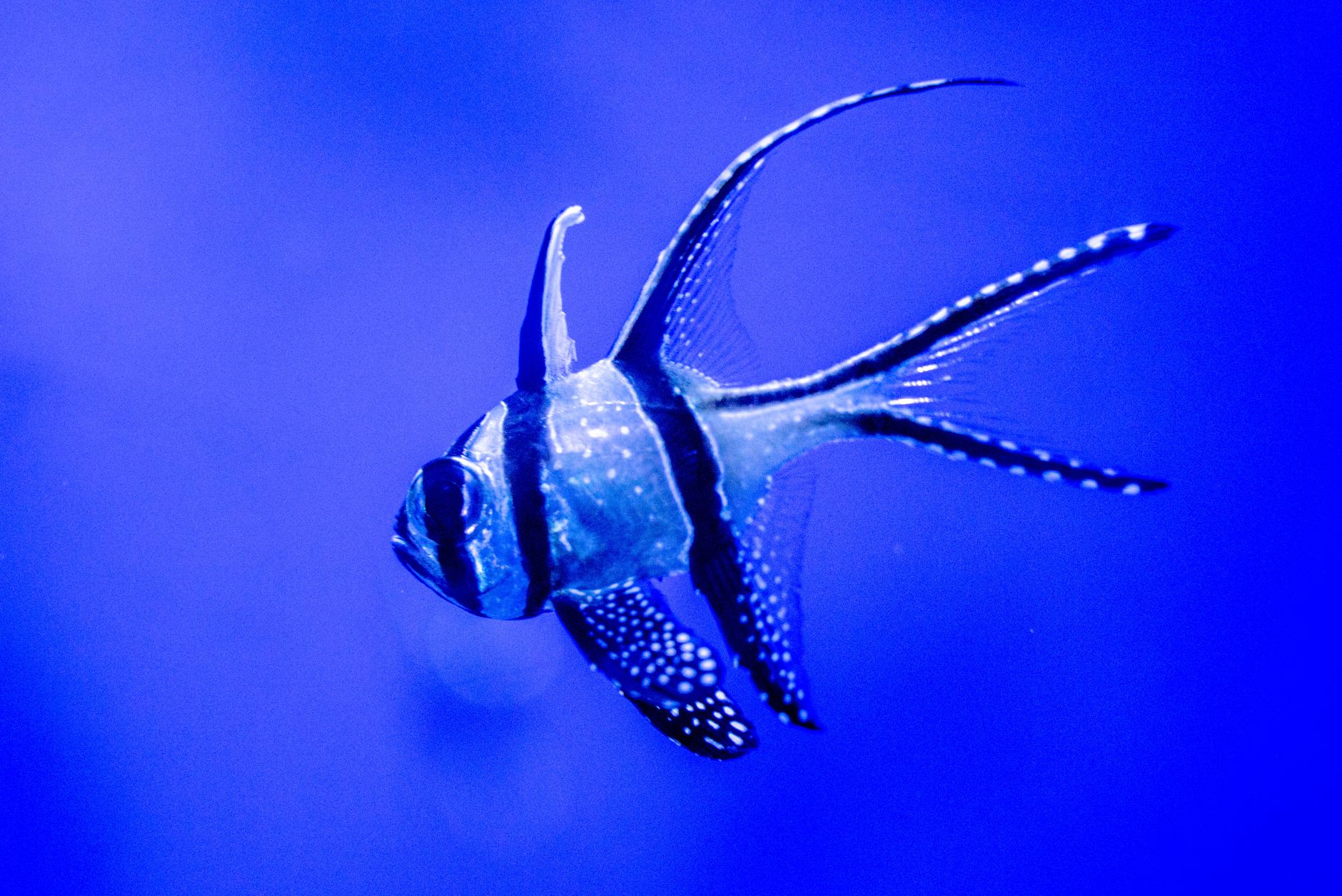
The Bangaii cardinalfish (Pterapogon kauderni) is one of the most recognizable saltwater fish in the hobby. Its black stripes, tall fins, and slow hovering motion make it a favorite for reef tanks and peaceful fish-only displays. Adult Bangaii cardinalfish reach about 3 inches in length, so they do not need a massive aquarium. Still, they require very stable water conditions and a carefully planned community. This guide will walk through the proper tank size, diet, and compatible tankmates for this beautiful species.
Many new saltwater keepers are drawn to Bangaii cardinalfish because they are hardy once settled. The catch is that they can be picky at first and may refuse food for a few days after introduction. A fully cycled tank is essential. Before adding this fish, review how to cycle a fish tank and then test the water consistently. A stable environment reduces stress and encourages feeding. With the right setup, these fish can live for five to seven years.
One important note is that wild Bangaii cardinalfish populations are threatened in their native range around Indonesia. Captive-bred specimens are widely available and typically adapt faster to aquarium life. If you are comparing cardinalfish species, the pajama cardinalfish care guide covers another peaceful option. This article focuses specifically on the Bangaii cardinalfish, including water parameters, feeding schedules, and mate and tankmate selection.
According to Aqueon’s aquarium care references, Bangaii cardinalfish do best in a calm, well-filtered aquarium. They are not strong swimmers and can be outcompeted by faster fish at feeding time. A reliable heater is critical because temperature swings weaken their immune system. Check the Eheim Jager Aquarium Heater on Amazon if you need a dependable unit. Now let’s get into the step-by-step care process.
What You’ll Need
- 30-gallon or larger aquarium
- Heater with thermostat
- Filter rated for saltwater
- Refractometer or hydrometer
- Saltwater test kit
- Live rock or dry rock
- Frozen Mysis shrimp and marine pellets
- Quarantine tank (10 gallons)
How Do You Care for Bangaii Cardinalfish?
- Choose a 30-Gallon or Larger Tank
Start with a tank that holds at least 30 gallons for a single fish or a mated pair. This size gives the Bangaii cardinalfish enough horizontal swimming space and helps dilute waste. A 20-gallon tank can work temporarily for a very small juvenile, but it is not a good long-term home. If you plan to keep a small group of four or five, move up to a 40-gallon or 55-gallon aquarium. Long tanks are better than tall tanks because these fish hover and move horizontally rather than up and down.
Filtration should be gentle but effective. Bangaii cardinalfish do not enjoy strong water flow, so choose a filter rated for your tank size and adjust the output if needed. A sump or a high-quality hang-on-back filter can work well. For more options, see our guide to the best aquarium filters 2026. The goal is to keep ammonia and nitrite at zero while creating only moderate surface agitation. Add a lid or mesh screen, because while these fish are not frequent jumpers, they can leap when startled.
Place the tank away from direct sunlight and busy walkways. Sudden movements and bright light can cause the fish to hide for extended periods. A quiet room with stable temperature is ideal. Before adding any water, make sure the stand is level and the tank is properly supported. This step connects directly to water parameter setup, because a larger volume of water is easier to keep stable for a species that dislikes rapid changes.
If you are setting up a new tank, choose a beginner-friendly system. Our best beginner fish tanks roundup lists setups that include everything needed. Avoid adding Bangaii cardinalfish until the nitrogen cycle is complete. A rushed cycle is the most common cause of early fish loss.
- Set Stable Water Parameters and Salinity
Bangaii cardinalfish need warm, stable saltwater. Keep the temperature between 78 and 80 degrees Fahrenheit. The pH should stay between 8.1 and 8.4, and specific gravity should measure 1.023 to 1.025. Ammonia and nitrite must always read zero, with nitrate kept below 20 ppm. Test these values weekly at first, then every other week once the tank is mature. A saltwater test kit makes this routine much easier. Avoid large water chemistry swings.
Cycle the tank completely before adding the fish. A full nitrogen cycle can take four to eight weeks in a new marine aquarium. If you are unfamiliar with the process, read our guide on the aquarium nitrogen cycle explained. Once the cycle is done, acclimate the Bangaii cardinalfish slowly to the new water. Drip acclimation over 45 to 60 minutes is best. This helps the fish adjust to your tank’s specific salinity and temperature.
Regular water changes are the easiest way to keep parameters stable. Replace 10 to 20 percent of the water every one to two weeks. Use a quality salt mix and a refractometer to measure salinity before each change. Top off evaporated water with fresh water, not saltwater, because salt does not evaporate. Consistency matters more than chasing an exact number, but the ranges above are the target.
Many keepers ask if this fish can handle a fish-only tank with lower salinity. It is possible to keep Bangaii cardinalfish at 1.020 in a fish-only setup, but reef tanks and most saltwater communities do better at 1.024. Sudden shifts from store water to your tank cause stress and disease. Always match the water as closely as possible.
- Create Hiding Spots and Low-Flow Aquascape
Bangaii cardinalfish feel secure when they have caves, overhangs, and shadowed areas. Use live rock or dry rock to build several hiding spots. Arrange the rock so there are open swimming lanes in front of the caves. The fish will hover near the rockwork and dart into a crevice if it feels threatened. Avoid stacking rocks high enough to tumble. Secure larger pieces with aquarium-safe epoxy or place them on the bottom glass before adding sand.
Lighting should be moderate. Bright reef lighting can make this species shy, especially in a shallow tank. If you run strong LED lights for corals, create shaded zones with rock ledges. For a fish-only tank, a simple marine LED is enough. Our best aquarium lighting 2026 guide covers fixtures that work for fish-only and soft coral setups.
Water flow should be gentle to moderate. Bangaii cardinalfish are not built for strong currents. Position powerheads so the flow does not blast across the entire tank. If the fish is constantly fighting the current, it may hide and refuse food. You want just enough flow to keep detritus suspended and oxygen levels high. A wavemaker on a low setting can work, but watch the fish’s behavior during the first few days.
Substrate choice is not critical, but fine sand or small crushed coral works well. These fish do not disturb the substrate much. They swim mostly in the water column and near rockwork. This step sets the stage for feeding success, because a comfortable fish is far more likely to eat.

- Feed a Varied Meaty Diet Twice Daily
Bangaii cardinalfish are carnivores. In the wild they eat small crustaceans, fish larvae, and plankton. In the aquarium, offer a mix of Mysis shrimp, enriched brine shrimp, chopped krill, and high-quality marine pellets. Feed small portions once or twice per day. Each feeding should be small enough that the fish consumes the food within two to three minutes. Overfeeding leads to poor water quality, which this species does not tolerate.
Start with frozen Mysis shrimp because it is highly palatable and nutritious. Thaw the food in a small cup of tank water, then use a pipette or turkey baster to target-feed near the fish. Bangaii cardinalfish often wait for food to drift by rather than chasing it. If you have faster tankmates, target feeding ensures the cardinalfish gets enough to eat. A quality pellet like Hikari Marine S can be offered once the fish is eating well.
Some wild-caught individuals may refuse dry foods at first. Live adult brine shrimp or live blackworms can stimulate a feeding response. If the fish still does not eat after three days, check water parameters and reduce tank traffic. A stressed Bangaii cardinalfish may breathe rapidly or hover near the surface. Keep lighting dim and offer food at the same time each day. Consistent routines reduce stress and improve appetite.
Diet variety is important for long-term health. Rotate between at least three different foods each week. Soaking dry foods in a vitamin supplement or garlic extract can also improve acceptance. Avoid feeding large chunks that the fish cannot swallow. This fish has a relatively small mouth, so finely chopped foods work best. Healthy feeding directly supports color, fin condition, and resistance to disease.

- Select Peaceful Tankmates Only
Bangaii cardinalfish are peaceful and slow-moving. They should never be housed with aggressive or highly territorial fish. Good tankmates include clownfish, firefish gobies, royal grammas, pajama cardinalfish, and small wrasses that are not aggressive. Avoid large dottybacks, triggers, lionfish, and most puffers. Even peaceful fish can outcompete them for food if the tank is too crowded or the fish are too fast.
Aquarium Co-Op emphasizes that quarantine and observation are key when mixing species. Add the most peaceful species first, then observe interactions at feeding time. Bangaii cardinalfish can hold their own with small gobies and blennies, but they will lose food to aggressive damsels. The green chromis care guide is a good example of a schooling fish that can work in the same tank, but keep a group of chromis well fed so they do not nip.
For reef tanks, Bangaii cardinalfish are considered coral safe. They will not pick at corals, anemones, or clams. They may eat tiny ornamental shrimp, especially very small sexy shrimp or juvenile shrimp. Most cleaner shrimp and peppermint shrimp are too large to be at risk. The firefish goby care guide describes another peaceful reef fish that pairs well with cardinalfish.
Do not keep more than one male Bangaii cardinalfish in a small tank. A mated pair is ideal, and adding several juveniles at once can work in a large aquarium. Once they mature, subordinate males may be chased. If you see torn fins or one fish hiding constantly, you may need to separate them. Compatibility includes intraspecies behavior, not just interactions with other species.
- Quarantine and Acclimate New Fish Slowly
Always quarantine new Bangaii cardinalfish for two to four weeks before adding them to the display tank. A simple 10-gallon quarantine tank with a sponge filter, heater, and PVC pipe for hiding works well. Quarantine lets you observe for ich, velvet, and bacterial infections without exposing your main tank. Treat any disease before the fish enters the display. Our guide on how to treat ich in aquarium explains one of the most common saltwater diseases.
Drip acclimation is essential when moving the fish from quarantine or from the store bag. Place the fish in a bucket and slowly drip water from the display tank into the bucket over 45 to 60 minutes. This gradually matches temperature, pH, and salinity. Never pour water from the store into your tank. Net the fish gently and release it into a dimly lit area of the tank. Turn off the lights for a few hours to reduce stress.
This step also applies when introducing new tankmates. Even if the Bangaii cardinalfish is already established, new fish can carry disease. Use a separate quarantine system for all new arrivals. Once quarantine is complete, you can use an acclimation box inside the display so the existing fish can see the newcomer. This works well for shy species that may be harassed initially.
Watch the fish closely for the first week after introduction. It may hide and refuse food for a day or two. That is normal. However, if it remains hidden for more than three days, develops white spots, or breathes rapidly, investigate water quality and possible disease. Quick action can save the fish. This step connects to ongoing maintenance and health checks.
- Maintain Water Quality and Monitor Health Weekly
Ongoing maintenance is the most important part of long-term Bangaii cardinalfish care. Perform a 10 to 20 percent water change every one to two weeks. Use a gravel vacuum to remove uneaten food and detritus from the substrate. Replace filter media according to the manufacturer’s schedule, but do not change all biological media at once. Clean the glass, check the heater, and inspect the fish for any visible issues. For water change guidance, see how often to change aquarium water.
Test the water weekly, especially during the first six months. Record temperature, salinity, pH, ammonia, nitrite, and nitrate. A log helps you spot trends before they become problems. If nitrate rises above 20 ppm, increase the size or frequency of water changes. This species is sensitive to deteriorating water quality, which can lead to fin rot and bacterial infections. Stable parameters are more important than perfect numbers.
Observe the fish every day during feeding. A healthy Bangaii cardinalfish hovers calmly, has clear eyes, and eats with interest. Signs of trouble include clamped fins, rapid breathing, white spots, red streaks, and refusal to eat. If you notice any of these, test the water first, then consider whether a new tankmate caused stress. Early help prevents minor issues from becoming serious.
Finally, avoid making multiple changes at once. If you adjust the heater, change the filter media, or add new fish, do it gradually. Bangaii cardinalfish respond best to a stable routine. Feed at the same times, keep lighting on a timer, and perform water changes on a consistent schedule. A well-maintained tank allows these fish to live five to seven years or more.

Red Flags & Warnings
- 🚨 Do not add Bangaii cardinalfish to an uncycled tank. Ammonia or nitrite spikes can kill them within days.
- 🚨 Avoid strong powerheads and high-flow pumps. Constant fighting against current causes stress and feeding refusal.
- 🚨 Never house Bangaii cardinalfish with aggressive species like large dottybacks, triggerfish, or lionfish. They cannot compete for food or territory.
- 🚨 Buy captive-bred specimens when possible. Wild-caught Bangaii cardinalfish are threatened and often arrive stressed and harder to feed.
- 🚨 Quarantine all newcomers. Skipping quarantine exposes your established fish to marine ich and velvet, which spread quickly.
- 🚨 Do not keep multiple males in a small tank. Aggression between males can cause torn fins and death.
Frequently Asked Questions
What size tank do Bangaii cardinalfish need?
A single Bangaii cardinalfish or a mated pair needs at least 30 gallons. For a small group of four or five fish, use 40 gallons or more. Larger tanks help dilute waste and reduce territorial stress.
Are Bangaii cardinalfish reef safe?
Yes, Bangaii cardinalfish are considered reef safe. They will not nip corals, anemones, or clams. They may eat very small ornamental shrimp, but most common shrimp are safe.
What do Bangaii cardinalfish eat?
They eat meaty foods like Mysis shrimp, enriched brine shrimp, chopped krill, and high-quality marine pellets. Feed small portions once or twice daily. Target feeding helps when faster tankmates are present.
Can you keep Bangaii cardinalfish together?
A mated pair does well in a 30-gallon tank. A small group can work if all are added at the same time and the tank is large enough. Watch for aggression among males as they mature.
How long do Bangaii cardinalfish live?
With good water quality and a varied diet, Bangaii cardinalfish often live five to seven years in home aquariums. Stable parameters and a low-stress environment are key to longevity.
Do Bangaii cardinalfish jump?
They are not frequent jumpers, but they can jump if startled or chased by aggressive tankmates. A tight-fitting lid or mesh screen is recommended to prevent accidents.
What Should You Remember?
- Tank size: Use at least a 30-gallon tank for a single or pair, and 40 gallons or more for a small group.
- Water parameters: Keep temperature at 78-80°F, pH 8.1-8.4, and salinity 1.023-1.025 with zero ammonia and nitrite.
- Diet: Offer meaty foods like Mysis shrimp and marine pellets once or twice daily, using target feeding if needed.
- Tankmates: Choose peaceful reef-safe species like clownfish, firefish gobies, and royal grammas. Avoid aggressive fish.
- Habitat: Provide caves, shaded areas, and low to moderate flow so the fish feels secure.
- Health: Quarantine all new fish, perform weekly water changes, and monitor for white spots or rapid breathing.
This article is for general information only and is not a substitute for professional veterinary or aquarium specialist advice. Always research the specific needs of your fish and consult an expert before making care decisions.