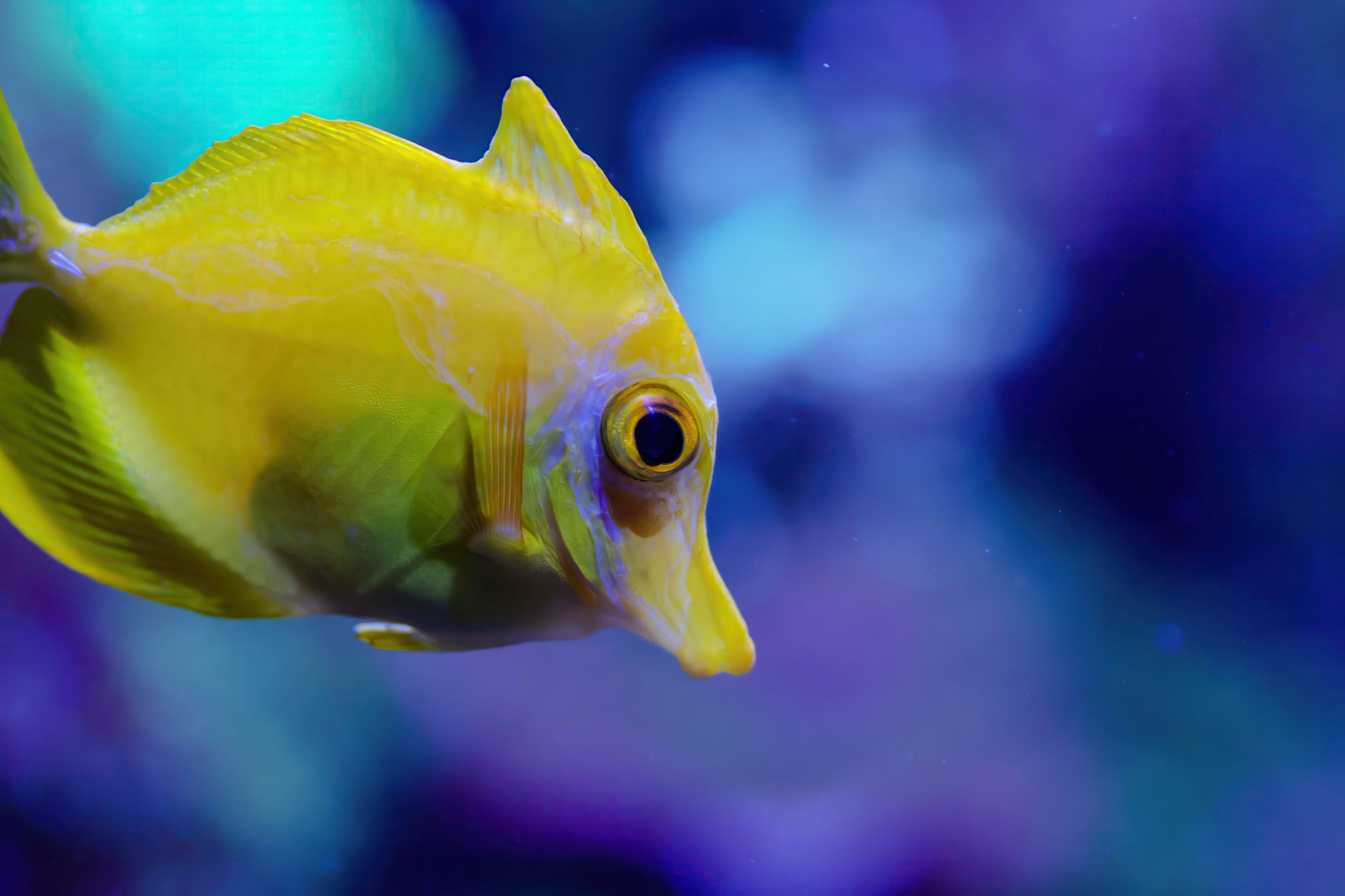
Yellow tangs are one of the most recognizable saltwater fish in the hobby. Their bright yellow body and active swimming make them a favorite for large reef tanks. But caring for a yellow tang goes beyond dropping in flakes. These fish need room, clean water, and a diet built around algae. This guide walks through tank size, water chemistry, feeding, and compatibility so you can keep one healthy for a decade or more.
A yellow tang can reach about 8 inches in length and lives 10 to 20 years in a well-run system. That means a small tank will stunt its growth and shorten its life. According to Aqueon, yellow tangs need at least a 125-gallon aquarium with plenty of open swimming space. If you are still planning your setup, check our best aquarium filters 2026 guide to choose equipment that can handle a big marine tank.
The yellow tang is also called the surgeonfish because of the sharp spine near its tail. This spine can cut nets and hands, so handle with care. The species is native to the Pacific Ocean around Hawaii and other reefs. Wild populations face collection pressure, which is one reason many fishkeepers now look for captive-bred yellow tangs. Plan the tank and equipment before you bring one home. A stable, mature system makes the transition far less stressful for the fish.
What You’ll Need
- 125-gallon or larger aquarium with stand
- Protein skimmer and sump
- Reliable heater, rated for tank volume
- Powerhead or wavemaker
- Marine salt mix and refractometer
- Ammonia, nitrite, nitrate, pH, alkalinity test kits
- Seaweed clip and nori sheets
- Quarantine tank with sponge filter and heater
How Do You Care for Yellow Tangs?
- Start with a 125-Gallon or Larger Tank
Start with a tank that gives an adult yellow tang room to swim. Yellow tangs can reach 8 inches long. A 125-gallon tank is the commonly cited minimum, but a 6-foot-long 180-gallon tank is even better. This fish is an open-water swimmer. It cruises around rocks and corals all day. A short or narrow tank causes stress and aggression.
The tank should have open horizontal space, not just tall rockwork. Leave a clear swimming lane in the front and middle. Use live rock or dry rock to create caves for sleep and retreat. Strong water movement is important because tangs come from surge zones. Choose a powerhead or wavemaker with adjustable flow.
Filtration must be heavy duty. Yellow tangs eat a lot and produce a lot of waste. A sump with a protein skimmer works well. You can find recommendations in our best aquarium filters 2026 article. Add a heater rated for the tank volume. A quality Eheim Jager Aquarium Heater can hold temperature steady.
Do not try a 75-gallon tank for a juvenile and upgrade later. Many fishkeepers do this and then face aggression or stunting. The upgrade often does not happen. Start big. If you already have a 75, this is not the fish for that tank. Plan long term from day one.

- Keep Water Parameters Stable and Clean
Yellow tangs are sensitive to ammonia, nitrite, and big swings in chemistry. Keep water temperature between 72 and 78°F. Specific gravity should stay between 1.020 and 1.025. pH should be 8.1 to 8.4. Alkalinity between 8 and 12 dKH helps keep pH stable. Test these weekly.
Ammonia and nitrite must read zero at all times. Nitrate should stay below 20 ppm, but lower is better for long-term health. High nitrate dulls colors and weakens the immune system. Use a saltwater test kit to track these levels. The API Saltwater Master Test Kit and other quality kits are fine choices. You can also check API Saltwater Master Test Kit on Amazon.
A cycled tank processes waste into less harmful nitrate. But water changes still remove nitrate. Aim to change 10 to 20 percent of the water every two weeks. This replaces trace elements that corals and fish use. It also removes dissolved organics that fuel algae.
Temperature stability matters more than the exact number. Sudden shifts of more than 2 degrees can stress a tang and trigger ich. Place the tank away from sunny windows and heating vents. Aquarium Co-Op recommends using a reliable heater and thermometer together. Check the heater daily.
- Cycle the Tank Completely Before Adding Your Tang
A new saltwater tank must be fully cycled before fish go in. Cycling grows beneficial bacteria that convert ammonia into nitrite and then nitrate. Without this, a yellow tang will be poisoned by its own waste. The process can take four to six weeks. Rushing it is the most common beginner mistake.
Use a fishless cycle with pure ammonia or a piece of raw shrimp. Add a bacterial starter if you want to speed things up. Test every day. You will see ammonia spike, then nitrite spike, then both fall to zero while nitrate rises. Only when ammonia and nitrite are zero and nitrate is under 20 ppm is the tank safe for a tang.
Our step-by-step how to cycle a fish tank guide explains the full process. It covers both fishless and fish-in methods. We do not recommend fish-in cycling for a yellow tang.
Even after the cycle, add fish slowly. Start with a hardy clean-up crew or a small peaceful fish. Let the biological filter adjust to each addition. Yellow tangs are not good first fish. Add them after the tank has been stable for at least two months.
- Feed a Varied, Algae-Rich Diet
Yellow tangs are grazers. In the wild they spend most of the day picking algae off rocks. In captivity, they need a diet that is mostly vegetable matter. Offer dried seaweed or nori every day. Clip a sheet to the glass with a Two Little Fishies Seaweed Clip and let the fish graze.
High-quality algae pellets or flakes designed for herbivores work as a base. Omega One Veggie Rounds are a good sinking option. Feed items like spirulina brine shrimp and mysis occasionally for protein. But keep meaty foods to a small portion, maybe twice a week.
Feed small amounts two or three times a day. Yellow tangs have fast metabolisms. A slow, constant supply of vegetable matter keeps them calm and healthy. Overfeeding meaty foods can cause bloating and fatty liver. Remove uneaten food after ten minutes.
If your tang ignores nori at first, try soaking it in garlic extract. You can also use a lettuce clip with romaine or spinach for a short period. But nori or marine algae is best. Do not feed iceberg lettuce. It has almost no nutrition.

- Pick Tank Mates That Won’t Trigger Aggression
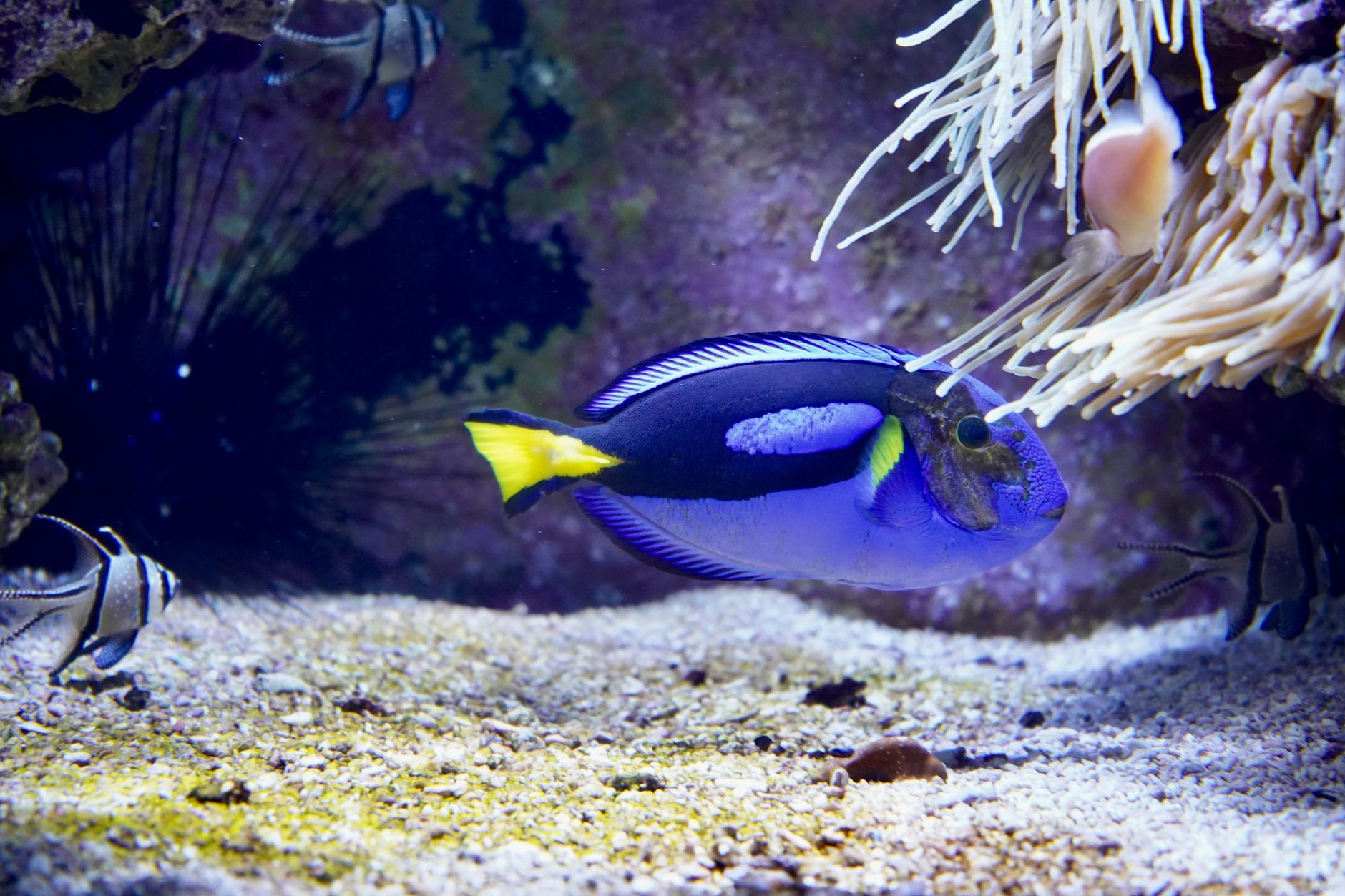
Yellow tangs can be peaceful in a large tank but aggressive in a crowded one. They often fight with fish that look similar. Other tangs, especially those with a yellow body, are high-risk tank mates. A blue tang is different enough but still needs a very large tank. Our blue tang care guide covers their specific needs.
Good tank mates include clownfish, firefish gobies, royal grammas, cardinalfish, and some wrasses. These fish do not compete for the same algae food. They also stay smaller and do not challenge the tang’s swimming space. See our clownfish ocellaris care guide for a compatible species.
Angelfish can work if the tank is large and they are introduced carefully. A flame angelfish adds color without outgrowing most tang setups. Avoid triggers, groupers, and large puffers. They may harass the tang or outcompete it for food.
If you want multiple tangs, use a 300-gallon or larger tank. Introduce them at the same time and watch for chasing. Have plenty of visual barriers with rockwork. Be ready to separate them if one hides or stops eating. Aggression can appear weeks later, so monitor daily.
- Quarantine and Acclimate New Tangs
Quarantine is not optional for yellow tangs. They are prone to marine ich and other parasites. A new tang should spend at least two to four weeks in a separate quarantine tank. This lets you observe for spots, rapid breathing, or scratching. Treat in quarantine, never in the display.
Set up a simple quarantine tank with a sponge filter, heater, and PVC pipe for hiding. Match the display tank’s water parameters. Use copper or chloroquine phosphate only if you see disease. Our guide on how to treat ich in aquarium explains safe treatment options.
After quarantine, acclimate the tang slowly. Float the bag for 15 minutes to equalize temperature. Then use a drip line to add display tank water to the bag over 45 to 60 minutes. This prevents osmotic shock from sudden salinity or pH changes.
Turn off the display lights during release. Net the tang gently and place it into the tank. Do not pour quarantine water into the display. Leave the lights off for several hours. The tang may hide for a day or two. Offer a small piece of nori on day two.
- Perform Regular Water Changes and Equipment Checks
Long-term health depends on stable maintenance. Change 10 to 20 percent of the water every two weeks with a quality marine salt mix. Match new water temperature and salinity to the tank before adding. Use a gravel vacuum to remove detritus from the sand bed.
Clean or replace mechanical filter media monthly. Rinse bio media gently in old tank water, not tap water. Check the protein skimmer cup and clean it when it fills. Inspect the heater for cracks and the powerhead for calcium buildup.
Test water parameters weekly: ammonia, nitrite, nitrate, pH, alkalinity, and salinity. How often to change aquarium water has more tips on scheduling. If nitrate rises above 20 ppm, increase water change frequency or size.
Keep a log of test results. This helps spot slow trends before they become problems. A sudden rise in nitrate or drop in pH often points to overfeeding or a dying organism. Correct the cause on the same day you notice it.

Red Flags & Warnings
- 🚨 Never keep a yellow tang in a tank under 125 gallons. The fish grows to 8 inches and needs long horizontal swimming space.
- 🚨 Do not add a tang to an uncycled tank. Ammonia and nitrite will burn its gills and cause death within days.
- 🚨 Skip quarantine at your own risk. Marine ich can spread to every fish in the display and is hard to treat once established.
- 🚨 Avoid keeping multiple tangs in tanks smaller than 300 gallons. Fights can lead to torn fins, starvation, and bacterial infections.
- 🚨 Do not feed only flake or pellet foods without algae. Lack of vegetable matter can cause head and lateral line erosion and digestive blockages.
- 🚨 Watch temperature swings. Yellow tangs are sensitive to sudden changes of more than 2 degrees. Use a reliable heater and thermometer.
Frequently Asked Questions
Can yellow tangs live in a 100-gallon tank?
A 100-gallon tank is too small for an adult yellow tang. They need at least a 125-gallon tank with a 6-foot length. Even a 125 is a minimum, not a luxury.
What do yellow tangs eat?
They eat marine algae, nori sheets, spirulina pellets, and occasional mysis or brine shrimp. Algae should form at least 70 percent of their diet.
Are yellow tangs reef safe?
Yes, yellow tangs are generally reef safe. They may occasionally nip at corals if underfed, but they usually leave corals alone and graze on algae instead.
How big do yellow tangs get?
Yellow tangs reach about 8 inches in length in a healthy aquarium. They grow quickly in the first few years.
Can you keep two yellow tangs together?
You can try in a very large tank, 300 gallons or more. Introduce them at the same time and provide visual barriers. Watch for aggression daily.
What water temperature do yellow tangs need?
Keep the water between 72 and 78°F. Specific gravity should be 1.020 to 1.025 and pH between 8.1 and 8.4.
What Should You Remember?
- Tank size: Start with at least a 125-gallon, 6-foot-long aquarium for one adult yellow tang.
- Water chemistry: Keep ammonia and nitrite at zero, nitrate below 20 ppm, pH 8.1-8.4, and temperature 72-78°F.
- Diet: Feed mostly nori and marine algae, with small amounts of meaty food twice a week.
- Compatibility: Choose peaceful, unlike-shaped tank mates and avoid other tangs unless the tank is over 300 gallons.
- Quarantine: Always quarantine new tangs for 2 to 4 weeks to prevent marine ich.
- Maintenance: Change 10 to 20 percent of the water every two weeks and test parameters weekly.
- Long term: A healthy yellow tang can live 10 to 20 years and grow to 8 inches, so plan for a permanent home.
This article is for general information only and is not a substitute for professional veterinary or aquarium specialist advice. Always research the specific needs of your fish and consult an expert before making care decisions.