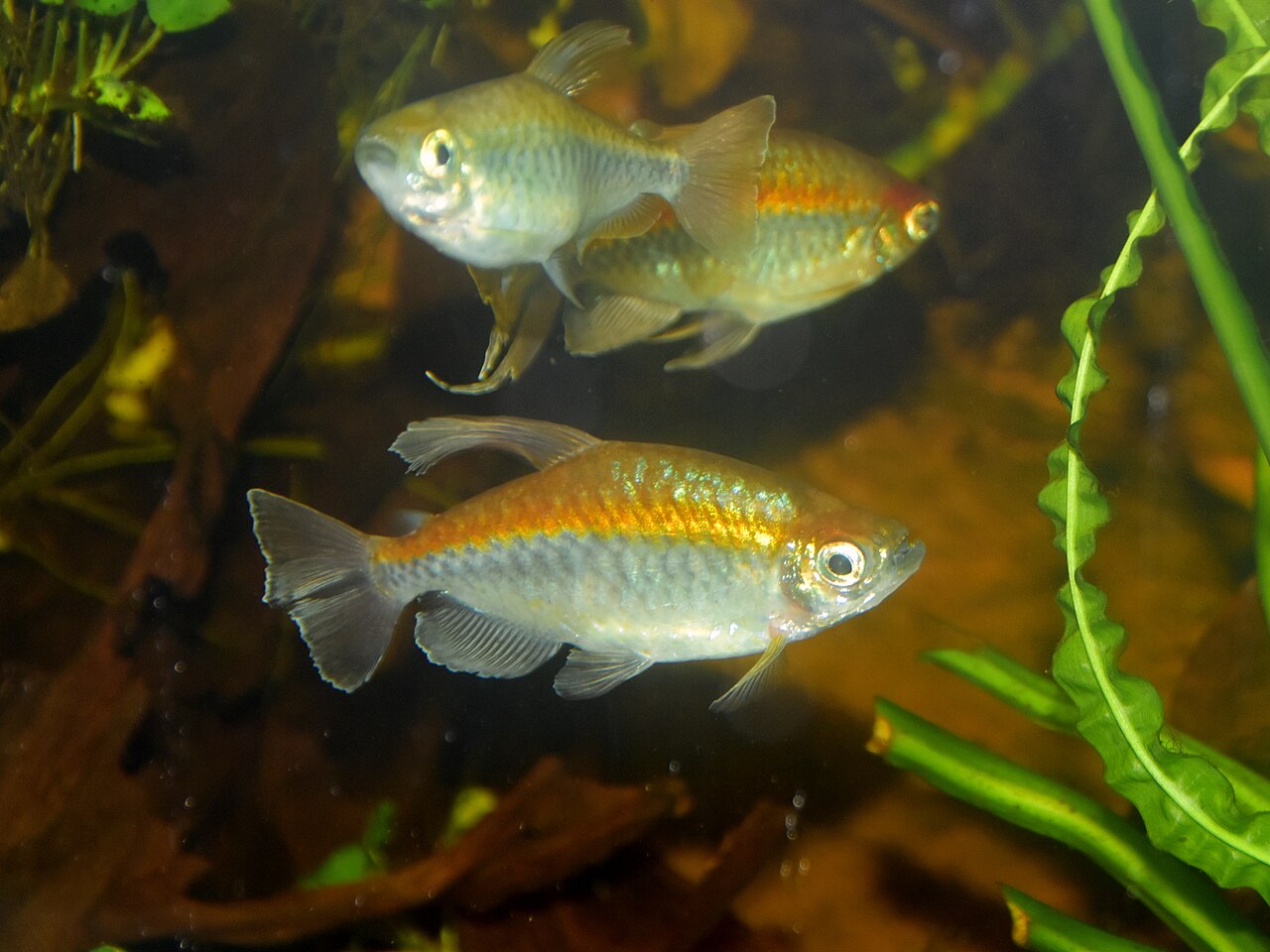
Congo tetras (Phenacogrammus interruptus) are among the most colorful freshwater fish from Africa. Adult males can reach about 3 inches and grow long, flowing dorsal and caudal fin extensions that shimmer with blue, orange, and yellow. Females stay closer to 2.5 inches and show more silver tones. Their size and active swimming style set them apart from smaller tetras like cardinal tetras. If you want a display fish that moves constantly and lights up a planted tank, this species is a strong pick.
Congo tetras come from the middle and upper Congo River basin. The water there is warm, soft, slightly acidic, and often stained with tannins from decaying leaves. Unlike some beginner tetras, they are not forgiving of cramped tanks or dirty water. A healthy group needs a long aquarium, stable parameters, and regular maintenance. The Seriously Fish species profile lists them as peaceful but best kept in a group of at least six.
This guide covers tank size, water chemistry, feeding, plants, tank mates, and common health problems. You will also learn how to acclimate a new school without losing fish. The steps below will help you avoid the most common Congo tetra mistakes in a community tank.
What You’ll Need
- 30-gallon or larger aquarium with tight lid
- Adjustable heater and thermometer
- Hang-on-back or canister filter
- Water conditioner/dechlorinator
- Soft substrate and live plants
- Driftwood and Indian almond leaves
- API Freshwater Master Test Kit
How Do You Care for Congo Tetras?
- Set Up a Long Tank with Swimming Space and the Right School Size
Start with a tank of at least 30 gallons for a small group of six Congo tetras. A 40-gallon breeder or 55-gallon long is even better because these fish use the entire horizontal length when they swim. Adult males can grow to about 3 inches, and females reach roughly 2.5 inches. Cramped quarters make them skittish and can lead to damaged fins. If you are unsure which tank to choose, best beginner fish tanks has several options that work well for medium tetra schools.
Keep at least six Congo tetras together, but aim for eight to ten if your tank allows. This is a schooling species, and a lone fish will hide, lose color, and may stop eating. A larger group also spreads out mild chasing behavior. Try to keep one male for every two or three females. Males display their best fins and colors when they have rivals and a small audience, but too many males can lead to constant sparring.
Set up the tank with open swimming lanes in the middle and taller plants or driftwood along the back and sides. Congo tetras are strong jumpers, especially when startled, so use a tight-fitting lid. You do not need extremely strong current, but a moderate flow from a canister or hang-on-back filter mimics their river habitat and keeps the water oxygenated.

- Keep Water Soft, Warm, and Stable
Congo tetras do best in water that is warm and slightly acidic to neutral. Aim for a temperature range of 73-82°F (23-28°C), a pH between 6.0 and 7.5, and soft to moderately hard water. Many sources, including Aqueon, recommend soft water for this species. If your tap water is very hard or alkaline, you can mix it with reverse osmosis water or use botanical materials like Indian almond leaves to lower pH gradually.
Stability matters more than hitting one exact number. A sudden pH swing or temperature drop can stress the fish and open the door to ich or fin rot. Use an adjustable heater and a reliable thermometer. Check the API Freshwater Master Test Kit on Amazon so you can monitor pH, ammonia, nitrite, and nitrate weekly. Before adding any fish, the tank must be fully cycled. If you need a refresher, read aquarium nitrogen cycle explained.
Perform a 25-30% water change every week to keep nitrate low. Use a dechlorinator on fresh tap water. Bring replacement water to roughly the same temperature as the tank before adding it. Congo tetras tolerate a range of conditions, but only if changes happen slowly and the tank remains clean.
- Feed a Varied Omnivore Diet
Congo tetras are omnivores that feed on insects, small crustaceans, and plant matter in the wild. In an aquarium, a high-quality flake or micro pellet should be the base of their diet. Avoid feeding only one type of food for months. A varied diet brings out the orange and blue pigments in males and supports fin growth. Feed small amounts two or three times per day, only what the fish can eat in about two minutes.
Offer frozen or live foods several times a week. Bloodworms, brine shrimp, daphnia, and mosquito larvae are good protein sources. You can also offer blanched vegetables such as zucchini or spinach occasionally. For a dependable dry option, try a sinking micro pellet or small granule. Check Hikari Micro Pellets on Amazon as a consistent staple, and rotate it with frozen foods.
Do not overfeed, because uneaten food will rot and raise ammonia. Congo tetras are fast eaters but not bottom feeders. If you keep them with catfish, make sure some food reaches the lower level. A lean, active school with slightly rounded bellies is a sign you are feeding correctly.
- Use Live Plants and Dim Lighting
Congo tetras come from tannin-stained forest streams where light is filtered through tree cover. They look and behave best in a planted tank with subdued lighting. Use easy low-light plants such as Java fern, Anubias, Cryptocoryne, and Vallisneria. If you are new to planted tanks, best aquarium plants for beginners lists hardy species that do not need CO2 injection.
Dim to moderate lighting is ideal. Bright light can make Congo tetras nervous and washed out. Floating plants like frogbit or water lettuce help diffuse the light and provide shaded areas. Add driftwood and dried leaves such as Indian almond or oak leaves to release tannins. The slight tea color in the water reduces stress and shows off the fishes’ iridescent scales.
Choose a dark substrate if you want the colors to pop. Sand or fine smooth gravel both work well. Avoid sharp decorations that can tear the long flowing fins of adult males. Arrange plants and wood to create broken lines of sight. This gives subordinate fish a place to retreat if a dominant male chases them.

- Choose Peaceful Tank Mates of Similar Size
Congo tetras are peaceful but active, so choose tank mates that can handle their constant swimming. Good options include medium tetras, rasboras, corydoras catfish, and peaceful dwarf cichlids like apistogrammas. Avoid species that are small enough to be mistaken for food, such as tiny shrimp or very small fry. Also avoid slow, long-finned fish that might be tempted by the tetras’ energetic behavior.
Do not keep Congo tetras with aggressive or nippy fish. Tiger barbs, large cichlids, and many freshwater puffers are poor choices. Congo tetras use speed and open water to avoid conflict, but persistent fin nipping can lead to infection. A school of rummy nose tetras can work well because they add another active midwater layer without competing directly for food.
Maintain a ratio of more females than males. Male Congo tetras will chase each other and sometimes pursue females, especially during spawning. This is normal as long as no fish is constantly pinned in a corner. Provide dense plant cover near the back of the tank. If aggression becomes a problem, add more females or increase the school size rather than removing a single male.
- Perform Weekly Maintenance and Water Changes
Congo tetras are sensitive to organic waste and nitrate buildup. Change 25-30% of the water every week using a dechlorinator. How often to change aquarium water explains how to build a routine that keeps most community tanks stable. Vacuum the substrate gently, but do not disturb plant roots more than necessary.
Rinse filter media in a bucket of used tank water, never under the tap. Chlorinated water kills beneficial bacteria. Replace disposable cartridges only when they are falling apart, and leave biological media alone. A properly maintained filter will keep ammonia and nitrite at zero while nitrate stays below 20 ppm.
Test the water before each water change. If nitrate creeps above 20 ppm, increase the water change volume or frequency. If you see cloudy water or a sudden ammonia spike, reduce feeding for a day and do an immediate 30% water change. Consistent maintenance is the biggest factor in keeping Congo tetras healthy long term.
- Watch for Common Congo Tetra Health Problems
Congo tetras can contract ich, fin rot, and external bacterial infections when stressed or kept in poor water. Ich appears as small white spots on the body and fins. Fin rot shows up as ragged, discolored fin edges. Both are treatable if caught early.
Quarantine every new fish for 2-4 weeks before adding it to your main tank. This prevents introducing parasites such as velvet or internal worms. During quarantine, watch for rapid breathing, clamped fins, rubbing against objects, or loss of appetite. Treat any problems in the quarantine tank instead of your display.
If you must treat the main tank, choose medications labeled safe for scaleless fish or tetras. Congo tetras are not scaleless, but they can be sensitive to copper. Remove carbon from the filter during treatment. Raise aeration with an air stone because many medications reduce oxygen levels. After treatment, perform a large water change and add fresh carbon to remove residual medication.
- Acclimate and Introduce Your Congo Tetra School
Bring the fish home and float the unopened bag in the tank for 15-20 minutes. This equalizes temperature. Then open the bag and add a small amount of tank water every 10-15 minutes for about an hour. A drip acclimation is even better for sensitive fish. Never pour store water into your tank, because it may contain parasites or different chemistry.
Add the whole school at once rather than one fish at a time. Congo tetras settle faster when they see companions. Keep the lights dim or off for the first 24 hours. Do not feed them on the first day. On day two, offer a small amount of food and observe how many fish come out to eat.
If you are adding Congo tetras to an existing tank, rearrange decorations slightly before introduction. This breaks up old territories and gives the new fish a fair chance. If your tank is new, make sure it has completed the nitrogen cycle before adding fish.
Red Flags & Warnings
- 🚨 Do not keep a single Congo tetra. Without a school, the fish becomes stressed, hides constantly, and may refuse to eat.
- 🚨 Never add Congo tetras to an uncycled tank. Ammonia and nitrite spikes can kill them within days.
- 🚨 Use a tight-fitting lid. Congo tetras jump, especially when startled or during feeding time.
- 🚨 Avoid hard alkaline water with rapid swings. Sudden pH changes weaken the immune system and lead to fin rot.
- 🚨 Do not house Congo tetras with fin nippers like tiger barbs or large aggressive cichlids.
- 🚨 Quarantine new fish for at least two weeks. Skipping quarantine can introduce ich or velvet to the whole school.
Frequently Asked Questions
What size tank do Congo tetras need?
A 30-gallon tank is the minimum for a group of six. A 40-gallon breeder or 55-gallon long is better because these fish are active and need horizontal swimming space. Larger schools of ten or more should have at least 55 gallons.
What are the ideal water parameters for Congo tetras?
Keep the temperature between 73-82°F (23-28°C), pH between 6.0 and 7.5, and water on the soft side. Stability is more important than an exact pH. Weekly water changes keep nitrate low.
Are Congo tetras good community fish?
Yes, they are peaceful with similarly sized fish. Avoid aggressive or nippy tankmates and very small shrimp. Good companions include medium tetras, rasboras, corydoras, and peaceful dwarf cichlids.
How often should I feed Congo tetras?
Feed small amounts two or three times per day. Give only what they can eat in about two minutes. Include a mix of quality flakes, pellets, and frozen foods like bloodworms or brine shrimp.
How long do Congo tetras live?
With good care, Congo tetras can live five to eight years in a well-maintained aquarium. Stable water, a varied diet, and a stress-free school size all support a longer lifespan.
Can Congo tetras live with angelfish?
Adult angelfish can sometimes work in a large tank, but long-finned angelfish may be outcompeted for food. Angelfish can also become territorial when spawning. If you try it, use a heavily planted tank of at least 55 gallons and watch for fin nipping.
What Should You Remember?
- School size: Keep at least six Congo tetras, but eight to ten is better.
- Tank size: Minimum 30 gallons for six fish, ideally 40-55 gallons with a lid.
- Water parameters: 73-82°F, pH 6.0-7.5, soft water, and zero ammonia/nitrite.
- Diet: Feed varied flakes, pellets, and frozen foods two to three times daily.
- Environment: Use live plants, dim lighting, and tannins to reduce stress.
- Maintenance: Do weekly 25-30% water changes and test nitrate.
- Tank mates: Choose peaceful fish of similar size and avoid fin nippers.
This article is for general information only and is not a substitute for professional veterinary or aquarium specialist advice. Always research the specific needs of your fish and consult an expert before making care decisions.