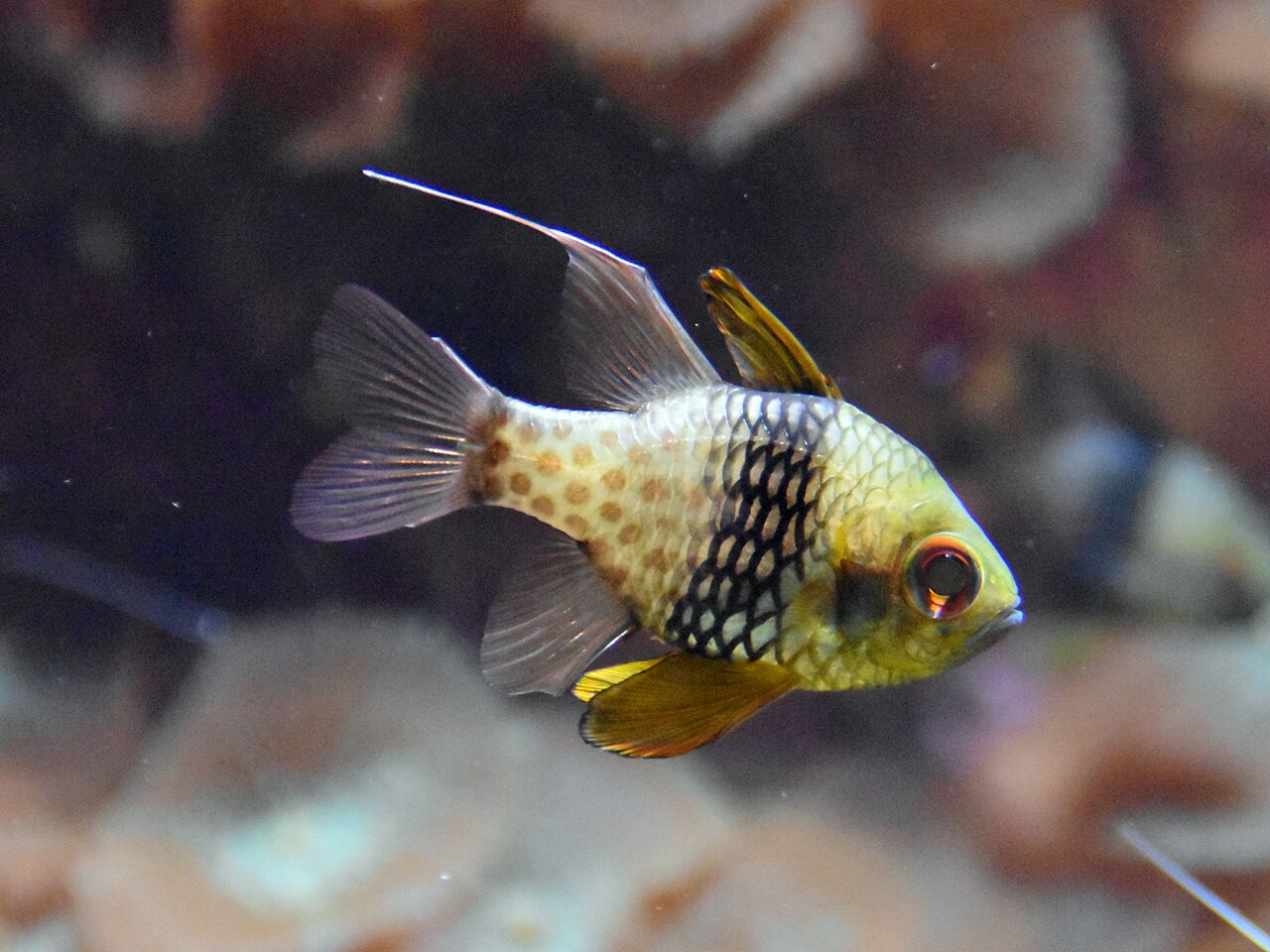
The pajama cardinalfish, sometimes called the spotted cardinalfish, is one of the most underrated saltwater fish for home aquariums. It has a peaceful temperament, stays small, and adapts well to reef tanks. That makes it a strong choice if you are moving beyond basic beginner fish but still want a hardy, low-stress animal. Unlike many marine species, it does not demand a massive system or an advanced feeding routine. For a close relative, see the Bangaii cardinalfish care guide to compare care needs.
This fish reaches an adult size of about 3 inches. It spends much of its time hovering near rockwork, caves, or coral branches. You still need to provide stable saltwater chemistry and the right tank mates. Skipping the cycle or putting it with aggressive species will lead to stress and disease. The good news is that a well-planned setup can keep this fish healthy for five or more years.
In this guide I will walk through tank size, water parameters, quarantine, diet, and compatibility. I will also point out common mistakes that new saltwater keepers make with cardinalfish. Use the steps in order, especially if this is your first marine fish. Before adding any fish, understand why ammonia control matters in a new saltwater system.
According to LiveAquaria, the pajama cardinalfish is a hardy, peaceful species that fits well in many community reef tanks. Still, care guides are only as good as the water quality behind them. A fish that tolerates beginner mistakes is not a fish that thrives in neglected water. I will cover the setup in detail so you avoid the usual problems with cardinalfish.
What You’ll Need
- 30-gallon or larger saltwater aquarium
- Heater and separate thermometer
- Powerhead or wavemaker
- Refractometer
- Saltwater liquid test kit
- Quarantine tank with sponge filter
How Do You Care for Pajama Cardinalfish?
- Choose a 30-gallon or larger tank with gentle flow
Start with a tank no smaller than 30 gallons for a single pajama cardinalfish. A 40-gallon breeder or a 55-gallon tank gives a pair more room and keeps nitrate buildup slower. Adult pajama cardinalfish reach about 3 inches, so they do not need a huge system. But they are active hoverers, and they appreciate horizontal swimming space more than tall water columns. A 30-gallon tank with a good rock scape is the practical minimum. If you need a starting system, check a 30-gallon aquarium on Amazon and read our best beginner fish tanks guide before buying.
Set up the tank with live rock or dry rock arranged into caves, overhangs, and shaded spots. Pajama cardinalfish are naturally shy. They will spend much of the day hovering under ledges or near coral branches. Leave open sand at the front so you can actually see the fish when it comes out to feed. Use a moderate flow pattern. Too much direct current tires them out, but very low flow lets waste settle. A small powerhead pointed at the surface or across the rockwork works well.
Place the aquarium away from windows, air vents, and exterior doors. Heat and cold drafts swing temperature fast, and cardinalfish do best when conditions stay predictable. Use a sturdy stand rated for the filled tank weight. A 30-gallon saltwater system with rock and sand can easily weigh over 300 pounds. Level the stand before adding water.
This step connects to every other part of care. If the tank is too small or the flow is too strong, the fish will hide constantly or stop eating. If the aquascape has no caves, the fish will stress. A calm, properly sized home makes cycling, feeding, and tank mate choices much easier.

- Set stable saltwater parameters and install quality equipment
Pajama cardinalfish come from tropical reef waters, so keep parameters stable. Aim for a temperature between 72 and 78 degrees Fahrenheit. A set point of 76 to 78 is common. Keep pH between 8.1 and 8.4. Specific gravity should stay in the 1.020 to 1.025 range. Ammonia and nitrite must read zero, and nitrate should stay below 20 parts per million. Use a refractometer instead of a swing-arm hydrometer. Refractometers are far more consistent.
Install a reliable heater sized for the tank volume. A pair of smaller heaters is often better than one large heater because a single failure will not crash the temperature. Check your heater with a separate thermometer. For testing, a liquid saltwater kit is essential. Check the API Saltwater Master Test Kit on Amazon.
Aqueon’s saltwater care guidance stresses the importance of regular testing and matching replacement water to the display tank. You can read more at Aqueon. Mixed saltwater should age with a powerhead for several hours before a water change. Match salinity and temperature to the display. If replacement water is off, the fish will notice.
Do not chase perfect numbers by dosing chemicals daily. Stable, slightly imperfect parameters are safer than rapidly shifting perfect numbers. Small, frequent water changes keep parameters from drifting. This step sets the baseline for a successful cycle and healthy introduction.
- Cycle the tank completely before adding cardinalfish
Pajama cardinalfish are sensitive to ammonia and nitrite. Never add them to a new tank that has not fully cycled. The nitrogen cycle establishes bacteria that convert ammonia into nitrite, then nitrite into nitrate. If you are unsure how this works, read our how to cycle a fish tank guide.
For a marine tank, live rock can provide both surface area and some bacterial seeding. You can also dose a quality nitrifying bacteria product. Feed the cycle with pure ammonia or a small amount of fish food. Test every day or two. The cycle is complete when ammonia and nitrite stay at zero for several days after being dosed, with nitrate present.
Do not rush this step with a pajama cardinalfish. Some people are tempted to add fish once ammonia drops once. That is a mistake. Nitrite often spikes afterward, and nitrite is toxic to marine fish. Give the tank three to six weeks. A properly cycled tank prevents new tank syndrome and gives the fish a real chance.
Once the cycle is complete, do a large partial water change to lower excess nitrate. Test the water before moving on. Only then should you buy the fish. A stable, cycled filter is the single best investment in long-term health.

- Quarantine and acclimate new pajama cardinalfish
Quarantine is not optional if you want to protect your display. Set up a separate 10 or 20-gallon quarantine tank with a sponge filter, heater, and PVC hides. Observe new pajama cardinalfish for two to four weeks. Watch for rapid breathing, spots, frayed fins, or refusal to eat.
When you are ready to add the fish to the display, use drip acclimation. Place the fish in a bucket with the water from the bag. Drip display tank water into the bucket at about two to four drips per second. Stop when the water volume has doubled or tripled over 45 to 60 minutes. Do not pour bag water into the display. Net the fish and discard the acclimation water.
New pajama cardinalfish often hide for the first few days. Dim the lights and feed lightly. They may refuse food at first. Do not chase them with a net or flash bright light. If you see white spots after introduction, check for ich immediately and treat in a separate hospital tank if needed.
This step connects to compatibility. A fish that arrives stressed will be bullied more easily. Quarantine also prevents introducing cryptocaryon or velvet. Better to wait a few weeks than to tear down the display.
- Feed a varied meaty diet
Pajama cardinalfish are carnivores. In the wild they eat small crustaceans, zooplankton, and tiny fish larvae. In the aquarium, feed a varied meaty diet. Good options include frozen mysis shrimp, brine shrimp enriched with vitamins, chopped krill, and small marine pellets. Offer food twice per day. Only feed what they can finish in about two minutes.
Do not rely on flake food alone. Flakes can work as a supplement, but cardinalfish often respond better to meaty frozen foods. Check frozen mysis shrimp on Amazon. You can also soak foods in a marine vitamin supplement once or twice a week. Pellets should be small enough for the fish to swallow. If the fish spits food out repeatedly, the pieces are too large or the food is too dry.
Overfeeding is a common problem. Leftover meaty food rots and raises ammonia and nitrate. Feed small portions and remove uneaten food after a few minutes. This ties directly to your maintenance schedule. Read our how often to change aquarium water guide to balance feeding with water changes.
A varied diet keeps colors strong and helps the fish resist disease. If a new pajama cardinalfish will not eat, try live brine shrimp or finely chopped garlic-soaked mysis. Once it is eating regularly, slowly mix in pellets and other frozen foods.

- Select peaceful tank mates and avoid aggression
Pajama cardinalfish are peaceful and do not compete well for food. Choose tank mates that are similarly calm. Good choices include clownfish, firefish gobies, royal grammas, small blennies, and some small gobies. These species generally ignore a hovering cardinalfish.
Avoid aggressive or fast-moving predators. Triggers, large angelfish, puffers, large wrasses, and territorial damsels will either chase the cardinalfish or outcompete it at feeding time. Even peaceful-looking species can become bullies in a small tank. If you keep multiple pajama cardinalfish, make sure the tank has enough visual barriers to break sight lines.
Pajama cardinalfish can be kept with corals and most invertebrates. They will not nip at coral polyps or bother shrimp. They may eat very small ornamental shrimp larvae, but adult cleaner shrimp and peppermint shrimp are safe. This makes them a solid reef-safe choice.
When adding tank mates, add the cardinalfish before the more assertive species if possible. Let the cardinalfish establish a hiding spot. But even then, do not pair it with known aggressive fish. A calm community keeps the fish out in the open where you can enjoy it.
- Maintain water quality with weekly partial water changes
Weekly maintenance keeps nitrate down and minerals stable. Perform a 10 to 20 percent water change every week or every two weeks. Use premixed saltwater matched to temperature and salinity. Siphon visible detritus from the sand and rockwork during the water change. A gravel vac designed for saltwater works well.
Test alkalinity, calcium, and magnesium if you keep a full reef. For a fish-only setup, pH, salinity, nitrate, and temperature are the main numbers. Clean filter sponges in old tank water, not tap water. Replace chemical media on schedule. If you notice algae or cloudy water, increase water change frequency before adding chemicals. You can compare filter options in our best aquarium filters 2026 guide.
Stability matters more than perfect individual readings. Pajama cardinalfish do not need pristine coral-level chemistry, but they do need clean water. A regular partial water change routine prevents stress and disease.
Keep a log of test results. Over time you will see trends before problems appear. A simple notebook or phone note works. If nitrate starts climbing, feed less or increase water changes. This is the maintenance loop that keeps the fish healthy for years.
- Monitor behavior and manage group dynamics
Pajama cardinalfish are social but not schooling in the tight sense. You can keep a single fish, a bonded pair, or a small group. If you want multiple, add them at the same time to avoid territory disputes. A group of five or six can work in a 55-gallon or larger aquarium. Provide multiple caves so each fish can claim a resting spot.
Watch for constant chasing, split fins, or fish hiding in a corner. These are signs of social stress. Remove the bully or add more visual barriers. Unlike the closely related Banggai cardinal, pajama cardinals are a little more tolerant in groups, but every fish is different.
Spawning can happen in mature tanks. The male may carry eggs in his mouth. That is normal. Do not try to net the carrying male. If you want to raise fry, set up a separate rearing system. Otherwise, most fry will not survive in a community tank. This is not a problem for most keepers.
The key to long-term behavior is observation. Spend a few minutes each day watching how the fish interacts. A calm pajama cardinalfish will hover in open water, come to the front at feeding time, and show no heavy breathing. Any change from that baseline is a signal to test water and check tank mates.
Red Flags & Warnings
- 🚨 Do not add pajama cardinalfish to an uncycled tank. Ammonia and nitrite above zero can kill them quickly.
- 🚨 Avoid aggressive tank mates. Triggers, puffers, large angelfish, and territorial damsels will outcompete or attack cardinalfish.
- 🚨 Do not skip quarantine. New fish can carry ich or velvet and infect the whole display.
- 🚨 Do not chase perfect parameters with daily chemical dosing. Rapid swings are more harmful than stable slightly off numbers.
- 🚨 Do not overfeed meaty foods. Leftovers raise ammonia and nitrate fast.
- 🚨 Watch group aggression. Multiple cardinalfish need enough visual barriers or one fish may be bullied.
Frequently Asked Questions
What size tank do pajama cardinalfish need?
A single pajama cardinalfish needs at least 30 gallons. A pair does better in a 40 or 55-gallon tank. Larger groups need 55 gallons or more with multiple hiding spots.
Are pajama cardinalfish reef safe?
Yes. They do not nip coral polyps or bother most invertebrates. They may eat tiny shrimp larvae, but adult cleaner shrimp and peppermint shrimp are safe.
Can you keep multiple pajama cardinalfish together?
Yes. A bonded pair is easiest, and small groups can work if added at the same time. Provide several caves to reduce chasing and territorial stress.
What do pajama cardinalfish eat?
They prefer meaty foods like frozen mysis shrimp, enriched brine shrimp, chopped krill, and small marine pellets. Feed twice daily in small portions they can finish in about two minutes.
How can I tell if my pajama cardinalfish is stressed?
Watch for constant hiding, rapid breathing, torn fins, refusing food, or pale color. Test water and check tank mate aggression if these signs appear.
Do pajama cardinalfish breed in captivity?
They can spawn in mature aquariums. The male may carry eggs in his mouth. Raising fry requires a separate system because most fry will not survive in a community tank.
What Should You Remember?
- Tank size: Provide at least 30 gallons for one pajama cardinalfish and larger for pairs.
- Water parameters: Keep temperature 72-78F, pH 8.1-8.4, and salinity 1.020-1.025.
- Diet: Feed meaty frozen foods like mysis and small marine pellets twice daily.
- Compatibility: Choose peaceful reef fish and avoid aggressive or fast-moving tank mates.
- Quarantine: Always quarantine new fish for two to four weeks before adding them to the display.
- Maintenance: Change 10 to 20 percent of the water weekly and test nitrate regularly.
- Observation: Watch for hiding, rapid breathing, or torn fins as signs of stress.
This article is for general information only and is not a substitute for professional veterinary or aquarium specialist advice. Always research the specific needs of your fish and consult an expert before making care decisions.