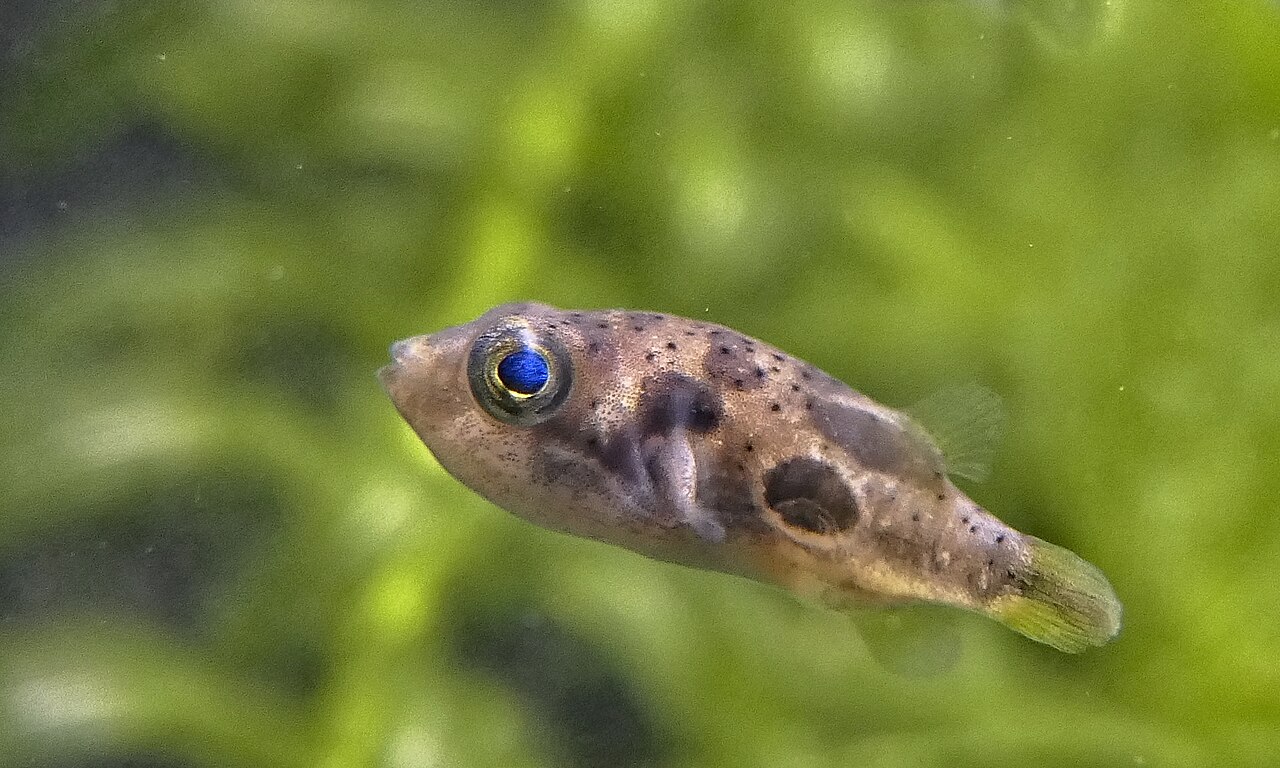
Pea puffers (Carinotetraodon travancoricus) are some of the smallest freshwater puffers in the hobby. Adult fish usually stay around 1 inch long, but their personality is much bigger. They are curious, interactive, and surprisingly territorial. Many new keepers assume a tiny fish can live in a tiny bowl, but that leads to stress and poor water quality. Before you bring one home, understand how to cycle a tank properly. The aquarium nitrogen cycle explained walks through the biological process that keeps fish safe.
Pea puffers are true freshwater fish. They do not need brackish water or marine salt. That separates them from some other puffer species that start freshwater and move to brackish conditions. I rely on Seriously Fish for detailed wild collection data and species profiles. In the aquarium, these fish want clean, stable water and a planted layout. They also need live or frozen meaty foods. Their beak-like teeth grow continuously, so snails are not optional. They are a working pet more than a passive decoration.
This guide covers tank size, water parameters, feeding, and compatible tank mates. You will also learn about quarantine, common health issues, and long-term care. I recommend reading about best aquarium plants for beginners because live plants form the backbone of a good pea puffer setup. If you set up the tank correctly, these fish reward you with hunting behavior and bold interactions. If you cut corners, you will see nipped fins, high nitrates, and a stressed puffer.
What You’ll Need
- 10-gallon or larger aquarium
- Gentle filter such as sponge filter or hang-on-back
- Adjustable 50-watt heater
- LED freshwater light
- Fine sand or smooth gravel substrate
- Live plants, driftwood, and caves
- API Freshwater Master Test Kit
- Siphon and bucket
- Live snail culture or frozen food supply
How Do You Care for Pea Puffers?
- Understand Pea Puffer Behavior and Adult Size
Pea puffers, often called dwarf puffers, come from slow-moving freshwater bodies in southwestern India. They max out at about 1 inch, with females slightly rounder and males showing a dark line down the belly. In good conditions they live 4 to 5 years. The small size leads some keepers to understock or use nano tanks, but these fish need more room than their length suggests. They are active hunters that patrol every inch of the tank. Their behavior is the main challenge. Pea puffers are territorial and can be aggressive toward their own kind, especially males. They like to hide in plants, driftwood, and caves. A bare tank makes them feel exposed, which increases chasing and stress. You will often see them hover and inspect new objects. That intelligence is part of the appeal, but it also means they get bored easily. Rotate decorations or add live plants to create new sight lines. Do not confuse this species with brackish puffers. The green spotted puffer care guide covers a different fish that needs salt as it matures. Pea puffers stay in freshwater their whole lives. Keeping them in brackish water will cause long-term harm. Their wild habitats have soft to moderately hard water with dense vegetation. Replicating that environment keeps their stress down and their colors up. Understanding this behavior connects directly to the next setup step. You need a planted tank with visual breaks. You also need enough space for territories. If you ignore behavior, all the filtration and feeding in the world will not prevent torn fins. Plan for the fish you are getting, not the fish you wish it were.
- Set Up the Right Tank Size and Environment
Start with a 10-gallon aquarium for a single pea puffer. That is the practical minimum. For a small group of one male and two to three females, use a 15-gallon or 20-gallon long tank. The long footprint gives each fish room to claim a territory. Add about 5 gallons per extra pea puffer. A larger tank also dilutes waste, which matters because these fish are messy eaters. Do not use a bowl or a 5-gallon desktop kit. Small water volumes swing fast. Plant the tank heavily. Use easy plants like java fern, anubias, hornwort, and water sprite. You can find more options in the best aquarium plants for beginners guide. Live plants break lines of sight and give fish places to retreat. They also host microfauna and help absorb nitrate. Add driftwood and caves to create shaded areas. A densely planted tank looks good, but its real job is to reduce aggression. Choose a gentle filter. A sponge filter or a hang-on-back with adjustable flow works well. Pea puffers are not strong swimmers and hate strong current. The filter should turn the tank volume over about 4 to 6 times per hour. Pair it with a reliable heater because these fish need stable tropical temperatures. Check the Eheim Jager aquarium heater on Amazon. Set it to 78°F as a starting point. Cycle the tank before adding fish. Pea puffers are sensitive to ammonia and nitrite. Use the fishless method described in how to cycle a fish tank. It takes 4 to 6 weeks, but it prevents the most common beginner mistake. Position plants, heater, and filter, then start cycling. Test until ammonia and nitrite are 0 ppm and nitrate is measurable. Only then add your pea puffer.

- Maintain Water Parameters and Quality
Pea puffers do best in water that stays warm and stable. Keep the temperature between 76°F and 82°F (24°C to 28°C). The pH should remain in the 7.0 to 7.8 range. Moderate hardness between 5 and 15 dGH is fine. Sudden shifts are more dangerous than a single reading slightly outside the ideal. Invest in an adjustable heater such as the Eheim Jager aquarium heater on Amazon. Pair it with a thermometer to verify the actual water temperature. Ammonia and nitrite must be 0 ppm at all times. Nitrate should stay below 20 ppm. These fish produce a good amount of waste for their size because they eat meaty foods. A missed water change can send parameters in a bad direction quickly. Use a liquid test kit, not strips, for accurate readings. Check the API Freshwater Master Test Kit on Amazon. Test weekly before water changes. Change 25% to 30% of the water every week. Use a siphon to remove uneaten food and waste from the substrate. Match the new water temperature and treat it with a dechlorinator first. The how often to change aquarium water guide explains why consistency matters more than occasional large cleanouts. Small weekly changes keep minerals and pH stable. A good heater matters because pea puffers are tropical fish. Use about 5 watts per gallon. In a 10-gallon tank, a 50-watt adjustable heater is plenty. Place it near the filter outflow to distribute heat evenly. Avoid cheap preset heaters that may overheat. Stable temperature supports appetite, activity, and disease resistance. Once water quality is locked in, feeding becomes the next big focus.
- Feed a Proper Pea Puffer Diet
Pea puffers are obligate carnivores. In the wild they eat tiny crustaceans, insect larvae, and snails. In the aquarium they need small live and frozen foods. The single most important food is snails. Their teeth grow constantly, like tiny beaks. Crunching snail shells wears the teeth down and prevents overgrowth. Offer small ramshorn, bladder, or Malaysian trumpet snails every day. Keep a separate snail culture so you never run out. Frozen foods make up the rest of the diet. Bloodworms, brine shrimp, daphnia, and blackworms are all good. Thaw frozen cubes in a small cup of tank water before feeding. Use feeding tongs or a pipette to place food near the puffer. Many pea puffers learn to eat from tongs, which helps you remove uneaten pieces. Avoid feeding only flakes or pellets. Some individuals accept high quality dry food, but it should never be the main meal. Feed adult pea puffers once or twice a day. Offer only as much as they can finish in a minute or two. Overfeeding leads to bloated puffers and fouled water. A chubby belly after a meal is normal, but the belly should flatten by the next feeding. Fast your pea puffer one day per week. This gives the digestive tract a break and helps prevent obesity. Check Fluval Bug Bites tropical fish food on Amazon as a backup dry option, but use it sparingly. Live food has value but also risk. Feeder snails from a local pond can carry parasites, pesticides, or predatory insect larvae. Culture your own snails in a simple 5-gallon container with algae wafers and plant clippings. Quarantine any live blackworms or daphnia for a few days before feeding. If your pea puffer refuses food, try live baby brine shrimp or a snail with the shell cracked. A healthy puffer is an active hunter, not a listless one.

- Choose Compatible Tank Mates (or Go Species-Only)
The safest choice is a species-only pea puffer tank. Keep a single fish in 10 gallons or a small group in a heavily planted 15 to 20 gallons. If you keep multiple, use one male with two to three females. Multiple males in a small tank will fight constantly. Even females can squabble over territory. Provide enough plants and caves so each fish can disappear from view. That is the cheapest form of aggression control. If you want tank mates, choose fast, peaceful fish that stay in the upper half of the water column. Ember tetras, chili rasboras, and harlequin rasboras can work in a larger tank. Otocinclus catfish are sometimes used as algae eaters because they stay near surfaces and move quickly. Kuhli loaches may hide, but they can be nipped if they cross a puffer. There is no guarantee. Some pea puffers ignore tank mates. Others turn into fin nippers. Avoid slow, long-finned fish. Bettas, guppies, angelfish, and fancy goldfish are easy targets. The puffer will bite at flowing fins. This causes infections and stress. Shrimp and ornamental snails are food, not companions. Even small Amano shrimp may disappear overnight. Cichlids and other territorial fish are a poor match because both will fight. A pea puffer may look cute, but it is a predator. Before adding any tank mate, have a backup plan. Keep a spare 5-gallon or 10-gallon tank ready. Watch the first 48 hours closely. If you see chasing, nipped fins, or hiding, separate the fish. Filtration and water changes alone will not fix incompatibility. You can learn more about community stocking in the best aquarium filters for 2026 guide, but remember that filtration does not override behavior.
- Introduce Your Pea Puffer Safely
Quarantine every new pea puffer for 2 to 4 weeks. Use a simple 5-gallon or 10-gallon quarantine tank with a sponge filter and a few plastic or silk plants. Many pea puffers arrive with internal parasites or ich. Watch for white spots, clamped fins, and rapid breathing. Treat with a praziquantel-based dewormer if you see stringy feces or a sunken belly. Never skip quarantine just because the fish looks active in the store bag. Acclimate slowly when moving your pea puffer to the main tank. Float the sealed bag for 15 to 20 minutes to equalize temperature. Then use a drip acclimation kit or add small amounts of tank water to the bag every 5 minutes for 30 to 45 minutes. This prevents pH and hardness shock. Pea puffers are small, so a sudden parameter shift hits them harder than a larger fish. Do not pour store water into the main tank. Release the puffer with the tank lights off. This reduces stress and lets the fish explore without feeling exposed. Keep the lights off for a few hours. Offer a small meal of live snails or bloodworms the next day. Do not chase the fish with a net once released. Let it settle. Many pea puffers hide behind plants for a day or two before gaining confidence. Monitor the first week closely. Test water daily or every other day. Watch for aggression if you added tank mates. Aquarium Co-Op has practical quarantine and medication videos that match the methods I use. If the puffer refuses food for more than three days, try live baby brine shrimp. Freshly introduced fish often need live food to trigger a feeding response.
- Manage Health, Maintenance, and Long-Term Care
Daily care is simple but not optional. Check the temperature and look at your fish. Offer one or two small meals and remove uneaten food. Watch for rapid gill movement, white spots, or clamped fins. A healthy pea puffer has a rounded belly after eating and active, curious movement. If your fish hides constantly, something is off. It could be bullying, poor water quality, or internal parasites. Weekly maintenance keeps the tank stable. Test ammonia, nitrite, and nitrate. Use a siphon to clean the substrate. Replace 25% to 30% of the water with dechlorinated water matched to tank temperature. Prune dead plant leaves and check the filter for clogging. This routine matters more in a small tank because waste concentrates quickly. Keep a log so you notice trends before they become emergencies. Watch for common diseases. Ich shows as tiny white spots and can be treated with heat and medication. Internal parasites cause a sunken belly despite eating. Bacterial infections often follow fin nips or scrapes. Quarantine any sick fish immediately. Do not medicate the main tank unless necessary. Many medications kill snails and plants. Use a separate hospital tank for treatments. Long-term success depends on stable routines and a steady snail supply. If you keep your water clean and feed crunchy foods, pea puffers can live several years. Avoid sudden changes in temperature, pH, or tank mates. If you decide to add more fish, upgrade the tank rather than overcrowding. Return to the how often to change aquarium water guide whenever you are unsure about maintenance. A consistent schedule beats an elaborate setup.

Red Flags & Warnings
- 🚨 Never keep pea puffers with slow, long-finned tank mates. They will shred betta, guppy, and angelfish fins.
- 🚨 Do not feed only flake or pellet food. Pea puffers need crunchy snails to wear down their ever-growing teeth.
- 🚨 Avoid overstocking. Add at least 5 gallons per extra pea puffer. Overcrowding triggers constant fighting and poor water quality.
- 🚨 Quarantine live snails and live food before feeding. Feeder snails from outdoor sources can carry parasites and pesticides.
- 🚨 Do not use sharp plastic plants or rough decor. Pea puffers have delicate skin and can get scraped.
- 🚨 Monitor ammonia and nitrite weekly in small tanks. A missed water change can cause a rapid deadly spike.
Frequently Asked Questions
What size tank do pea puffers need?
A single pea puffer needs at least 10 gallons. For each additional fish, add 5 gallons. A 20-gallon long planted tank works well for a small group of one male and two to three females.
Are pea puffers aggressive?
Yes, they are territorial and often nip fins. Males may fight each other. Heavy plants and a larger tank reduce but do not eliminate aggression. Species-only setups are safest.
What do pea puffers eat?
They eat small live and frozen foods. Snails, bloodworms, brine shrimp, and blackworms are good. Snails are necessary to wear down their beak-like teeth. Avoid flake-only diets.
Can pea puffers live with other fish?
Sometimes with fast, non-aggressive species like ember tetras or otocinclus. Avoid slow or long-finned fish. Many keepers prefer a species-only tank because pea puffers may nip any tank mate.
Do pea puffers need brackish water?
No. Unlike green spotted puffers, pea puffers are true freshwater fish. Keep them in freshwater with a pH of 7.0-7.8 and temperature of 76-82°F.
How many pea puffers can live together?
In a 15-gallon heavily planted tank, keep one male with two to three females. Do not keep multiple males in small tanks. A lone pea puffer in a 10-gallon tank is also fine.
What Should You Remember?
- Tank size: Use at least 10 gallons for one pea puffer and add 5 gallons per extra fish.
- Water parameters: Keep temperature at 76-82°F and pH between 7.0 and 7.8.
- Feeding: Offer small snails daily and supplement with frozen bloodworms and brine shrimp.
- Tank mates: Choose species-only setups or very fast, peaceful fish. Avoid slow, long-finned species.
- Environment: Plant heavily with live plants and driftwood to break sight lines and reduce aggression.
- Maintenance: Perform weekly 25-30% water changes and test ammonia, nitrite, and nitrate.
- Quarantine: Isolate new pea puffers and live food for 2-4 weeks before adding them to the main tank.
This article is for general information only and is not a substitute for professional veterinary or aquarium specialist advice. Always research the specific needs of your fish and consult an expert before making care decisions.