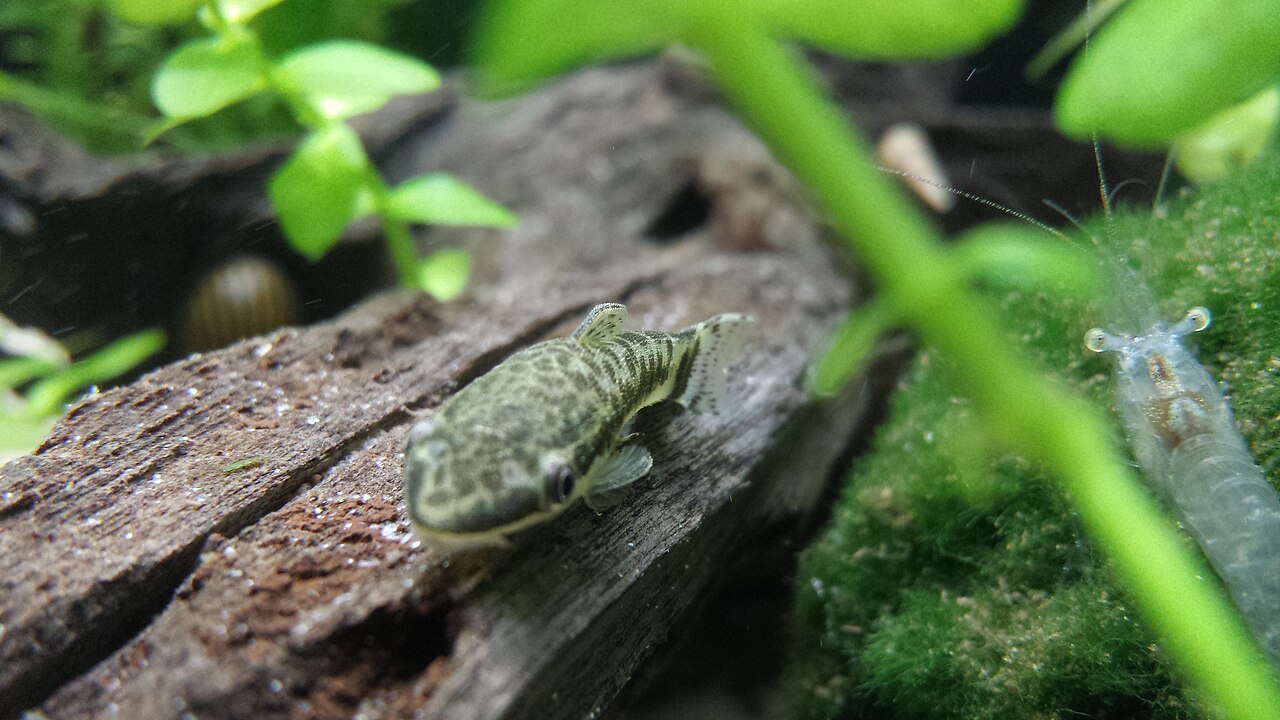
Otocinclus catfish are tiny, peaceful algae eaters that many aquarists add to planted tanks. These fish stay under two inches long and spend their days grazing on surfaces. But they are not beginner fish. They have a reputation for dying shortly after purchase. That happens because most new tanks do not have enough biofilm for them to eat. This guide fixes that by covering tank setup, diet, water parameters, and compatibility. If you want a planted tank that works for otos, start with the right plants. Check this best aquarium plants for beginners guide before you stock the tank.
The most common otos in stores are Otocinclus vittatus, Otocinclus macrospilus, and related species. They all look similar and need similar care. Adult size is usually 1.5 to 2 inches. That small size leads many people to think a one gallon or five gallon tank is enough. It is not. Otos are social grazers that need groups. They also need stable water. Aqueon and other reputable sources stress that otos should only go into established aquariums. A new tank with zero ammonia and building nitrifying bacteria is not the same as a mature tank. Read the aquarium nitrogen cycle explained article to understand why this matters.
Many otos die within the first few weeks because their tank has no natural food. They cannot survive on flake food alone. Biofilm and soft algae must be present on plants, driftwood, and glass. That takes weeks to develop. You need patience before adding these fish. The process starts with cycling. Use the how to cycle a fish tank steps first. Once the tank is cycled and algae begins to appear, you can think about adding a group of otos.
This guide follows care advice from Aquarium Co-Op and Seriously Fish. Both sources emphasize that otos need established tanks, soft water, and constant grazing. We will walk through eight steps that cover everything from setup to long-term maintenance. Each step includes specific numbers, common mistakes, and how it connects to the next step. The goal is to help your otos live for years, not weeks.
What You’ll Need
- 10 gallon or larger planted tank with driftwood and live plants
- Adjustable heater and thermometer
- Gentle filter such as a sponge filter or low flow hang-on-back
- API Freshwater Master Test Kit for pH, ammonia, nitrite, and nitrate
- Algae wafers and blanched vegetables for supplemental feeding
- Quarantine tank with cycled sponge filter
How Do You Care for Otocinclus Catfish?
- Set up a mature, planted tank before adding Otocinclus catfish
Otos are aufwuchs grazers. That means they eat the layer of biofilm, diatoms, and soft algae that grows on surfaces. A brand new tank has almost none of this. If you add otos on day one, they slowly starve even if water parameters are perfect. You should run the tank for at least four to six weeks before adding otos. During that time, allow the nitrogen cycle to establish. This resource on the aquarium nitrogen cycle explained explains why cycling alone is not enough. The tank also needs a light film of algae on plants, glass, and decor.
Add live plants, driftwood, and smooth rocks. These surfaces give otos places to graze and hide. Live plants also carry beneficial bacteria and small organisms that help the tank mature. If you are new to planted tanks, start with easy species like java fern, anubias, or water sprite. See this best aquarium plants for beginners list for ideas. Driftwood is especially useful because it develops a biofilm that otos love. Boil or soak wood before adding it to remove excess tannins, unless you want the natural look.
Lighting matters. Run your tank lights for six to eight hours per day. This is enough to grow plants and encourage some soft algae. But do not let green water or hair algae take over. Keep glass surfaces slightly green, not spotless. If you scrub every surface, you remove the food source. A small amount of brown diatom algae is actually good for otos. It signals that the tank is ready.

- Choose the right tank size and group size
A single oto is a stressed oto. These fish live in large groups in the wild. In an aquarium, you should keep at least six together. Some keepers suggest ten or more for natural behavior. A group of six needs at least a 10 gallon tank. That is the absolute minimum. A 20 gallon long is much better because it gives more horizontal swimming space. Otos spend most of their time on surfaces, so floor area matters more than height.
Do not cram six otos into a five gallon tank. They may survive for a short time, but water quality fluctuations will stress them. Otos are sensitive to nitrate and ammonia. A larger water volume dilutes waste and keeps parameters stable. This is true for most small fish, but otos are especially delicate. If you are choosing a new tank, look at this best beginner fish tanks guide for options that fit a group.
Filtration also matters. A gentle filter with a low flow is best. Otos are not strong swimmers. A strong current can exhaust them. A sponge filter or a hang-on-back filter with an adjustable flow works well. For more guidance, read this best aquarium filters 2026 article. Make sure the filter is cycled and running for several weeks before adding fish. A mature filter helps process waste and keeps ammonia at zero.
- Get the water parameters right for Otocinclus catfish
Otos come from soft, slightly acidic streams in South America. The ideal temperature range is 72 to 79 degrees Fahrenheit. Keep pH between 6.5 and 7.5. Soft to moderately hard water is best, around 2 to 15 dGH. More important than hitting a perfect number is keeping things stable. Otos do not handle sudden changes well. Use a reliable heater and thermometer. Check this best aquarium heaters 2026 guide for options that hold steady temperature.
Test your water every week. Ammonia and nitrite must stay at 0 ppm. Nitrate should stay below 20 ppm. Even low levels of ammonia can harm otos. The best way to know is a liquid test kit. The API Freshwater Master Test Kit measures pH, ammonia, nitrite, and nitrate. Test strips are quicker but less accurate. If your tap water is hard or high in pH, you may need to use reverse osmosis water or Indian almond leaves to soften it. Make any changes slowly over several days.
Acclimation is part of water parameter success. Never float the bag and dump the fish. Otos are sensitive to shifts in pH and temperature. Drip acclimate new otos for at least 45 minutes. Add tank water to the bag or bucket slowly. After that, net the fish out and place them in the tank. Do not pour pet store water into your aquarium. This process reduces shock and gives the fish a better start.
- Cycle the tank fully before adding fish
A cycled tank has bacteria that convert ammonia into nitrite and then nitrate. Otos cannot handle ammonia or nitrite at all. Even a small spike can kill them. Before you buy any oto, complete a fishless cycle. This means adding ammonia to an empty tank and testing until the bacteria process it within 24 hours. Use this how to cycle a fish tank guide for the full process. It usually takes four to eight weeks.
A fishless cycle is safer than using hardy fish. You avoid stressing those fish and you avoid introducing disease into the oto tank. To cycle, add a source of ammonia such as pure ammonia or fish food. Test for ammonia, nitrite, and nitrate regularly. When ammonia and nitrite stay at 0 ppm after adding ammonia, the cycle is done. You can speed up the process with bottled beneficial bacteria, but it is not a substitute for time. Many keepers use products containing nitrifying bacteria to help establish the filter.
After the cycle completes, add the oto group slowly. If you add six otos at once to a small tank, ammonia can spike because the biofilter is only used to a certain ammonia level. Increase feeding slowly. Monitor ammonia and nitrite daily for the first two weeks. If you see any ammonia or nitrite, do a water change and reduce feeding. The tank will stabilize as the bacteria catch up.

- Feed a biofilm-rich diet and supplement carefully
Otos are constant grazers. In the wild they eat biofilm and soft algae all day. A tank with only a little algae will not feed a group of six. You must supplement their diet. Start by letting some soft green algae and brown diatoms grow on glass, driftwood, and plants. Do not scrape every surface. Add Indian almond leaves or alder cones. These botanicals break down and create biofilm that otos eat.
Offer blanched vegetables two or three times per week. Zucchini, cucumber, and spinach are good choices. Blanch them in boiling water for a few minutes to soften. Sink them with a plant weight or a clip. Leave the vegetable in for 24 hours, then remove any uneaten portion. Uneaten food decays and fouls the water. You can also offer high quality sinking algae wafers. The Hikari Algae Wafers are a common option. Break the wafer into small pieces so the otos can graze.
Many wild caught otos do not recognize wafers at first. Some take days or weeks to try them. A gel food works well for these picky eaters. It can be spread on rocks or driftwood so it mimics natural biofilm. If your otos have sunken bellies, increase the amount of natural algae and soft vegetables. Do not rely on flake food. According to Seriously Fish, otos need constant access to suitable food. A slow adjustment to processed foods is normal, but starvation is a risk if you wait too long.
- Choose peaceful compatible tank mates
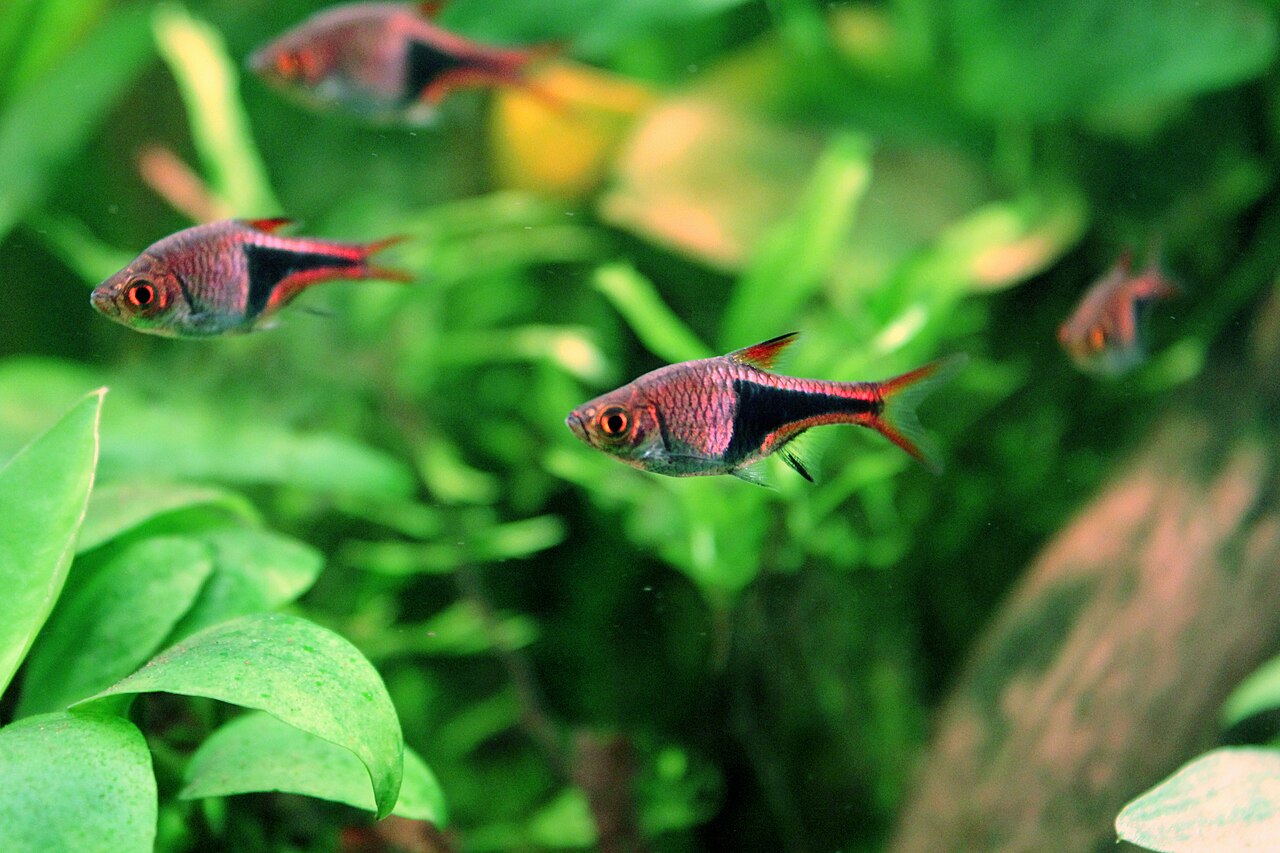
Otos are timid and peaceful. They do not fight back. The best tankmates are small, calm fish. Neon tetras, ember tetras, harlequin rasboras, and small rasboras work well. Corydoras catfish are also good because they stay on the bottom and are not aggressive. This neon tetra care guide gives a good example of a compatible schooling fish. Dwarf shrimp and snails are also safe options. They all feed at different levels and do not bother otos.
Avoid large or aggressive fish. Cichlids, bettas, and many barbs can stress or attack otos. A betta may tolerate otos in a large planted tank, but some bettas see them as intruders. Tiger barbs are notorious fin nippers and can harass slow moving otos. Read this tiger barb care guide before mixing them. Large plecos are usually safe in behavior, but they can be territorial over bottom caves. Small bristlenose plecos are a better fit if you want an algae eating pleco. Check this bristlenose pleco care guide for details.
Food competition is another issue. Fast eaters like danios or larger tetras can eat all the food before otos get any. If you keep such fish, feed at multiple spots or after lights out. Otos are more active at dawn and dusk. Dropping food near them helps. But overall, the best approach is a calm community tank that allows otos to graze without competition.
- Quarantine and acclimate new Otocinclus catfish slowly
Otos are often wild caught and arrive stressed. They may carry parasites or bacterial infections. A quarantine tank is not optional if you have an established display tank. Set up a small 5 to 10 gallon quarantine tank with a cycled sponge filter. Observe new otos for two to four weeks. Look for red gills, clamped fins, white spots, or sunken bellies. Treat any disease in quarantine, not in the main tank. This how to treat ich in aquarium guide can help if you see white spots.
Acclimate each fish slowly. The trip from the fish store to your tank is stressful. Float the closed bag to equalize temperature for 15 minutes. Then open the bag and drip aquarium water in. Use airline tubing with a knot or a drip acclimation kit. Continue for 45 to 60 minutes. This slow change reduces shock. Net the oto out and place it in the tank. Never dump store water in.
After adding new otos, keep the lights off or dim for the first day. This gives them time to explore without bright light stress. Offer a small amount of food near their hiding spots. Do not chase them or move decor around. The first week is the most critical. Watch for heavy breathing or refusal to eat. If all otos are active and grazing after a week, they have a good chance.

- Perform weekly maintenance and watch for weight loss
Otos are sensitive to dirty water. Nitrate should stay below 20 ppm. Do a 25 percent water change every week. Use a gravel vacuum to remove uneaten food and waste from the substrate. This is a consistent habit that prevents nitrate buildup. Read this how often to change aquarium water guide for more details. Always use a dechlorinator that also detoxifies ammonia and nitrite. Match the new water temperature and pH to the tank.
Check the filter every month. Rinse filter media in old tank water, not tap water. This preserves beneficial bacteria. A clogged filter reduces flow and oxygen. For filter upgrades or replacements, see this best aquarium filters 2026 guide. Keep the heater working and monitor temperature daily. A failed heater can crash the tank. Stable conditions are more important than exact values.
Watch each oto’s body shape. A healthy oto has a rounded belly. A sunken belly is a sign of starvation or internal parasites. If you see a thin fish, increase feeding with soft algae, blanched vegetables, and gel food. Quarantine that fish if needed. Also look for white patches or reddish areas. Otos do not have scales, so they are sensitive to medications. Treat only with products labeled safe for scaleless fish. With consistent care, your otos can live for three to five years.
Red Flags & Warnings
- 🚨 Never add Otocinclus catfish to a brand new or uncycled tank. They need established biofilm and zero ammonia and nitrite or they will starve or die from toxins.
- 🚨 Do not keep a single oto. Otos are social and need groups of at least six. A lone oto often stops eating and becomes stressed.
- 🚨 Avoid using salt or harsh medications with otos unless you confirm they are safe for scaleless fish. Many common treatments can harm them.
- 🚨 Do not assume otos will eat algae wafers right away. Wild caught otos may ignore processed food and starve if their tank lacks natural biofilm and soft vegetables.
- 🚨 Keep otos away from large, aggressive, or fast eating tankmates. Bullies and food competitors will prevent them from feeding normally.
- 🚨 Watch for sunken bellies or clamped fins. These are early signs of starvation or disease. Immediate action can save the fish.
Frequently Asked Questions
What size tank do Otocinclus catfish need?
A group of at least six otos needs a minimum of 10 gallons. A 20 gallon long is better because it provides more horizontal grazing area and stable water. Smaller tanks make it hard to keep ammonia and nitrate under control.
Are Otocinclus catfish good algae eaters for beginners?
Otos are good algae eaters for planted tanks, but they are not beginner fish. They need a mature tank with established biofilm and stable water. Beginners often add them too early and the fish starve or die from water quality issues.
What do Otocinclus catfish eat besides algae?
Besides soft algae and biofilm, otos eat blanched zucchini, cucumber, spinach, and high quality sinking algae wafers. Some also accept gel foods spread on rocks. They need constant grazing, so offer vegetables two or three times per week.
Can Otocinclus catfish live with bettas or shrimp?
Otos can live with peaceful dwarf shrimp and snails safely. A betta may tolerate otos in a large planted tank, but some bettas become aggressive. It depends on the individual betta. Always watch for chasing or stress.
How many Otocinclus should be kept together?
Keep at least six Otocinclus catfish together. They are social fish that feed and feel secure in groups. Ten or more is even better in a larger tank. A single oto will usually hide and may stop eating.
Why do my Otocinclus keep dying?
The most common reason otos die is a new tank with no biofilm and unstable water. They may also starve because they never learned to eat wafers. Other causes include ammonia or nitrite spikes, aggressive tankmates, and disease from wild caught stock.
What Should You Remember?
- Mature tank required: Cycle the tank and let biofilm and soft algae grow for at least four to six weeks before adding otos.
- Group of six minimum: Otos are social and need groups of six or more to feel secure and feed normally.
- Soft, stable water: Keep temperature 72-79°F, pH 6.5-7.5, and zero ammonia and nitrite at all times.
- Supplement their diet: Offer blanched vegetables and algae wafers in addition to natural tank algae.
- Choose peaceful tankmates: Avoid aggressive or fast fish that will outcompete or bully otos.
- Quarantine and acclimate slowly: Drip acclimate new otos and watch for sunken bellies or signs of stress.
This article is for general information only and is not a substitute for professional veterinary or aquarium specialist advice. Always research the specific needs of your fish and consult an expert before making care decisions.