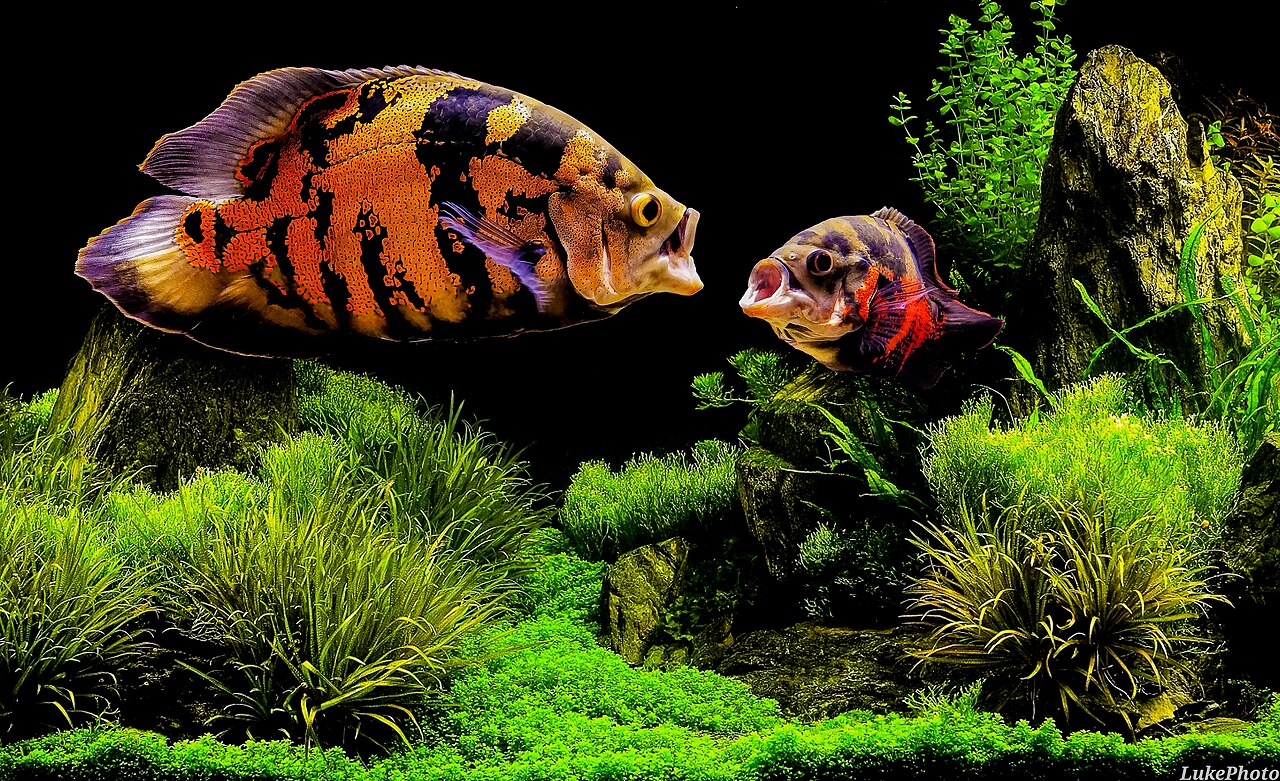
Oscars are one of the most interactive freshwater fish you can keep. They recognize owners, beg for food, and watch you from across the room. But these South American cichlids grow from a cute two-inch juvenile to a 12-inch adult in about a year. That rapid growth shocks many new owners. According to aquarium fishkeeping statistics, cichlid keepers consistently report tank size as a top reason for rehoming large fish. The first rule is simple: never buy an Oscar on impulse.
Oscars are not hard to keep if you plan the aquarium around their needs. They need a large footprint, heavy filtration, and big weekly water changes. Before you bring one home, you should understand the aquarium nitrogen cycle. A cycled tank prevents ammonia spikes that stress or kill these messy fish. This guide breaks the care into clear steps you can follow before and after adding the fish. Start with the right setup and the fish will reward you with years of personality.
Tank mates are another common mistake. Oscars eat anything that fits in their mouths, and they also defend territory. Small tetras, guppies, and shrimp become snacks. A proper setup may use a best aquarium filters unit rated for double the tank volume. Plan the aquarium as a long-term commitment. Oscars commonly live 10 to 15 years with good care.
Below, you will find eight steps that cover Oscar size, tank selection, filtration, cycling, feeding, maintenance, tank mates, and disease. You will also see exact water parameters and product suggestions. The goal is to help you raise a healthy Oscar without learning the hard way. If you follow these steps, your fish will grow into an active, colorful centerpiece.
What You’ll Need
- 75-gallon or larger aquarium
- Canister filter rated for 150+ gallons
- Two submersible heaters
- Liquid water test kit
- Gravel vacuum and buckets
- Water conditioner
How Do You Care for Oscar Fish?
- Start with the adult size and lifespan in mind
Oscars are sold as juveniles usually around 2 to 3 inches. They do not stay that size. In ideal conditions an Oscar adds roughly an inch per month during the first year. A 12-inch adult is common, and some reach 14 inches or more. Expect this before you buy the fish. The size change happens faster than most people think.
Adult size drives every other care decision. Tank size, filtration, water change volume, and tank mate choice all depend on it. A 10-gallon nursery tank fails within weeks. Even a 55-gallon tank becomes cramped for a single adult. Keep adult dimensions in mind from day one.
Lifespan matters too. An Oscar with good care lives 10 to 15 years. Some reach 20 years in very stable tanks. This is a long-term pet, similar to a dog or cat. You need a plan for moving, power outages, and vacation feeding. If you are not ready for a decade plus, choose a smaller fish.
Oscars are known for pouting, rearranging decor, and digging. They may sulk after a water change. This personality is a big part of their appeal. Just remember that a 12-inch fish rearranges gravel and unrooted plants. Heavy rocks and durable decor become necessary.

- Choose a 75-gallon tank as the absolute minimum
Most reliable sources agree that one adult Oscar needs at least a 75-gallon aquarium. Aqueon lists a 75-gallon as the minimum for a single Oscar. A 75-gallon tank has a footprint of 48 by 18 inches, which gives a 12-inch fish enough room to turn. For a pair, most keepers recommend 125 gallons or more. The extra volume also dilutes waste between water changes.
Bigger is better. A 90-gallon or 125-gallon tank offers more swimming space and more stable water chemistry. Oscars are messy eaters and produce a lot of waste. More water volume means ammonia builds up more slowly. This gives you a buffer if life gets busy and you miss a scheduled water change by a day.
Place the tank on a strong, level stand. A 75-gallon setup weighs over 800 pounds when filled with water, gravel, and glass. Do not place it on a dresser or a weak shelf. Put the tank away from direct sunlight to reduce algae. Also choose a spot where you can easily run a siphon to a drain or bucket.
Floor load can be an issue in upper-story apartments. Check the direction of your floor joists and place the tank across several joists. If in doubt, ask a contractor. A leaking or broken large tank can cause serious damage. The location choice matters as much as the tank itself.
- Install oversized filtration, heating, and simple décor
Oscars are heavy waste producers. Choose a filter rated for at least twice the tank volume. A 75-gallon tank should have a filter suited for 150 gallons or more. Canister filters like the Fluval FX4 are popular because they hold lots of biological media. The best aquarium filters for Oscars have high flow and easy maintenance.
Heating is straightforward. Oscars do well between 74 and 81 degrees Fahrenheit with 77 as a common target. Use two smaller heaters instead of one large heater. That way if one fails, the tank does not drop too quickly. A reliable heater like the Eheim Jager works well. Check our picks for best aquarium heaters to match heater wattage to room temperature.
Substrate should be easy to clean. Fine sand or small smooth gravel works. Oscars dig constantly, so rooted plants rarely survive. Use large rocks, driftwood, and artificial plants that cannot be uprooted. Anchor heavy decorations directly on the glass bottom before adding substrate. This prevents an Oscar from toppling them onto itself.
Lighting can be moderate. Oscars do not need intense light. A basic LED fixture on a timer is enough. If you keep live plants, choose tough species like Java fern or Anubias attached to driftwood. Still, expect them to be moved or torn. Simpler décor means less frustration.
- Cycle the tank fully before adding your Oscar
Oscars are sensitive to ammonia and nitrite, especially as juveniles. You must establish the nitrogen cycle before introducing the fish. This means growing beneficial bacteria that convert ammonia into nitrite and then nitrate. The process usually takes four to six weeks. A fishless cycle is the safest method. You can follow our guide on how to cycle a fish tank for step-by-step instructions.
During the cycle, add a source of ammonia and test the water daily. You should see ammonia rise, then nitrite rise, and finally nitrate climb. The aquarium nitrogen cycle is complete when ammonia and nitrite read zero and nitrate is present. Only then is the tank safe for an Oscar.
Do not use feeder goldfish to cycle the tank. They introduce disease and then either die or become tank mates that an Oscar may attack. Fishless cycling is cleaner and more humane. It also lets you fully decorate the tank without working around livestock.
Once the cycle is complete, do a large water change to lower nitrate before adding the Oscar. Test with a liquid kit for accurate results. Then acclimate the fish slowly by floating the bag and adding tank water over 30 minutes. Avoid dumping store water into the tank.
- Feed a varied, protein-rich diet
Oscars are carnivores with a big appetite. They eat insects, crustaceans, and small fish in the wild. In the aquarium, start with a high-quality cichlid pellet as the staple. Pellets should make up most of the daily diet. They provide balanced vitamins and less mess than live feeders. According to Seriously Fish, Oscars are opportunistic feeders that need a meaty diet.
Offer variety two or three times per week. Good options include earthworms, crickets, krill, silversides, and chopped shrimp. Many keepers also offer peas with the shell removed to help digestion. Avoid goldfish and minnows from feeder tanks. They carry parasites and have low nutritional value.
Feed juvenile Oscars two or three times per day in small amounts. Feed adult Oscars once or twice per day. Only offer what the fish can eat in two minutes. Remove uneaten food with a net or siphon. Overfeeding is one of the fastest ways to foul a large tank.
Oscars often beg for food even when they are full. Do not fall for it. A fat Oscar may look cute but it develops health problems. Keep a regular feeding schedule. Skip one day per week for adult fish. This gives the digestive system a rest and mimics natural feeding patterns.

- Change water weekly and test parameters
Large, messy fish need large weekly water changes. For a single Oscar in a 75-gallon tank, change at least 30 to 50 percent of the water every week. This removes nitrate and dissolved organics. If you keep two Oscars, you may need twice-weekly changes. Use a gravel vacuum to remove waste from the substrate.
Test the water before each change. A liquid kit such as the API Freshwater Master Test Kit gives accurate readings for ammonia, nitrite, nitrate, and pH. Aim for ammonia and nitrite at zero. Keep nitrate below 40 ppm, ideally below 20 ppm. If nitrate is high, increase water change volume or frequency.
Match the new water temperature to the tank water. Use a water conditioner to remove chlorine and chloramine. Add the new water slowly to avoid shocking the fish. This is also a good time to rinse filter media in old tank water. Never rinse bio media under tap water because chlorine kills the bacteria.
A consistent schedule matters more than perfect technique. Mark water change days on a calendar. Regular changes prevent old tank syndrome and keep your Oscar active. For more detail, see our guide on how often to change aquarium water.
- Choose tank mates carefully or keep your Oscar alone
Oscars are territorial and predatory. They eat fish small enough to fit in their mouths. This means no neon tetras, guppies, or shrimp. Small fish become expensive feeders. Even medium fish may be nipped or stressed. Many keepers choose a species-only tank for exactly this reason.
If you want tank mates, use large, fast, or tough fish. Silver dollars, large barbs, and some large catfish can work in a big tank. Other Central and South American cichlids like convict cichlids or Jack Dempseys may also be compatible if the tank is large enough. Still, aggression varies by individual Oscar.
A 125-gallon tank or larger is needed for most Oscar community setups. Add all fish as juveniles if possible. Rearrange the tank before adding new tank mates to break up territories. Watch for chasing, torn fins, or hiding. Be ready to separate fish with a divider or second tank.
Do not keep Oscars with small bottom dwellers like Corydoras. Even larger plecos can be attacked if they compete for hiding spots. If you want a cleanup crew, use a tough species like a large adult common pleco, but be aware it also has a huge bioload. Many successful Oscar tanks are simply one Oscar and the owner.

- Watch for common Oscar diseases and injuries
Oscars are fairly hardy but they can get sick. The most common issue is ich, a parasite that causes white spots and flashing. Poor water quality or sudden temperature drops often trigger it. If you see white spots, act fast. Our guide on how to treat ich in aquarium covers safe treatment options for large fish.
Hole in the head disease is another Oscar problem. It appears as pits or holes on the head and lateral line. The cause is often poor water quality, lack of vitamins, or a parasite. Improve water changes and feed high-quality pellets with vitamins. Some keepers add a vitamin supplement to the food.
Oscars injure themselves by ramming into heaters, rocks, or lids. Use a heater guard to prevent burns. Make sure decorations have no sharp edges. If you see a scrape, keep the water very clean and watch for redness or fungus. Minor injuries heal quickly in good water.
Quarantine new fish before adding them to an Oscar tank. A separate 20-gallon quarantine tank can prevent disease outbreaks. Treat any signs of illness early, because large fish can decline quickly. Keep a broad-spectrum medication on hand but use it only when you know the cause.
Red Flags & Warnings
- 🚨 Never buy a young Oscar without a plan for its adult size. A two-inch fish becomes a foot-long fish within a year.
- 🚨 Do not use feeder goldfish or minnows. They carry parasites and cause fatty liver disease over time.
- 🚨 Avoid sharp gravel and small decorations. Oscars dig and may swallow or injure themselves on small items.
- 🚨 Never skip cycling. Ammonia and nitrite spikes can kill an Oscar in days.
- 🚨 Do not keep Oscars with small or slow tank mates. If it fits in the mouth, it will be eaten.
- 🚨 Avoid overfeeding. Oscars beg constantly, but extra food fouls the water and causes health problems.
Frequently Asked Questions
What size tank does one Oscar need?
One adult Oscar needs at least a 75-gallon tank. A 125-gallon tank is better for a pair or if you want tank mates. More water volume also helps dilute waste between weekly changes.
What do Oscar fish eat?
Oscars eat a staple of high-quality cichlid pellets. Offer earthworms, krill, silversides, and chopped shrimp as variety two or three times per week. Avoid feeder goldfish and minnows because they carry disease.
Can Oscar fish live with other fish?
Yes, but only in a large tank with large, fast tank mates. Silver dollars, large catfish, and other robust cichlids can work if the tank is 125 gallons or larger. Small fish are not safe with Oscars.
How fast do Oscars grow?
Juvenile Oscars can grow about an inch per month for the first year. Most reach 10 to 12 inches by 12 to 18 months. Full adult size can be 12 to 14 inches or more.
What water temperature and pH do Oscars need?
Keep the water between 74 and 81 degrees Fahrenheit, with 77 degrees as a common target. pH can range from 6.0 to 8.0, but stability matters more than an exact number. Ammonia and nitrite must stay at zero.
How long do Oscars live?
With good care, Oscars live 10 to 15 years. Some reach 20 years in very stable aquariums. Their long lifespan makes them a serious commitment.
What Should You Remember?
- Tank size: Start with a 75-gallon tank for one Oscar and 125 gallons for a pair.
- Water quality: Keep ammonia and nitrite at zero, nitrate below 40 ppm, and change 30 to 50 percent weekly.
- Diet: Feed a cichlid pellet staple with occasional meaty foods like earthworms and krill.
- Compatibility: Avoid small tank mates; if you try a community, use a 125-gallon tank and large fish.
- Cycling: Complete a fishless nitrogen cycle before adding an Oscar to prevent ammonia burns.
- Health: Watch for ich, hole in the head, and injuries; quarantine new fish and use clean water.
- Lifespan: Plan for 10 to 15 years of care, including tank maintenance and feeding.
This article is for general information only and is not a substitute for professional veterinary or aquarium specialist advice. Always research the specific needs of your fish and consult an expert before making care decisions.