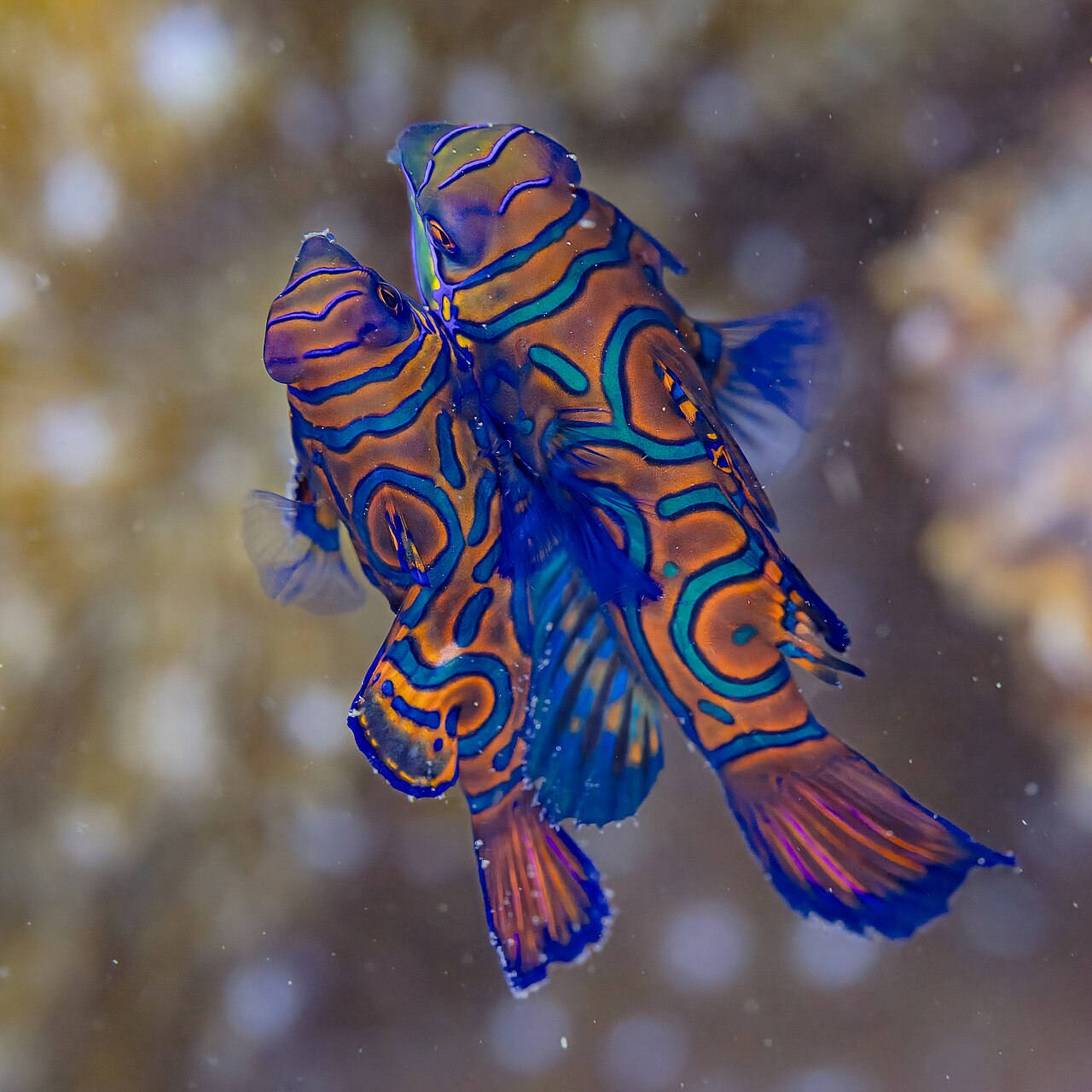
The mandarin fish (Synchiropus splendidus), often called the mandarin dragonet or mandarin goby, is one of the most colorful fish in the saltwater hobby. Its swirling blue, orange, and green patterns stop people mid-stride at aquarium stores. That beauty comes with a strict care requirement. You cannot treat this fish like a typical community fish. A successful mandarin starts weeks or months before you bring one home.
The biggest challenge is feeding. Mandarins are micro-predators. They pick tiny pods off live rock and sand all day. A new or sterile tank will starve one within weeks. Before adding a mandarin, you need a mature system with a constant supply of copepods. Many keepers fail because they expect the fish to accept flakes or pellets. Most do not. This guide explains how to avoid that mistake. Learn how to cycle a fish tank the right way before you stock.
Tank size matters more than most beginners think. A mandarin may only reach about 3 inches, but it needs large grazing territory. A 75-gallon established tank is a common starting point. Smaller tanks can work only with a large refugium and heavy pod seeding. Compatibility also matters. Peaceful tank mates are essential because mandarins are slow eaters and can be easily outcompeted. Aggressive fish or other pod grazers will starve a mandarin without visible fighting. Plan your stocking around the fish’s feeding needs. This article shows you how to build the right environment.
In this guide you will learn how to prepare the right tank, keep stable water chemistry, build a pod population, acclimate safely, choose foods, and select tank mates. Each step is written for a hobbyist who has kept saltwater fish before but maybe never kept a mandarin. By the end you will know if a mandarin fits your setup. A little patience now prevents a starving fish later. Every section gives you actionable steps, not just theory. Let’s start with the foundation.
What You’ll Need
- 75 gallon or larger established saltwater tank
- Refugium with macroalgae and live rock rubble
- Live copepod culture
- Phytoplankton or powdered algae
- Drip acclimation kit
- Test kits for pH, ammonia, nitrite, nitrate, and salinity
How Do You Care for Mandarin Fish?
- Start with an established tank and refugium
Set up the tank long before you buy the fish. A mandarin needs a mature system with a live copepod population. Many experts suggest waiting 8 to 12 months after cycling. This gives live rock and sand time to develop microfauna. The fish feeds on pods all day. A new system simply cannot produce enough food. Understand the aquarium nitrogen cycle explained so you know why an established tank matters. The cycle handles waste, but pod growth takes even longer.
A refugium is your best tool. A refugium is a protected area, usually in a sump, where pods reproduce without fish eating them. Add live rock rubble and macroalgae like Chaetomorpha. Light the refugium on a reverse cycle to stabilize pH at night. Authoritative guides from Aquarium Co-Op stress that a mature tank is more important than gallons alone.
Do not rush this step. Some hobbyists add pods to a new tank and think it is ready. That approach fails. The pod population must be established enough to handle constant grazing. Without this, your mandarin will slowly lose weight.
- Keep water parameters stable
Keep water parameters in a consistent range. Mandarin fish do best with specific gravity between 1.023 and 1.025. Temperature should stay between 76 and 80 degrees Fahrenheit. pH should remain from 8.1 to 8.4. Ammonia and nitrite must be zero. Nitrate should stay below 10 ppm. Use a reliable best aquarium heaters 2026 and a controller to avoid temperature swings. Even a two degree drop can make a mandarin stop eating.
Test the water every week. Salinity changes are especially dangerous. Use an auto top off system with reverse osmosis water. Replacing evaporated water with saltwater raises salinity quickly. Mandarin fish have small bodies and little energy reserve. They feel stress from unstable chemistry more than larger fish do.
High nitrate also reduces pod numbers. Pods live in the same water column. Keep dissolved organics low with regular water changes. The goal is stable, clean water that supports both the fish and its live food. This sets up the next step: growing enough pods.
- Seed and grow a constant copepod supply
Seed the tank with several species of copepods. Tisbe, Tigriopus, and Apocyclops pods are common choices. Add them to both the display tank and the refugium. Do this at least three to four weeks before adding the fish. The pods need dark crevices and surface area. Live rock rubble and macroalgae help. Use a full spectrum best aquarium lighting 2026 over the refugium to grow algae for pods to eat.
Feed the pods. Add phytoplankton several times a week. You can also add a small amount of powdered algae. Turn off return pumps for an hour after seeding so pods settle into the rock. Check for pods at night with a red flashlight. You should see tiny white specks moving on the glass and rock. A live copepod starter culture helps speed this up. You can check live copepods on Amazon.
Some hobbyists add a second pod culture monthly. The fish will graze constantly. The refugium acts as a pod factory, but it takes time. If the population crashes, the mandarin will starve within a few weeks. Do not skip this step.

- Quarantine and acclimate your mandarin fish
Quarantine the mandarin for two to four weeks before adding it to your display. Use a separate 10 or 20 gallon tank with simple PVC fittings for hiding places. Fill it with water from the already healthy display if possible. The quarantine tank must have a cycled biofilter. It also needs a small pod population or daily live food. A bare quarantine tank with no pods will starve the fish.
Use a drip acclimation system when moving the fish from the bag to the quarantine. Match temperature, salinity, and pH slowly over 45 to 60 minutes. Do not pour store water into your tank. Watch for rapid breathing, clamped fins, or white spots. If you see spots, consult how to treat ich in aquarium before treating with copper. Mandarins are sensitive to many medications.
While in quarantine, train the fish to eat frozen food if possible. Offer live baby brine shrimp first, then mix in tiny frozen cyclops. A mandarin that eats frozen in quarantine has a much better chance. This step protects your main tank from disease and starvation. It also prepares the fish for the feeding routine in step five.
- Feed live foods first, then train to frozen
Feed live foods as the main diet. Copepods should always be available on live rock. Supplement with enriched baby brine shrimp and small mysis. Feed multiple small meals each day. Mandarins are slow grazers, not binge eaters. A feeding station or turkey baster helps deliver food near the fish. Soak foods in a vitamin or amino acid supplement like Selcon. This adds nutrition.
Do not expect a new mandarin to eat flakes. Some trained fish accept frozen, but many never do. Start with live baby brine shrimp, then mix frozen cyclops or fish eggs into the feeding station. Over time, the fish may follow the other foods. The how often to change aquarium water guide explains how to manage extra waste from frequent feeding. Leftover food should not rot in the tank.
A common mistake is feeding once a day. That is not enough. A mandarin’s stomach is small and its gut is short. It needs constant tiny meals. Use an auto feeder only for trained frozen food, never for live pods. Keep a culture of live foods running so you never run out. Connect this feeding plan with compatible tank mates in the next step.
- Stock peaceful, slow-eating tank mates
Choose tank mates that will not compete for pods. Peaceful fish like ocellaris clownfish, firefish gobies, and royal grammas can work well. They do not spend all day picking at the rock. Avoid aggressive pod eaters such as six line wrasses, dottybacks, and large angelfish. These fish will outcompete the mandarin. A mandarin needs time to search every crevice. Fast tank mates will scare it away.
Do not keep two male mandarins together. They will fight over territory. A proven male and female pair may work in a large tank with plenty of pods. Even then, watch for aggression. Mandarin fish are not strong swimmers. They do best in a calm tank.
Reef tanks with live rock and sand are ideal. Mandarins are reef safe. They do not eat coral. Soft corals and small polyp stony corals are safe. Keep water flow gentle. High flow makes it hard for the fish to land on rocks. This step sets up the final one: long term monitoring.
- Monitor weight loss and pod depletion
Observe your mandarin every day. A healthy fish has a rounded belly and moves slowly but deliberately. A pinched stomach or visible backbone is a red flag. If you see weight loss, increase pod seeding and reduce competition. You can also isolate the fish in a breeder box inside the display for target feeding. Do not wait until the fish is emaciated.
Check the pod population at night with a red light. If pods become sparse, add live cultures immediately. You may need a larger refugium or more live rock. Some keepers run a separate pod culture to keep supply steady. This is more work but lowers risk.
Continue weekly water changes and testing. A stable system supports both the fish and its food. Long term mandarin care is about patience. If you keep the parameters stable and the pods plentiful, a mandarin can live for many years.

Red Flags & Warnings
- 🚨 Never buy a mandarin for a newly cycled tank. Even a three month old tank has too few pods and the fish will slowly starve.
- 🚨 Do not assume a mandarin will eat flakes or pellets. Many never accept prepared food. Observe it eating before you buy.
- 🚨 Avoid aggressive or fast tank mates. They outcompete the mandarin for pods and can stress it to death.
- 🚨 A bare quarantine tank will starve a mandarin. Always add pods or live baby brine shrimp daily during quarantine.
- 🚨 Two male mandarins in one tank will fight. Keep only one per display unless you have a proven male and female pair.
- 🚨 Use a mesh lid. Mandarin fish can jump when stressed or spooked, and they may end up on the floor.
Frequently Asked Questions
What size tank do mandarin fish need?
A 75-gallon established tank is the safest minimum. A 40-gallon tank with a large refugium and heavy pod seeding can work for an experienced keeper. The key is mature live rock and a constant copepod supply, not just water volume.
What do mandarin fish eat?
Mandarins eat small live food, mainly copepods. They can be trained to accept frozen cyclops, fish eggs, and tiny mysis. Live baby brine shrimp is a good bridge food.
Are mandarin fish hard to keep?
Yes, they are challenging for beginners because of their narrow diet. They need a mature tank and a steady live food supply. Hobbyists who prepare properly can keep them for years.
Can mandarin fish live with clownfish?
Yes, peaceful ocellaris clownfish can work. Make sure the tank is large enough and the clownfish do not bully the mandarin at feeding time. Avoid larger or aggressive clown species.
Are mandarin fish reef safe?
Yes, mandarins are reef safe. They do not eat coral or sessile invertebrates. They spend their time picking pods from live rock and sand.
How long do mandarin fish live?
With proper care, a mandarin can live 5 to 10 years in a mature aquarium. Stable water parameters and a constant pod supply are the most important factors.
What Should You Remember?
- Mature Tank: Start with a tank that has been running 8 to 12 months before adding a mandarin.
- Copepod Supply: Seed live pods in the display and refugium for weeks before introducing the fish.
- Water Parameters: Keep temperature at 76-80°F, pH 8.1-8.4, and salinity 1.023-1.025.
- Quarantine Carefully: Use a pod-rich quarantine tank and drip acclimate for 45 to 60 minutes.
- Live-First Diet: Feed live pods and enriched brine shrimp while training to frozen food.
- Peaceful Tank Mates: Avoid aggressive fish and other pod grazers that compete with mandarins.
- Daily Observation: Watch for weight loss and check pod density at night with a red light.
This article is for general information only and is not a substitute for professional veterinary or aquarium specialist advice. Always research the specific needs of your fish and consult an expert before making care decisions.