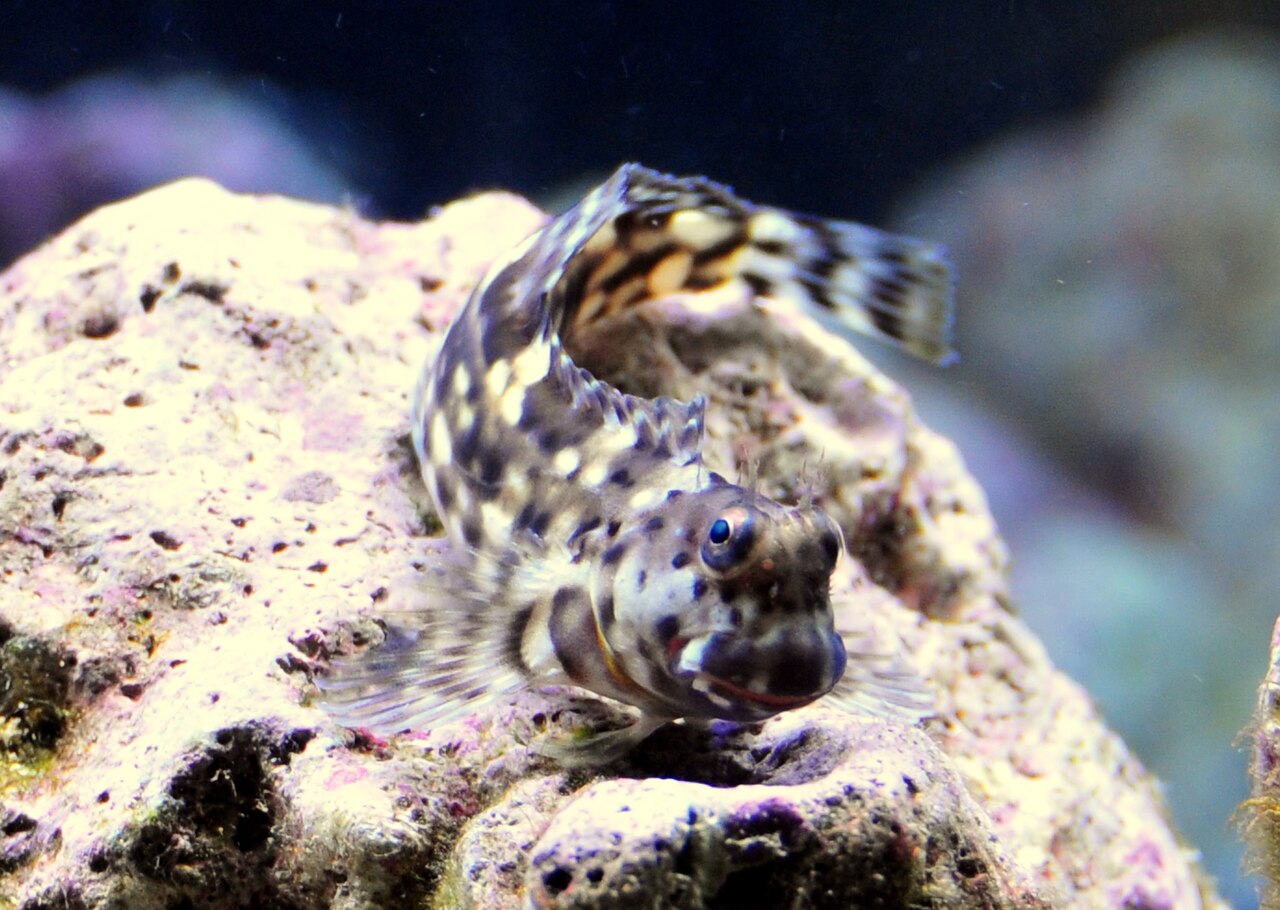
A lawnmower blenny, also called the algae blenny or sailfin blenny, is one of the most entertaining and useful fish for a saltwater aquarium. It earns its name by constantly scraping algae off rocks and glass with its comb-like teeth. That constant grazing makes it a top choice for aquarists who struggle with green film algae or hair algae. Before you bring one home, you need to understand its specific care needs. This guide covers tank setup, diet, compatibility, and long-term health.
The lawnmower blenny is not a beginner fish, but it is forgiving if you meet its basic requirements. It does best in a mature aquarium with stable water chemistry and plenty of natural algae. According to Aqueon, lawnmower blennies are hardy but need rockwork for hiding and grazing. They can starve in a sterile new tank that lacks algae. So the first step is setting up the right environment before you buy the fish.
Many aquarists overestimate how much algae one blenny can eat. A single lawnmower blenny controls light algae growth but will not fix a severe hair algae outbreak alone. You still need proper nutrient management, water changes, and good filtration. If you are new to saltwater, check our guide on how to cycle a fish tank before adding any fish. That article explains the nitrogen cycle basics you must master first.
This species also has a big personality. Lawnmower blennies perch on rocks, watch you from across the room, and even spit sand at tank mates. They are peaceful but territorial toward other blennies and similar-shaped fish. In this guide, you will learn exact water parameters, feeding routines, tank mate choices, and warning signs to watch for. By the end, you will know whether a lawnmower blenny fits your saltwater setup.
What You’ll Need
- 30+ gallon aquarium with lid or mesh screen
- Live rock and reef-safe epoxy
- Heater with controller
- Refractometer or salinity probe
- Protein skimmer
- Marine test kits (ammonia, nitrite, nitrate, pH, alkalinity)
- Seaweed clip and nori sheets
- Spirulina flakes or pellets
- Quarantine tank (10-20 gallons)
- Airline tubing and drip valve for acclimation
How Do You Care for a Lawnmower Blenny?
- Set Up the Right Tank and Aquascape
Start with a tank of at least 30 gallons for a single lawnmower blenny. A 40-gallon breeder is even better because it offers more horizontal swimming and grazing area. Larger tanks also dilute aggression and give the blenny a defined territory. The fish spends most of its time on the bottom half of the tank, so floor space matters more than height. Plan for a long, shallow tank rather than a tall column.
Fill the tank with plenty of live rock arranged in caves, overhangs, and flat ledges. The blenny needs hiding spots to feel secure and surfaces to graze. Use epoxy or reef-safe putty to secure rock structures so they cannot collapse if the blenny digs underneath. Lawnmower blennies often perch on the highest rock and survey the tank. That perch becomes their lookout point, so place it away from direct filter outflow.
Let the tank mature for at least a few months before adding the fish. Mature live rock develops a natural biofilm of microalgae, which is exactly what the blenny eats. A new tank with white dry rock cannot sustain this fish. If you must use dry rock, seed it with live rock rubble and dose a quality nitrifying bacteria product. You can also run the lights longer to encourage algae growth before the fish arrives.
Filtration should be strong but not so strong that the blenny is tossed around. A hang-on-back or sump filter rated for double the tank volume works well. Add a protein skimmer to remove dissolved organics and keep nitrate low. For equipment options, check best aquarium filters 2026 for recommendations. The blenny tolerates moderate flow, but it needs calm resting spots near the bottom.

- Maintain Stable Water Parameters
Lawnmower blennies are hardy but hate sudden changes in water chemistry. Keep temperature between 72 and 78 degrees Fahrenheit. The sweet spot is 76 to 78 degrees. Use a reliable heater and a thermometer to verify the reading daily. Temperature swings of more than two degrees in a day can stress the fish and lower its immune response. A quality heater with a controller prevents nighttime drops.
Salinity should stay between 1.020 and 1.025 specific gravity. The ideal range is 1.023 to 1.025 for a reef tank. Use a refractometer, not a swing-arm hydrometer, because it gives accurate readings. Top off evaporated water daily with fresh reverse osmosis or deionized water. Do not add salt to top off, because salt does not evaporate. Keep a log of your readings so you catch slow drift before it becomes a problem.
pH should remain between 8.1 and 8.4. Alkalinity between 8 and 12 dKH helps stabilize pH. Test alkalinity, calcium, and magnesium weekly if you keep corals. The blenny does not need coral-level calcium, but stable alkalinity keeps the whole system steady. Regular water changes of 10 to 15 percent every two weeks help replenish trace elements. Our guide on how often to change aquarium water breaks down the best schedule.
Ammonia and nitrite must always read zero. Nitrate should stay below 20 ppm, though lower is better for algae control. If nitrate creeps up, the blenny will have more algae, but that is not a good reason to slack on maintenance. High nitrate also feeds problem algae species that the blenny avoids. Use a quality test kit and record results weekly so you can spot trends.
- Provide a Varied, Algae-Rich Diet
The lawnmower blenny is primarily an herbivore. It grazes constantly on microalgae, film algae, and some hair algae. But in most home tanks, there is not enough natural algae to support a full-grown blenny. You must supplement its diet daily. Nori or dried seaweed sheets clipped to the glass are the best staple. Use a veggie clip and replace the sheet every 24 hours so it does not rot. Check Check the seaweed clip on Amazon for a reliable option.
Offer spirulina-based flakes or pellets as a second staple. Sinking pellets work well because the blenny feeds near the bottom and on rocks. Feed only what the fish consumes in two minutes, twice a day. Soaked pellets are easier to digest. You can also offer frozen foods like mysis shrimp, brine shrimp, and chopped clam once or twice a week. The occasional meaty treat gives extra protein for growth and color.
Watch the blenny’s belly. A healthy lawnmower blenny has a slightly rounded belly. A sunken or pinched belly means it is starving. That often happens in new tanks with little algae. If you see a sunken belly, increase feeding frequency and offer more nori. You can also smear spirulina powder on a rock and place it near the blenny’s perch. Some aquarists use a turkey baster to target feed algae paste to the fish.
Do not rely on the blenny to clean your entire tank. If you have a severe hair algae problem, fix the root cause. Excess nutrients and poor flow cause algae outbreaks. A lawnmower blenny is a helper, not a cleanup crew replacement. Our article on the aquarium nitrogen cycle explained explains how nutrient balance works. For a broader saltwater setup guide, check clownfish ocellaris care guide for tank mates that share similar water parameters.

- Choose Compatible Tank Mates
Lawnmower blennies are peaceful toward most fish that do not look like them. They generally ignore clownfish, gobies, cardinalfish, and most wrasses. Good tank mates include pajama cardinalfish, firefish gobies, royal grammas, and ocellaris clownfish. Avoid keeping two lawnmower blennies in the same tank unless the tank is very large with distinct rock territories. They will fight over grazing areas.
Do not pair a lawnmower blenny with other blennies, especially midas blennies or bicolor blennies. They see each other as direct competitors for algae and hiding spots. The same goes for some gobies and dottybacks that occupy the same rockwork niche. If you want a single blenny with maximum personality, choose one and stick with it. A midas blenny care guide shows why mixing blennies fails in most aquariums.
Avoid large, aggressive fish that might bully the blenny. Triggers, large puffers, and some larger wrasses can nip at the blenny’s fins. Also avoid fast, aggressive damselfish that claim the entire rock structure. The blenny will hide and stop eating if it feels constantly threatened. Peaceful community tanks with calm swimmers work best. A firefish goby care guide offers more examples of peaceful tank mates.
Corals and invertebrates are usually safe with a lawnmower blenny. The fish may perch on corals but rarely damages them. Still, some individuals nip at the mantles of clams or large polyp stony corals. This behavior happens when the blenny is hungry. Keep it well fed and watch for signs of nipping. If nipping starts, remove the blenny or target feed it more often. Most reef keepers report no problems with soft corals, LPS, or SPS.
- Acclimate and Introduce the Blenny Safely
Proper acclimation is critical for lawnmower blennies. They are sensitive to changes in salinity and pH. Drip acclimation is the safest method. Float the bag in the tank for 15 minutes to equalize temperature. Then pour the fish and water into a clean bucket. Use airline tubing with a drip valve to add tank water at about 2 to 3 drops per second. Continue for at least 45 minutes, or until the water volume doubles.
Do not rush this step. Sudden salinity changes cause osmotic shock, which can kill the fish days later. Test the bag water and tank water before starting. If salinity differs by more than 0.002, extend the drip to 60 or 90 minutes. Never pour bag water into your display tank. Net the blenny gently and place it in the tank. Turn off the lights for the first few hours to reduce stress.
After release, the blenny may hide for a day or two. That is normal. Do not chase it or move rocks to check on it. The fish needs time to find a safe perch and learn the tank layout. Leave the tank lights off for the rest of the day. Offer a small piece of nori near its hiding spot after 24 hours. If it does not eat, do not panic. Lawnmower blennies can go a day or two without food while they adjust.
Quarantine is strongly recommended for all new saltwater fish. A separate 10 to 20 gallon quarantine tank lets you observe the blenny for ich, velvet, or internal parasites. Treat prophylactically if needed. Skipping quarantine risks introducing disease to your display. For more on disease prevention, read how to treat ich in aquarium. A healthy quarantine period also lets you fatten up a skinny blenny before it competes with other fish.
- Observe Behavior and Health Daily
Spend a few minutes each day watching your lawnmower blenny. Healthy blennies are active during the day and perch on rocks between grazing bouts. They should have clear eyes, intact fins, and a rounded belly. A blenny that hides constantly or breathes rapidly may be stressed or sick. Rapid gill movement can signal parasites or poor water quality. Check ammonia and nitrite immediately if you see this.
Watch for weight loss. A lawnmower blenny with a pinched stomach or a visible lateral line depression is not eating enough. Increase nori offerings and target feed with a pipette. You can also lower the flow during feeding so the fish can catch food easily. Some blennies are slow eaters and need a calm feeding zone. If other fish outcompete it, feed the blenny after lights out when competitors sleep.
Look for signs of territorial stress. If other fish chase the blenny away from food or its perch, you need to rearrange the rockwork. Adding more caves and perches can break up territories. Sometimes moving a bully to a different tank is the only fix. A stressed blenny stops eating and loses color. Its normally mottled brown and green pattern may fade to a pale gray.
Check the fish’s mouth and fins daily. Lawnmower blennies use their lips to scrape algae. Mouth injuries from sharp rock edges can become infected. Fungal or bacterial infections appear as white or red patches. Treat bacterial infections with a broad-spectrum antibiotic in a quarantine tank. Do not medicate the display tank unless absolutely necessary, because many medications harm invertebrates. Regular observation catches problems early when they are easiest to fix.

- Manage Algae and Tank Maintenance
Your lawnmower blenny is part of your algae management plan, not the whole plan. Keep nitrate and phosphate low through regular water changes and good filtration. Use a protein skimmer and avoid overfeeding. If algae gets out of control, reduce light duration and intensity. A photoperiod of 8 hours is enough for most reef tanks. Too much light fuels algae growth faster than the blenny can eat it.
Clean the glass weekly, but leave a patch of algae on the back or side panel for the blenny to graze. This gives the fish a natural food source and reduces stress. You can also cultivate algae on a separate rock in a refugium and rotate it into the display. That method works well for tanks with very low natural algae. A simple refugium light helps grow macroalgae like chaeto, which also exports nutrients.
Maintain your equipment on a schedule. Clean the filter sponges or replace filter media monthly. Check heater and powerhead operation weekly. A failed heater can cause a rapid temperature drop that stresses the blenny. Replace old heater thermostats every two years. For a reliable heater option, you can Check the aquarium heater on Amazon. Keep a backup heater on hand for emergencies.
Test water parameters weekly and log the results. Stable parameters are more important than chasing perfect numbers. If alkalinity drops, adjust with a two-part additive or kalkwasser drip. Drastic corrections cause more harm than gradual drift. A best aquarium heaters 2026 guide can help you choose a stable heating system. Consistent care keeps the blenny healthy and its algae supply balanced for years.
Red Flags & Warnings
- 🚨 Never keep two lawnmower blennies in a tank under 75 gallons. They will fight aggressively over territory and food.
- 🚨 Do not add a lawnmower blenny to a brand new tank with no algae. The fish will starve within weeks. Wait at least 3 months after cycling.
- 🚨 Avoid medications containing copper in a display tank with invertebrates. Copper is lethal to shrimp, snails, and corals. Treat in quarantine instead.
- 🚨 Do not assume the blenny will eat all types of hair algae. Some individuals ignore tough hair algae. Manual removal is still needed for severe outbreaks.
- 🚨 Use a tight-fitting lid or mesh screen. Lawnmower blennies can jump when startled, especially during the first week after introduction.
- 🚨 Do not chase or handle the blenny with bare hands. Their small teeth can scrape skin and stress the fish. Use a soft net and minimal handling.
Frequently Asked Questions
How big does a lawnmower blenny get?
Lawnmower blennies typically reach 4 to 5 inches in length in home aquariums. They grow slowly and need several years to reach full size.
Will a lawnmower blenny eat hair algae?
Yes, they eat hair algae and film algae. Still, some individuals ignore hair algae if other food is abundant. Keep them slightly hungry so they graze naturally.
Can a lawnmower blenny live with clownfish?
Yes, clownfish and lawnmower blennies usually ignore each other. Both are peaceful enough for a community tank, as long as the blenny has its own rock territory.
Do lawnmower blennies jump out of tanks?
They can jump if startled or stressed. Always use a tight-fitting lid or mesh screen cover. Leave no gaps around filter and heater openings.
Is a lawnmower blenny reef safe?
Mostly yes. They do not eat coral polyps, but they may graze on algae growing on coral bases. Some individuals nip at clam mantles or large polyp stony corals if very hungry.
How often should I feed a lawnmower blenny?
Feed once or twice daily with algae-based foods. Supplement with nori or spirulina flakes and occasional frozen mysis. Adjust based on belly size and grazing behavior.
What Should You Remember?
- Tank size: Provide at least 30 gallons with mature live rock for natural algae grazing.
- Water parameters: Keep temperature 72-78°F, salinity 1.020-1.025, and pH 8.1-8.4.
- Diet: Offer algae sheets, spirulina flakes, and occasional meaty foods to prevent nipping at corals.
- Compatibility: Choose peaceful tank mates and avoid aggressive grazers like tangs in small tanks.
- Acclimation: Drip acclimate for at least 45 minutes to reduce osmotic shock.
- Observation: Watch for sunken belly, rapid breathing, or refusal to eat, which signal stress or disease.
- Maintenance: Keep nitrate below 20 ppm and allow some algae to grow on rocks and back glass.
This article is for general information only and is not a substitute for professional veterinary or aquarium specialist advice. Always research the specific needs of your fish and consult an expert before making care decisions.