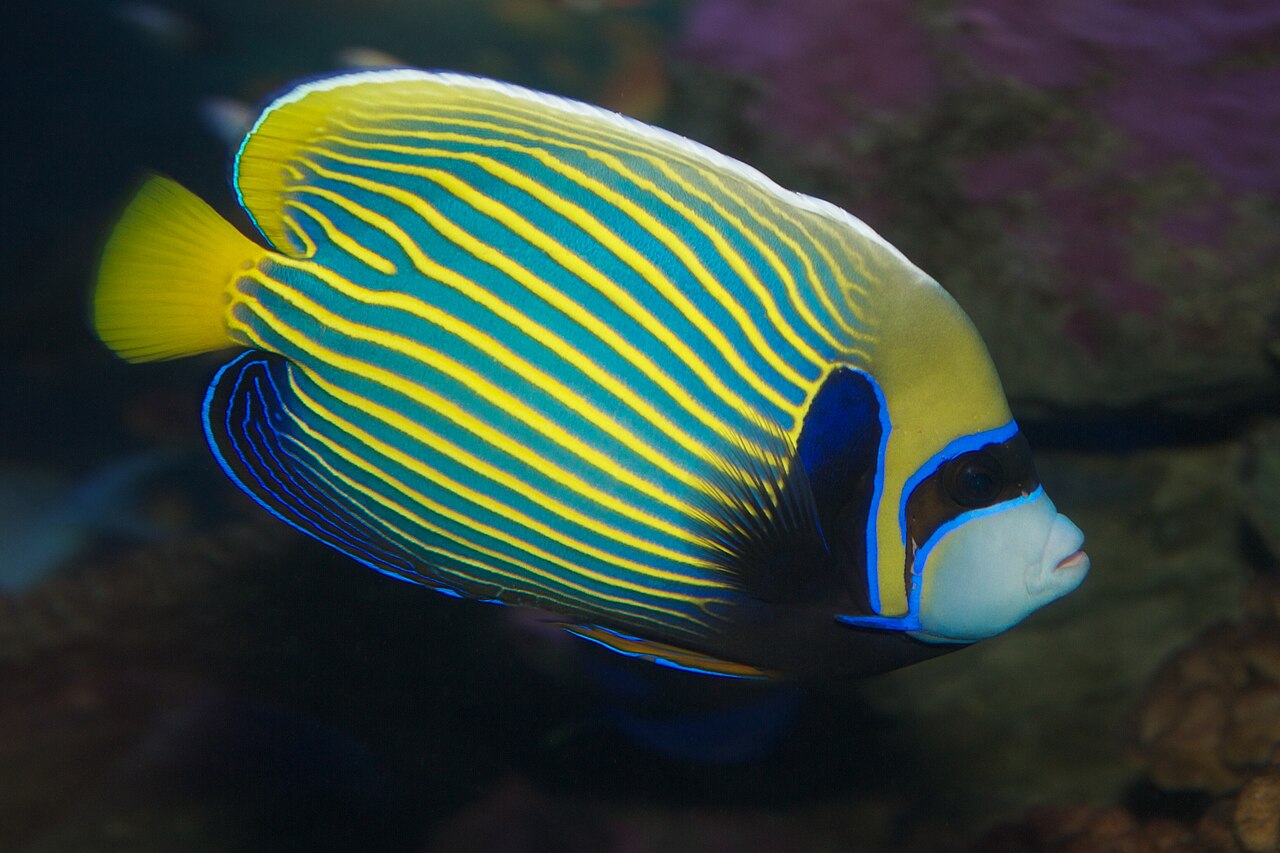
The emperor angelfish is one of the most recognizable saltwater fish in the trade. Juveniles wear bold blue and white spirals that look completely different from the adult’s yellow and blue horizontal stripes with a dark mask around the eyes. That color change is dramatic, but so are the fish’s care requirements. If you want a smaller and more forgiving marine angelfish, start with our coral beauty angelfish care guide. If you are set on an emperor, you need a large tank, a mature system, and a long-term plan.
Emperor angelfish, Pomacanthus imperator, comes from the Indo-Pacific where it patrols reef slopes and lagoons. Adults can reach about 15 inches in length, and they use that size to dominate feeding areas. They are not a good fit for nano tanks, new aquariums, or mixed reefs with delicate invertebrates. This fish needs space, stable water chemistry, and a diet that includes sponge matter. Before you buy one, understand the aquarium nitrogen cycle explained so the tank is fully cycled and stable.
This guide covers emperor angelfish tank size, water parameters, diet, compatibility, and ongoing maintenance. We will use baseline care data from Aqueon and species husbandry from LiveAquaria, then explain what works in a home aquarium. Think of this as a practical walkthrough from setup to long-term health. The steps below assume you already have saltwater experience or are willing to invest in the right equipment.
One more thing before diving in. Emperor angelfish can live 15 to 20 years with proper care. That is a long commitment, longer than many dogs. You will need a reliable source of high-quality marine food, a strict maintenance schedule, and a tank large enough to handle an adult. If that sounds manageable, the rewards are a bold, intelligent fish that often recognizes its keeper and becomes the centerpiece of a fish-only display.
What You’ll Need
- 125+ gallon marine aquarium, preferably 180 gallons or larger
- Live rock with multiple caves
- Protein skimmer and strong filtration
- Marine test kit for pH, alkalinity, nitrate, and phosphate
- Reliable heater and thermometer
- RODI water system or source
- Quarantine tank with heater and filter
- Sponge-based marine foods and nori
How Do You Care for Emperor Angelfish?
- Provide a Large, Mature Aquarium
A single juvenile emperor angelfish can start in a 125-gallon tank, but this is the floor, not the ideal. Adults reach about 15 inches and need swimming room plus territory. A 180-gallon or larger tank with a 6-foot footprint is better. More water volume also dilutes waste and gives you a buffer against parameter swings. If you have the space, a 220-gallon aquarium is even more comfortable for an adult emperor.
The aquarium must be mature before you add the fish. That means the nitrogen cycle is finished and the live rock has been in place long enough to grow biofilm, copepods, and microfauna. Add an emperor to a newly cycled tank only after several months of stable readings. Review the aquarium nitrogen cycle explained if you need a refresher. Live rock gives the fish grazing surfaces and hiding spots, but it must be cured and stable.
Many keepers make the mistake of buying a juvenile because it looks small. Emperor angelfish grow more slowly than some large fish, but they do grow continuously. A 60-gallon tank will cause stress, stunted growth, and aggression. Plan for the adult size from day one. You will also need strong filtration and a quality protein skimmer. Check a protein skimmer on Amazon. A large skimmer removes dissolved organics before they break down into nitrate and phosphate.
LiveAquaria lists a minimum tank size in its species profile, and most experienced keepers suggest going larger. LiveAquaria is a useful reference for baseline husbandry, but local success depends on your water change habits and tankmates.

- Lock In Stable Water Parameters
Emperor angelfish are sensitive to unstable water, especially when it comes to temperature and pH. Keep the temperature between 72 and 78 degrees Fahrenheit. pH should stay between 8.1 and 8.4, and specific gravity should fall between 1.020 and 1.025. Alkalinity of 8 to 12 dKH helps hold pH steady. Ammonia and nitrite must stay at zero, and nitrate should stay below 20 ppm.
Use reverse osmosis deionized water for mixing saltwater, and test every new batch before water changes. A good marine test kit makes this easier. Check the marine test kit on Amazon. Test alkalinity, calcium, and magnesium weekly if you keep live rock or any corals. Even in fish-only tanks, alkalinity stability prevents pH swings that stress large angelfish.
Invest in a reliable heater and a separate thermometer or controller. You can review our best aquarium heaters guide for options. Heaters fail, and a stuck heater can cook a tank quickly. Use two smaller heaters instead of one large one when possible. That way if one fails, the other can keep the temperature from dropping too far.
As Aqueon points out in its general fish care guidance, consistent water quality prevents stress and disease. If pH or alkalinity drifts, do not chase numbers with large buffer additions. Make slow adjustments with water changes and test again. Sudden shifts are more harmful than slightly off readings.
- Design Rockwork with Hiding Spots and Swimming Lanes
Emperor angelfish need caves, overhangs, and visual barriers. A juvenile will stay close to rockwork and dart into caves when startled. Adults also use caves to rest but need open water to swim. Arrange live rock so there are multiple caves along the back and at least one open channel across the front or middle of the tank.
Build a stable structure before adding water. Large pieces of live rock should sit on the tank bottom, not on sand that can shift. Use epoxy, acrylic rods, or careful stacking to prevent rockslides. An adult emperor is a strong swimmer and can bump loose rocks when it bolts. Test each piece by pressing on it gently.
Porous live rock gives the fish grazing surfaces. Emperor angelfish pick at rock throughout the day, and that natural behavior keeps them busy. If the rockwork is too minimal, the fish may pace or become more aggressive toward tankmates. You can add a few smaller rocks later, but move with care because rescaping can trigger territorial disputes.
Visual barriers are especially important if you plan to keep multiple large fish. A direct line of sight across the whole tank allows a dominant emperor to chase constantly. A well-placed rock wall or tall coral skeleton can block sight lines. This setup leads directly into compatibility, which is the next step.

- Feed a Sponge-Rich, Varied Marine Diet
Emperor angelfish are omnivores that eat sponges, algae, and small invertebrates in the wild. Captive diets should include sponge-based prepared foods, dried seaweed such as nori, spirulina flakes, mysis shrimp, brine shrimp, and finely chopped seafood. Offer food two to three times a day for juveniles and one to two times a day for adults. Smaller, frequent meals are better than one large feeding.
Sponge matter is critical for this species. Long-term diets without sponge can lead to poor color, nutritional deficiencies, and a condition similar to hole-in-the-head or lateral line erosion. Look for frozen or pellet formulas that list sponge as an ingredient. Algae sheets should be available on a clip most days, because emperor angelfish graze constantly.
Use a variety of frozen and dry foods, but thaw frozen food in a cup of tank water before feeding. Garlic extract can help entice a new or shy fish to eat. Avoid feeding only generic flake food. Check frozen marine fish food on Amazon to see what is available, but choose formulas with sponge and algae.
Watch the fish’s body condition. A healthy emperor has a slightly rounded belly but not a bloated look. If the stomach appears sunken, increase feeding frequency and add more meaty foods. If the fish ignores food, check water quality and tankmate aggression. A good diet is also your best defense against disease.
- Choose Tank Mates and Monitor Compatibility
Emperor angelfish can live with large, semi-aggressive fish, but they will not tolerate small, shy species. Good options include yellow tangs, foxface rabbitfish, large wrasses, and some large damselfish or chromis in big enough groups. Avoid ornamental shrimp, small gobies, and delicate reef fish that an adult emperor may see as food. This is a fish-only or live-rock aquarium fish, not a true reef inhabitant.
For a large active tankmate, a yellow tang care guide is a good place to start. Yellow tangs are similarly active and can hold their own if the aquarium is 180 gallons or larger. You might also consider a blue tang care guide if you have enough space. Do not add multiple large angelfish species unless the tank is very large, 300 gallons or more.
Introduce the emperor angelfish last when possible. This lets other fish establish territories first, which can reduce initial aggression. After adding the emperor, feed the tank heavily for a few minutes to distract everyone. Watch for chasing. Some chasing is normal for a few days, but constant pursuit or torn fins means you need to intervene.
If aggression escalates, rearrange the rockwork or use an acrylic egg crate divider for a few days. Removing the more aggressive fish to a sump or acclimation box can reset the social order. Compatibility is not a guarantee. Each emperor has an individual personality, and some adults become too territorial for any tankmates.
- Manage Aggression and Territory as the Fish Matures
A juvenile emperor is often shy and may hide for the first week. As it grows and changes from juvenile stripes to adult color, usually between 4 and 6 inches, its personality changes too. Adult emperors become bold, territorial, and sometimes aggressive. The fish that seemed peaceful as a youngster may start chasing tankmates or rearranging small coral frags.
Territory is the main trigger. In a tank with too little space, the emperor will claim the whole aquarium. Provide visual breaks and enough rockwork so it can patrol without seeing all tankmates at once. If you see flared gill covers, rapid darting, or one fish trapped in a corner, separate them before injury occurs.
Never keep two male emperor angelfish in the same tank unless it is a massive public-aquarium style system. Even a male and female pair can fight in anything under 300 gallons. Juveniles may tolerate each other for a while, but this changes as they mature. Same-species aggression is one of the most common reasons keepers rehome one fish.
If the emperor starts nipping corals or clams, you have limited options. Removing the fish, removing the invertebrates, or separating the fish from corals in a sump system are the practical choices. This is why many experienced keepers place emperor angelfish in fish-only systems from the start. Manage territory early and you reduce stress before disease sets in.
- Quarantine and Watch for Disease
Every new emperor angelfish should go through a quarantine period of four to six weeks before entering the display. Use a simple quarantine tank with a heater, filter, and PVC pipe for hiding. Observe the fish daily for rapid breathing, scratching, white spots, or cloudy eyes. Marine ich and marine velvet are common and move fast.
Do not treat a display tank with copper if live rock and invertebrates are present. Use the quarantine tank for any medication, and follow the product instructions carefully. Our guide on how to treat ich in aquarium explains the basics. Emperor angelfish can be sensitive to some medications, so use a lower dose initially and watch for signs of distress.
Freshwater dips can provide temporary relief for some external parasites, but they stress the fish. A better approach is to quarantine properly and treat only when you see a clear problem. If the fish stops eating in quarantine, check ammonia and temperature first. A hungry emperor is usually a sick or stressed emperor.
Ask the seller about collection and holding time. Wild-caught emperor angelfish may arrive with parasites or damage from cyanide collection in some regions. A captive-conditioned or tank-raised fish will cost more but often adapts faster. Quarantine is not optional for this species.

- Keep a Steady Maintenance and Water Change Schedule
Perform a 10 to 15 percent water change every one to two weeks. Use aged, heated, and aerated saltwater that matches the display temperature and salinity. This removes nitrate and phosphate and replenishes trace elements. For more detail, see how often to change aquarium water. Consistency is what keeps an emperor healthy.
Clean the substrate with a siphon during water changes, but be careful around live rock burrows. Empty the protein skimmer cup regularly, and clean the collection neck at least once a month. Check filter socks or pads and replace them before they clog. Emperor angelfish produce a heavy bioload, so mechanical and chemical filtration need attention.
Test nitrate and phosphate weekly for the first few months. If nitrate climbs above 20 ppm, increase water change volume or frequency. Phosphates above 0.10 ppm can lead to algae problems. You can review best aquarium filters for 2026 if you need better mechanical or biological filtration. A refugium with macroalgae also helps.
Keep a log of temperature, salinity, and test results. When something goes wrong, a log helps you spot trends before they become emergencies. Stable husbandry prevents most disease and aggression problems. The work is simple but not optional.
Red Flags & Warnings
- 🚨 Do not place an emperor angelfish in a reef tank with fleshy corals, clams, or sponges. It will likely nip and eat them over time.
- 🚨 Do not keep two male emperor angelfish together. They will fight as they mature, even if they seemed fine as juveniles.
- 🚨 Do not use copper-based treatments in a display tank with live rock or invertebrates. Treat only in a quarantine tank.
- 🚨 Do not feed a diet of only flake or generic pellets. Emperor angelfish need sponge and algae to avoid nutritional decline.
- 🚨 Do not add this fish to a newly cycled tank. Wait several months for the system to mature and stabilize.
- 🚨 Do not assume a juvenile will stay small. Emperor angelfish reach about 15 inches and need a large aquarium from the start.
Frequently Asked Questions
What size tank does an emperor angelfish need?
A minimum of 125 gallons for a juvenile, but 180 gallons or larger is better for a 15-inch adult. A 6-foot tank gives swimming room and territory.
Is the emperor angelfish reef safe?
Not reliably. It often nips stony and soft corals, clams, and sponges. A fish-only or live-rock aquarium is safer.
What do emperor angelfish eat?
A varied diet of sponge-based prepared foods, nori, spirulina, mysis shrimp, brine shrimp, and chopped seafood. Feed two to three times a day when young.
How big do emperor angelfish get?
Adults reach about 15 inches in the wild. In captivity, they typically grow to 12 to 15 inches with proper care.
Can I keep an emperor angelfish with a coral beauty angelfish?
Not in most tanks. Two angelfish of similar shape may fight unless the tank is very large, 300 gallons or more, with clear visual territories.
How long do emperor angelfish live?
With good care, 15 to 20 years in a large, stable aquarium. Poor diet and water quality shorten lifespan.
What Should You Remember?
- Tank size: minimum 125 gallons, with 180 gallons or more recommended for adults.
- Water parameters: keep 72 to 78 degrees Fahrenheit, pH 8.1 to 8.4, and salinity 1.020 to 1.025.
- Diet: feed sponge-rich prepared foods, nori, and chopped seafood every day.
- Compatibility: choose large, robust fish and avoid small docile species and ornamental shrimp.
- Territory: provide caves, visual breaks, and open swimming lanes.
- Health: quarantine 4 to 6 weeks and watch for ich and velvet before adding to the display.
This article is for general information only and is not a substitute for professional veterinary or aquarium specialist advice. Always research the specific needs of your fish and consult an expert before making care decisions.