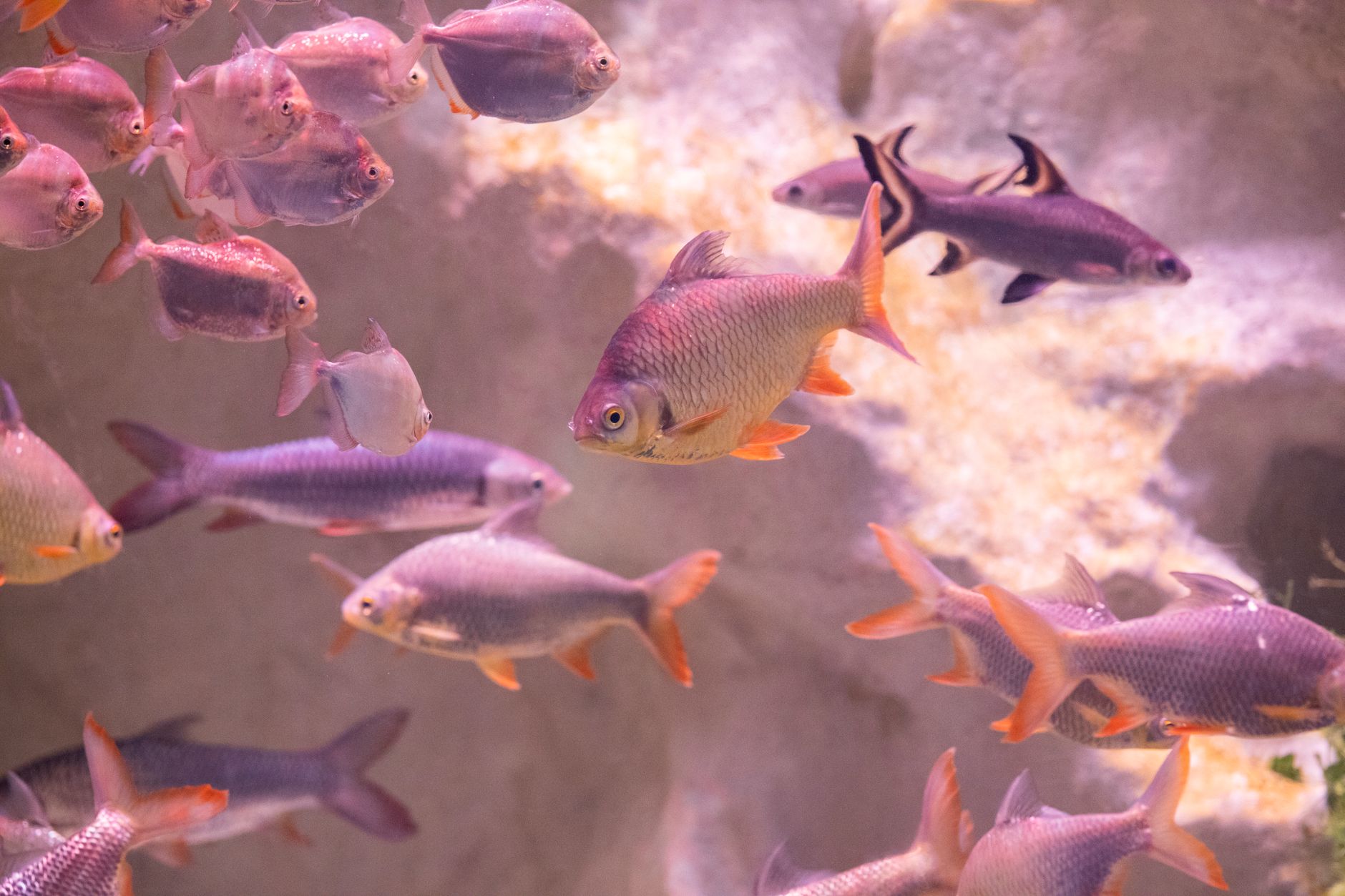
Schooling fish are the backbone of almost every freshwater community tank. Watch a group of neon tetras in a planted 20-gallon and you will see them move as one body, turning together, feeding together, and settling into the same corner at night. That behavior is not decoration. It is a stress response that only works when the group is large enough. Buy three and the same fish will hide behind the filter, lose color, and fade out within months. Buy ten and they swim in the open all day. Group size does more for their health than any bottle of additive you can pour into the tank. This guide compares six species that school reliably in home aquariums, with the tank sizes, temperatures, pH ranges, and group numbers each one actually needs.
Every number below comes from published care data rather than a store label. We cross-checked minimum tank sizes, temperature ranges, pH, hardness, and adult lengths against Seriously Fish species profiles, the Aqueon care library, and FishProfiles.com entries. Where sources disagree, we list the wider range and flag the risk. If this is your first tank, the aquarium nitrogen cycle guide explains why new tanks kill fish before the water ever looks cloudy, and our best fish for beginners roundup covers several of these species with a starter budget in mind. The ranking weighs three things: how tightly the fish schools, how forgiving it is of ordinary tap water, and how easy it is to find healthy stock.
Water chemistry matters more than the brand of food or the color of the gravel. Test your tap water before you choose a species. If it comes out at pH 7.8 and 12 dGH, a cardinal tetra will struggle while a harlequin rasbora and a zebra danio settle in without complaint. The order of operations is simple. Set up the tank, cycle it, plant it, run it for a month, then stock in groups. Cleaning a fish tank is part of that same routine, and skipping it is the most common reason a school starts dying six months in. Our how often to change aquarium water guide breaks the schedule down by tank size and stocking level.
Tank size sets the ceiling on what you can keep. A 20-gallon long is the practical minimum for almost every species here, because it gives six to ten small fish a full three feet of swimming room without crowding the filter. A 29-gallon or a 40-gallon breeder opens up the option of two schools plus a bottom group of corydoras. Temperature should drive your choice as much as looks do. Zebra danios run happily at 68 degrees Fahrenheit, which means no heater in a warm room, while cardinal tetras want water close to 80. Get that part wrong and no medication will fix it. Here are the six species, ranked by how well they school and how hard they are to keep alive.
How Do the Top Options Compare?
| Species | Best For | Min Tank | Temp (F) | pH | Adult Size | Group Size |
|---|---|---|---|---|---|---|
| Neon Tetra | First community tank | 20 gal long | 72-78 | 6.0-7.0 | 1.5 in | 8-10 |
| Cardinal Tetra | Soft, warm water setups | 20-29 gal | 73-81 | 5.0-6.8 | 2 in | 8-10 |
| Harlequin Rasbora | Neutral to slightly hard water | 20 gal long | 72-78 | 6.0-7.5 | 1.8 in | 8-10 |
| Rummy Nose Tetra | Experienced keepers | 20-30 gal | 74-80 | 6.0-7.2 | 2 in | 8-10 |
| Corydoras Catfish | Bottom level activity | 20 gal long | 68-78 | 6.5-7.5 | 2.5-3 in | 6-8 |
| Zebra Danio | Cool water tanks | 20 gal long | 64-75 | 6.5-7.5 | 2 in | 8-10 |
Parameters are listed as ranges because published sources disagree at the edges and because your own tap water matters more than any single number. Hardness is left out of the table on purpose: cardinals want under 6 dGH, danios and corydoras handle 15 dGH or more. No live animals are linked on this page. Equipment links are affiliate links and cost you nothing extra. Always quarantine new fish for two to four weeks before they meet your existing stock.
1. Neon Tetra , Best all-around schooler for a first community tank
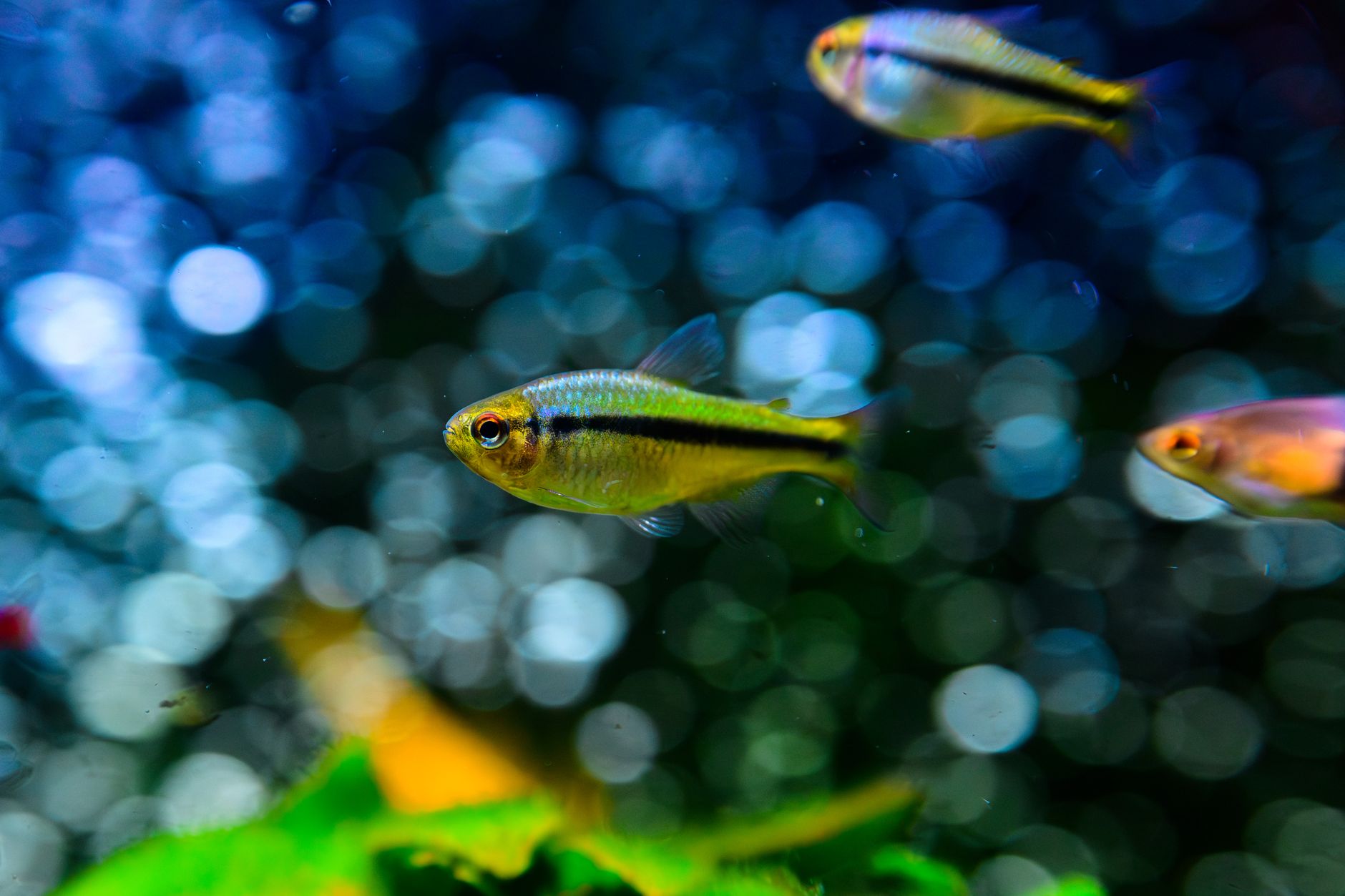
The neon tetra is the fish most people picture when they hear the word schooling, and it earns the reputation. A group of ten in a 20-gallon long with a dark background and floating plants holds formation across the whole tank. Adults reach about 1.5 inches. The care range is 72 to 78 degrees Fahrenheit, pH 6.0 to 7.0, and soft to moderately hard water, which is wide enough that most dechlorinated tap water works. That tolerance is a large part of why the species dominates the beginner market. Our neon tetra care guide walks through quarantine and drip acclimation step by step.
Stock quality is the real problem. Commercial neons are farmed in enormous numbers, and generations of inbreeding left the line prone to neon tetra disease, a wasting illness with no cure. Expect to lose a fish or two in the first two weeks even when everything is right. Quarantine new arrivals for two to four weeks in a separate tank. Never buy a neon with a bent spine, a sunken belly, or a washed-out stripe. A store that holds fish for a week before selling them gives you far better odds.
Neons feed in mid-water, so they leave the bottom open for corydoras and the surface open for other species. Keep them with peaceful tankmates of similar size. Angelfish, adult gouramis, and anything with a mouth wide enough to swallow a neon will eat them, usually after lights out. Test weekly with a liquid kit. Check the API Freshwater Master Test Kit on Amazon for pH, ammonia, nitrite, and nitrate in one box, and keep nitrate under 20 ppm.
Key strengths:
- ✅ Tight schooling behavior once the group reaches eight or more, which keeps the fish visible instead of hidden.
- ✅ Wide temperature and pH tolerance for a tetra, so most treated tap water works without adjustment.
- ✅ Low cost and near-constant availability at almost every fish store.
- ✅ Peaceful mid-water swimmer that ignores plants, shrimp, and bottom dwellers.
- ✅ Color deepens against dark substrate and under the shade of floating plants.
- ❌ Farm-bred stock is heavily inbred and prone to neon tetra disease, which has no treatment.
- ❌ Small enough to be eaten by angelfish, adult gouramis, and other large tankmates.
- ❌ Shorter lived than bigger tetras, with many fish fading by the three-year mark.
Who it’s for: Pick neons if you want the classic tight school and your tap water sits close to neutral.
2. Cardinal Tetra , Best for soft, warm water community tanks
Cardinal tetras look like neons with the volume turned up. The red stripe runs the full length of the body instead of stopping at the tail base, and adults reach about 2 inches. The difference that actually matters is water chemistry. Cardinals want 73 to 81 degrees Fahrenheit, pH 5.0 to 6.8, and water with almost no hardness at all, ideally under 6 dGH. Most of the fish in the trade are wild-caught in the Rio Negro basin, which is why they arrive thin, pale, and stressed.
If your tap water is hard, this is not the fish for you. Cardinals kept at pH 7.6 and 14 dGH survive for a while, then stop eating and waste away over a few months. Keepers who want them usually mix RO water with tap water to hit the target, or run a tank full of driftwood, catappa leaves, and dark substrate that slowly pulls pH down. It is more work than a neon tetra and the price per fish reflects that.
Get the water right and the payoff is a tight, long-lived school. Cardinals commonly live five to eight years and hold formation better than neons do. They are calm enough to share a tank with discus, ram cichlids, and other quiet fish that would spook a nervous species. Temperature stability matters as much as the number itself, so run an adjustable heater rather than a preset one. Check the Eheim Jager heater on Amazon for a glass-guarded model you can dial in. Just do not skip quarantine, because wild imports carry parasites far more often than farmed stock.
Key strengths:
- ✅ More saturated red and blue than a neon, with the red stripe running the full length of the body.
- ✅ Tighter, more consistent school than neons once the group reaches eight or more.
- ✅ Long-lived in a stable tank, often five to eight years.
- ✅ Calm and reliable with discus, rams, and other quiet tankmates.
- ❌ Requires genuinely soft, acidic water, and hard tap water shortens its life.
- ❌ Wild-caught imports arrive stressed and need a long quarantine.
- ❌ Costs noticeably more per fish than a neon tetra.
Who it’s for: Choose cardinals if you already run soft, warm water or you are willing to mix RO water.
3. Harlequin Rasbora , Best tight schooler for neutral to slightly hard water
The harlequin rasbora is the answer for anyone whose tap water sits at pH 7.4 with 8 dGH. Adults reach about 1.8 inches, and the species handles 72 to 78 degrees Fahrenheit, pH 6.0 to 7.5, and hardness from very soft up to roughly 15 dGH. That range covers most of North America and northern Europe without any water mixing. Our harlequin rasbora care guide has the full breakdown, but the short version is that this is one of the few tight-schooling fish that does not demand soft water.
The body is a deep copper wedge with a black patch across the rear half, and a group of ten under floating plants looks better than any single show fish. They school in the middle of the tank, ignore plants and shrimp, and live five to eight years with basic care. Feed a mix of flake, micro pellets, and frozen food twice a day. Give them a 20-gallon long at minimum, and expect any smaller tank to make the school look thin and scattered.
Two habits annoy some keepers. Males spend a lot of time flaring and shoving at each other, which is harmless but constant. The fish also wash out on pale gravel under bright light, turning grayish instead of copper. Use a dark substrate and let floating plants shade part of the surface. They stay in mid-water, so plan a bottom species if you want activity at every level of the tank.
Key strengths:
- ✅ Handles pH up to 7.5 and moderate hardness, which few tight schoolers tolerate.
- ✅ Schools tightly under floating plants and shade.
- ✅ Hardy and long-lived, with five to eight years being typical.
- ✅ Ignores plants and shrimp, so it works in a planted tank without damage.
- ❌ Loses most of its copper color on pale substrate under bright light.
- ❌ Males spar constantly, which looks aggressive to new keepers.
- ❌ Stays mid-water, leaving the bottom third of the tank empty.
Who it’s for: Get harlequins if your tap water is neutral to slightly hard and you want a tight school without water mixing.
4. Rummy Nose Tetra , Best for keepers who test and change water on schedule
No small tetra schools as tightly as the rummy nose. Two inches long, silver body, black and white striped tail, and a red head that starts at the mouth and fades backward. The red is the useful part. It deepens in clean water and pales within a day when nitrate climbs or the temperature swings. Experienced keepers read the school like a gauge and know something is wrong before a test kit shows it.
The catch is that a fish which reacts to everything is also a fish that suffers from everything. Rummy noses want 74 to 80 degrees Fahrenheit, pH 6.0 to 7.2, and nitrate under 20 ppm. They ship badly and lose weight fast in a quarantine tank. Keep them in groups of eight or more. A pair or a trio will hang in one corner with clamped fins and no color, and new keepers often mistake that for disease.
Maintenance is not optional here. Plan a 25 to 30 percent water change every week in a stocked 29-gallon, and match the new water temperature to the tank. Feed small amounts of frozen food along with flake. When conditions are right the school moves as a unit with red heads bright, and it will outswim and out-color almost any other small tetra in the same tank.
Key strengths:
- ✅ The tightest school of any small tetra on this list.
- ✅ The red nose acts as a live water-quality indicator for nitrate and temperature swings.
- ✅ Peaceful and easy to feed on flake, micro pellets, and frozen food.
- ✅ Long-lived, with well-kept fish passing five years.
- ❌ Sensitive to nitrate and sudden parameter changes, and usually the first fish to look bad.
- ❌ Needs a group of eight or more or it fades and hides.
- ❌ Handles shipping poorly, so expect losses on new arrivals.
Who it’s for: Choose rummy noses if you already keep up with weekly water changes and want the best schooling display.
5. Corydoras Catfish , Best bottom-schooling fish for a community tank
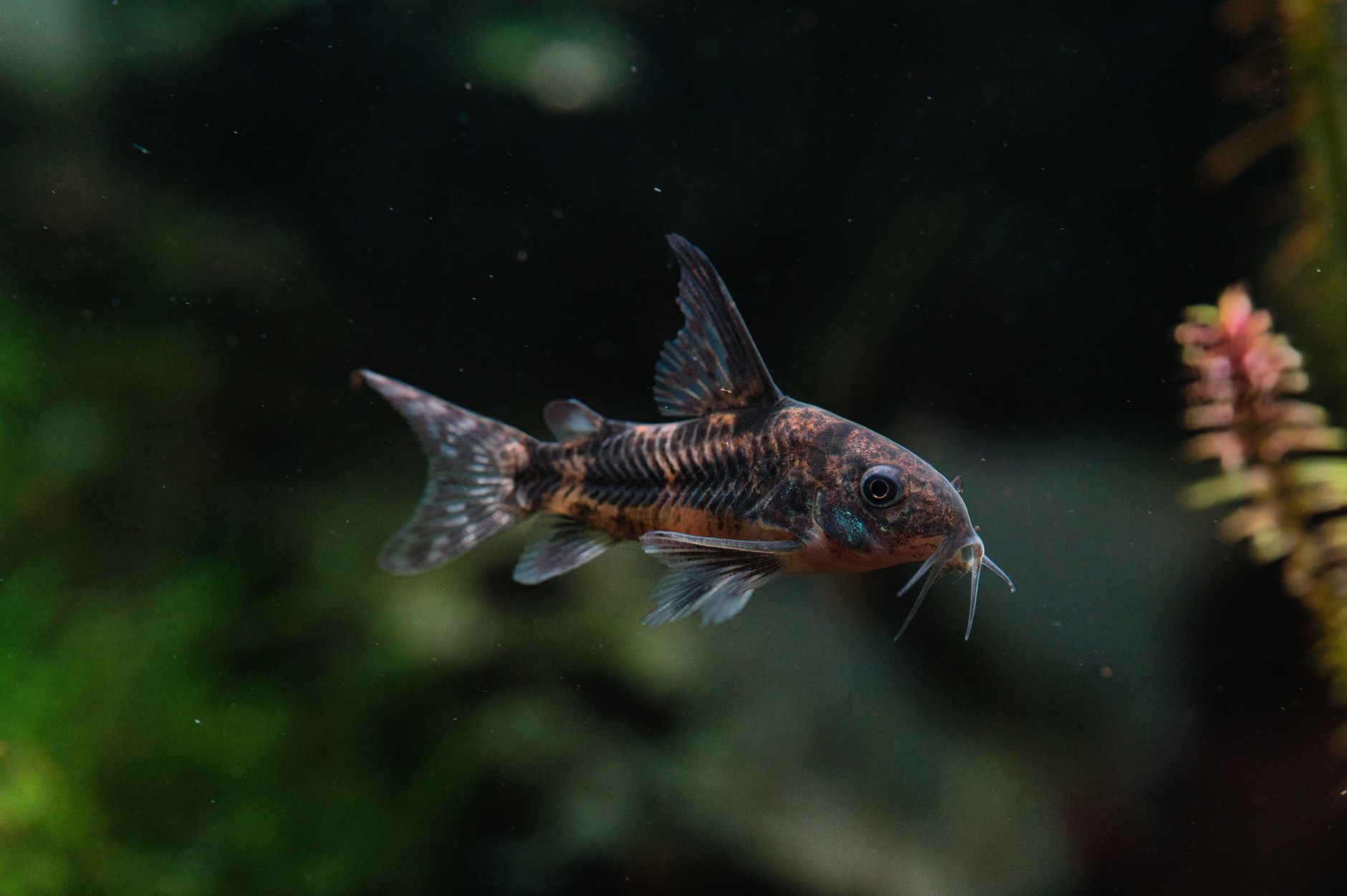
Corydoras catfish are schooling fish that work the bottom third of the tank. Peppered and bronze corys reach 2.5 to 3 inches and want 68 to 78 degrees Fahrenheit, pH 6.5 to 7.5, and moderately soft to hard water. They are not a cleanup crew, despite what store signs claim. They eat sinking pellets and frozen food, and they need to be fed directly like any other fish. Our corydoras catfish care guide covers the individual species and their slightly different temperature needs.
Substrate is the one thing you cannot compromise on. Sharp gravel wears down their barbels, the whisker-like organs around the mouth, and worn barbels get infected. Use fine sand. The fish will sift it through their gills all day and sit in a loose group on the surface. Six is the minimum group size and eight is better. A 20-gallon long with sand and a cave or two is the smallest setup that works long term.
Breeding is easy to trigger by accident. A cool water change that drops the tank a few degrees often sets off spawning, with females carrying eggs between their fins before sticking them on the glass. Water changes belong in the routine anyway. Always dose the new water with a conditioner. Check Seachem Prime on Amazon for a concentrated option that also detoxifies ammonia and nitrite between changes.
Key strengths:
- ✅ Schools on the bottom and fills the level that tetras and rasboras ignore.
- ✅ Peaceful with every other species on this list.
- ✅ Long-lived, with ten years or more being realistic in good conditions.
- ✅ Sand-sifting behavior keeps the substrate surface turned over.
- ✅ Eats sinking pellets and frozen food without fuss.
- ❌ Sharp gravel damages barbels and leads to infections that are hard to treat.
- ❌ Needs a group of six or more, so a 20-gallon is the realistic floor.
- ❌ Produces a lot of waste for its size and pushes your filter and water change schedule.
Who it’s for: Pick corydoras if you want a peaceful bottom school and you are willing to run sand instead of gravel.
6. Zebra Danio , Best schooler for unheated and cool water tanks
Zebra danios are the schooling fish for people who do not want to run a heater. The species handles 64 to 75 degrees Fahrenheit, pH 6.5 to 7.5, and hardness from soft all the way to quite hard. Aqueon’s freshwater care reference lists them among the hardiest starter fish for exactly that reason. Adults reach about 2 inches and live three to five years. In a room that stays above 68 degrees, a danio tank needs no heater at all.
They school loosely compared with tetras, which is worth knowing before you buy. Danios scatter, chase, and race along the front glass in bursts. Buy eight to ten and the group stays together more often, but this is an active fish, not a calm one. A 20-gallon long is the practical minimum and a 36-inch tank is better, because swimming distance matters more here than total volume.
One real downside. Danios nip fins when they are bored or crowded, and long-finned tankmates like bettas and guppies end up shredded. Keep them with short-finned, fast-moving species such as other danios, larger rasboras, or barbs. They also jump, so keep a lid on the tank. On the plus side, they eat almost anything, tolerate imperfect water better than any tetra here, and hold their stripe pattern under bright light.
Key strengths:
- ✅ Thrives at 64 to 75 degrees Fahrenheit, so most homes need no heater.
- ✅ Extremely hardy and forgiving of beginner mistakes.
- ✅ Active top and mid-water movement that fills an otherwise quiet tank.
- ✅ Accepts nearly any food and adapts to a wide hardness range.
- ❌ Constant fast swimming can stress slow or long-finned tankmates.
- ❌ Needs a three-foot tank to school properly, which rules out small cubes.
- ❌ Nips betta and guppy fins when the group is too small or the tank too bare.
Who it’s for: Go with zebra danios if you want a no-heater tank or you are stocking a cool room.
Frequently Asked Questions
How many schooling fish should I keep together?
Six is the absolute minimum for most species, and eight to ten is much better. Smaller groups trigger the stress response that schooling is supposed to prevent, so the fish hide, lose color, and die earlier. Buy the full group at once if your budget allows.
Can I mix different schooling species in one tank?
Yes, and it often looks better than one large school. A group of eight neon tetras, eight harlequin rasboras, and six corydoras works well in a 40-gallon breeder. Keep each species in its own group and stay inside the tank’s stocking limit.
Do schooling fish need a heater?
Most do. Tetras and rasboras want water between 72 and 80 degrees Fahrenheit, so a 50 to 100 watt adjustable heater is standard equipment. Zebra danios are the exception and do fine at room temperature down to about 64 degrees.
Why do my schooling fish hide all the time?
The usual causes are a group that is too small, too much open bright space, or water that has drifted off target. Add more of the same species, plant the tank more heavily, and test ammonia and nitrite. Hiding is a symptom, not a personality trait.
What is the smallest tank for a school of tetras?
A 20-gallon long is the smallest tank worth recommending. It gives a group of eight small tetras three feet of swimming room and enough water volume to keep parameters steady. A 10-gallon can hold a school, but the margin for error is tiny.
Will schooling fish breed in a community tank?
Some will. Corydoras spawn regularly after a cool water change, and zebra danios scatter eggs almost constantly. Nearly all eggs and fry get eaten by tankmates, so raising fry requires a separate grow-out tank.
What Should You Remember?
- Buy the full group at once. Six is the floor for every species on this list, and eight to ten is where real schooling behavior shows up.
- Match the fish to your tap water. Cardinals need soft, acidic water, while harlequins and danios handle pH 7.5 with moderate hardness without complaint.
- A 20-gallon long is the practical minimum. Three feet of swimming room matters more than a few extra gallons of volume.
- Sand, not gravel, for corydoras. Sharp substrate damages barbels and leads to infections that are slow and difficult to treat.
- Zebra danios run cool. They thrive between 64 and 75 degrees Fahrenheit, so most homes need no heater at all with this species.
- Test weekly and change water weekly. A liquid test kit plus a 25 to 30 percent water change keeps nitrate under 20 ppm and keeps schools colored up.
This article is for general information only and is not a substitute for professional veterinary or aquarium specialist advice. Always research the specific needs of your fish and consult an expert before making care decisions.