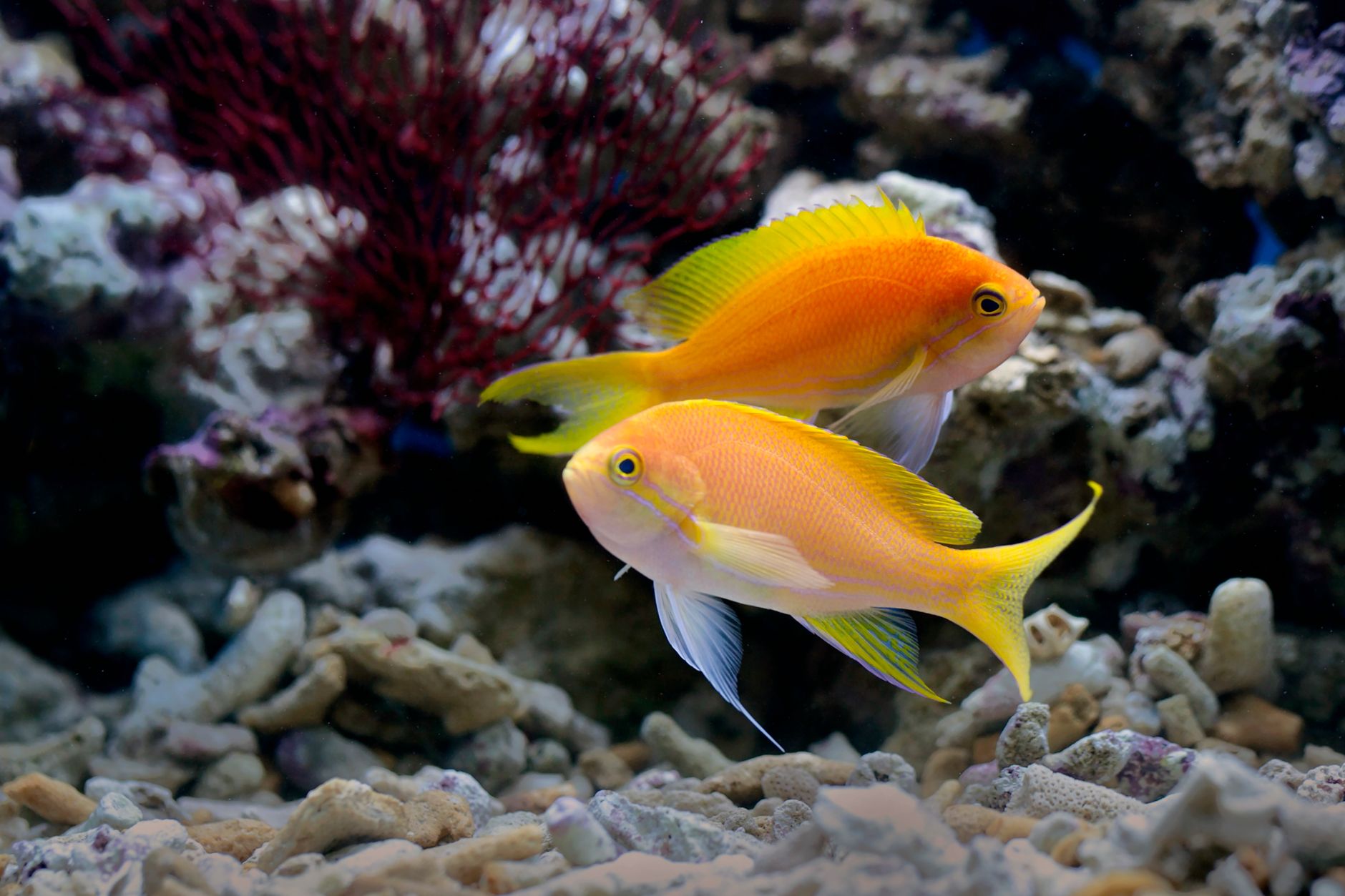
The firefish goby, also called the fire dartfish, is one of the most popular saltwater fish for reef and nano aquariums. Its bright red, orange, and yellow body stands out against live rock and sand. This fish is peaceful, hardy, and easy to feed once it settles in. That said, first time keepers often underestimate its jumping habit and need for calm tank mates. This guide explains how to care for firefish goby with the right tank size, diet, and compatibility. If you are new to saltwater, start with our best fish for beginners guide.
A firefish goby reaches about 3 inches in length as an adult. In the wild it lives on Indo-Pacific reef slopes and lagoons. It hovers a few inches above the sand and darts into a burrow when threatened. In a home aquarium this behavior means you need open sand space and a secure lid. The species is reef safe and will not bother corals or invertebrates. Aqueon’s fish care resources note that firefish gobies are ideal for peaceful community tanks when given proper cover and stable conditions. You can check Aqueon for general saltwater care reminders.
The biggest mistakes with firefish gobies are keeping them with aggressive tank mates, skipping quarantine, and leaving the tank uncovered. These fish stress easily and will jump through the smallest gap. They may also refuse food if bullied. Setting up a proper environment from day one prevents most problems. Before adding any fish, understand the nitrogen cycle so ammonia and nitrite do not spike. A reliable heater and a gentle filter also matter more than you might think.
Firefish gobies are a good choice for a mature nano reef. They need stable water chemistry, so avoid adding them to a brand new tank. With a 20-gallon or larger setup, regular maintenance, and the right diet, these fish can live for several years. The steps below cover tank size, aquascaping, compatible tank mates, feeding, acclimation, and ongoing care. Use this as a complete guide, not just a quick reference.
What You’ll Need
- 20-gallon or larger aquarium
- Tight-fitting mesh lid
- Heater and thermometer
- Refractometer or hydrometer
- Live rock and sand
- Frozen mysis and brine shrimp
- Water test kit
How Do You Care for Firefish Goby?
- Set up a 20-gallon tank with a tight-fitting lid
A single firefish goby needs at least a 20-gallon aquarium. A 30-gallon tank is better for a mated pair or if you plan to keep several peaceful tank mates. The fish only reaches about 3 inches, but it is an active swimmer that hovers in open water. A 20-gallon long tank gives more horizontal room than a tall tank of the same volume. This matters because firefish gobies swim short bursts from the sand to the water column.
Firefish gobies are famous escape artists. They jump straight up when startled, and they can fit through very small gaps. A tight-fitting mesh lid or a glass canopy with clips is mandatory. Do not rely on a loose cover or an open top. A secure lid also reduces evaporation and keeps dust out. Check the aquarium lid on Amazon if you need a replacement or an upgrade.
Set the aquarium in a calm location away from heavy foot traffic and loud sounds. Firefish gobies startle easily and may dash into rocks if frightened. Gentle water flow works best. A strong return pump or powerhead can push this small fish around. Use an adjustable filter or add a flow diffuser if needed. This low-stress environment makes the next step, cycling the tank, more effective.

- Cycle the tank and stabilize water parameters
Never add a firefish goby to an uncycled tank. The fish is sensitive to ammonia and nitrite, which can burn its gills and cause death. A fully cycled tank should read 0 ppm ammonia, 0 ppm nitrite, and less than 20 ppm nitrate. You can cycle with live rock, live sand, or a bacteria starter. For a complete walkthrough, see how to cycle a fish tank. This process usually takes four to six weeks.
Keep the water temperature between 72 and 78 degrees Fahrenheit. The pH should stay in the range of 8.1 to 8.4. Salinity should measure 1.020 to 1.025 specific gravity. These are the main parameters for a healthy firefish goby. Use a reliable heater and a calibrated refractometer or hydrometer. A quality aquarium heater keeps temperature swings small, which matters a lot for this species.
Test the water every few days during cycling. Once ammonia and nitrite drop to zero, you can perform a large water change to lower nitrates. Then wait another week with daily tests to confirm stability. Do not rush this step. Stable water is more important than perfect decor. A cycled, stable tank gives your firefish goby the best chance to settle in without stress.
- Create sand beds and rockwork with hiding places
Firefish gobies need fine sand to feel secure. Use aragonite sand or another reef-safe substrate at least one to two inches deep. The fish will hover above the sand and may dig a small burrow near the base of rocks. Coarse gravel or crushed coral can irritate its body and makes natural burrowing harder. A soft sand bed also supports beneficial bacteria and helps maintain water quality.
Arrange live rock or dry rock to create caves, overhangs, and small crevices. Firefish gobies dart into these spots when they feel threatened. Provide at least two or three hiding places on different ends of the tank. This gives the fish options and reduces stress. Secure all rockwork with epoxy or reef putty so it cannot collapse if the fish digs under a base rock.
Leave an open area of sand in the front or middle of the tank. Firefish gobies like to hover in open water, but they need quick access to shelter. A tank that is too crowded with rock can reduce swimming space and trap food. Balance the aquascape so the fish can move freely and still find cover. Good aquascaping connects directly to the next step: choosing tank mates that will not chase this fish.

- Choose peaceful tank mates for compatibility
Firefish gobies are shy, peaceful fish. They do best with other non-aggressive species. Good tank mates include royal grammas, clownfish, pajama cardinals, banggai cardinalfish, small gobies, and blennies. These species occupy different parts of the tank and rarely bother a firefish goby. Avoid adding fast or territorial fish that will outcompete it for food.
Bad tank mates include dottybacks, damselfish, hawkfish, triggers, large wrasses, and any fish that can swallow a firefish goby. Even semi-aggressive species may nip at the goby’s long dorsal fin. If your tank already has aggressive fish, do not add a firefish goby. Bullying leads to constant hiding, refusal to eat, and eventual starvation. The compatibility equation is simple: if you are unsure about a species, skip it.
Multiple firefish gobies can be tricky. A mated pair can live in a 30-gallon or larger tank. Adding two random individuals often ends with one fish hiding and the other being aggressive. For most hobbyists, a single firefish goby in a peaceful community is the best path. This reduces social stress and makes feeding easier. Once tank mates are selected, you can move on to diet and feeding strategy.
- Feed a varied meaty diet two or three times each day
Firefish gobies are planktivores. In the wild they feed on zooplankton drifting in the water column. In captivity they need small, frequent meals rather than one large feeding. Offer frozen mysis shrimp, enriched brine shrimp, cyclops, and finely chopped krill. High quality marine pellets and flakes can round out the diet. Feed only what the fish can eat in about two minutes.
Feed two to three times per day for a settled fish. A newly introduced firefish goby may only accept one small meal per day at first. Use a turkey baster or pipette to place food near its hiding spot. This helps shy fish compete with faster tank mates. Try to target feed if the goby hovers near the back or under an overhang. Check the frozen fish food on Amazon for reliable frozen options.
The Aquarium Co-Op feeding guide suggests rotating foods to prevent nutritional gaps. Their articles also note that many saltwater fish do better with live or frozen foods over dry foods alone. You can visit Aquarium Co-Op for more fishkeeping advice. Do not let uneaten food rot on the sand. Remove leftovers and monitor nitrate levels, especially with frequent feeding. Good diet helps the fish resist disease and recover from stress.
- Acclimate the firefish goby slowly to reduce stress
Floating the bag is not enough for saltwater fish. A rapid change in salinity or pH can shock a firefish goby. Use drip acclimation over 45 to 60 minutes. Start by floating the closed bag in the tank for 15 minutes to equalize temperature. Then empty the fish and bag water into a clean container and add tank water with airline tubing at a slow drip.
Once the water volume in the container has doubled or tripled, net the fish gently or pour it into the tank through a soft container. Turn off the aquarium lights during and after acclimation. Bright light adds stress. Let the firefish goby find cover on its own. Do not chase it with a net or try to force it out. It will hide for a day or two, and that is normal.
Quarantine new arrivals before the display tank whenever possible. A separate tank lets you observe the fish for disease and parasites. Stress during shipping and acclimation can trigger marine ich. Treating a sick fish in a quarantine tank is much safer than treating a full reef. If you skip quarantine, you risk introducing disease to every fish in your display.
- Monitor for stress, jumping, and signs of disease
A healthy firefish goby is alert and hovers in the water column with its dorsal fin extended. It should dart to cover when you approach but return to feeding quickly. If your fish stays hidden for days, refuses food, or breathes heavily, something is wrong. Check water parameters first. High ammonia or nitrite often causes hiding and rapid gill movement. Then look at tank mate aggression and flow.
Firefish gobies jump when scared or when water quality drops. A fish that repeatedly swims to the surface or darts upward may be looking for an escape. Keep the lid on at all times. Even during feeding and maintenance, open only the front panel if your lid has one. If the fish jumps, act fast. Gently return it to the tank and investigate the cause.
Watch for white spots, velvet, ragged fins, or cloudy eyes. Marine ich is one of the most common problems in new saltwater fish. Stress usually makes it worse. Avoid treating the display tank with copper if you have live rock or invertebrates. Move the fish to a quarantine tank for treatment instead. Consistent care and low stress prevent most disease issues before they start.
- Keep up water changes and regular maintenance
Stable water quality comes from routine maintenance. Change 10 to 20 percent of the water every one to two weeks. Use reverse osmosis deionized water mixed with quality reef salt. Match the new water temperature and salinity to the display tank before adding it. This prevents parameter swings that stress your firefish goby. For a deeper look at schedules, see how often to change aquarium water.
Test nitrate, alkalinity, pH, and salinity weekly at first. Once the tank is stable, you can test every other week. Nitrate should stay below 20 ppm, and ideally under 10 ppm for a reef tank. Clean the filter media gently in removed tank water, not tap water. Replace chemical media like carbon according to the product directions. Do not clean everything at once or you may disrupt beneficial bacteria.
Firefish gobies are hardy when their needs are met. A clean tank with low nitrate and steady parameters supports their bright color and activity. If you notice algae or detritus building up, adjust feeding and water changes. The goal is consistency. This final step ties together tank size, diet, compatibility, and stress reduction into a long term care plan.

Red Flags & Warnings
- 🚨 Firefish gobies are expert jumpers. Keep a tight lid with no gaps and never leave the top open during maintenance.
- 🚨 Do not keep firefish gobies with aggressive fish such as dottybacks, damselfish, hawkfish, or large wrasses. Bullying causes starvation and stress.
- 🚨 Avoid rapid changes in salinity, temperature, or pH. Firefish gobies do not tolerate swings well and may develop disease.
- 🚨 Quarantine every new fish for at least two weeks before adding it to a display tank. This prevents marine ich and velvet outbreaks.
- 🚨 Never use copper based medications in a reef tank with live rock or invertebrates. Choose a separate quarantine tank for treatment.
- 🚨 If a firefish goby refuses food for more than two days, check water quality and tank mate aggression immediately. Do not wait.
Frequently Asked Questions
What size tank does a firefish goby need?
A single firefish goby needs at least 20 gallons. A 30 gallon or larger tank is better for a mated pair. These fish reach about 3 inches and need horizontal swimming room plus sand and rockwork.
What do firefish gobies eat?
They eat meaty frozen foods like mysis shrimp, brine shrimp, cyclops, and chopped krill. They also accept high quality marine pellets and flakes. Feed small amounts two to three times daily.
Are firefish gobies reef safe?
Yes, firefish gobies are completely reef safe. They will not nip corals, clams, or invertebrates. They are planktivores that hover and feed in the water column.
Can you keep more than one firefish goby together?
You can keep a mated pair in a 30 gallon or larger tank. Adding two random firefish gobies often leads to aggression and stress. Never crowd them in a small space.
Why does my firefish goby hide all day?
Hiding is normal at first, especially after introduction. Constant hiding usually means bullying by tank mates, strong flow, or poor water quality. Add more cover and remove aggressive species.
How long do firefish gobies live?
With good care, firefish gobies can live three to five years in a home aquarium. Stable water quality, a varied diet, and low stress all contribute to a longer lifespan.
What Should You Remember?
- Tank size: Provide at least 20 gallons for one firefish goby, and 30 gallons or more for a pair.
- Water parameters: Keep temperature 72-78°F, pH 8.1-8.4, and salinity 1.020-1.025.
- Jump-proof lid: Firefish gobies dart upward when scared. A tight-fitting lid is not optional.
- Diet: Feed meaty frozen foods and quality pellets two to three times per day.
- Compatibility: Choose only peaceful tank mates like clownfish, royal grammas, and cardinalfish.
- Quarantine: Isolate new fish before they enter the display tank to prevent disease outbreaks.
This article is for general information only and is not a substitute for professional veterinary or aquarium specialist advice. Always research the specific needs of your fish and consult an expert before making care decisions.