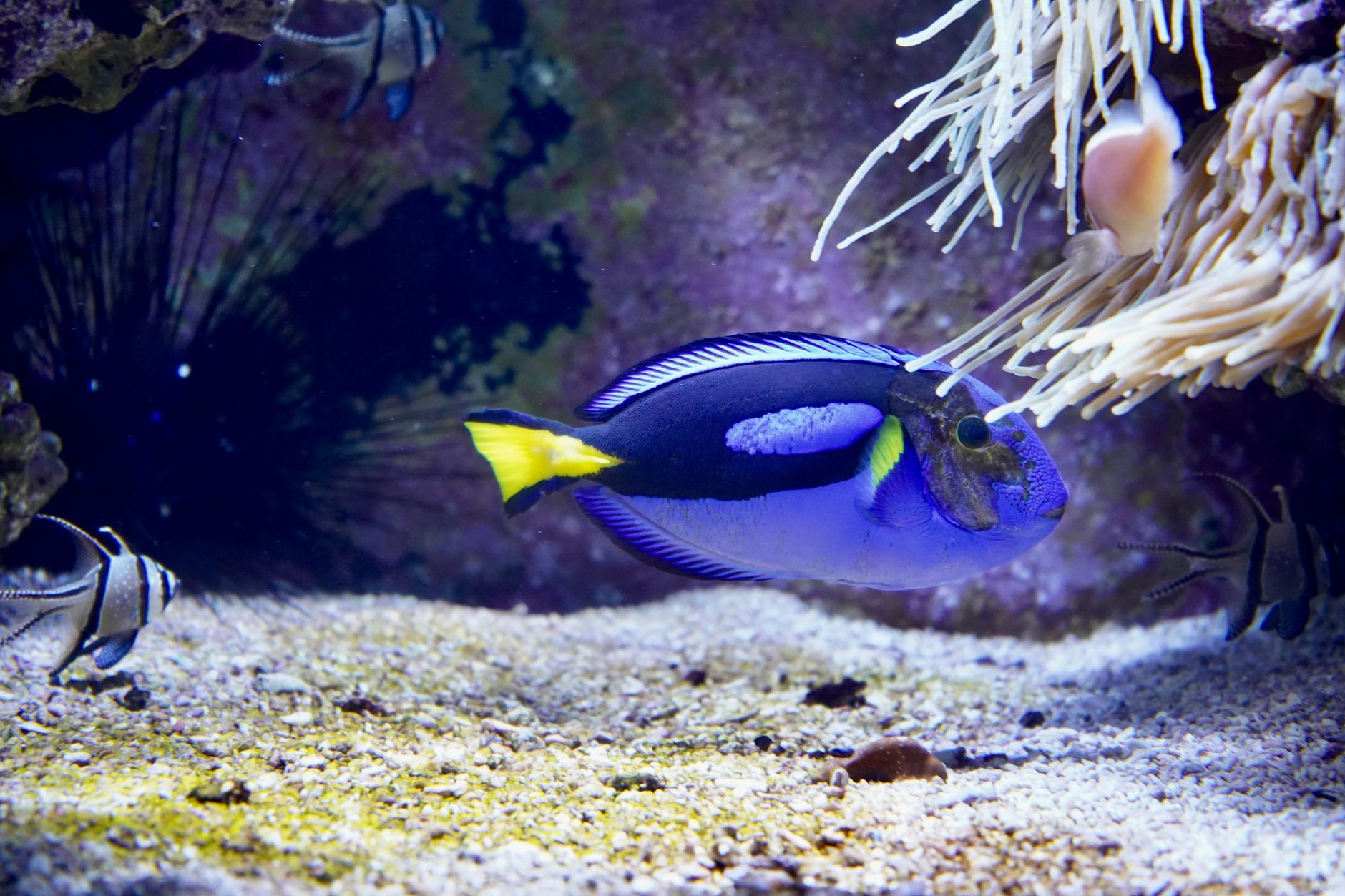
The blue tang (Paracanthurus hepatus) is one of the most recognized marine fish in the hobby. Hobbyists know it as the palette surgeonfish or the Dory fish. It has a bright blue body, bold black markings, and a yellow tail. That beauty comes with real care demands. A blue tang is not a beginner saltwater fish. It grows large, swims constantly, and needs stable water chemistry. Before you bring one home, plan for a big tank and a long term commitment. This fish can live 20 years or more with excellent care. This guide covers tank size, diet, compatibility, and daily care.
Blue tangs come from Indo-Pacific reefs. They spend most of the day grazing on algae and swimming over open reef flats and drop-offs. In an aquarium, they need similar room and water quality. A mature system with plenty of live rock and strong flow works best. If your tank is still cycling or under 6 feet long, wait. You can read more about the aquarium nitrogen cycle before adding any fish. A healthy tang starts with a stable, fully cycled tank.
Many hobbyists underestimate adult size. A juvenile blue tang may be only 1 to 2 inches long at the store. It can reach 10 to 12 inches within a few years. That growth changes tank requirements and tank mate choices. Aqueon notes that blue tangs need ample swimming space and excellent filtration. We will break this down step by step. Plan for the adult fish, not the tiny juvenile in the dealer’s tank.
This article walks through tank setup, water parameters, feeding, compatible species, quarantine, and routine maintenance. You will also find warnings and answers to common blue tang questions. Use this guide alongside trusted references and your own water test results. A well cared for blue tang can live for over a decade. Careful planning prevents the most common beginner mistakes with this species. The cost of the fish is small compared with the cost of proper equipment and a large, mature tank. Let’s start with the most important factor: tank size.
What You’ll Need
- 180-gallon or larger aquarium, 6 feet long
- Protein skimmer and sump filtration
- Two or more powerheads for high flow
- Heater and digital temperature controller
- Refractometer and saltwater test kits
- Live rock, 1 to 1.5 pounds per gallon
- Nori clip and marine algae foods
- Quarantine tank, 20 to 40 gallons
How Do You Care for a Blue Tang?
- Set up a tank of at least 180 gallons with strong filtration
A blue tang needs room. Many sources recommend a minimum of 180 gallons for an adult. A standard 180-gallon tank is 6 feet long, 2 feet wide, and 2 feet tall. That footprint gives the fish a straight swimming path. Tangs are open-water swimmers that never stop moving. Small tanks cause stress, aggression, and stunted growth. Do not start with a 75-gallon or 90-gallon tank. You will only need to upgrade within a year or two. Longer is better than taller for this species. A 6-foot tank is the floor, not the ideal.
Filtration needs to handle heavy waste. A blue tang eats constantly and produces a lot of ammonia. Use a sump with a high-quality protein skimmer. A skimmer removes dissolved organics before they rot. That keeps nitrate and phosphate lower. Also add mechanical filtration, such as filter socks or a filter roller. If you are choosing a canister or hang-on-back filter, size it for at least double the tank volume. You can compare options in our guide to the best aquarium filters for 2026. Redundancy helps, because tangs are sensitive to water quality swings.
Water movement matters as much as filtration. Blue tangs come from surge zones and reef channels. Provide 20 to 40 times tank volume per hour in total flow. For a 180-gallon tank, that means 3,600 to 7,200 gallons per hour of circulation. Use two or more powerheads placed on opposite ends. This creates alternating current and prevents dead spots. Aim for some surface agitation to promote gas exchange. Good flow also keeps food suspended and encourages the tang to swim naturally.
A reliable heater and temperature controller are required. Blue tangs do poorly in cold or fluctuating water. Set the heater to 76 to 78 degrees Fahrenheit. Use a separate digital thermometer or controller to verify. You can Check the protein skimmer on Amazon to see common reef models. The next step explains how to cycle the system before adding the fish. Never rush this part.

- Cycle the tank and lock in stable saltwater parameters
A blue tang should never go into a new, uncycled tank. The nitrogen cycle must be complete before you add fish. Use a fishless cycling method with ammonia or a bacteria starter. Test daily for ammonia, nitrite, and nitrate. You should see ammonia and nitrite rise and then fall to zero. Nitrate will remain, and you can lower it with water changes. If you need a refresher, read our guide on how to cycle a fish tank. A fully cycled tank processes waste without harming the fish.
Saltwater parameters must stay within a narrow range. Keep temperature between 72 and 78 degrees Fahrenheit, with 76 to 78 degrees being ideal. Maintain salinity at 1.023 to 1.025 specific gravity. pH should stay between 8.1 and 8.4. Alkalinity should be 8 to 12 dKH. Calcium and magnesium also matter if you keep corals. Use a refractometer to check salinity, not a swing-arm hydrometer. Aqueon recommends testing regularly and recording results. Stable parameters are more important than chasing perfect numbers.
Use RO/DI water for mixing salt. Tap water often contains phosphates, silicates, or heavy metals. These fuel algae and stress marine fish. Mix a quality reef salt to the correct salinity at least 24 hours before a water change. Aerate the mixed water with a small pump. Match temperature and salinity to the display tank. Sudden changes cause osmotic shock. Blue tangs are especially prone to stress-related disease when salinity or temperature swings.
Give the tank time to mature before adding a tang. Mature tanks have stable beneficial bacteria on live rock and filter media. They also have a healthy layer of biofilm and microfauna. A blue tang will graze on this natural growth. A tank that has been running for four to six months is safer than one cycled last week. Add clean-up crew and hardy invertebrates first. The next step covers how to arrange the aquascape for a tang.
- Design rockwork with caves and long open swimming lanes
Blue tangs need hiding places but also wide-open swimming room. Build rockwork along the back and sides. Leave the front and middle of the tank open. This lets the tang sprint from one end to the other. Use cured live rock or dry rock secured with reef epoxy. Avoid unstable stacks that can topple. A startled tang can knock over loose rock and injure itself. Create at least two or three cave-like spaces. The fish will retreat there at night or when it feels threatened.
Open water is just as important as rock. Do not fill the tank with a solid rock wall from front to back. A blue tang needs at least 18 to 24 inches of clear swimming space in the front half. This mimics the reef channels where tangs forage. Strong water flow should move through the open area. If the flow is blocked by rock, detritus builds up. That leads to nitrate and algae problems. Keep powerheads pointed toward open lanes.
Live rock serves as a biological filter and a grazing surface. Blue tangs nibble algae and biofilm from rock pores. The rock also supports copepods and other microfauna. Those are a minor but natural part of the tang’s diet. Use about 1 to 1.5 pounds of live rock per gallon. For a 180-gallon tank, that means 180 to 270 pounds. This seems like a lot, but it provides essential surface area. Do not use dead coral skeletons as your only rock. They lack the porous structure of good live rock.
You can add a shallow sand bed if you like. Blue tangs do not need sand, but it looks natural and helps some clean-up crews. A 1 to 2 inch sand bed is enough. Avoid deep sand beds if you are new to saltwater. They can trap detritus and crash if disturbed. Once the rockwork and flow are set, let the tank settle for a few weeks. Then you can focus on the tang’s diet, which is step four.
- Feed a marine algae based diet with small meaty additions
Blue tangs are primarily herbivores. In the wild, they spend hours scraping algae from rocks and dead coral. In an aquarium, they need marine algae every day. Dried nori or dried seaweed sheets are the best staple. Clip a sheet to a nori clip or wrap it around a small rock. Leave it in the tank for a few hours, then remove uneaten pieces. You can Check the nori clip on Amazon to make feeding easier. A varied algae source prevents nutritional deficiencies.
Offer commercial herbivore pellets and frozen foods. Choose a high-quality marine pellet or flake that lists spirulina or algae as the first ingredient. Feed small amounts two to three times per day. Blue tangs have high metabolisms and do better with frequent, small meals. Frozen mysis shrimp, brine shrimp, and chopped krill can be offered a few times a week. These provide protein. Too much meaty food can cause bloating and poor digestion. Keep the diet mostly plant based. This is similar to feeding other tangs like the yellow tang.
Fresh or frozen marine algae is better than terrestrial vegetables. Some hobbyists offer romaine lettuce, spinach, or broccoli. Those are not ideal for a marine fish. They contain different nutrient profiles and can foul the water. Stick to products made for marine herbivores. Nori, spirulina, and seaweed blends work well. Aquarium Co-Op has helpful fishkeeping guides that explain why species-specific diets matter. A blue tang with enough algae shows better color and fewer health problems.
Feed at the same times each day. Blue tangs learn to recognize their keeper. Drop food near the powerhead outflow so it moves through the water. This mimics natural algae drift. Watch that the tang is actually eating. A new tang may hide for a day or two. If it refuses food for more than three days, check water quality and look for signs of disease. The next step covers choosing tank mates that will not outcompete or stress the tang.

- Choose compatible tank mates and introduce the blue tang last
Blue tangs are generally peaceful but can become territorial. They are less aggressive than many other tangs, but they still may fight with their own kind. Do not keep two blue tangs in a tank under 300 gallons. Even in a large tank, introduce them together as juveniles if you must. Mixing multiple tang species also requires a very large system. A blue tang is usually safer with peaceful tank mates that do not look similar.
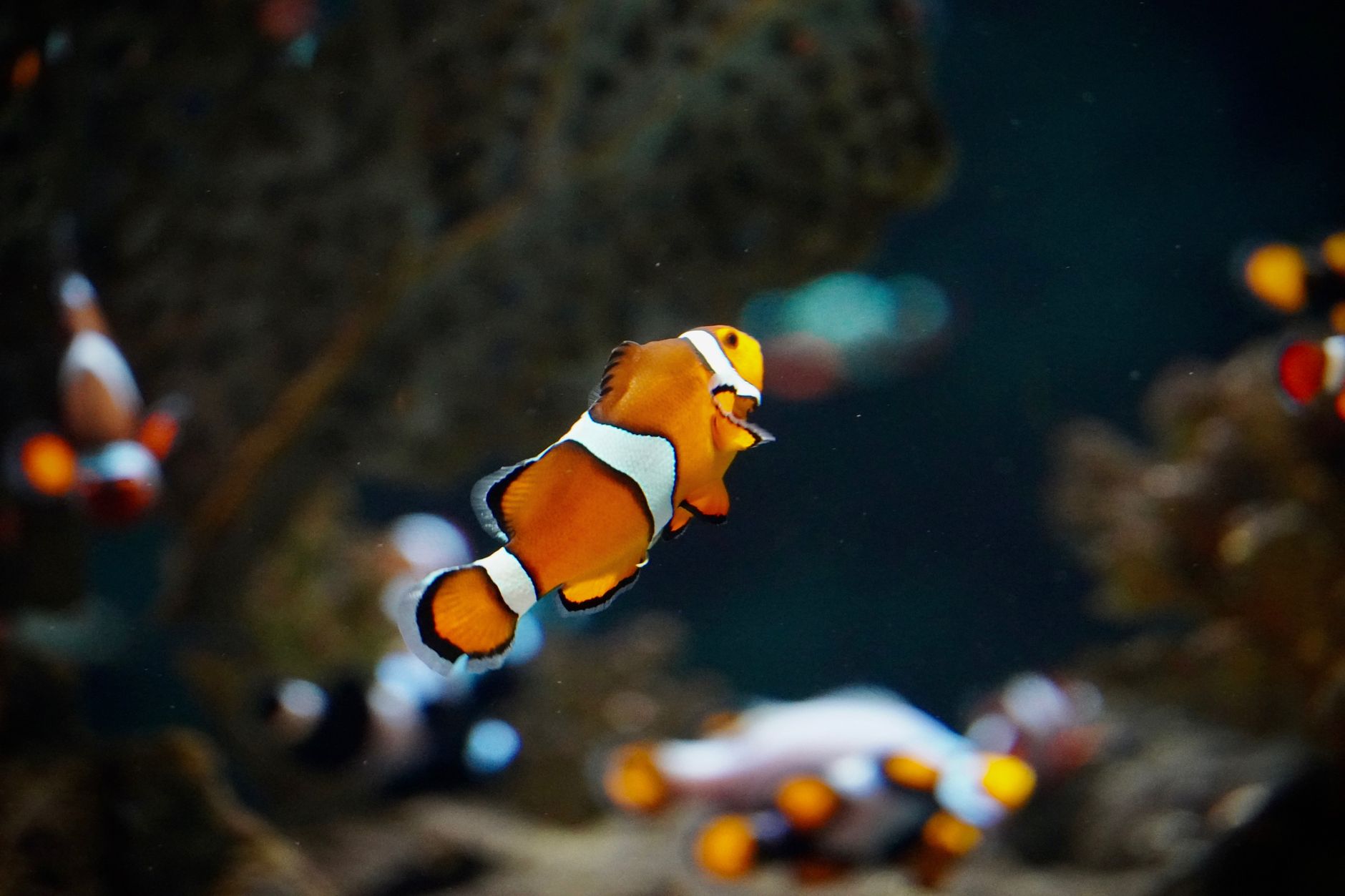
Good tank mates include clownfish, cardinalfish, royal grammas, firefish, and some wrasses. These fish occupy different niches and rarely bother a tang. For example, a pair of ocellaris clownfish will stay near their anemone or coral. A royal gramma prefers rock caves. The blue tang uses open water. This reduces direct competition. Avoid small, slow fish that a tang might outcompete at feeding time. Also avoid aggressive damsels and large triggerfish.
Angelfish and butterflyfish can work in large tanks. Dwarf angelfish are generally safe with corals, but large angelfish may nip at sessile invertebrates. The blue tang usually ignores them. Still, every fish has its own personality. Observe new tank mates closely for the first week. If a fish chases the tang constantly, separate them. A stressed tang stops eating and becomes vulnerable to ich. Have a plan for rehoming a problem fish before you add it.
Add the blue tang as one of the last fish. This lets other fish establish territories first. It also gives the biological filter time to adjust to the existing bioload. A tang added to a crowded tank may be stressed by competition. A tang added first may claim the whole tank as its territory. Quarantine the tang separately, then use an acclimation box in the display. This allows visual introduction without immediate aggression. The next step covers quarantine and disease prevention in detail.
- Quarantine every new fish and watch for ich
Blue tangs are notorious for carrying marine ich, also called Cryptocaryon irritans. They are one of the most sensitive fish to this parasite. A new tang may look healthy at the store but break out with white spots after a few days in your tank. Quarantine is the most important step you can take. Set up a separate 20 to 40 gallon quarantine tank. Use a simple sponge filter, heater, and PVC pipe for hiding. Keep the tang in quarantine for at least four weeks.
Observe the fish daily during quarantine. Look for white spots, cloudy eyes, rapid breathing, or scratching against objects. These are classic signs of marine ich. If you see them, do not add the fish to the display. Treat the quarantine tank, not the main tank. Copper-based medications work for ich, but they cannot be used with invertebrates or live rock. Hyposalinity is another option for fish-only systems. Our guide on how to treat ich in an aquarium explains treatment steps. Never medicate a reef tank unless the product is proven reef safe.
Blue tangs can also suffer from head and lateral line erosion. This shows as pits or discoloration along the face and sides. Poor water quality, lack of algae, and stray voltage may contribute. Feed a varied algae diet and keep nitrate low. Use a grounding probe if electrical current is suspected. Regular large water changes help. The best treatment is prevention through excellent water quality and proper nutrition.
When quarantine ends, acclimate the tang slowly. Use the drip method over 45 to 60 minutes. Match temperature and salinity first, then drip water from the display into the quarantine container. This reduces shock. Transfer the fish with a net or cup, and avoid introducing quarantine water into the display. Turn off the display lights for a few hours after adding the tang. This gives other fish less reason to investigate. Next, maintain water quality through a consistent routine.
- Maintain water quality with a consistent weekly routine
Regular maintenance keeps a blue tang healthy. Change 10 to 20 percent of the water every one to two weeks. Use pre-mixed saltwater that matches the display tank temperature and salinity. Vacuum the sand bed lightly and remove detritus from the sump. Do not disturb the entire sand bed at once. A stable routine prevents nitrate and phosphate from creeping up.
Test water parameters weekly at first, then every two weeks once the tank is stable. Check salinity, pH, alkalinity, nitrate, and phosphate. Keep nitrate below 20 ppm and phosphate below 0.05 ppm for a fish-only system. If you keep corals, aim lower. Record the results so you can spot trends. A sudden spike means you need to find the cause. It may be overfeeding, a dead animal, or weak filtration.
Clean equipment on a schedule. Rinse mechanical filter media in discarded tank water, not tap water. Clean the protein skimmer cup at least twice a week. Check powerheads and return pumps for calcium buildup or clogging. Replace heater controllers if they show moisture or corrosion. A failing heater can kill a blue tang quickly. Keep spare parts and a battery-powered air pump for power outages.
Observe the tang every day. Watch for normal color, active swimming, and a strong appetite. Changes in behavior are often the first sign of trouble. A healthy blue tang should graze and swim with purpose. If it hides constantly, breathes fast, or refuses food, investigate immediately. Early action is the difference between a quick fix and a serious disease outbreak. With steady care, a blue tang can thrive for many years in your aquarium.

Red Flags & Warnings
- 🚨 Never keep an adult blue tang in a tank under 180 gallons or under 6 feet long. Small tanks cause stress, aggression, and stunted growth.
- 🚨 Do not add a blue tang to an uncycled or newly cycled tank. Ammonia and nitrite spikes can kill a tang within hours.
- 🚨 Avoid keeping two blue tangs or multiple tang species in a tank under 300 gallons. Tangs often fight when space is limited.
- 🚨 Quarantine every new fish for at least four weeks. Blue tangs frequently carry marine ich, and a single infected fish can infect the whole display.
- 🚨 Do not rely on lettuce or terrestrial vegetables as the main diet. Blue tangs need marine algae like nori or spirulina to stay healthy.
- 🚨 Watch for white spots, scratching, or rapid breathing. Marine ich spreads fast and requires prompt treatment in a separate tank.
Frequently Asked Questions
How big do blue tangs get?
A blue tang can reach 10 to 12 inches in length. Most captive juveniles grow quickly, so plan for the adult size from day one. A 6-foot tank is the minimum footprint.
What size tank does a blue tang need?
A single adult blue tang needs at least a 180-gallon tank that is 6 feet long. Juveniles can start in smaller quarantine or grow-out tanks, but they need the full size within a year or two. Longer tanks are better than tall ones.
Are blue tangs reef safe?
Yes, blue tangs are generally reef safe. They do not eat corals or sessile invertebrates. They may graze on algae growing on rock, which is normal and helpful.
What do blue tangs eat?
Feed a blue tang marine algae daily, such as nori or seaweed sheets. Add high quality spirulina-based pellets and occasional frozen mysis or brine shrimp. Most of the diet should be plant matter.
Can blue tangs live with clownfish?
Yes, ocellaris clownfish and blue tangs usually coexist well. Clownfish stay near their host area, while the tang uses open water. Just make sure the tank is large enough for both.
Are blue tangs hard to keep?
Blue tangs are not beginner fish. They need stable water quality, a large tank, and a varied algae diet. They are also prone to marine ich, so quarantine and careful observation are essential.
What Should You Remember?
- Tank size: Provide at least 180 gallons and a 6-foot long tank for an adult blue tang.
- Water parameters: Keep temperature at 72 to 78 degrees Fahrenheit, pH at 8.1 to 8.4, and salinity at 1.023 to 1.025.
- Diet: Offer marine algae, such as nori, every day, plus spirulina-based pellets and small meaty foods.
- Compatibility: Choose peaceful tank mates like clownfish and royal grammas, and avoid other tangs in smaller tanks.
- Quarantine: Keep every new blue tang in a separate quarantine tank for at least four weeks.
- Filtration: Use a strong protein skimmer, live rock, and high flow to handle waste and oxygenate the water.
- Observation: Watch for white spots, rapid breathing, or scratching, and treat marine ich immediately.
This article is for general information only and is not a substitute for professional veterinary or aquarium specialist advice. Always research the specific needs of your fish and consult an expert before making care decisions.