Finding Nemo sold a lot of fish tanks. Twenty years after the film, the clownfish is still the first saltwater fish most new keepers ask for, and the blue tang still ends up in tanks that are far too small for it. The gap between what the movie shows and what these animals actually need is the subject of this comparison. Every character in the film is a real species with a real minimum tank size, and those minimums run from 20 gallons to 180. Below you will find the numbers that decide whether the fish lives: tank volume, water temperature, pH, salinity, adult length, and how hard each one is to keep alive for a decade.
The data here comes from published husbandry sources rather than forum chatter. LiveAquaria’s species profiles list a minimum tank volume for every fish in the film, and those figures line up with what large public aquariums and breeders publish. When two sources disagree, this article uses the larger number. A fish that outgrows its tank is a fish you have to catch, rehome, or watch get sick. One thing needs settling before any of the species notes make sense. Every named character in Finding Nemo is a marine animal. Reef fish need saltwater mixed to a specific gravity of about 1.020 to 1.025, and no amount of acclimation changes that. If you keep freshwater tanks, the film’s cast is off the table. A hardy, striped substitute is the clown loach, which brings the same bold banding without the salt.
Either way, the tank has to cycle before anything swims in it. Our aquarium nitrogen cycle explained walkthrough covers the ammonia and nitrite spikes that kill most first fish, and marine tanks take longer to settle than freshwater ones. Interest in these species has not faded, and the buying pattern has not changed much either. Industry tracking collected in our aquarium fishkeeping statistics 2026 report shows saltwater keepers spend a huge share of their budget on livestock and filtration, while impulse purchases remain the leading reason fish get returned to stores. A clownfish bought on a whim usually lands in a tank that is still cycling. A blue tang bought on a whim usually ends up in a 40-gallon breeder with a case of marine ich.
There is also a cost dimension the movie hides. Saltwater setups need a heater that holds a steady temperature, a filter or skimmer rated for the actual volume, a refractometer, and a test kit that measures ammonia, nitrite, nitrate, pH, and alkalinity. That gear list applies whether you keep one clownfish or a full reef. Skipping it does not save money. It just moves the cost to replacement fish. Read the comparisons below as minimums, not targets. A 20-gallon tank is the smallest volume that keeps a pair of clownfish stable, which means a 29-gallon tank is easier to live with. Temperature stability matters more than any single number on the list. Aqueon’s care library makes the point plainly: a heater that holds 78 degrees all night beats one that swings between 74 and 82. For most of the film’s cast, anything between 72 and 82 works.
How Do the Top Options Compare?
| Fish (Film Role) | Best For | Min. Tank | Temp | pH | Adult Size |
|---|---|---|---|---|---|
| Ocellaris clownfish (Nemo) | First saltwater nano tank | 20 gal | 76-82°F | 8.1-8.4 | 3.5 in |
| Regal blue tang (Dory) | Big, established reef systems | 180 gal | 72-78°F | 8.1-8.4 | 12 in |
| Yellow tang (Bubbles) | 100-gallon tanks with algae to graze | 100 gal | 72-78°F | 8.1-8.4 | 8 in |
| Royal gramma (Gurgle) | Peaceful nano tanks with caves | 30 gal | 72-78°F | 8.1-8.4 | 3 in |
| Porcupine pufferfish (Bloat) | Species-only tanks with heavy filtration | 120 gal | 72-78°F | 8.1-8.4 | 12 in |
Tank volumes are minimums for one adult fish, or for a bonded pair in the clownfish’s case. Every species listed needs marine salinity of 1.020 to 1.025 specific gravity and a fully cycled tank before it goes in. Figures are drawn from LiveAquaria, Seriously Fish, and Aqueon care references. Where sources disagree, the larger tank size is used here.
1. Ocellaris Clownfish (Nemo) , Best for a first saltwater nano tank
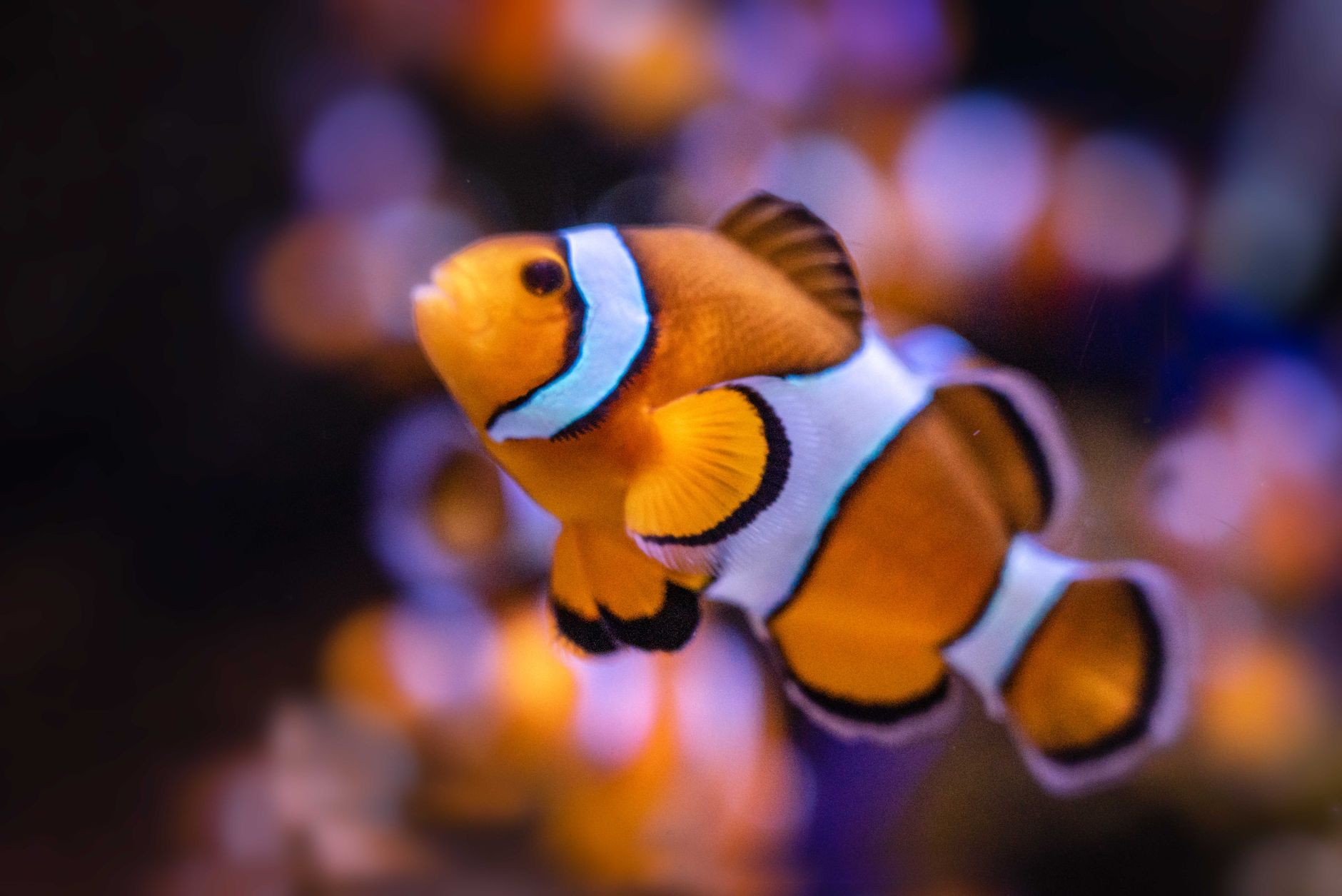
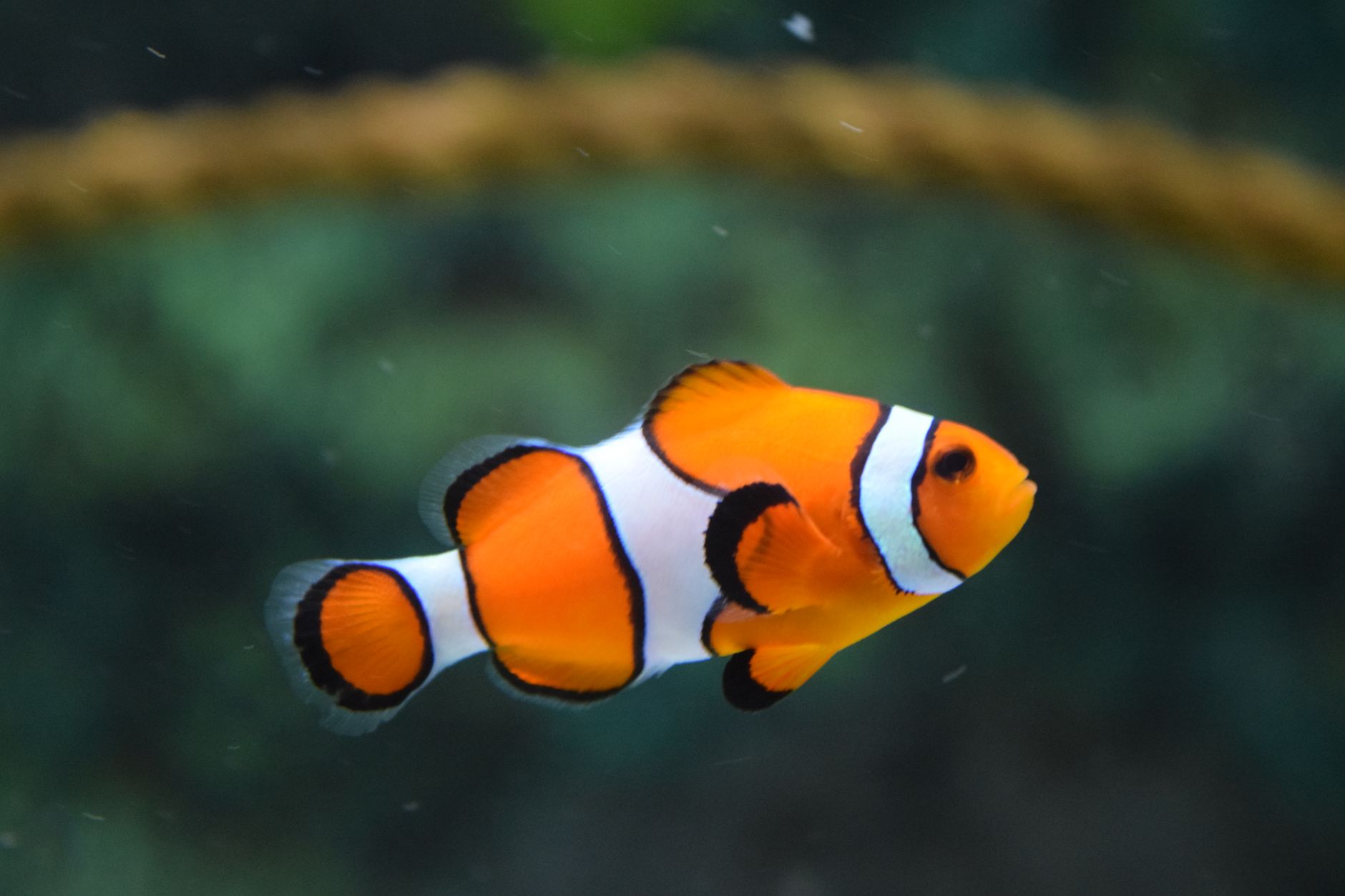
Nemo is an ocellaris clownfish, Amphiprion ocellaris, and he is the only character in the film that fits in a small tank. A single fish does fine in 10 gallons. A bonded pair needs 20 gallons, which is the number LiveAquaria and most breeders publish. Keep the water at 76 to 82 degrees Fahrenheit, pH 8.1 to 8.4, and salinity at 1.020 to 1.025. Adults top out around 3.5 inches, and captive-bred fish routinely live 8 to 12 years.
Clownfish are damselfish, which explains both their hardiness and their attitude. They eat almost anything, including frozen mysis, brine shrimp, and 1mm pellets, and they do not need a host anemone in captivity. Buy captive-bred fish. They accept prepared food on day one, they carry far less disease than wild-caught stock, and each one you buy takes pressure off wild reefs. Our ocellaris clownfish care guide walks through quarantine, pairing, and what to do when the female decides she runs the tank.
That last point matters more than new keepers expect. The larger fish becomes female, and she will chase a new clownfish relentlessly in a 20-gallon tank. Add tankmates that occupy different water instead: a royal gramma in the rockwork, a small goby on the sand, a cleaner shrimp on the rock. Skip other damselfish. Skip a second clownfish pair.
Equipment for this tank is short. A 50 to 100W heater keeps a nano stable, so check the 100W aquarium heater on Amazon for a model with a separate controller. Budget for a refractometer and a full marine test kit as well. Those two tools catch most problems before the fish show symptoms.
Key strengths:
- ✅ Hardy for a saltwater fish, and far more forgiving of beginner mistakes than tangs or puffers
- ✅ Captive-bred supply is widely available, so you are not buying wild-caught stock
- ✅ A 20-gallon footprint fits on a desk or a countertop, which keeps the gear list short
- ✅ Eats frozen and prepared food immediately, with no live-food weaning period
- ✅ Lives 8 to 12 years in a properly maintained tank
- ❌ The female turns aggressive toward new tankmates, especially other clownfish
- ❌ Needs stable salinity, so top-offs and water changes are never optional
- ❌ Can jump out of an open-top tank during a chase
Who it’s for: The best first saltwater fish for a nano tank if you will mix saltwater and test salinity every week.
2. Regal Blue Tang (Dory) , Best for large, established reef systems only
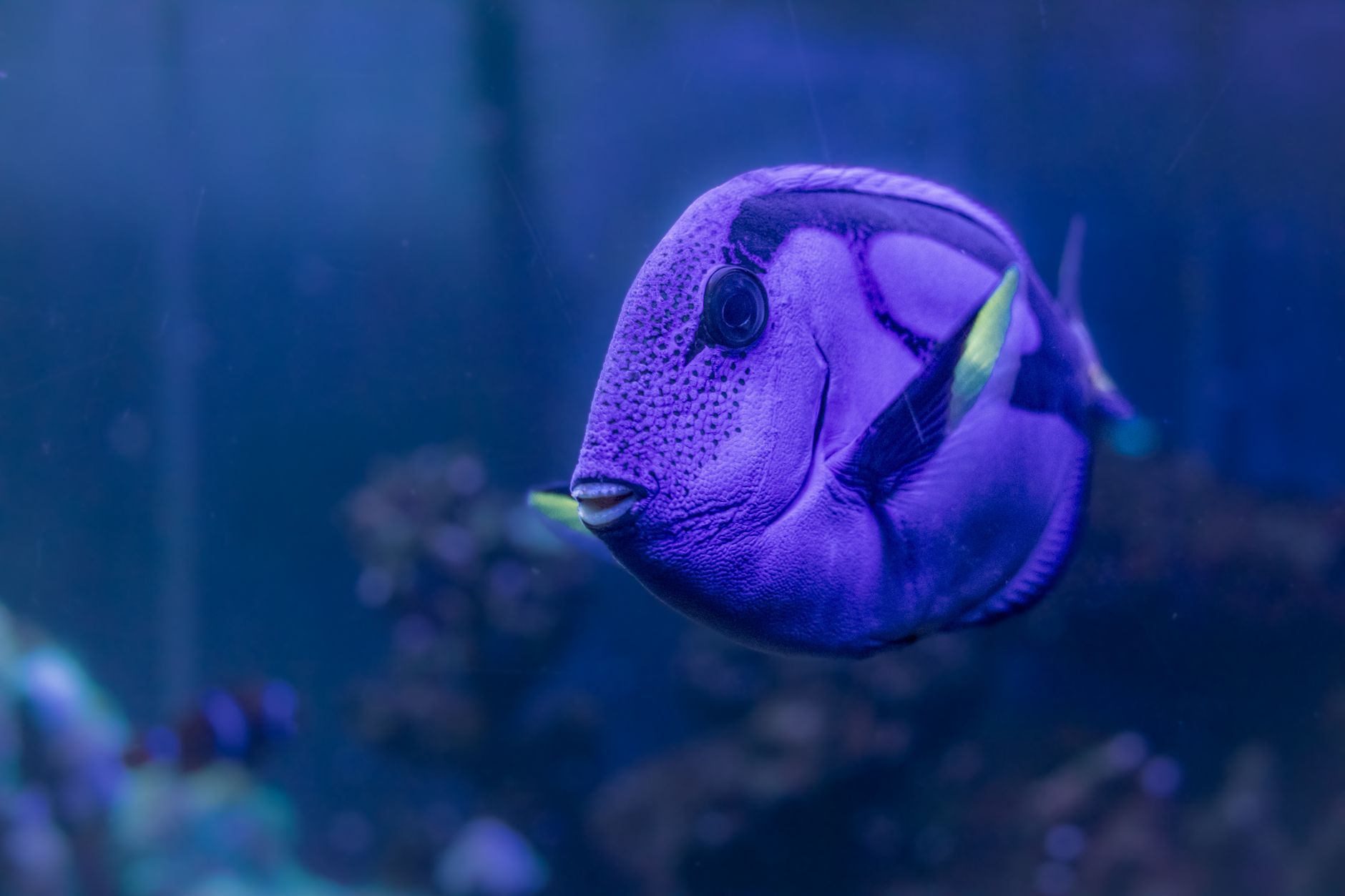
Dory is Paracanthurus hepatus, the regal blue tang, and she is the reason a lot of people set up a saltwater tank in the first place. She is also the reason many of those tanks go wrong. Adults reach 12 inches and swim in open water all day, so a juvenile that looks comfortable in a 55-gallon tank at two inches will not stay comfortable. The minimum for one adult is 180 gallons, at 72 to 78 degrees Fahrenheit, pH 8.1 to 8.4, and salinity 1.020 to 1.025.
Seriously Fish’s species profile and LiveAquaria land on the same minimum, and both flag the same weakness. Blue tangs stress easily, and stressed tangs break out with marine ich, Cryptocaryon irritans. Once that parasite is in a display tank, the tank has to run fallow for 76 days to clear it. That is the real price of skipping quarantine. Two and a half months with no fish in the tank, and every fish you own treated in a separate hospital setup.
Feeding is the other half of the job. These fish graze algae all day and need nori sheets or a similar vegetable food clipped in the tank, plus frozen food with marine algae and vitamin supplements. A tang fed only flakes loses color and develops lateral line problems. Our blue tang care guide covers the diet and quarantine protocol in full.
A tank this size needs heavy filtration. Expect a large protein skimmer, a sump, and enough flow to move the full volume several times per hour. Check the protein skimmer on Amazon for a model rated well above your actual water volume, because tang waste adds up fast. If you want the honest answer, most homes cannot fit the tank this fish needs.
Key strengths:
- ✅ One of the most recognizable fish in the trade, with a blue no freshwater species matches
- ✅ Lives 20 years or more when kept in a tank that fits it
- ✅ Grazes algae and eats a mostly vegetable diet, so food cost stays low
- ✅ Captive-bred specimens now exist from commercial breeders, which reduces wild collection pressure
- ❌ 180 gallons is a hard minimum, and juveniles in small tanks fail slowly
- ❌ Extremely prone to marine ich and other stress-related parasites
- ❌ Captive-bred fish are still scarce and cost several times what a wild-caught juvenile does
Who it’s for: An experienced keeper with a 180-gallon-plus system, a quarantine tank, and a plan for the next 20 years.
3. Yellow Tang (Bubbles) , Best for 100-gallon tanks with algae to graze
Bubbles is the yellow tang, Zebrasoma flavescens, the bright yellow fish circling the tank in half the scenes. It has the same body plan as the blue tang and roughly the same swimming demands, which is why the minimum is 100 gallons for one adult. Water sits at 72 to 78 degrees Fahrenheit, pH 8.1 to 8.4, salinity 1.020 to 1.025. Adults reach about 8 inches and live well past 20 years in good conditions.
Supply changed in 2021, when a court ruling stopped commercial collection of Hawaiian yellow tangs. Almost every fish sold now is captive-bred, and those arrive smaller and more adaptable than the wild fish ever did. They also graze constantly. A mature tank with algae on the rock is a good home. A bare tank with no vegetable food is not, and a tang with nothing to graze loses weight and color within a few months. Clip dried nori to the glass daily, so check the nori seaweed clip on Amazon if you want a simple holder for it.
Aggression is the thing that catches people out. Yellow tangs bully other tangs, especially similar-bodied ones, and they bully new additions that are smaller than they are. Add the tang last. If you want more than one, buy them together as juveniles in a tank of 150 gallons or more, and accept that you may have to separate them later.
This is not a first fish, and it is not a fish for a tank that was set up last month. It suits someone who already runs a 100-gallon system and wants an algae grazer with a color that carries across the room.
Key strengths:
- ✅ Captive-bred supply is now the norm, so buying one does not pull from wild reefs
- ✅ Grazes hair algae and other nuisance growth off the rockwork
- ✅ Color that reads from across a room, even under cheap lighting
- ✅ Long-lived, often 20 years or more with stable water
- ✅ Eats vegetable matter you can buy dried and keep on a shelf
- ❌ 100 gallons is a hard minimum for a single adult
- ❌ Bullies other tangs and smaller new additions, sometimes to the point of starvation
- ❌ Needs vegetable matter every single day, not just when you remember
Who it’s for: A keeper with a mature 100-gallon tank who wants an active grazer and can handle a bossy fish.
4. Royal Gramma (Gurgle) , Best for peaceful nano tanks with caves
Gurgle is a royal gramma, Gramma loreto, and he is the most underrated fish on this list. The species needs 30 gallons, the smallest tank of any marine character in the film besides the clownfish, and it costs a fraction of what a tang costs. Temperature is 72 to 78 degrees Fahrenheit, pH 8.1 to 8.4, salinity 1.020 to 1.025, and adults stay around 3 inches. If you want a film-inspired tank on a real budget, a clownfish pair plus one royal gramma in a 30-gallon tank is the sensible build.
The colors split straight down the middle, purple in front and yellow behind, and the fish spends most of its day hanging upside down under a rock ledge. That habit is normal, not a sign of illness, though new keepers ask about it constantly. Give it caves, overhangs, and a dim corner. A gramma with no rockwork to claim will wedge itself behind the heater.
Feeding is easy. Frozen mysis, small pellets, and brine shrimp all work. Aggression is limited to its own kind. Two males in a 30-gallon tank will fight until one stops eating, so keep one, or buy a confirmed pair. Against clownfish, gobies, and shrimp it stays quiet and low in the tank.
One honest downside: the fish hides. Even a settled gramma ducks into the rock whenever someone walks past the tank, so expect a few minutes of viewing at feeding time rather than all-day activity. If you want a fish that presses against the front glass, this is not it.
Key strengths:
- ✅ Only needs a 30-gallon tank, which keeps the whole setup affordable
- ✅ Hardy and inexpensive for a marine fish, even for a first-timer
- ✅ Peaceful with clownfish, gobies, and shrimp
- ✅ Uses the lower half of the tank, so it adds activity without crowding open water
- ✅ Captive-bred stock is available from several breeders
- ❌ Spends much of the day hidden in rockwork
- ❌ Two males cannot share a small tank
- ❌ Needs established live rock, so a bare or brand-new tank does not suit it
Who it’s for: Someone with a 30-gallon tank and good rockwork who wants color without the maintenance load of a tang.
5. Porcupine Pufferfish (Bloat) , Best for species-only tanks with heavy filtration
Bloat is a porcupine pufferfish, Diodon holocanthus, and he is the character that most deserves a warning label. Adults reach 12 inches, sometimes a little more, and the minimum tank is 120 gallons for a single specimen. Temperature sits at 72 to 78 degrees Fahrenheit, pH 8.1 to 8.4, salinity 1.020 to 1.025. A juvenile at 3 inches looks harmless. It will not stay that size, and it will eat anything that fits in its mouth.
The mouth is the problem. Puffers have fused teeth that grow for life, and a diet of soft food lets those teeth overgrow until the fish cannot eat and starves. Feed shell-on food: whole cockles, clams on the half shell, crab legs, snails. That is maintenance, not a treat, and it costs more than flake food ever will.
Reef keepers should skip this fish completely. It eats shrimp, crabs, and snails, which means it eats the cleanup crew, and it produces more waste than almost any fish of the same length. Expect a large skimmer, a heavy water change schedule, and a tank built around the puffer rather than the other way around. Our porcupine pufferfish care guide covers the diet and filtration in detail, but the short version is that a puffer tank is a commitment, not a display piece you add fish to later.
One more thing new keepers get wrong. A puffer that inflates in the tank is stressed, not performing. Netting it, chasing it, or moving it between tanks can force an inflation that pulls in air and leaves the fish floating wrong side up for hours. Use a container, never a net, and keep your hands out of the tank.
Key strengths:
- ✅ Enormous personality, and one of the few marine fish that recognizes its keeper
- ✅ Hardy once settled, with few of the parasite problems that plague tangs
- ✅ Eats meaty foods that are easy to source from a seafood counter
- ✅ Lives a long time, often 10 to 15 years or more in a proper setup
- ❌ 120 gallons for one fish, and more if you want tankmates
- ❌ Eats shrimp, crabs, and snails, so it is incompatible with a reef cleanup crew
- ❌ Fused teeth need hard shell-on food or they overgrow and the fish starves
Who it’s for: A keeper with a 120-gallon tank and the appetite for regular water changes who wants one big, messy, personable fish.
Frequently Asked Questions
Can Finding Nemo fish live in freshwater?
No. Clownfish, blue tangs, yellow tangs, royal grammas, and porcupine puffers are all marine species that need saltwater mixed to a specific gravity of roughly 1.020 to 1.025. A freshwater tank will kill them within hours to days.
How big of a tank does a clownfish need?
A single ocellaris clownfish does well in a 10-gallon tank, and a bonded pair needs 20 gallons. Smaller volumes make it hard to hold temperature and salinity steady, which is the main reason nano tanks fail.
Can a blue tang live in a 55-gallon tank?
No. Adults reach about 12 inches and need at least 180 gallons. A juvenile blue tang will survive in a 55 for a year or so, then show stunted growth, chronic stress, and repeated parasite outbreaks.
What temperature do Nemo fish need?
Most of the film’s fish sit between 72 and 82 degrees Fahrenheit. Clownfish prefer the warm end at 76 to 82, while blue tangs, yellow tangs, royal grammas, and porcupine puffers are comfortable at 72 to 78.
Do I need a protein skimmer for a clownfish tank?
Not always. A 20-gallon tank with one clownfish pair and weekly water changes can run without one. Tanks holding puffers or tangs produce far more waste and need a skimmer rated for the actual water volume.
How long does a saltwater tank take to cycle?
Four to eight weeks. Ammonia and nitrite must both read zero before you add the first fish, and marine tanks usually take longer than freshwater ones to finish the cycle.
What Should You Remember?
- Tank size follows the adult fish. A blue tang hits 12 inches and needs 180 gallons, while a clownfish stops at 3.5 inches and fits in 20.
- Every Finding Nemo character is a saltwater fish. A freshwater tank will kill clownfish, tangs, grammas, and puffers within days.
- Water parameters barely change across the cast. All five species want pH 8.1 to 8.4 and a temperature somewhere between 72 and 82 degrees Fahrenheit.
- The clownfish is the only beginner pick. Everything else on this list needs a large tank, an established filter, or both.
- Cycle and quarantine before you buy livestock. Ammonia and nitrite at zero, plus observation time for new fish, prevents most losses.
- Build the tank around the fish. Measure the wall the tank sits against before you pick the species on the poster.
This article is for general information only and is not a substitute for professional veterinary or aquarium specialist advice. Always research the specific needs of your fish and consult an expert before making care decisions.