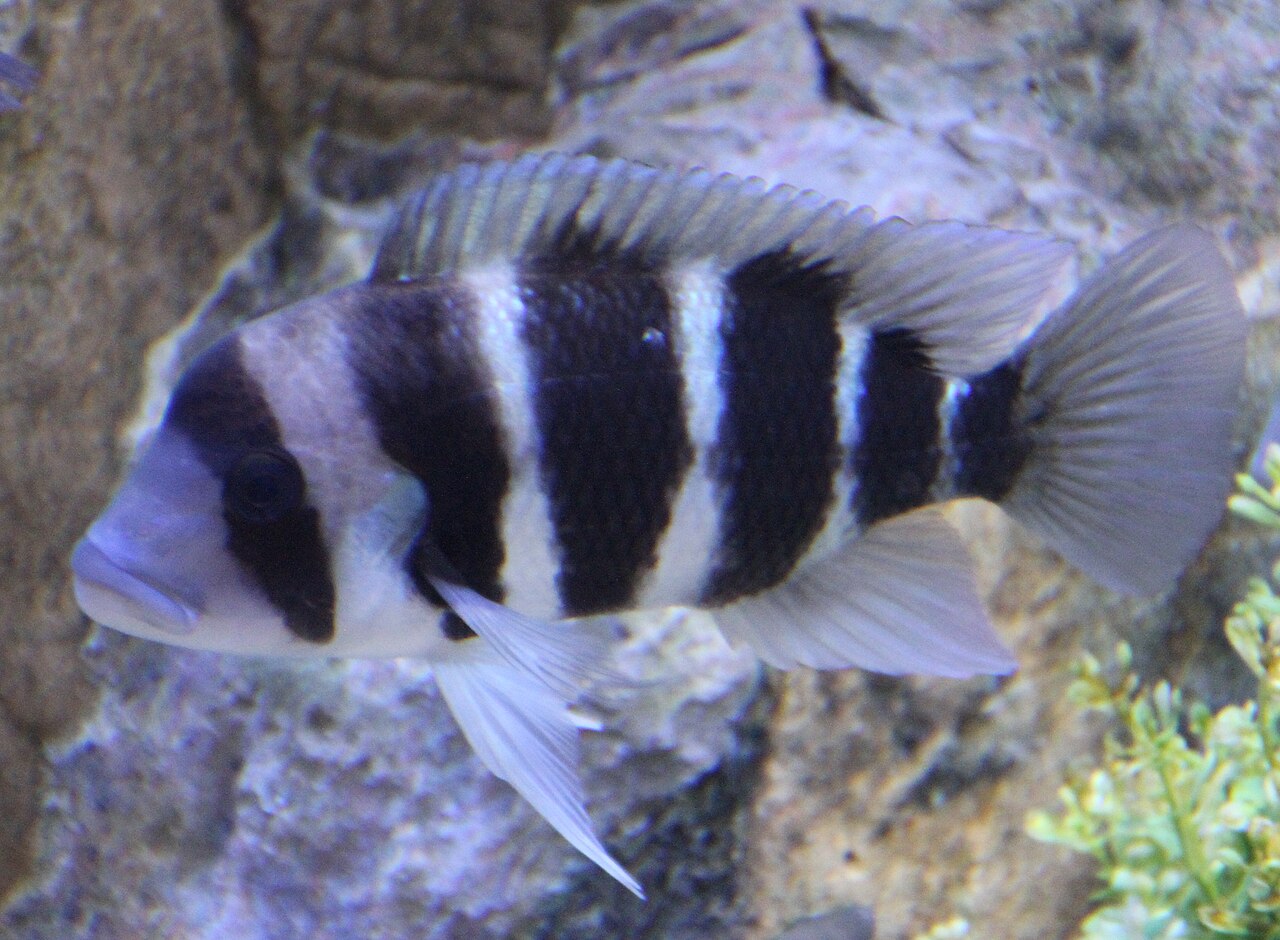
Convict cichlids (Amatitlania nigrofasciata) are among the toughest, most beginner-friendly cichlids in the freshwater hobby. They get their common name from the dark vertical bars on a pale gray or blue body. Males reach about 4 to 6 inches, while females stay closer to 3 to 4 inches. Despite their small size, they have big personalities and strong territorial instincts. Many keepers start with them because they tolerate beginner mistakes well. If you want a fish that is active, easy to feed, and simple to breed, this species is a solid pick. Check out our best fish for beginners list to see how they compare.
The key to keeping convict cichlids happy is giving them enough space and a structured tank. They come from warm, slow-moving waters in Central America. They prefer a temperature range of 75 to 79 degrees Fahrenheit and a pH between 6.5 and 8.0. Aquarium Co-Op notes that convicts are extremely adaptable and can handle a wide range of water conditions. That said, stable water beats perfect water. You still need to cycle the tank and keep nitrates low. A solid setup prevents the worst aggression and health problems.
This guide walks through tank size, diet, compatibility, and breeding. You will learn how to set up a tank that controls aggression. You will also learn how to feed these fish without clouding the water. Because convict cichlids are so easy to spawn, we will cover how to manage fry. Use the links throughout to find specific gear and compatible species. If you are new to the nitrogen cycle, learn the basics before you add fish.
Many guides ignore the social side of convict cichlids. These fish form pairs and defend caves. That behavior makes them fascinating to watch. It also makes them difficult to keep with small community fish. Plan the tank around their need for territory. With the right setup, they can live for 8 to 10 years. That is a long-term commitment worth doing right.
What You’ll Need
- 20-gallon long or larger aquarium
- Hang-on-back or canister filter
- Submersible heater and thermometer
- Liquid water test kit
- Gravel vacuum and buckets
- Caves, rocks, and smooth substrate
- Cichlid pellets and frozen foods
How Do You Care for Convict Cichlids?
- Choose a 20-gallon long tank as the minimum
A 20-gallon long tank is the smallest practical home for a single convict cichlid or a bonded pair. The long footprint matters more than total gallons. It gives a male enough room to claim one end and a female another. Tall tanks do not provide the same usable territory. If you plan to keep a pair with dither fish, move up to a 30 or 40 gallon breeder. Larger tanks give you more options for rocks and sight breaks. You can browse best beginner fish tanks for starter setups that fit this species. Check a 20 gallon long aquarium on Amazon if you want to compare prices.
Think about adult size before you buy. Convict cichlids are not huge, but they are active diggers. They rearrange substrate and uproot plants. The tank needs a secure lid because these fish can jump when startled. A sturdy stand is also important. Water weighs about 8.3 pounds per gallon, so a filled 20-gallon tank weighs over 200 pounds. Place the tank away from direct sunlight to reduce algae.
The shape of the tank matters for aggression. A longer tank creates line-of-sight breaks with rocks and driftwood. Fish can retreat to the other end. In a shorter tank, every chase feels close. This causes stress, torn fins, and sometimes death. For a single convict, a 20-gallon long is fine. For a pair, use a 30-gallon long or 40-gallon breeder. For a community, start at 55 gallons.
Common mistake: Some keepers put a convict in a 10-gallon tank because the fish is small at the store. This fails quickly. The fish grows fast and becomes territorial. Water quality also drops fast in small tanks. Start with the right size or upgrade within a few months. Your fish will show better color and less stress.

- Install a strong filter and reliable heater
Convict cichlids are messy eaters and diggers. They stir up waste and leftover food. A filter rated for at least 1.5 times the tank volume helps keep water clear. For a 20-gallon tank, choose a filter rated for 30 gallons or more. Hang-on-back filters are easy to clean. Canister filters work well for longer tanks. Sponge filters add extra biological filtration and are safe for fry. See our best aquarium filters 2026 guide for options that fit cichlid tanks.
Heating is just as important. Convict cichlids tolerate a range, but rapid swings weaken their immune system. Keep the water between 75 and 79 degrees Fahrenheit. Breeding pairs often do best at the warmer end, around 78 to 79 degrees. Use a submersible heater with a thermostat. Check the wattage against your tank size. A 50-watt heater works for a 20-gallon tank in a normal room. For larger tanks, use 100 watts or more.
Position the filter output to create gentle flow. Convicts do not need a strong current. Too much flow pushes them around and makes it hard to guard a nest. Aim the spray bar against the glass or use a baffle. Place the heater near the filter outflow so heat spreads evenly. Add a thermometer on the opposite side to monitor the real tank temperature.
Do not clean the filter media with tap water. Chlorine kills the beneficial bacteria. Rinse sponges and ceramic rings in old tank water during water changes. This keeps the cycle strong. A cycled filter protects your fish from ammonia and nitrite spikes. Without it, new tank syndrome can kill even hardy convicts.
- Cycle the tank before adding convict cichlids
New tanks need time to build beneficial bacteria. These bacteria convert ammonia from fish waste into nitrite, then less harmful nitrate. Convict cichlids are hardy, but ammonia burns their gills. Cycling takes four to six weeks if you start from scratch. You can speed it up with bottled bacteria or seeded filter media. If you are not sure how to start, follow our how to cycle a fish tank guide step by step.
To begin, set up the tank with substrate, filter, and heater running. Add a source of ammonia, such as fish food or pure ammonia. Test the water daily. You will see ammonia rise, then nitrite, then nitrate. The cycle is done when ammonia and nitrite read 0 ppm and nitrate is under 40 ppm. At that point, do a large water change and add fish slowly. Rushing this step leads to cloudy water and stressed fish. A good grasp of the process helps with every tank you keep.
Do not use convict cichlids to cycle a tank. Many old-school keepers say these fish are tough enough. That may be true, but it still causes suffering and fin damage. Fish-in cycling works only if you test often and dose a water conditioner that binds ammonia. It is much easier to cycle without fish. Patience now saves months of disease treatment later.
Once the tank is cycled, add only a few fish at a time. If you plan to keep a pair, add them together or introduce the female first. A mature filter can handle the bioload of one or two convicts. Do not add a full community in one day. Let the bacteria adjust to each new fish.

- Build caves and sight breaks with rocks and plants
Convict cichlids need territory. In the wild, they claim rocky crevices and dig pits for spawning. In a tank, they do the same. Add plenty of caves made from rocks, terracotta pots, or PVC pipe. Each fish should have at least one hiding spot. Use smooth rocks to avoid torn fins. Stack them carefully so they cannot collapse. If you use live plants, choose hardy types like Java fern or Anubias. Hardy plants survive cichlid digging better than most.
Arrange decor to break lines of sight. A long tank with a rock pile in the middle works well. Fish on one side cannot see fish on the other. This reduces constant aggression. Use driftwood, taller rocks, and plant clusters to create natural walls. Convicts will rearrange substrate, so do not expect a perfect aquascape. Anchor plants to rocks or wood. Leave open swimming space at the front.
Substrate matters for their natural digging behavior. Fine gravel or sand works best. Sand is soft and easy for them to sift. Avoid sharp crushed coral unless you want to raise pH. Convict cichlids dig constantly, especially when breeding. A bare bottom tank is easy to clean but offers no enrichment. A thin layer of sand gives them a job.
Caves are not just for hiding. They are nesting sites. A pair will choose a cave, clean the walls, and defend it. If you want breeding, provide several flat rocks and a flowerpot. If you do not want fry, avoid too many perfect caves. In that case, keep only one fish or a same-sex group. But even same-sex convicts can be aggressive, so give each fish space.
- Feed a varied omnivore diet
Convict cichlids eat almost anything. They are omnivores that need both protein and plant matter. A high-quality cichlid pellet should form the base of the diet. Look for pellets sized for medium cichlids. Feed once or twice a day, only what they can eat in two minutes. Overfeeding is the biggest mistake with these fish. It leads to bloat, obesity, and poor water quality. Check Hikari Cichlid Gold pellets on Amazon to see a widely used option.
Add frozen or live foods a few times a week. Bloodworms, brine shrimp, and daphnia are all good choices. These foods boost color and condition breeding pairs. Do not feed tubifex or blackworms from unknown sources. They can carry bacteria. Thaw frozen foods before feeding. You can also offer blanched zucchini, spinach, or shelled peas. Plant matter helps their digestion and prevents constipation.
Aqueon recommends feeding small portions that fish consume quickly. Leftover food rots and spikes ammonia. If you see food on the substrate after two minutes, feed less next time. Use a sinking pellet for bottom feeding if you have bottom dwellers. But remember convicts will eat from all levels. They are not picky.
Young convicts grow fast and need more frequent meals. Feed small amounts three times a day until they reach 2 inches. Adult fish do fine on one or two feedings per day. A varied diet keeps their colors bright. Avoid feeder goldfish and cheap fish flakes as the main diet. These lack the nutrition cichlids need and can introduce disease.
- Do regular water changes and monitor parameters
Water quality keeps convict cichlids healthy and reduces aggression. Even a hardy fish suffers in high nitrates. Test the water weekly for ammonia, nitrite, nitrate, and pH. A liquid test kit is more accurate than strips. The API Freshwater Master Test Kit is a good choice. Check the API Freshwater Master Test Kit on Amazon. Aim for 0 ppm ammonia, 0 ppm nitrite, and under 40 ppm nitrate.
Change 25 to 50 percent of the water every week. The exact amount depends on stocking and nitrate levels. For a single convict in a 20-gallon, 25 percent weekly is often enough. For a pair with fry, do 50 percent twice a week. Use a gravel vac to remove waste from the substrate. Convicts dig and stir up mulm, so vacuum the open areas. Be careful around caves where they may have laid eggs. Read how often to change aquarium water for a schedule that fits your tank.
Match the new water temperature and treat for chlorine. Use a water conditioner like Seachem Prime. Add it to the bucket before pouring water into the tank. Rapid temperature changes stress fish and can trigger ich. Let the new water sit if needed. Never replace filter media and do a huge water change on the same day. That can crash the cycle.
If you skip water changes, nitrates climb. Fish become lethargic, colors fade, and diseases take hold. Convicts are hardy but not invincible. Regular maintenance is easier than treating sick fish. Keep a log of your test results. It helps you spot problems before they get bad.
- Choose tank mates that can handle convict aggression
Convict cichlids are not community fish in the usual sense. They guard territory and attack anything that looks like a threat. That means small tetras, guppies, and shrimp are not safe. Instead, choose fast, armored, or large fish that can live in similar water. Good options include larger barbs, silver dollars, and some catfish. A bristlenose pleco is a common choice because it stays small and has tough armor.
Other Central American cichlids can work in a large tank. Firemouth cichlids are similar in size and temperament. But they still need space to avoid each other. Do not mix convicts with very aggressive cichlids like red devils or jaguars. These fish are bigger and will kill them. Avoid territorial bottom dwellers unless the tank is at least 75 gallons.
Tank size determines compatibility. In a 20-gallon, keep a single convict alone. In a 40-gallon breeder, a pair can live with a few fast dither fish like giant danios. In a 55-gallon, you can try a convict pair with larger catfish and large, fast schooling fish. Watch for chasing at feeding time. Add hiding spots so each fish can retreat.
Introduce all fish at the same time when they are young if possible. This reduces territorial claims. Rearrange decor before adding new fish. That breaks up established territories. Watch new fish closely for the first two weeks. If a convict locks onto a tank mate, separate them. Not all fish have the same personality. Some convicts are mild, while others are relentless.

- Prepare for breeding and fry care
Convict cichlids breed readily. If you keep a male and female, expect eggs. A pair will pick a cave, clean the surface, and spawn within days. The female guards the eggs while the male patrols the perimeter. Eggs hatch in about three to five days. The fry become free-swimming within a week. Parents may herd them around the tank in a tight school.
Breeding brings intense aggression. The pair will defend a large area and may attack your hand during maintenance. This is normal but requires caution. Give them space. Use a tank divider if they hurt other fish. Remove tank mates before spawning if necessary. The parents usually protect the fry, but they may eat them if stressed. Keep the tank quiet and avoid sudden movements.
Feed the fry infusoria or powdered fry food for the first few days. Newly hatched brine shrimp are the best next food. Crush flake food into a fine powder if you do not have baby brine shrimp. Feed small amounts several times a day. Keep the water clean with small daily water changes. Fry are sensitive to ammonia and nitrites. For disease prevention, review how to treat ich in aquarium before issues start.
You will need a plan for the fry. Convict cichlids can spawn every few weeks. A single pair can produce hundreds of babies. Most local fish stores will not take them unless you arrange it first. Some keepers sell or give them to other hobbyists. Others use a separate grow-out tank. If you do not want fry, keep only one convict or separate males and females. Many keepers breed them just for the experience. Be prepared for the work.
Red Flags & Warnings
- 🚨 Never keep convict cichlids in tanks smaller than 20 gallons. Cramped space makes them stressed and more aggressive.
- 🚨 Do not add small, slow fish like neon tetras, guppies, or dwarf shrimp. Convicts see them as food or threats.
- 🚨 Be ready for constant breeding. A male and female pair can spawn every few weeks and produce hundreds of fry.
- 🚨 Avoid overfeeding. Uneaten food rots, spikes ammonia, and causes bloat in convicts.
- 🚨 Do not skip quarantine for new fish. Convicts may survive ich, but new tank mates can bring diseases that stress the whole tank.
- 🚨 Never clean filter media with tap water. Chlorine kills beneficial bacteria and can crash the nitrogen cycle.
Frequently Asked Questions
How big do convict cichlids get?
Male convict cichlids reach about 4 to 6 inches. Females stay smaller, usually 3 to 4 inches. Their size depends on diet, tank space, and water quality.
What size tank does a convict cichlid need?
A 20-gallon long is the minimum for a single fish. A pair needs at least 30 gallons, and a community setup should be 55 gallons or larger. More space reduces aggression.
What do convict cichlids eat?
They are omnivores. Feed high-quality cichlid pellets as the staple. Add frozen bloodworms, brine shrimp, and blanched vegetables a few times per week.
Can convict cichlids live with other fish?
Only with hardy, fast, or armored tank mates. Good options include silver dollars, larger barbs, and bristlenose plecos. Avoid small community fish and slow movers.
How often do convict cichlids breed?
They can breed every few weeks once they pair off. A pair may produce hundreds of fry. If you do not want fry, keep only one fish or a same-sex group.
Are convict cichlids good for beginners?
Yes, they are hardy and easy to feed. But their aggression and breeding habits can surprise new keepers. A planned tank setup helps prevent problems.
What Should You Remember?
- Tank size: Use at least a 20-gallon long for one convict cichlid. Give pairs 30 to 40 gallons and communities 55 gallons or more.
- Water parameters: Keep temperature between 75 and 79 degrees Fahrenheit. Maintain pH between 6.5 and 8.0 and nitrates under 40 ppm.
- Filtration: Use a filter rated for at least 1.5 times tank volume. Pair it with a reliable heater and thermometer.
- Diet: Feed a base of cichlid pellets. Add frozen foods and blanched vegetables for variety.
- Tank mates: Choose fast, armored, or large fish. Avoid small tetras, guppies, and shrimp.
- Maintenance: Change 25 to 50 percent of water weekly. Test parameters regularly with a liquid kit.
- Breeding: Expect fry if you keep a male and female. Have a grow-out plan before they spawn.
This article is for general information only and is not a substitute for professional veterinary or aquarium specialist advice. Always research the specific needs of your fish and consult an expert before making care decisions.