Search for cichlids online and you get a list that looks like a mistake. A three-inch Bolivian ram and a twelve-inch oscar are in the same family. One wants soft, slightly acid water. The other treats liquid rock like a spa. The blood parrot cichlid sits between those extremes, a man-made hybrid with a body shape no wild fish has ever evolved, and it is one of the most widely sold freshwater fish in North America. That popularity hides a problem. Most people pick a cichlid by color and then find out about adult size six months later, when the fish is beating up everything in a 20-gallon tank.
This comparison covers six fish you will find in the same aisle: the blood parrot cichlid plus five common alternatives. I looked at adult length, minimum tank volume in gallons, temperature range in Fahrenheit, pH window, water hardness in dGH, and temperament. The care data comes from Seriously Fish species profiles, which publishes wild-collection and aquarium parameter ranges side by side, and from Aqueon’s care reference pages. Where the sources disagree, I used the wider and more forgiving range, because tank-raised fish tolerate more than wild-caught ones do.
Tank size is the number that ends most cichlid arguments before they start. A fish that reaches 12 inches does not belong in a 40-gallon breeder, no matter how small it looks at the store. Water hardness is the second filter, and it splits these six fish into two camps. Central and South American cichlids want soft to moderately hard water, while the Lake Malawi electric yellow needs hardness of 10-20 dGH and a pH near 8. Get that backwards and you fight your own tap water forever. Get it right and the fish mostly take care of themselves. If you are still cycling the tank you plan to use, work through our aquarium nitrogen cycle explained guide first.
One more thing before the numbers. The blood parrot is a hybrid, probably a cross between a red devil and a severum, created in Taiwan in the late 1980s. Its mouth does not close all the way. That single anatomical detail changes everything about how you stock its tank, because the fish cannot bite back effectively and gets bullied by tankmates half its size. Keep that in mind while reading the comparisons below. The best cichlid for your tank is the one whose adult size, water chemistry, and temperament match what you can actually provide for the next decade.
How Do the Top Options Compare?
| Cichlid | Adult Size | Min Tank | Temp | pH | Gear Pick |
|---|---|---|---|---|---|
| Blood Parrot Cichlid | 6-8 in | 40 gal | 76-82 F | 6.5-7.5 | AquaClear 110 - Check price |
| Convict Cichlid | 4-6 in | 30 gal | 72-82 F | 6.5-8.0 | AquaClear 50 - Check price |
| Oscar | 10-12 in | 75 gal | 74-81 F | 6.0-8.0 | Fluval FX4 - Check price |
| Electric Yellow Cichlid | 3-4 in | 40 gal | 75-82 F | 7.8-8.6 | AquaClear 70 - Check price |
| Jack Dempsey | 8-10 in | 55 gal | 72-82 F | 6.5-8.0 | Eheim Classic 600 - Check price |
| Bolivian Ram | 3-3.5 in | 29 gal | 74-80 F | 6.0-7.5 | AquaClear 30 - Check price |
Parameters describe adult, tank-raised fish and come from Seriously Fish species profiles and Aqueon care references. Juveniles tolerate a wider range than adults, and wild-caught specimens are far less forgiving than tank-bred ones. Tank volumes are minimums for the stocking described in each section, not targets. Gear links are for equipment only; no live animals are sold through them.
1. Blood Parrot Cichlid , Best for keepers who want one personable mid-size cichlid without the body count
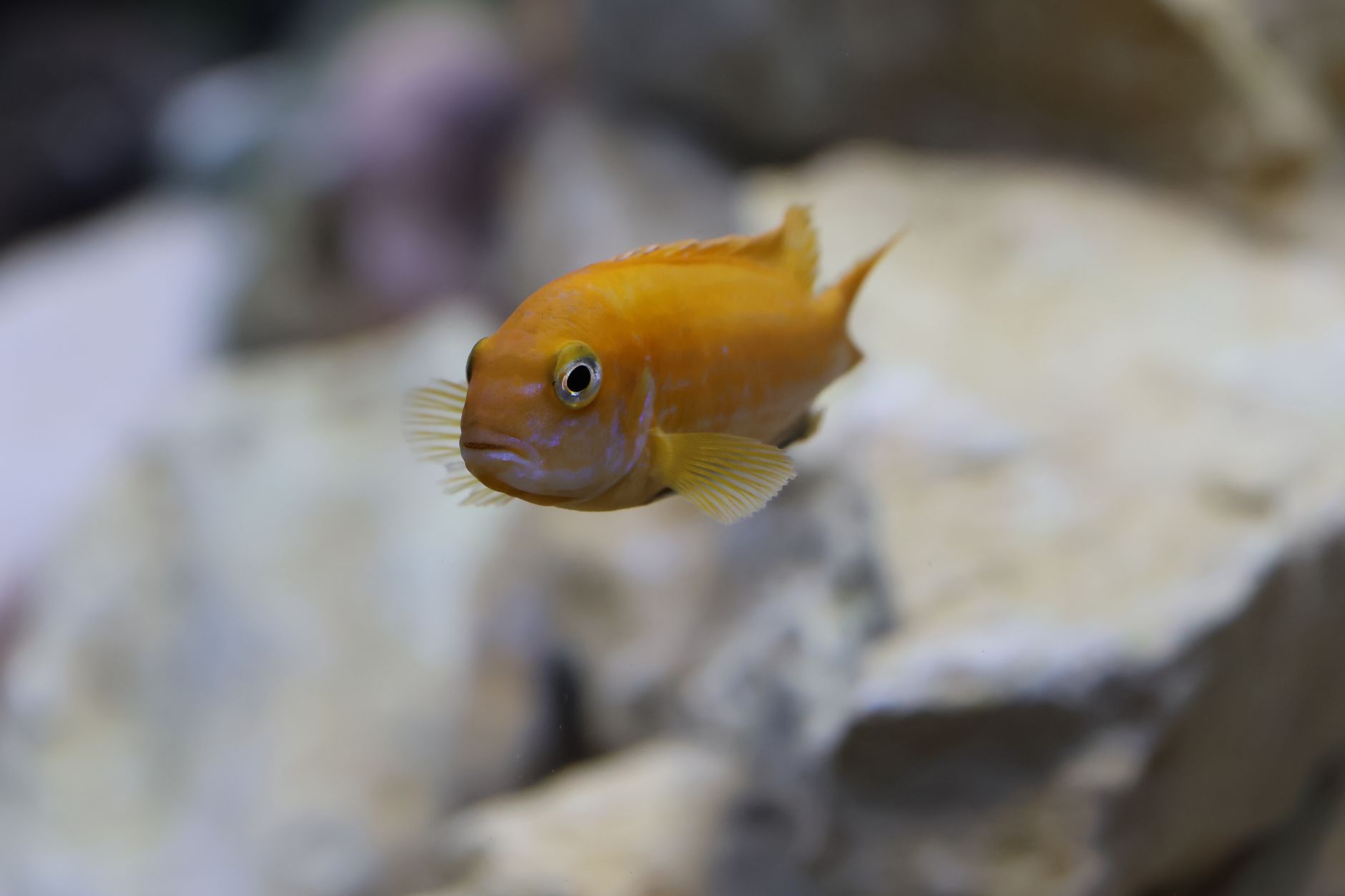
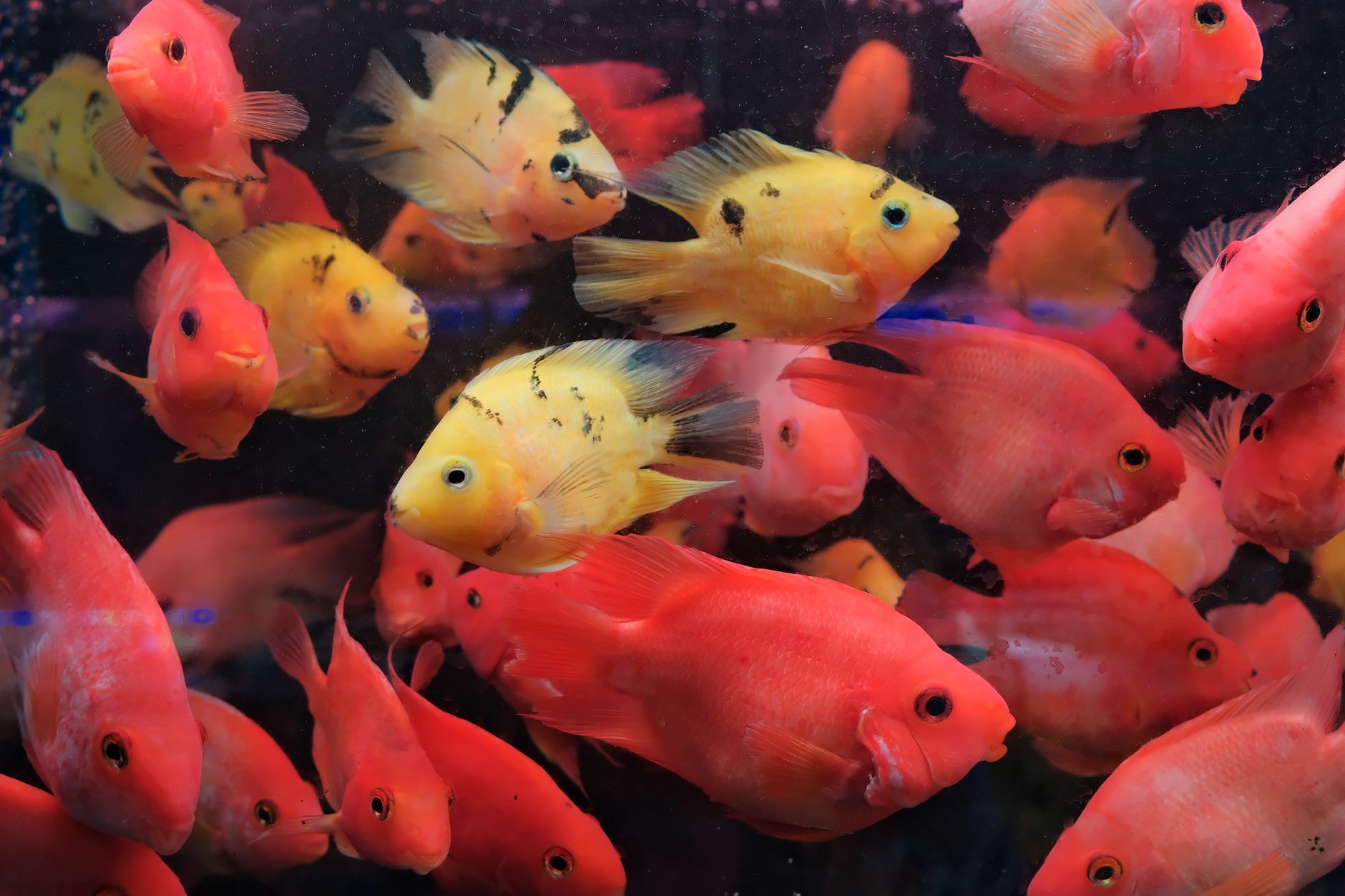
The blood parrot cichlid reaches 6 to 8 inches, and a well-fed male can push 10. Plan on a 40-gallon tank for a single adult, and 75 gallons or more if you want tankmates. Temperature sits at 76-82 degrees F, pH runs 6.5-7.5, and hardness lands between 5 and 15 dGH. Lifespan is 10-15 years, which is long enough that the fish stops being a pet and starts being furniture.
Filtration matters more than most people expect. Blood parrots are chunky, messy eaters, and they produce a surprising amount of waste for their size. A hang-on-back rated for double the tank volume is the floor, and a canister is better on anything 55 gallons and up. I have had good results with the AquaClear 110 power filter on a 75-gallon setup. Pair it with a stable heater, because this fish reacts badly to temperature swings. Our best aquarium heaters roundup covers sizing if you are starting from scratch.
Temperament is where the blood parrot surprises people. It is listed as semi-aggressive, but in practice it is timid. The mouth deformity means it cannot deliver a real bite, so it postures, charges, and then loses. Good tankmates are fast, peaceful fish that ignore a slow orange blob: larger tetras, giant danios, bristlenose plecos, and silver dollars. Bad tankmates are anything nippy or boisterous. Convicts, Jack Dempseys, and most mbuna will harass a blood parrot relentlessly.
The ethical argument is real, so hear it before you buy. Blood parrots are hybrids, some are dyed or injected with color, and the shortened body causes swim bladder and constipation problems. Buy natural orange or red fish, not neon pink ones. Feed a varied diet with spirulina and carotenoid pellets to hold the color. Do that and you get a hardy, interactive fish that lives well past a decade.
Key strengths:
- ✅ Adult size of 6-8 inches fits a 40-gallon tank, which is rare for a cichlid with this much personality.
- ✅ Tolerant water chemistry: pH 6.5-7.5 and hardness of 5-15 dGH covers most tap water in the US.
- ✅ Calmer than the Central American cichlids it gets compared to, so a mixed community tank is realistic.
- ✅ Lives 10-15 years, so you are not replacing the fish every couple of years.
- ✅ Learns to recognize its keeper and begs at the glass, which most cichlids will not do.
- ❌ The mouth cannot close, so it loses fights and gets bullied by smaller, faster fish.
- ❌ Hybrid origin and the dyed jellybean trade make it a fish you have to buy carefully.
- ❌ Body shape causes swim bladder and constipation issues, especially on cheap flake food.
Who it’s for: Choose the blood parrot if you want one big, personable centerpiece fish in a 40-75 gallon tank and you are willing to buy from a store that does not sell dyed stock.
2. Convict Cichlid , Best for beginners who want a bulletproof fish or an easy breeder
The convict cichlid tops out at 4-6 inches, with males larger than females, and a single fish does fine in a 30-gallon tank. Pairs need the same footprint plus a cave they can claim. Temperature range is 72-82 degrees F, pH runs 6.5-8.0, and hardness spans 5-20 dGH. They come from Central America and they are close to indestructible as freshwater fish get.
Breeding is not a challenge. It is the default state. A well-fed pair spawns every few weeks, and both parents turn genuinely aggressive while guarding fry. In a 30-gallon tank that means every other fish gets pinned in a corner until it dies. Keep a single convict, or accept that you will be rehoming fry on a rolling basis. Females can produce 100-200 fry per spawn and they do not stop.
Compared with a blood parrot, the convict is smaller, tougher, and meaner. It handles a wider pH range and sidesteps the hybrid health problems entirely. What it lacks is the calm. A blood parrot can share a 75-gallon tank with a school of silver dollars. A breeding convict pair cannot share anything. Our convict cichlid care guide covers cave layout and sexing in more depth.
Key strengths:
- ✅ Hardy enough for a first cichlid, and it tolerates water that would stress a blood parrot.
- ✅ Adult size of 4-6 inches means a 30-gallon tank is genuinely enough for one fish.
- ✅ Readily available and inexpensive compared to most cichlids its size.
- ✅ Spawning behavior is easy to observe, which makes it a good fish for learning cichlid breeding.
- ✅ Water hardness of 5-20 dGH means almost any tap water works without adjustment.
- ❌ Breeding pairs are vicious and will kill tankmates in a small tank.
- ❌ Females can lay 100-200 eggs per spawn, and rehoming fry gets old fast.
- ❌ Less interactive than a blood parrot; it hides more and comes to the glass less.
Who it’s for: Pick a convict if you want a single tough fish in a 30-gallon tank, or if you actually want to breed cichlids.
3. Oscar , Best for keepers with room for a 75-gallon tank and an oversized filter
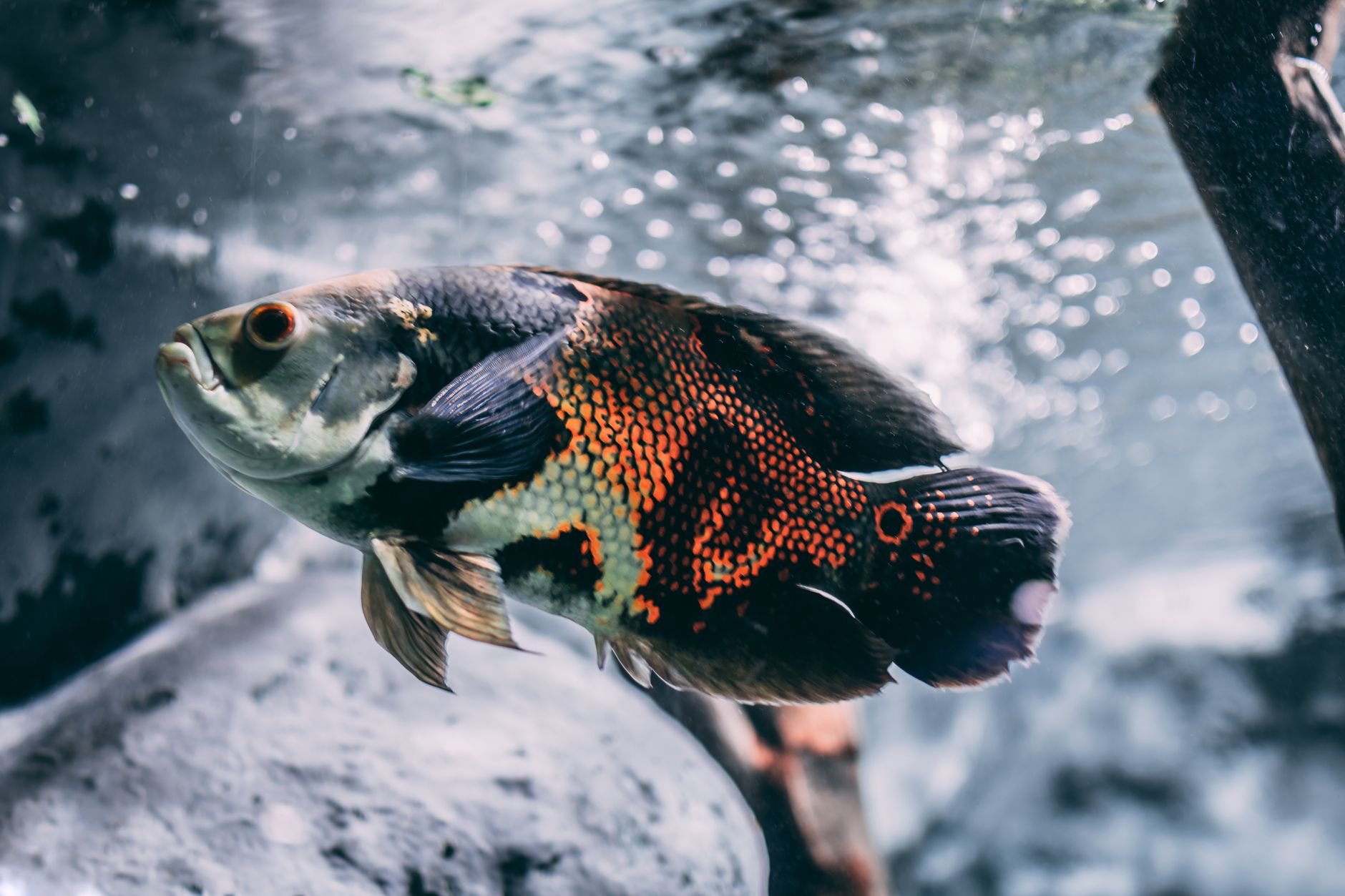
Oscars reach 10-12 inches, and 75 gallons is the honest minimum for one adult. Two oscars need 100 gallons or more, and even then a pair may fight until one is removed. Temperature runs 74-81 degrees F, pH spans 6.0-8.0, and hardness sits at 5-20 dGH. Lifespan is 10-15 years. This is a fish you commit to, not a fish you try.
The bioload is what nobody warns you about. An adult oscar eats like a dog and produces waste to match. A single 12-inch oscar in a 75-gallon tank needs filtration rated for at least 150 gallons, plus weekly 50 percent water changes. I run a Fluval FX4 canister filter on tanks this size, and it is the difference between clear water and permanent haze. Oscars also redecorate. Plants come up, driftwood moves, and substrate ends up in piles.
Temperament is predatory rather than aggressive. An oscar will not chase a fish it cannot swallow, but it eats anything that fits in its mouth, which covers most tankmates under 3 inches. Tankmates need to be big, fast, or armored. Silver dollars, large plecos, and full-grown severums work. Blood parrots get suggested as oscar tankmates all the time, and the pairing can survive in a 125-gallon tank, but the parrot loses every race to the food and often ends up skinny.
What oscars have that blood parrots do not is personality at scale. They sulk, they beg, they recognize individual people, and they learn to take food from your fingers. That is worth the maintenance. It is not worth buying a 55-gallon tank for a fish that will outgrow it in eighteen months. Read our oscar care guide before you commit.
Key strengths:
- ✅ Exceptional personality, with real recognition of individual people.
- ✅ Tolerates pH 6.0-8.0 and hardness of 5-20 dGH, one of the widest windows on this list.
- ✅ Readily available in several natural color forms, including tiger, red, and albino.
- ✅ Hardy once established and forgiving of minor water quality slips.
- ✅ Long lifespan of 10-15 years when the water stays clean.
- ❌ Needs a 75-gallon tank for a single fish, and 100 gallons or more for a pair.
- ❌ Enormous waste output requires oversized filtration and weekly 50 percent water changes.
- ❌ Eats anything that fits in its mouth, which limits tankmate options severely.
Who it’s for: Choose an oscar only if you have room for a 75-gallon tank and the discipline to do large weekly water changes for the next decade.
4. Electric Yellow Cichlid , Best for hard, alkaline tap water straight out of the faucet
Electric yellows stay small at 3-4 inches, but they are mbuna from Lake Malawi and they need company. A single fish in a 30-gallon tank hides. A group of four to six needs a 40-55 gallon tank with rockwork and broken sight lines. Temperature is 75-82 degrees F. Here is the part that rules out most tanks: pH 7.8-8.6 and hardness of 10-20 dGH. This fish wants hard, alkaline water, and it will not thrive in the neutral pH 7.0 water that suits a blood parrot.
That chemistry mismatch is the whole comparison. If your tap water comes out at pH 8.2 and 12 dGH, an electric yellow is an easier fish than a blood parrot. If your water is soft and slightly acid, you would be buffering every single water change, which is a chore you will eventually skip. Crushed coral or aragonite substrate helps, but it is an ongoing commitment, not a one-time fix. Aquarium Co-Op’s fishkeeping guides walk through the buffer options in detail.
For a mbuna, the electric yellow is mild. It does not shred plants or murder tankmates the way a demasoni will. It still nips, holds a territory, and needs a rock-heavy tank to spread aggression around. Compared with a blood parrot, it is smaller, faster, more active, and far less forgiving about water chemistry. Our electric yellow cichlid care guide covers the rockwork layout and stocking ratios.
Key strengths:
- ✅ Small adult size of 3-4 inches keeps tank volume requirements reasonable.
- ✅ Bright yellow color holds in both males and females, unlike many cichlids.
- ✅ One of the least aggressive mbuna, so a mixed Malawi tank is possible.
- ✅ Thrives in hard tap water that would cause problems for South American cichlids.
- ✅ Active and visible all day instead of hiding in a cave.
- ❌ Needs pH 7.8-8.6 and 10-20 dGH, which is incompatible with soft-water community tanks.
- ❌ Requires a group and heavy rockwork, so a 40-gallon tank is the practical floor.
- ❌ Buffering soft tap water gets expensive and tedious over time.
Who it’s for: Go with electric yellows if your tap water is already hard and alkaline and you want an active group instead of one big centerpiece fish.
5. Jack Dempsey , Best for experienced keepers who want a heavy-bodied bruiser
Jack Dempseys reach 8-10 inches and need a 55-gallon tank at minimum, with 75 gallons being more realistic once you add any tankmate. Temperature is 72-82 degrees F, pH runs 6.5-8.0, and hardness sits at 5-20 dGH. Lifespan is 10-15 years. The iridescent blue-green speckling on a dark body is why people buy them. The attitude is why people rehome them.
Aggression is the headline. A Jack Dempsey is territorial, heavy-bodied, and willing to fight fish larger than itself. It usually tolerates one or two similar-sized tankmates in a large tank with clearly separated territories, and it kills everything else. Blood parrots get proposed as tankmates because the adult sizes overlap. Do not do it in anything under 125 gallons. The parrot cannot bite back, and the Dempsey has no reason to stop.
Compared with a blood parrot, the Jack Dempsey is bigger, meaner, hardier, and far less flexible about tankmates. It is also more rewarding if you want to see real cichlid behavior: digging, lip-locking, display, and brood care. Our Jack Dempsey care guide covers tankmate selection and the electric blue variant. Buy a juvenile only if the 55-gallon tank is already set up and cycled.
Key strengths:
- ✅ Striking natural coloration that improves with age, with no dye or hybrid involved.
- ✅ Very hardy and tolerant of pH 6.5-8.0 and hardness of 5-20 dGH.
- ✅ Shows classic cichlid behavior: digging, display, and parental care.
- ✅ Adult size of 8-10 inches fits a 55-gallon tank for a single fish.
- ✅ Long lived at 10-15 years with proper feeding and water changes.
- ❌ Genuinely aggressive and will kill tankmates that cannot hold a territory.
- ❌ Digs up plants and rearranges substrate, so a scaped tank will not stay scaped.
- ❌ Not a safe tankmate for a blood parrot in anything under 125 gallons.
Who it’s for: Choose a Jack Dempsey if you want a single big, aggressive cichlid in a 55-75 gallon tank and you have no interest in a community setup.
6. Bolivian Ram , Best for peaceful community tanks and smaller spaces
Bolivian rams are the odd one out. They reach 3-3.5 inches, live happily in a 29-gallon tank, and behave more like community fish than cichlids. Temperature is 74-80 degrees F, pH runs 6.0-7.5, and hardness sits at a soft 2-10 dGH. Lifespan is shorter than the big cichlids at 4-6 years. They come from Bolivia and they are peaceful enough to keep with tetras, corydoras, and rasboras.
The catch is water quality. Soft, slightly acid water is the goal, and rams are sensitive to nitrate. A 29-gallon tank with a pair needs weekly 30 percent water changes and a filter that keeps nitrate low. An AquaClear 30 power filter handles a tank this size, but the water changes matter more than the equipment does. Skip them and you get a fish that stops eating and dies with no obvious symptoms.
Against a blood parrot, the Bolivian ram wins on tank size and temperament and loses on toughness and lifespan. It is not a fish you can drop into hard, alkaline tap water and forget about. It is also not a fish that will bully anything. A pair defends a spawning site, which is the full extent of its aggression. Our Bolivian ram care guide covers sexing and tankmate choices.
Key strengths:
- ✅ Fits a 29-gallon tank, so it works in apartments and small rooms.
- ✅ Peaceful enough to live with tetras, corydoras, and other community fish.
- ✅ Hardy for a dwarf cichlid, unlike the more delicate German blue ram.
- ✅ Colorful without being a hybrid or a dyed fish.
- ✅ Stays visible in mid-water instead of hiding behind plants all day.
- ❌ Needs soft water at 2-10 dGH and pH 6.0-7.5, which rules out most hard tap water.
- ❌ Sensitive to nitrate buildup, so weekly water changes are not optional.
- ❌ Short lifespan of 4-6 years compared to 10-15 for the larger cichlids.
Who it’s for: Pick Bolivian rams if you have soft water and want a peaceful community tank instead of a single dominant cichlid.
Frequently Asked Questions
Can a blood parrot cichlid live with other cichlids?
Yes, but only calm, similar-sized species in a tank of 75 gallons or more. Convicts, Jack Dempseys, and mbuna will harass a blood parrot because its mouth cannot close and it cannot bite back. Fast, peaceful tankmates like silver dollars and bristlenose plecos work far better.
How big does a blood parrot cichlid get?
Most adults reach 6 to 8 inches, and a well-fed male can push 10 inches. A single adult needs a 40-gallon tank at minimum, and 75 gallons if you want tankmates.
What tank size does an oscar need?
One adult oscar needs 75 gallons, and a pair needs 100 gallons or more. Anything smaller leads to stunted growth, constant nitrate problems, and weekly water changes that still cannot keep up.
Do electric yellow cichlids need hard water?
Yes. They need pH 7.8 to 8.6 and hardness of 10 to 20 dGH. Soft, neutral water causes chronic stress and shortens their life, so they are a poor choice if your tap water is soft.
Which cichlid is best for a beginner?
The convict cichlid is the most forgiving about water chemistry, and the Bolivian ram is the most peaceful. Avoid oscars and Jack Dempseys until you have a large tank running and fully cycled.
Are blood parrot cichlids aggressive?
No. They are timid for a cichlid. They posture and charge but cannot deliver a real bite, so they usually lose confrontations with faster or more aggressive tankmates.
What water temperature works for all of these cichlids?
Set the heater to 78 degrees F and every fish on this list is within range. Blood parrots want 76 to 82, oscars 74 to 81, electric yellows 75 to 82, and Bolivian rams 74 to 80.
What Should You Remember?
- Tank size decides first: a single blood parrot needs 40 gallons, an oscar needs 75, and a Jack Dempsey needs 55.
- Match your tap water: soft water suits parrots, rams, and oscars, while electric yellows need pH 7.8-8.6 and 10-20 dGH.
- Temperament beats color: convicts and Jack Dempseys look calm in the store and turn territorial the moment they pair off.
- The blood parrot is a hybrid: its mouth cannot close, so it cannot defend itself against nippy or aggressive tankmates.
- Temperature is the easy part: 76-80 degrees F works for all six fish, so tank volume and hardness are the real filters.
- Plan for a decade: parrots, oscars, and Jack Dempseys live 10-15 years, longer than most people keep a tank running.
- Buy natural stock: skip dyed jellybean parrots and injected color morphs, and ask the store where the fish came from.
This article is for general information only and is not a substitute for professional veterinary or aquarium specialist advice. Always research the specific needs of your fish and consult an expert before making care decisions.