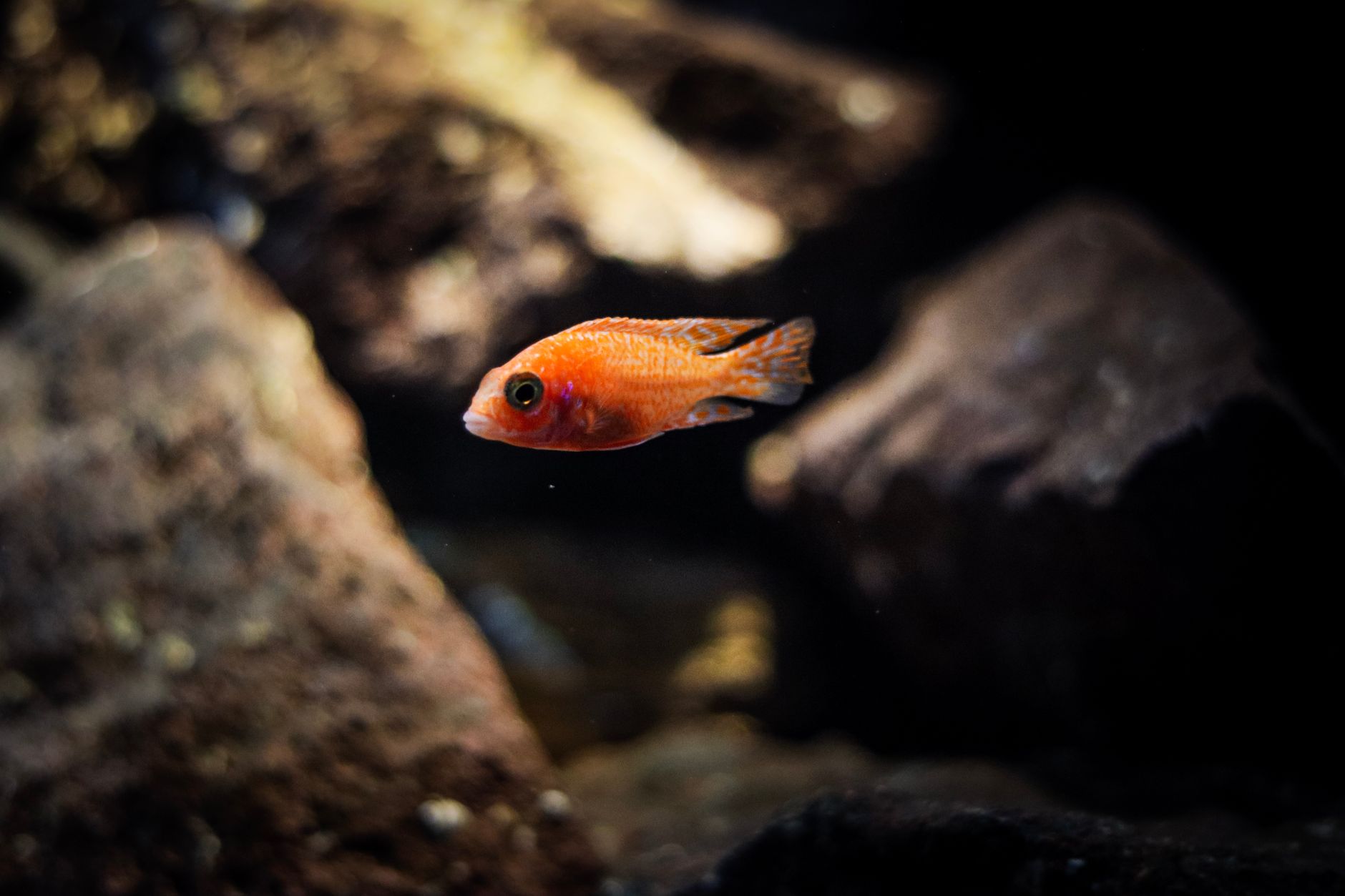
Peacock cichlids (Aulonocara species) are among the most colorful freshwater fish from Lake Malawi. They stay smaller than many African cichlids, usually 4 to 6 inches long. Their bright blues, oranges, and yellows make them popular for a species tank. But they need specific water chemistry, space, and tank mate planning. This guide covers setup, feeding, and long-term care. For detailed species profiles, visit Seriously Fish.
Many new keepers assume all cichlids are aggressive. Peacocks are more peaceful than mbuna, but they still need careful stocking. Males can fight over territory. A stressed peacock loses color and stops eating. The right tank size and rock work reduce conflict. Before you buy, understand the nitrogen cycle. Start with how to cycle a fish tank so your new fish do not suffer from ammonia spikes.
Water quality matters more than decoration. Lake Malawi water is alkaline and hard. Tap water in many regions is soft and acidic. You will need buffer products or a substrate that raises hardness. Aquarium Co-Op points out that consistent parameters matter more than exact numbers. Still, your fish will look best and live longer near their natural range. Peacocks reward stable, clean water with intense color.
This 2026 guide walks through tank size, filtration, setup, diet, and compatibility. We include product examples and links to more detailed guides. By the end, you will know how to keep a stable, colorful peacock cichlid tank without common beginner mistakes. The steps build on each other, so follow them in order for best results.
What You’ll Need
- 55-gallon or larger aquarium with stand
- Canister or large hang-on-back filter
- Submersible aquarium heater and thermometer
- Aragonite sand or crushed coral substrate
- Smooth rocks or holey rock for caves
- API Freshwater Master Test Kit
- Cichlid pellets and frozen foods
- Dechlorinator water conditioner
How Do You Care for Peacock Cichlids?
- Start with a 55-gallon or larger aquarium
Peacock cichlids are active and territorial. A 55-gallon tank is the minimum for a small group. A 75-gallon or 125-gallon tank is better for an all-male display. More length gives males room to claim separate rock piles. This reduces chasing and torn fins. Start with the largest tank you can fit and afford.
Think about footprint, not just volume. A 4-foot tank works for a small harem. A 6-foot tank is ideal for mixed peacocks and peaceful haps. Tall narrow tanks limit swimming lanes. Peacocks stay near rocks and sand, but they dash across open areas. Leave at least 18 inches of clear swimming space in front of the rock work.
If you are new to cichlids, look at best beginner fish tanks for basic setup ideas. But note that most beginner kits are too small for adult peacocks. A 55-gallon kit can work if you upgrade the filter. Avoid bowls and 20-gallon tanks. They cause stunting, stress, and aggression.

- Match Lake Malawi water parameters
Peacocks come from Lake Malawi. The water is warm, hard, and alkaline. Keep temperature between 76°F and 82°F. Most keepers aim for 78°F. pH should stay between 7.8 and 8.5. Hardness should measure 10 to 20 dGH. Use a liquid test kit weekly to track these values.
Many tap water sources are soft and neutral. Peacocks can survive in pH 7.4 for a while. Still, low hardness weakens their coloration and immune response. Add a cichlid salt mix or use crushed coral or aragonite sand. These slowly dissolve and buffer the water. Test before every water change to avoid swings.
Do not use pH-lowering products. They work against the fish’s biology. If your tap water is very soft, a product like Check the Seachem Cichlid Lake Salt on Amazon helps add minerals. You can also use baking soda in small amounts, but measured buffers are more predictable. Keep a log of pH and hardness. Sudden shifts do more harm than slightly off values.
- Install oversized filtration and a reliable heater
African cichlids are messy eaters. They produce a lot of waste. Choose a filter rated for at least double your tank volume. A 55-gallon tank should have a filter rated for 100 gallons or more. Canister filters and large hang-on-back units both work. best aquarium filters 2026 covers top options for cichlid tanks.
A strong heater keeps the water stable. Use a submersible heater with a thermostat. Set it to 78°F and check with a separate thermometer. In cold rooms, a heater rated for the next tank size up helps. best aquarium heaters 2026 reviews reliable choices for African cichlids.
Add a powerhead or a spray bar for extra flow. Lake Malawi has good circulation. Peacocks do not need torrent-level current, but gentle to moderate flow keeps oxygen high. Point the return along the surface to break water. This also releases carbon dioxide and keeps pH stable. Avoid strong jets aimed directly at rock caves where fish rest.
- Cycle the tank completely before adding fish
Never add peacocks to an uncycled aquarium. Ammonia and nitrite spike during the first weeks. This can kill expensive, sensitive fish. A fishless cycle is safer and faster to control. You need a source of ammonia, a test kit, and patience. how to cycle a fish tank explains the process in detail.
The nitrogen cycle converts ammonia to nitrite, then to nitrate. In a peacock tank, aim for 0 ppm ammonia, 0 ppm nitrite, and less than 20 ppm nitrate. Test the water every day until the cycle finishes. Once the cycle is stable, do a large water change before adding fish. aquarium nitrogen cycle explained walks through each stage.
Some keepers try to cycle with small feeder fish. This is risky. Feeder fish carry disease and do not produce enough waste for a full bioload. Use pure ammonia or a bacterial starter product. Add fish slowly after the cycle. Adding all peacocks at once can overwhelm even a cycled filter. Stock in groups and monitor ammonia for two weeks.
- Build rock caves over a sand or crushed coral substrate
Peacock cichlids use rocks for territory and shelter. Use smooth rocks, holey rock, or lace rock. Stack them securely to create caves and line-of-sight breaks. Do not pile rocks against the back glass. Fish can get trapped behind them. Place rocks directly on the bottom before adding sand. This prevents toppling.
Sand is the best substrate for peacocks. They sift sand through their gills looking for small invertebrates. Crushed coral or aragonite sand also buffers pH and hardness. Avoid sharp gravel that injures their gills. Two to three inches of sand is enough. best aquarium plants for beginners lists plants, but most plants do not survive peacock digging. Use anubias tied to rocks if you want greenery.
Create multiple rock clusters. Leave open sand patches between them. This gives males visual separation. A sight break can stop a chase before it escalates. Do not use too many small decorations that trap waste. Clean the surface of the sand during water changes. A siphon can stir the sand and remove debris without harming the fish.

- Choose peaceful Malawi tank mates
Peacock cichlids do best with other peacocks and peaceful Malawi haps. Avoid mbuna like auratus, zebra, and kenyi. These fish are too aggressive for peacocks. They attack fins and stress them. A good rule is to keep fish with similar size and temperament. electric yellow cichlid care guide shows one mbuna that is sometimes mixed, but even yellow labs can be pushy.
For a species-only tank, keep one male with three or four females. The male will display to the females but should not focus on one fish. For an all-male display, choose eight to twelve males in a 75-gallon or larger tank. Pick different color varieties to reduce same-species aggression. Do not keep two males of the same type in a small tank.
Avoid community fish like neon tetras, guppies, and angelfish. They need different water chemistry and become targets. Bottom dwellers like synodontis catfish can work if the tank is large. clown loach care guide is not a match because clown loaches prefer softer water and grow large. Research every addition before you buy.

- Feed a varied diet with cichlid-specific foods
Peacock cichlids are micro-predators in the wild. They eat small crustaceans and insect larvae from the sand. In the aquarium, offer a high-quality cichlid pellet as the staple. Look for foods with fish meal or krill listed first. Avoid foods heavy in corn or wheat. Feed small portions twice a day.
Variety keeps color strong and digestion healthy. Add frozen or live foods like mysis shrimp, brine shrimp, and bloodworms. Use these as treats two or three times per week. You can also offer a spirulina flake once a week. Too much protein from mammal meat causes bloat. Do not feed beef heart or feeder goldfish.
Malawi bloat is a common killer. It happens when fish overeat or eat the wrong foods. Soak pellets for a few minutes before feeding. This prevents them from expanding in the stomach. Skip one feeding day per week. A fasting day lets the digestive tract clear. Watch for fish with swollen belly and loss of appetite. Remove uneaten food within five minutes.
- Perform weekly water changes and test the water
Change 30 to 50 percent of the water each week. Peacocks tolerate clean water well. Frequent changes remove nitrate and dissolved organics. Vacuum the sand surface to remove leftover food. Use a dechlorinator that also detoxifies ammonia. how often to change aquarium water has a schedule you can follow.
Test pH, ammonia, nitrite, and nitrate before each water change. A liquid kit like the API Freshwater Master Test Kit is accurate and lasts for hundreds of tests. Check the API Freshwater Master Test Kit on Amazon. Record the numbers. If nitrate rises above 20 ppm, increase water change frequency or amount. Do not let pH drop below 7.5.
Rinse filter media in old tank water. Do not replace all media at once. The filter holds most of the beneficial bacteria. Clean the impeller and intake monthly. Check the heater and thermometer for accuracy. Stable routines keep peacocks colored up and active. A skipped week now and then is fine, but long gaps invite disease and aggression.
- Watch for aggression, bloat, and common diseases
Watch the tank daily for chasing and torn fins. A little chasing is normal during feeding. Constant chasing is not. If one fish hides all day, add more rock piles or move the bully. Re-arranging the rocks resets territories. It stops old rivals from fighting over the same cave. Do this during a water change.
White spots on the body or fins may be ich. It often appears after temperature swings or stress. Raise the temperature slowly to 82°F and use a cichlid-safe medication. how to treat ich in aquarium explains treatment steps. Do not use copper treatments with sensitive invertebrates. Quarantine new fish for two to four weeks before adding them to the display.
A bloated fish that stops eating needs quick action. Malawi bloat can kill within days. Move the fish to a hospital tank. Use an antibacterial or antiparasitic treatment for internal issues. Keep the water clean and offer a small amount of shelled pea. Prevention through diet and water changes is far more effective than treatment.
Red Flags & Warnings
- 🚨 Do not mix peacock cichlids with small tetras, guppies, or dwarf shrimp. Peacocks will eat or nip anything that fits in their mouth.
- 🚨 Avoid aggressive mbuna species such as auratus or kenyi. They will kill peacocks by constant aggression.
- 🚨 Never add peacocks to an uncycled tank. Ammonia and nitrite spikes often cause rapid death.
- 🚨 Do not overfeed protein-rich foods. Malawi bloat is a leading cause of peacock cichlid death.
- 🚨 Do not rely on a small hang-on-back filter rated for the exact tank volume. Cichlids need at least double filtration.
- 🚨 Avoid soft acidic water. It weakens color and immunity, making fish vulnerable to disease.
Frequently Asked Questions
How big do peacock cichlids get?
Most peacock cichlids reach 4 to 6 inches in an aquarium. Males usually grow larger than females. A few species can approach 7 inches, but this is less common.
What size tank do peacock cichlids need?
A 55-gallon tank is the minimum for a small group. A 75-gallon or larger tank is better for all-male display groups. More length reduces territorial aggression.
Are peacock cichlids aggressive?
They are less aggressive than many mbuna but still territorial. Males chase each other and can be rough on females during breeding. Using enough rock caves and keeping proper ratios reduces most problems.
What do peacock cichlids eat?
Feed a high-quality cichlid pellet as the staple. Add frozen mysis shrimp, brine shrimp, and spirulina flakes several times a week. Avoid mammal meat and overfeeding to prevent bloat.
Can peacock cichlids live with angelfish?
No. Angelfish prefer softer, more acidic water and are slow moving. Peacocks need alkaline, hard water and may nip the angels’ long fins.
How many peacock cichlids should I keep together?
Keep one male with three to four females in a 55-gallon tank. For an all-male display, keep eight to twelve males in a 75-gallon or larger tank. Never keep two males of the same color variety in a small tank.
What Should You Remember?
- Tank size: Provide at least 55 gallons for a small harem, or 75 gallons for an all-male group.
- Water parameters: Keep temperature 76°F to 82°F, pH 7.8 to 8.5, and hardness 10 to 20 dGH.
- Filtration: Use a filter rated for double the tank volume and add extra water movement.
- Cycling: Complete a fishless cycle before adding any peacock cichlids.
- Tank mates: Stick to peaceful Malawi haps and other peacocks. Avoid aggressive mbuna and small community fish.
- Diet: Feed high-quality cichlid pellets plus frozen foods, and skip one day per week.
- Maintenance: Change 30 to 50 percent of the water weekly and test parameters often.
This article is for general information only and is not a substitute for professional veterinary or aquarium specialist advice. Always research the specific needs of your fish and consult an expert before making care decisions.