New fishkeepers often pick fish based on color, then discover the fish needed a 75-gallon tank or aggressive tankmates. That mistake kills more beginner fish than any disease. The best fish for beginners are hardy, tolerate small errors, eat standard food, and fit in common tank sizes. Aqueon’s care reference lists exact temperature and tank size requirements for many species. Keep the nitrogen cycle in mind before adding fish. A cycled tank turns toxic ammonia into safer nitrate. Without it, even the toughest fish will suffer.
Start with a simple rule. Choose fish that stay under 3 inches, accept a range of 70 to 80 degrees Fahrenheit, and do not require extreme pH. This list includes 10 species that fit that profile. They are widely available, peaceful enough for community tanks, and forgiving of beginner mistakes. Check our best beginner fish tanks guide before you buy any glass box. A larger water volume dilutes mistakes, so a 20-gallon long often works better than a 5-gallon desk tank. Small tanks swing fast when the heater fails or someone overfeeds.
We looked at care guides, breeder recommendations, and long-term aquarium experiences to rank these fish. Every species here has been kept successfully by first timers. That does not mean they are bulletproof. They still need a heater, a filter, and weekly water changes. Use our aquarium nitrogen cycle guide to understand what happens before fish go in. Aquarium Co-Op’s beginner guides also walk through tank setup. You will need a liquid water test kit and a dechlorinator that removes chlorine and chloramine.
The setup matters more than the fish. A 10-gallon tank with an adjustable heater, a hang on back filter, and a lid can handle most species below. Live plants help, but they are optional. Start with easy plants if you want better water quality. Then add six small fish instead of one. Schooling fish display more natural behavior and feel safer. Buy from a local fish store that quarantines stock, not a chain where tanks look sick. Choose fish that are active, clear eyed, and eating. Avoid any fish from a tank with dead tankmates.
How Do the Top Options Compare?
| Fish | Best For | Min Tank | Temperature | pH | Adult Size | Price |
|---|---|---|---|---|---|---|
| Betta Fish | Solo small tanks | 5 gallons | 78-80°F | 6.5-7.5 | 2.5 inches | Check 5-gallon kit |
| Neon Tetra | Peaceful schools | 10 gallons | 70-76°F | 6.0-7.0 | 1.5 inches | Check 10-gallon LED kit |
| Corydoras Catfish | Bottom cleanup | 20 gallons | 72-78°F | 6.0-8.0 | 2-3 inches | Check aquarium sand |
| Harlequin Rasbora | Planted schools | 10 gallons | 72-80°F | 6.0-7.5 | 2 inches | Check sponge filter |
| Zebra Danio | Cold water activity | 10 gallons | 64-75°F | 6.5-7.5 | 2 inches | Check 20-gallon long tank |
| Platy | Hard water livebearer | 10 gallons | 70-78°F | 7.0-8.0 | 2.5-3 inches | Check hang on back filter |
| Guppy | Flashy small tank | 10 gallons | 72-82°F | 6.8-7.8 | 1.5-2.5 inches | Check adjustable heater |
| Cherry Barb | Peaceful red barb | 20 gallons | 74-79°F | 6.0-8.0 | 2 inches | Check live plants bundle |
| Dwarf Gourami | Single centerpiece | 10 gallons | 75-82°F | 6.0-7.5 | 3 inches | Check API test kit |
| Bristlenose Pleco | Small algae eater | 20-30 gallons | 73-81°F | 6.5-7.5 | 4-5 inches | Check driftwood |
Price links go to Amazon search results for starter equipment, not the fish themselves. Prices change daily. Never buy live fish from generic online retailers. Choose a local fish store or reputable breeder.
1. Betta Fish , Best for Solo Small Tanks

Betta fish are the classic beginner fish because they tolerate small tanks and look stunning. A single betta needs a 5-gallon tank at 78 to 80 degrees Fahrenheit with a pH between 6.5 and 7.5. They grow to about 2.5 inches. Do not keep male bettas together. Males will fight until one dies. Females can live in sororities, but that is not a beginner project.
A 5-gallon tank needs a heater and gentle filter. Strong current exhausts a betta because their long fins create drag. Sponge filters or baffled hang on back filters work best. Check our betta fish care guide for the full setup. Feed 2 to 4 pellets once or twice a day. Overfeeding causes bloat and water problems. Check 5-gallon betta tank kits on Amazon.
Key strengths:
- ✅ Tolerates a 5-gallon tank, which makes setup inexpensive
- ✅ Comes in endless colors and fin types
- ✅ Does not need a school or complicated social setup
- ✅ Easy to feed with standard betta pellets
- ❌ Male bettas cannot share a tank with other bettas or flashy fish
- ❌ Long fins make them sensitive to strong filter flow
- ❌ Prone to bloat if overfed
Who it’s for: A beginner who wants a single, colorful fish in a small tank.
2. Neon Tetra , Best for Peaceful Community Schools
Neon tetras are staples of the beginner community tank. A group of six or more needs a 10-gallon tank at 70 to 76 degrees Fahrenheit. Keep pH between 6.0 and 7.0 and the fish rarely grow past 1.5 inches. They are peaceful and mix well with other small species. The catch is their sensitivity to ammonia and nitrite in a new tank. Add them only after the tank has fully cycled.
See our neon tetra care guide for detailed water parameters. You should run a sponge filter or a gentle hang on back filter. Bright light washes out their blue and red stripe, so use floating plants or dimmable lighting. Feed micro pellets, crushed flakes, and occasional frozen daphnia. They live longer when kept in groups of 10 or more in a 20-gallon long. Check 10-gallon LED aquarium kits on Amazon.
Key strengths:
- ✅ Bright blue and red colors stand out in planted tanks
- ✅ Peaceful with nearly all small community fish
- ✅ Readily available and inexpensive
- ✅ Active schooling behavior in groups of six or more
- ❌ Sensitive to ammonia and nitrite spikes in new tanks
- ❌ Needs a fully cycled aquarium to thrive
- ❌ Small size makes them a target for larger fish
Who it’s for: A beginner with a cycled 10-gallon tank who wants a peaceful schooling fish.
3. Corydoras Catfish , Best for Bottom-Dwelling Cleanup Crew

Corydoras catfish are armored little bottom dwellers that keep leftover food from rotting. Most species stay around 2 to 3 inches, and a group of six needs a 20-gallon long tank. Keep them at 72 to 78 degrees Fahrenheit with a pH between 6.0 and 8.0. They prefer soft sand over sharp gravel because their barbels dig constantly. Use a sand substrate or smooth, rounded gravel.
A hang on back filter with gentle flow works fine. Corydoras dart to the surface to gulp air occasionally, so leave a gap below the lid. They are social and need at least six of the same species. Our corydoras catfish care guide explains why a group matters. Feed sinking pellets, wafers, and frozen bloodworms. They will not eat fish waste, so do not rely on them as tank janitors. Check aquarium sand for Corydoras on Amazon.
Key strengths:
- ✅ Peaceful and active bottom dwellers
- ✅ Tolerate a wide pH range from 6.0 to 8.0
- ✅ Many species stay small enough for a 20-gallon long
- ✅ Help keep food from sinking and decaying
- ❌ Need a group of six or more, which requires a larger tank
- ❌ Sharp gravel can damage their barbels
- ❌ Will not eat fish waste or replace water changes
Who it’s for: A beginner with a 20-gallon tank who wants an active cleanup crew.
4. Harlequin Rasbora , Best for Warm Water Planted Community Tanks
Harlequin rasboras are calm, hardy, and less nippy than many tetras. A group of eight fits in a 10-gallon tank, but a 20-gallon long gives them room to swim. Keep the water at 72 to 80 degrees Fahrenheit and pH between 6.0 and 7.5. Adults stay around 2 inches. Their copper and black triangular patch looks striking against green plants.
Use low to moderate lighting and add floating plants for shade. They eat crushed flakes, micro pellets, and occasional live or frozen baby brine shrimp. Harlequins are peaceful and rarely bother tankmates. They do not need extreme soft water, which makes them easier than wild caught tetras. Add them after the tank cycles, and they will settle in within a day. This is one of the best schooling fish for a beginner who wants something different from neon tetras.
Key strengths:
- ✅ Hardy and adaptable to normal tap water
- ✅ Peaceful schooling fish with no fin nipping
- ✅ Stands out in planted tanks
- ✅ Tolerates temperatures up to 80 degrees Fahrenheit
- ❌ Schooling group of eight or more is best
- ❌ Less colorful than neon tetras or guppies
- ❌ Can be shy in bright open tanks without cover
Who it’s for: A beginner who wants a peaceful schooling fish that handles normal tap water.
5. Zebra Danio , Best for Cold Water and High Activity
Zebra danios are nearly indestructible. They tolerate temperatures from 64 to 75 degrees Fahrenheit, which means they can live in unheated indoor tanks. A group of six needs a 10-gallon tank at minimum, but a 20-gallon long is better because they swim constantly. pH should stay between 6.5 and 7.5, and adults reach about 2 inches.
They are fast, active, and always hungry. Feed small flakes or micro pellets two or three times per day, enough that they finish in 60 seconds. Avoid keeping them with slow, long-finned fish. Zebra danios sometimes nip at betta fins or angelfish fins. They also jump, so a tight fitting lid is required. For a first cold water tank, zebra danios are easier than goldfish because they produce less waste and stay small.
Key strengths:
- ✅ Tolerates cooler water from 64 to 75 degrees Fahrenheit
- ✅ Very hardy and forgiving of beginner mistakes
- ✅ Active and entertaining to watch
- ✅ Stays around 2 inches and fits in a 10-gallon tank
- ❌ Can nip long-finned tankmates
- ❌ Needs a lid because they jump
- ❌ Constant swimming may stress slower fish
Who it’s for: A beginner who wants a cold water or unheated tank with active fish.
6. Platy , Best for Easy Livebearer with Color Variety
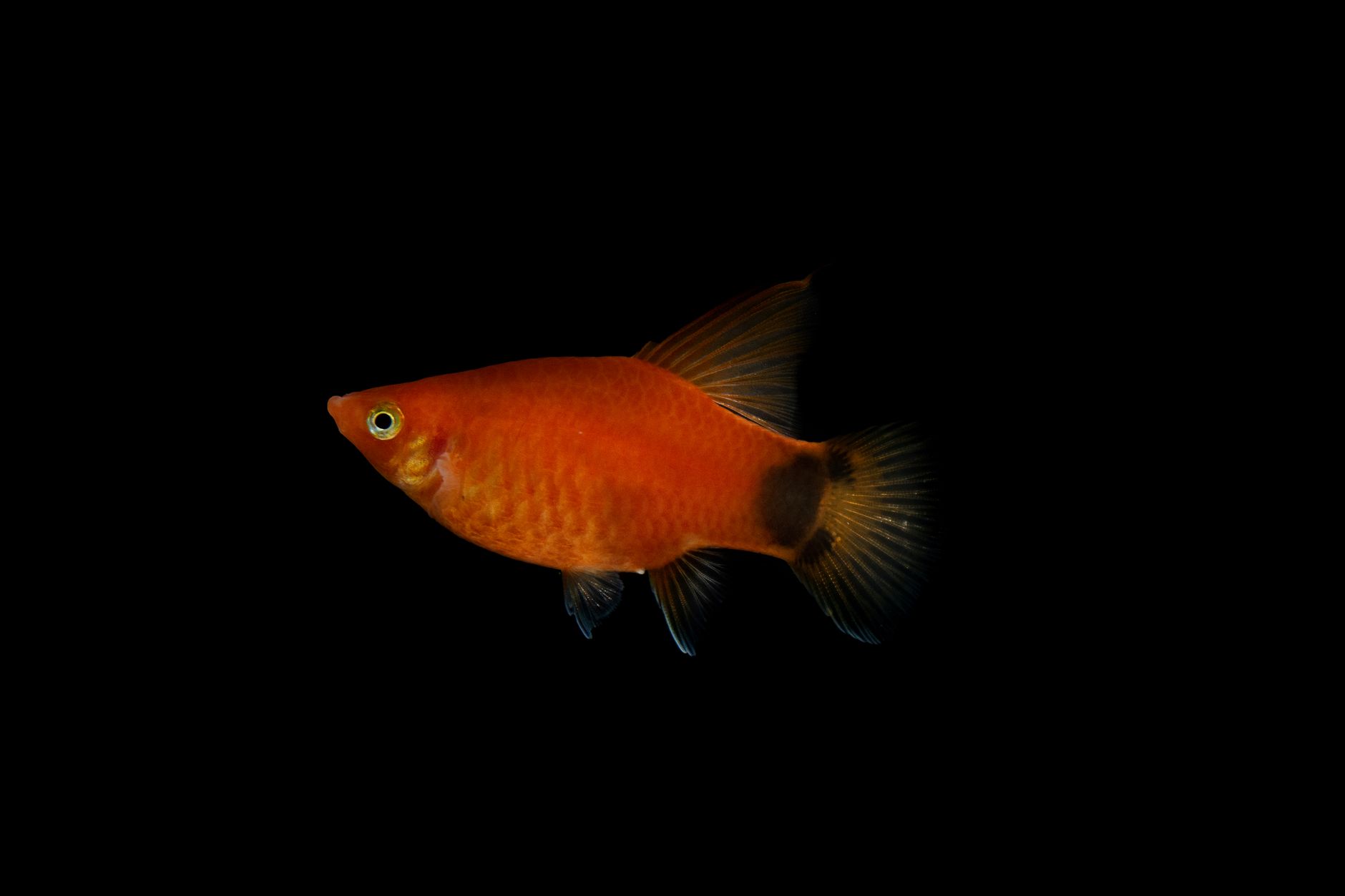
Platies are livebearers with bright orange, red, blue, and wagtail color patterns. They grow to 2.5 to 3 inches and do well in a 10-gallon tank at 70 to 78 degrees Fahrenheit. Keep pH between 7.0 and 8.0. A small group of three to five works, but more females than males prevents constant harassment.
Platies eat standard flakes, algae wafers, and occasional blanched vegetables like zucchini. They breed readily in a community tank. If you keep males and females together, expect fry. A well planted tank with floating hornwort gives babies a place to hide. Feed crushed flakes to the fry or move them to a breeding net. These fish are forgiving of minor water quality mistakes, but hard alkaline water suits them best.
Key strengths:
- ✅ Tolerates a pH from 7.0 to 8.0, including hard tap water
- ✅ Very easy to feed and breed
- ✅ Comes in a wide range of colors
- ✅ Active and peaceful in community tanks
- ❌ Breeds constantly if males and females are mixed
- ❌ Adult size up to 3 inches means a 10-gallon is tight for many
- ❌ May eat small shrimp
Who it’s for: A beginner with hard tap water who wants colorful, easy livebearers.
7. Guppy , Best for Flashy, Sociable Fish for Hard Water
Guppies bring constant movement and color to a small tank. A trio or small group needs a 10-gallon tank at 72 to 82 degrees Fahrenheit. They prefer pH between 6.8 and 7.8. Males stay around 1.5 to 2 inches, while females reach 2.5 inches. Keep two females for every male to reduce chasing and stress.
Guppies eat flake food, micro pellets, and occasional live or frozen foods. They breed even more than platies, so have a plan for fry. Some local fish stores accept healthy guppies as donations. If you do not want breeding, keep an all male group. Our guppy care guide covers tank setup and water parameters in depth. Avoid keeping guppies with fin nippers like tiger barbs or bettas.
Key strengths:
- ✅ Tolerates a wide temperature range from 72 to 82 degrees Fahrenheit
- ✅ Small size works in a 10-gallon tank
- ✅ Excellent color variety and active swimming
- ✅ Easy to feed and breed
- ❌ Breeds constantly if both sexes are kept
- ❌ Fancy guppies are sometimes weaker than wild type guppies
- ❌ Long tails attract fin nipping tankmates
Who it’s for: A beginner with a heated 10-gallon tank who wants flashy, active fish.
8. Cherry Barb , Best for Peaceful Barb with Red Color
Cherry barbs break the bad barb reputation. They are peaceful, not fin nippers, and they add a deep red color to planted tanks. A group of six needs a 20-gallon long tank at 74 to 79 degrees Fahrenheit. pH should stay between 6.0 and 8.0, and adults reach about 2 inches. Males turn bright red when comfortable, while females are more brown.
Give them plants, driftwood, and subdued lighting to bring out the color. They eat flakes, micro pellets, and frozen daphnia. Cherry barbs are hardy and tolerate moderate water quality issues, but do not skip water changes. They will not bother slow fish or long-finned species. This makes them one of the best barb species for a beginner community tank. Use a gentle filter because they come from slow flowing streams.
Key strengths:
- ✅ Peaceful for a barb, safe with long-finned fish
- ✅ Red males add striking color to planted tanks
- ✅ Tolerates pH from 6.0 to 8.0
- ✅ Hardy and easy to feed
- ❌ Needs a 20-gallon long for a proper school
- ❌ Females are duller and may disappoint buyers
- ❌ Color fades under bright light or in bare tanks
Who it’s for: A beginner who wants red schooling fish without aggressive barb behavior.
9. Dwarf Gourami , Best for Centerpiece Fish with Labyrinth Organ
Dwarf gouramis are colorful centerpiece fish that breathe air from the surface. A single fish needs a 10-gallon tank at 75 to 82 degrees Fahrenheit with a pH between 6.0 and 7.5. They grow to about 3 inches. Their pelvic fins look like long feelers, and they use them to explore plants and substrate. Keep one dwarf gourami per tank unless it is a large 40-gallon setup with plenty of visual barriers.
They can be shy at first, so provide floating plants and calm tankmates. Small tetras or corydoras work well. Avoid fast zebra danios and fin nippers. Dwarf gouramis eat flakes, pellets, and frozen bloodworms. The main downside is their susceptibility to dwarf gourami iridovirus, which has no cure. Buy from a reputable breeder to reduce the risk. They are also sensitive to poor water quality despite their labyrinth organ.
Key strengths:
- ✅ Beautiful blue and red striped body in a compact size
- ✅ Does not need a school and works as a single centerpiece
- ✅ Breathes air, which helps in low oxygen conditions
- ✅ Peaceful with small tankmates
- ❌ Prone to dwarf gourami iridovirus, especially from poor stock
- ❌ Can be shy and take time to show natural behavior
- ❌ Males may fight each other in smaller tanks
Who it’s for: A beginner with a heated 10-gallon planted tank who wants a single centerpiece fish.
10. Bristlenose Pleco , Best for Algae Eating with Personality
Bristlenose plecos are the beginner friendly alternative to the common pleco. They stay 4 to 5 inches and need a 20 to 30-gallon tank. Keep them at 73 to 81 degrees Fahrenheit with a pH between 6.5 and 7.5. They have bushy whiskers around their mouth, especially males. Feed them sinking algae wafers, blanched zucchini, and occasional protein like bloodworms.
Do not rely on them to clean the whole tank. They eat some algae but produce a lot of waste. Provide driftwood because they rasp on it for fiber and gut health. A single bristlenose fits in a 20-gallon long, while a pair needs a 30-gallon tank. They are peaceful but territorial with other bottom dwelling plecos. Keep one unless the tank is large enough for multiple hiding spots.
Key strengths:
- ✅ Stays small at 4 to 5 inches, unlike common plecos
- ✅ Eats algae and leftover food efficiently
- ✅ Hardy and adaptable to a range of pH
- ✅ Distinctive bushy face gives the tank personality
- ❌ Produces heavy waste and needs good filtration
- ❌ Requires driftwood for proper digestion
- ❌ Territorial toward other bottom dwellers
Who it’s for: A beginner with a 20 to 30-gallon tank who wants an algae eater that stays manageable.
Frequently Asked Questions
What fish is best for a beginner with a small tank?
A betta is best for a 5-gallon tank. Guppies or a small group of male guppies also work in a 10-gallon tank with a heater and gentle filter.
Do I need to cycle a tank before adding beginner fish?
Yes. Add an ammonia source and wait until beneficial bacteria process ammonia and nitrite. Test kits from API or Aqueon show when the cycle is done.
How many beginner fish can go in a 10-gallon tank?
A 10-gallon tank can hold six to eight small fish like neon tetras or guppies if filtration is good. Larger species need more space.
What temperature should a beginner tropical tank be?
Most beginner tropical fish thrive at 72 to 78 degrees Fahrenheit. Use an adjustable heater and thermometer to keep temperature stable.
Can I use tap water for easy aquarium fish?
Yes, with a water conditioner that removes chlorine and chloramine. Test pH and hardness to match fish preferences.
What should I feed beginner fish?
Feed a high-quality flake or pellet food once or twice per day. Add sinking wafers for catfish and occasional frozen foods for variety.
What Should You Remember?
- Cycle first: Complete the nitrogen cycle before adding any fish, even hardy species.
- Tank size matters: Most easy species need at least a 10-gallon tank and a larger group for schooling fish.
- Schooling fish: Tetras, danios, rasboras, and corydoras need groups of six or more.
- Stable temperature: Keep tropical fish between 72 and 78 degrees Fahrenheit to reduce stress.
- Water changes: Change 20 to 25 percent of the tank water every week.
- Solo bettas: Male bettas cannot share a tank with other male bettas or flashy fin nippers.
- Test water: Use a liquid test kit weekly for ammonia, nitrite, nitrate, and pH.
This article is for general information only and is not a substitute for professional veterinary or aquarium specialist advice. Always research the specific needs of your fish and consult an expert before making care decisions.