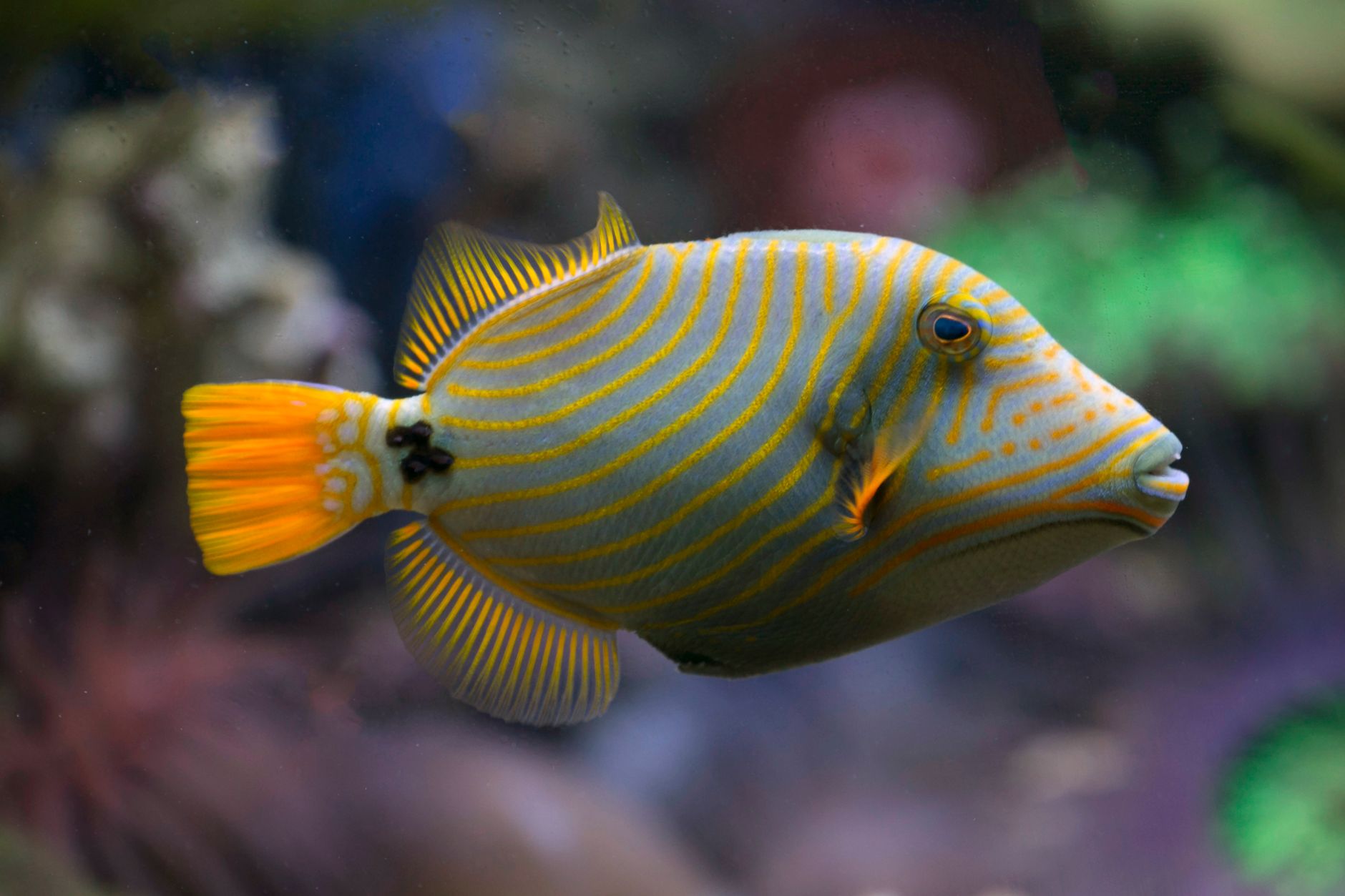
Clown triggerfish (Balistoides conspicillum) are among the most recognizable marine fish. Their black body, white spots, and yellow saddle markings make them a centerpiece in large saltwater displays. But this species is demanding. It reaches roughly 20 inches in the wild, though most aquarium specimens stay 12 to 18 inches. If you want a smaller, easier marine fish, consider the Ocellaris clownfish instead. For keepers ready for a big, aggressive fish, proper planning matters more than anything.
This guide covers care from the first setup to long-term maintenance. You will learn how to set up a tank that can handle a triggerfish. You will also see how to feed, choose tank mates, and avoid the worst mistakes. The clown triggerfish has a reputation for biting. It can also break heaters, move rocks, and kill smaller fish. Understanding that behavior before you buy helps you succeed.
One key point is that clown triggerfish need space and stable water. According to Aqueon, marine fish thrive when keepers match natural water conditions. The clown triggerfish comes from Indo-Pacific reefs. It prefers warm, well-oxygenated water with plenty of hiding spots. A large tank with strong filtration and careful aquascaping gives this fish the room it needs to feel secure.
We will walk through each part of clown triggerfish care step by step. You can use this guide whether you are setting up a species-only tank or adding a triggerfish to a large predator system. The goal is to keep the fish healthy and reduce the risk of injury to you and its tank mates. Pay close attention to the warnings and FAQ at the end.
What You’ll Need
- 180-gallon or larger aquarium
- Protein skimmer
- Two aquarium heaters
- Powerheads or wavemakers
- Marine test kits
- Siphon with rigid tube
- Feeding stick or tongs
- Large plastic container or fish trap
How Do You Care for Clown Triggerfish?
- Choose a 180-gallon or larger tank
Tank size sets the foundation for clown triggerfish care. A juvenile can start in a 75-gallon tank for a short time. But an adult needs a 180-gallon aquarium at minimum. Larger tanks are better because this fish swims constantly and grows to 12 to 18 inches in captivity. A small tank increases stress, aggression, and water quality problems.
Before adding the fish, cycle the tank fully. The aquarium nitrogen cycle must process ammonia and nitrite before any fish goes in. Use a quality saltwater test kit to confirm zero ammonia and zero nitrite. Then add the clown triggerfish slowly after a proper acclimation. A 180 gallon aquarium with a sump gives you more water volume and makes maintenance easier.
Pick a tank with a sturdy stand. Clown triggerfish can slam into the glass when startled and can rocket across the tank. A secure, reinforced stand prevents disaster. Place the tank away from high-traffic areas to reduce startle responses. The fish may also splash water, so a tight-fitting lid or canopy is worth using.
Plan the tank as a species or large predator system. This fish should not live in a small reef aquarium. The bigger the water volume, the more forgiving the system will be. You will also have room for the rockwork and open swimming lanes this species needs.

- Build a triggerfish-safe aquascape
Clown triggerfish rearrange their environment. They pick up rocks, spit substrate, and wedge themselves into tight spots. Use large, heavy pieces of live rock or dry rock. Stack them so they lock together. If you place a rock on top, make sure it cannot fall when the fish digs under it. A collapsing rock pile can crack the glass or crush the fish.
Create multiple caves and overhangs. The fish likes to retreat when it feels threatened. It also sleeps in rock crevices at night. Leave open swimming space in the front. This gives the triggerfish room to patrol without crashing into decorations. Avoid delicate corals. The fish can and will break them.
Use a sand bed that is at least 2 inches deep. Clown triggerfish often blow jets of water into the sand to uncover food. A sandy substrate works best. Crushed coral or coarse gravel can scratch the fish and trap debris. Choose a substrate that is easy to siphon during water changes.
Anchor any equipment cords and airline tubing. Clown triggerfish have strong jaws and may chew on exposed wires. Use rigid conduit or cord covers. Place heaters inside a sump or behind a protective guard. This fish can bite a glass heater and shatter it. A sump setup is much safer for triggerfish keepers.
- Install powerful filtration, heating, and flow
Clown triggerfish produce a lot of waste. They are messy eaters and have a heavy bioload. You need filtration rated for a tank larger than the actual volume. A sump with a good protein skimmer removes dissolved organics before they break down. The best aquarium filters for saltwater include oversized canister filters or, better, a sump with filter socks and live rock.
Heating and flow matter just as much. Use two heaters with a combined wattage of 3 to 5 watts per gallon. For a 180-gallon tank, that means about 500 to 900 watts, split between two devices. This prevents total failure if one heater breaks. Look for reliable heater options designed for marine tanks. A quality heater controller adds an extra layer of safety.
Water movement should be strong. Clown triggerfish come from reef slopes with steady current. Use powerheads or wavemakers to turn over the tank volume 10 to 20 times per hour. Position them so there are no dead spots where detritus collects. Strong flow also keeps the fish active and helps oxygen exchange.
Test your water before adding the fish. For a fish-only system, the specific gravity should be between 1.020 and 1.025. pH should stay between 8.1 and 8.4. Temperature should remain at 72 to 78 degrees Fahrenheit. A stable environment matters more than chasing exact numbers. Sudden shifts stress the fish and lead to disease.
- Maintain stable water parameters
Stability is the most important part of clown triggerfish care. Marine fish do not tolerate rapid changes in salinity, pH, or temperature. Use a reliable marine test kit to check ammonia, nitrite, nitrate, pH, alkalinity, and salinity every week. Record the results. If you see a trend, correct it before it becomes a crisis.
Perform regular partial water changes. For a heavy-bioload predator tank, change 15 to 20 percent of the water every two weeks. Use how often to change aquarium water as a starting point, but adjust based on nitrate. Keep nitrate below 20 ppm if possible. Mix new saltwater at least 24 hours in advance and match temperature and salinity to the display.
Top off evaporated water with fresh water, not saltwater. Salt does not evaporate. Adding saltwater for top-off raises salinity over time. Use an auto top-off system or mark the sump water level. Check the specific gravity before each water change to maintain 1.020 to 1.025.
Run the nitrogen cycle properly from the start. If you are setting up a new tank, read how to cycle a fish tank. Clown triggerfish should only go into a fully cycled system. Adding a large, messy fish too early causes ammonia spikes that can kill it. Patience here saves you from major losses.

- Feed a varied carnivorous diet
Clown triggerfish are carnivores. In the wild, they eat crustaceans, mollusks, sea urchins, small fish, and worms. In captivity, offer a mix of meaty foods. Good options include chopped squid, clam, shrimp, mussel, and marine fish flesh. Use a quality frozen marine fish food to add variety.
Feed adults once a day. Juveniles can eat twice a day. Give only as much food as the fish consumes in two minutes. Overfeeding leads to nitrate spikes and fatty liver disease. Remove uneaten food after 10 minutes. This fish will beg for food, but do not give in. Triggerfish are prone to obesity in tanks.
Include hard-shelled foods on occasion. Clown triggerfish have teeth that grow continuously. Crunchy items like unshelled shrimp, clams on the half shell, or feeder snails help wear down their teeth. Avoid freshwater feeder fish, which can cause nutritional problems. Use a feeding stick or long tongs to place food away from your fingers.
This species also needs vitamin supplements. Soak frozen foods in a marine vitamin supplement a few times a week. You can also use a garlic additive to stimulate appetite. Vary the diet so the fish does not fixate on one item. A fish that only eats krill may develop deficiencies over time.

- Choose tank mates strategically
Compatibility is one of the hardest parts of clown triggerfish care. This fish is aggressive and territorial. It may tolerate some large fish but will attack small, shy, or slow-moving species. Good tank mates include large tangs, large angelfish, groupers, eels, and other similarly sized semi-aggressive fish. Avoid small wrasses, gobies, clownfish, and any ornamental shrimp or snails.
Introduce the clown triggerfish last when possible. This lets other fish establish territories first. Still, there is no guarantee. Every triggerfish has an individual personality. Some live in community tanks for years. Others attack everything. Be prepared to separate the fish if aggression becomes constant.
Never house a clown triggerfish with corals, anemones, or most invertebrates. It will eat or destroy them. If you want a reef tank with corals, this is not the right species. The fish will also move live rock and break coral skeletons. A fish-only or fish-only-with-live-rock system is best.
Consider a species-only tank if this is your first triggerfish. A 180-gallon species tank lets you control the environment. You can watch the fish without worrying about tank mate deaths. It also reduces stress on the triggerfish, which often becomes calmer when alone. Large predators such as the porcupine pufferfish can sometimes coexist if the tank is very large.
- Handle the fish safely during maintenance
Clown triggerfish are bold and curious. They may approach your hand during cleaning and can bite. Their teeth are strong enough to break skin. Always keep an eye on the fish while your hand is in the tank. Use long tools and a net to move decorations. Keep a lid nearby so the fish cannot jump.
Never hand-feed a clown triggerfish. The fish will learn to associate fingers with food. That leads to accidental bites and makes maintenance dangerous. Use a feeding stick or tongs. If the fish charges at your hand, remove your hand slowly and give it space. Do not swat at the fish.
Use a fish trap or a large plastic container if you need to move the fish. Clown triggerfish have sharp dorsal and anal spines that can lock into place. They also have rough skin. A soft net can snag on their teeth or spines. A solid container is safer for the fish and for you.
Plan maintenance carefully with this species. The fish may attack the siphon hose or power cords. Use a siphon with a rigid tube and supervise the fish. If you need to move rockwork, do it before water changes. The triggerfish may try to push rocks back into place. Work quickly and calmly.
Red Flags & Warnings
- 🚨 Never keep clown triggerfish with small, docile fish or ornamental shrimp and snails. They will be eaten or killed.
- 🚨 Do not put your bare hands near a clown triggerfish. They bite hard and can cause deep cuts.
- 🚨 Secure all rockwork. Clown triggerfish dig under rocks and can topple them, cracking the tank glass.
- 🚨 Do not use copper-based medications or any treatment without checking compatibility with marine fish. Follow product instructions exactly.
- 🚨 Never release a clown triggerfish into natural waters. It can harm local habitats.
- 🚨 Do not overcrowd the tank. A stressed clown triggerfish becomes more aggressive and more prone to disease.
Frequently Asked Questions
How big do clown triggerfish get?
Adults can reach 20 inches in the wild, but most aquarium specimens stay between 12 and 18 inches. This large adult size is why a 180-gallon tank is the minimum recommended size.
What size tank does a clown triggerfish need?
A 180-gallon aquarium is the minimum for one adult. Larger tanks are better. A juvenile can start in a 75-gallon tank, but it will quickly outgrow that space.
Are clown triggerfish reef safe?
No. They will eat or destroy corals, anemones, and most invertebrates. Keep them in a fish-only or fish-only-with-live-rock system.
What do clown triggerfish eat?
Offer a varied carnivorous diet including chopped shrimp, clam, squid, mussel, and marine fish flesh. Feed adults once a day and include hard-shelled foods to wear down their teeth.
Can clown triggerfish live with other fish?
They can live with large, semi-aggressive tank mates such as tangs, large angelfish, groupers, and eels. Avoid small or shy fish. Each triggerfish has a different personality, so monitor carefully.
Are clown triggerfish aggressive toward humans?
They can be. Clown triggerfish may bite hands during tank maintenance. Use long tools and never hand-feed them.
What Should You Remember?
- Tank size: Provide at least a 180-gallon aquarium for one adult clown triggerfish.
- Diet: Feed a varied carnivorous diet with meaty foods and occasional hard-shelled items.
- Compatibility: Choose large, semi-aggressive tank mates and avoid invertebrates.
- Water parameters: Keep temperature 72-78°F, specific gravity 1.020-1.025, and pH 8.1-8.4.
- Aquascaping: Use heavy, stable rockwork and leave open swimming lanes.
- Maintenance: Perform large regular water changes to manage heavy waste output.
- Safety: Never hand-feed and always watch the fish when your hands are in the tank.
This article is for general information only and is not a substitute for professional veterinary or aquarium specialist advice. Always research the specific needs of your fish and consult an expert before making care decisions.