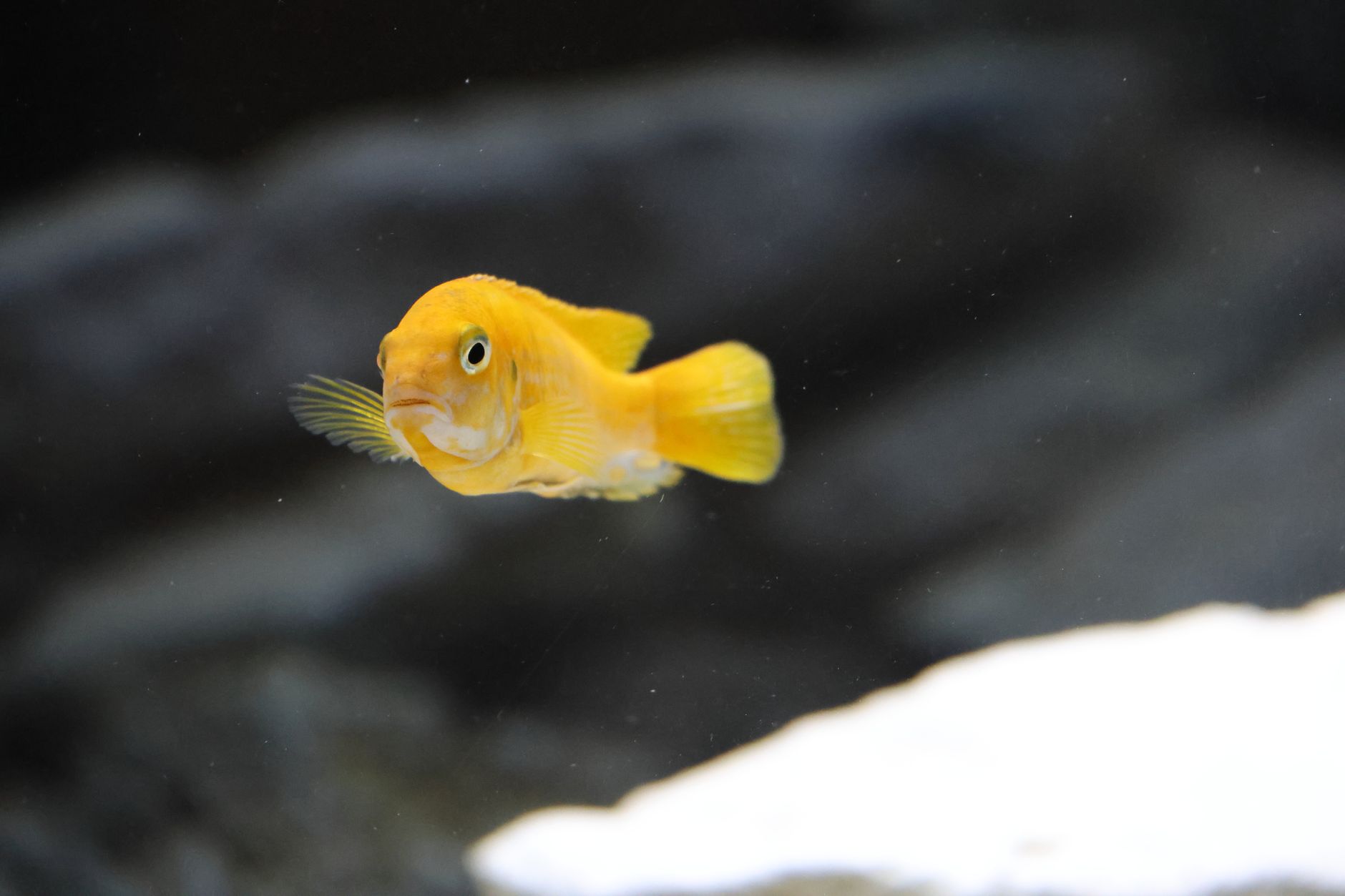
Electric yellow cichlids are one of the most recognizable mbuna from Lake Malawi. Their scientific name is Labidochromis caeruleus, but most fishkeepers call them yellow labs. They have bright yellow bodies and black dorsal fin accents. They are relatively peaceful for mbuna, but they still need proper space and structure. According to Aquarium Co-Op, mbuna cichlids do best in groups with lots of rockwork. This guide covers how to set up the right tank. If you are comparing species, see the peacock cichlid care guide for another Malawi option.
The electric yellow cichlid reaches about 4 to 5 inches as an adult. It is not huge, but it is active and territorial. A small tank leads to stress and fighting. I recommend a 55-gallon tank as the minimum for a small group. The water should be hard and alkaline. Specific ranges are a temperature of 76-82°F and a pH of 7.8-8.6. These are key data points for long-term health. The aquarium nitrogen cycle also matters because messy cichlids produce plenty of waste.
Diet is not complicated, but it is easy to get wrong. Electric yellows are omnivores that lean toward plant matter. They need spirulina, algae, and some protein. Too much protein can lead to Malawi bloat. Aqueon suggests feeding mbuna a varied diet with vegetable-based foods. This is a practical reference for new owners. We will cover specific foods later in the guide. The right diet supports color and reduces aggression.
This 2026 care guide walks through tank setup, filtration, cycling, feeding, tank mates, hardscape, and health. You will learn the exact steps I use for electric yellow cichlid tanks. The goal is a stable, active mbuna community. Each step includes mistakes to avoid. Let’s start with the tank itself.
What You’ll Need
- 55-gallon or larger aquarium
- Canister or high-capacity HOB filter
- Adjustable heater and thermometer
- Aragonite sand and smooth rocks
- Liquid test kit
- Spirulina flakes or cichlid pellets
How Do You Care for Electric Yellow Cichlids?
- Set up a 55-gallon or larger tank with rockwork and sand
Electric yellow cichlids may not grow huge, but they need horizontal swimming space and territories. A 55-gallon tank is the minimum I recommend for a group of six. The tank should be at least 48 inches long. A 75-gallon tank is even better if you plan to add other mbuna. Smaller tanks increase fighting and stunt growth. Keep the footprint wide, not tall.
Use a sand substrate. Aragonite sand is ideal because it helps buffer pH and hardness. Add plenty of rocks to create caves, crevices, and line-of-sight breaks. Each fish needs a place to retreat. Without hiding spots, a dominant male may bully the rest. Build structures securely so they do not collapse when fish dig.
Place rocks directly on the bottom before adding sand. This prevents toppling if fish dig underneath. Use smooth limestone or Texas holey rock. Avoid sharp edges that can scrape cichlids. You can also add ceramic caves. The goal is many visual barriers. This step connects to filtration because more rockwork means more surfaces for bacteria.

- Install powerful filtration and a stable heater
These fish eat a lot and produce waste. Filtration should turn over the tank volume 8 to 10 times per hour. For a 55-gallon tank, that means a filter rated for 440 to 550 gallons per hour. A canister filter works well for mbuna tanks. A hang-on-back filter can work on smaller setups, but it may not be enough. See the best aquarium filters 2026 guide for specific options.
Heat is next. Keep the water between 76°F and 82°F. Use an adjustable heater and a separate thermometer. In cold rooms, two smaller heaters can provide redundancy. Stable temperature reduces stress and supports immune function.
Water chemistry should be hard and alkaline. Aim for pH 7.8-8.6 and general hardness of 10-20 dGH. If your tap water is soft, add a cichlid salt mix. I use Seachem Cichlid Lake Salt to raise hardness. Do not use marine salt. It is not the same.
Keep the filter media simple. Mechanical pads catch debris, and biological media hold nitrifying bacteria. Clean mechanical media in old tank water, not tap water. This protects the bacteria.
- Cycle the tank before adding fish and test the water weekly
Never add electric yellow cichlids to an uncycled tank. These fish are sensitive to ammonia and nitrite. The aquarium nitrogen cycle explains how bacteria convert waste. You can cycle a new tank with pure ammonia or fish food. It usually takes 4 to 6 weeks. Rushing this step causes new tank syndrome.
To start, add ammonia to 2 ppm daily until nitrite appears. Then wait for nitrate to rise and ammonia and nitrite to read zero. Use a liquid test kit, not strips. I recommend the API Master Test Kit. Liquid tests are more accurate than strips.
After cycling, test weekly for ammonia, nitrite, nitrate, pH, and hardness. Mbuna tanks tend to accumulate nitrate. Change 30 to 50 percent of the water each week. Use a gravel vacuum to remove uneaten food.
If ammonia or nitrite ever reads above zero, do an immediate water change. Also cut back feeding for a day or two. A cycled tank plus regular maintenance keeps the fish colorful and active. This step directly supports the diet step because uneaten food rots and spikes ammonia.
- Feed a vegetable-forward diet with protein in moderation
Electric yellow cichlids need more plant matter than many people realize. In Lake Malawi, they graze on algae and small invertebrates. A good staple is a high-quality spirulina flake or pellet. You can also feed blanched zucchini, spinach, and algae wafers. Protein should be a smaller part of the diet. Too much protein is a common cause of Malawi bloat.
I feed a small amount two or three times per day. Each feeding should be gone in about 30 seconds. Overfeeding is one of the biggest mistakes with mbuna. Uneaten food breaks down into ammonia. Use a sinking pellet or flake because these fish feed in the water column and on rocks. A product like Hikari Cichlid Excel is a decent pellet for herbivorous cichlids.
Avoid bloodworms, beef heart, and other meaty foods as staples. They are too rich for electric yellows. You can offer a tiny amount of frozen brine shrimp or daphnia once a week as a treat. Still, the base of the diet should be vegetable based. This reduces bloat and keeps the yellow color bright.
Some keepers also add live plants, but electric yellows may nibble them. If you want plants, choose tough species like Anubias. The best aquarium plants for beginners guide has options that can handle cichlids. Feed vegetables before adding plants so fish are less likely to destroy them.
- Choose compatible tank mates and manage aggression
Electric yellow cichlids are less aggressive than many mbuna, but they still need careful stocking. In a species-only tank, keep one male with three or four females. This spreads out the male’s attention. If you add other mbuna, choose fish with similar size and temperament. Avoid very aggressive mbuna that may harass yellow labs.
Good tank mate options include other Labidochromis, some Pseudotropheus, and peaceful haplochromines. Many keepers mix yellow labs with peacock cichlids in a 75-gallon or larger tank. Peacocks are also Malawi cichlids but less aggressive than most mbuna. Make sure there are enough rocks for separate territories.
Avoid South American cichlids like convict cichlids or angelfish. They need different water chemistry and may fight. Small community fish such as neon tetras or guppies are food or targets. Do not keep electric yellows with soft-water fish. The pH and hardness needs are too different.
Add all mbuna at once if possible. This prevents established fish from attacking newcomers. If you must add later, rearrange the rockwork before introducing new fish. This disrupts old territories and gives everyone a fresh start. Watch for chasing that lasts more than a few minutes. You may need to remove a bully.
- Create a rock-heavy aquascape with minimal plants
Rockwork is not just decoration for electric yellow cichlids. It provides shelter, breeding sites, and visual barriers. Use limestone, holey rock, or slate. These rocks also buffer the water toward a higher pH. Build caves that are large enough for a 4-5 inch fish to enter. Avoid unstable stacks.
Place several rock piles along the back and sides. Leave open swimming space in the front. The fish will defend small territories around the rocks. More caves usually means less aggression. If every fish has a spot to hide, the dominant male cannot chase constantly. You can also add PVC pipes for extra caves, but rocks look better.
Plants are optional. Electric yellows may eat soft plants. Tough plants like Anubias and Java fern can work if attached to rocks. The best aquarium lighting 2026 guide can help you grow these plants. Do not expect a lush planted tank. This is a rock-focused biotope. Aqueon notes that mbuna aquariums often skip plants because the fish graze on algae.
If you want more algae growth, increase lighting slightly. Electric yellows will graze on it. Keep the glass clean, but do not scrub every rock surface. The algae is a natural food source. This step sets up the next one, because good hardscape makes maintenance and health easier.

- Watch for health issues, breed them, and maintain long-term stability
Electric yellow cichlids are hardy when water is stable. The most common health issue is Malawi bloat. It often follows a high-protein diet, stress, or poor water quality. Signs include a swollen belly, loss of appetite, and rapid breathing. If you see these signs, stop feeding for a day and improve water quality. Some keepers treat with metronidazole in a separate tank.
Ich is another possible problem, especially if temperature drops. Small white spots appear on the fins and body. Raise the temperature slowly to 82°F and use an ich treatment. The how to treat ich in aquarium guide has a full plan. Quarantine new fish for two weeks before adding them to the main tank. This prevents many diseases.
Breeding electric yellows is straightforward. They are maternal mouthbrooders. The female lays eggs on a flat rock, the male fertilizes them, and she picks up the eggs in her mouth. She holds them for about 18 to 21 days. Provide caves and a flat stone for spawning. Feed the female well before breeding.
Fry are relatively large when released. They can eat crushed flake and baby brine shrimp. If you want to raise many fry, move the female to a separate tank before she releases them. In a community mbuna tank, some fry survive in the rocks. Regular water changes of 30-50% weekly keep the whole system healthier.
Red Flags & Warnings
- 🚨 Never keep electric yellow cichlids in a tank under 55 gallons. A small tank leads to extreme aggression and stunted growth.
- 🚨 Do not feed meaty foods like bloodworms or beef heart as staples. This raises the risk of Malawi bloat.
- 🚨 Do not add them to an uncycled tank. Ammonia and nitrite spikes kill cichlids quickly.
- 🚨 Avoid mixing electric yellows with South American cichlids or small community fish. Water chemistry and aggression create constant stress.
- 🚨 Use only smooth rocks and secure all structures. Cichlids dig, and collapsing rockwork can injure or kill fish.
- 🚨 Quarantine new fish for at least two weeks. One sick fish can infect an entire mbuna tank.
Frequently Asked Questions
What size tank do electric yellow cichlids need?
A 55-gallon tank is the minimum for a group of six. A 75-gallon or larger tank is better if you add other mbuna. Adults reach 4 to 5 inches and need rocky territories.
Are electric yellow cichlids good for beginners?
They are one of the easier African cichlids if you can keep hard, alkaline water. They are hardy but still need stable parameters and a large tank. Start with a cycled 55-gallon setup.
What do electric yellow cichlids eat?
Feed vegetable-based foods like spirulina flakes, algae wafers, and high-quality cichlid pellets. You can add small amounts of protein. Avoid meaty foods as daily staples.
Can electric yellow cichlids live with angelfish?
No. Angelfish prefer soft, warm water and are too peaceful. Electric yellows need hard water and may stress or attack them.
How many electric yellow cichlids should be kept together?
Keep at least six in a group. Use one male to three or four females to reduce harassment. In a 55-gallon tank, start with six juveniles.
How do you breed electric yellow cichlids?
They are maternal mouthbrooders. The female lays eggs, picks them up, and carries them for 18 to 21 days. Provide a flat rock and caves, then separate fry if you want high survival.
What Should You Remember?
- Tank size: Keep a single group in at least a 55-gallon tank. A 75-gallon is better.
- Water chemistry: Aim for pH 7.8-8.6 and 76-82°F. Use aragonite sand or limestone to buffer.
- Diet: Feed spirulina and vegetable-based foods first. Limit protein to avoid Malawi bloat.
- Tank mates: Pair with other mbuna or peaceful Malawi cichlids. Avoid soft-water community fish.
- Filtration: Provide 8-10 times tank volume in gallons per hour. Over-filter to handle waste.
- Rockwork: Build caves and line-of-sight breaks. This reduces aggression and gives territories.
- Maintenance: Test weekly and change 30-50% of the water. Stable parameters keep them healthy.
This article is for general information only and is not a substitute for professional veterinary or aquarium specialist advice. Always research the specific needs of your fish and consult an expert before making care decisions.