Most people who walk into a fish store for the first time are not shopping for a filter. They are shopping for color. A 10 or 20 gallon tank sitting on a kitchen counter only looks finished once something bright is moving inside it, and that is why small colorful freshwater fish dominate the beginner market. The catch is that color and easy care do not always travel together. Some of the brightest nano fish on the shelf are also the most sensitive to swings in temperature, pH, and waste buildup. Others look stunning in the store system and turn dull the moment they land in water that does not suit them. Getting this right starts with the aquarium nitrogen cycle guide, because no color survives an uncycled filter.
What follows is a shortlist of five freshwater species that stay under four inches, show real color under ordinary aquarium lighting, and fit in tanks that most people can actually place in a living room. I picked them on four criteria: adult size, minimum tank footprint, tolerance of typical tap water, and how the fish behaves toward tankmates. Every pick below is a species with decades of hobby history behind it, which matters when you are learning. A fish bred in captivity for fifty generations is far more forgiving than a wild caught rarity. Aqueon’s freshwater care reference covers the general water chemistry ranges these fish expect.
Equipment matters as much as the fish itself. A 20 gallon tank with an adjustable heater set to 78 degrees, a sponge filter, and a basic LED strip will keep every species on this list comfortable. What actually kills small fish is not tank volume, it is the temperature swing between night and day when a heater is undersized, or the ammonia spike that follows rinsing a filter sponge under tap water. Pick up a reliable aquarium heater and a sponge or hang on back filter before you buy livestock, not after. Both cost less than replacing a school of fish.
One more point before the list. Small colorful fish are rarely sold as singles for good reason. Neon tetras, harlequin rasboras, and cherry barbs are shoaling species, and a lone specimen hides, loses color, and often dies early. Buy six to ten of the same species and you get a completely different animal: fish that swim in the open, feed aggressively, and show the colors you paid for. Industry survey data in the 2026 fishkeeping statistics report shows freshwater community tanks remain the most common setup in the hobby, which means nearly every beginner faces the same stocking decision.
How Do the Top Options Compare?
| Fish | Best For | Min Tank | Temp | pH | Adult Size | First Gear |
|---|---|---|---|---|---|---|
| Neon Tetra | Beginner color | 20 gal | 72-78°F | 6.0-7.0 | 1.5 in | Test kit Check price |
| Guppy | Nonstop color and easy breeding | 10 gal | 72-82°F | 6.8-7.8 | 1.5-2.5 in | Heater Check price |
| Harlequin Rasbora | Tight schooling behavior | 20 gal | 72-77°F | 6.0-7.5 | 2 in | Sponge filter Check price |
| Cherry Barb | True red accent in a planted tank | 20 gal | 73-81°F | 6.0-7.5 | 2 in | LED light Check price |
| Dwarf Gourami | Single centerpiece fish | 10 gal | 72-82°F | 6.0-7.5 | 3.5 in | Pellet food Check price |
Tank sizes listed are minimums for a group of six to ten fish of the same species, not for a single specimen. Temperature and pH ranges are stable targets, not numbers to chase every day, and a steady 76°F matters more than hitting an exact figure. Every link on this page points to equipment or consumables, never livestock. Quarantine new fish for two to four weeks before adding them to a display tank.
1. Neon Tetra , Best for Beginner Color
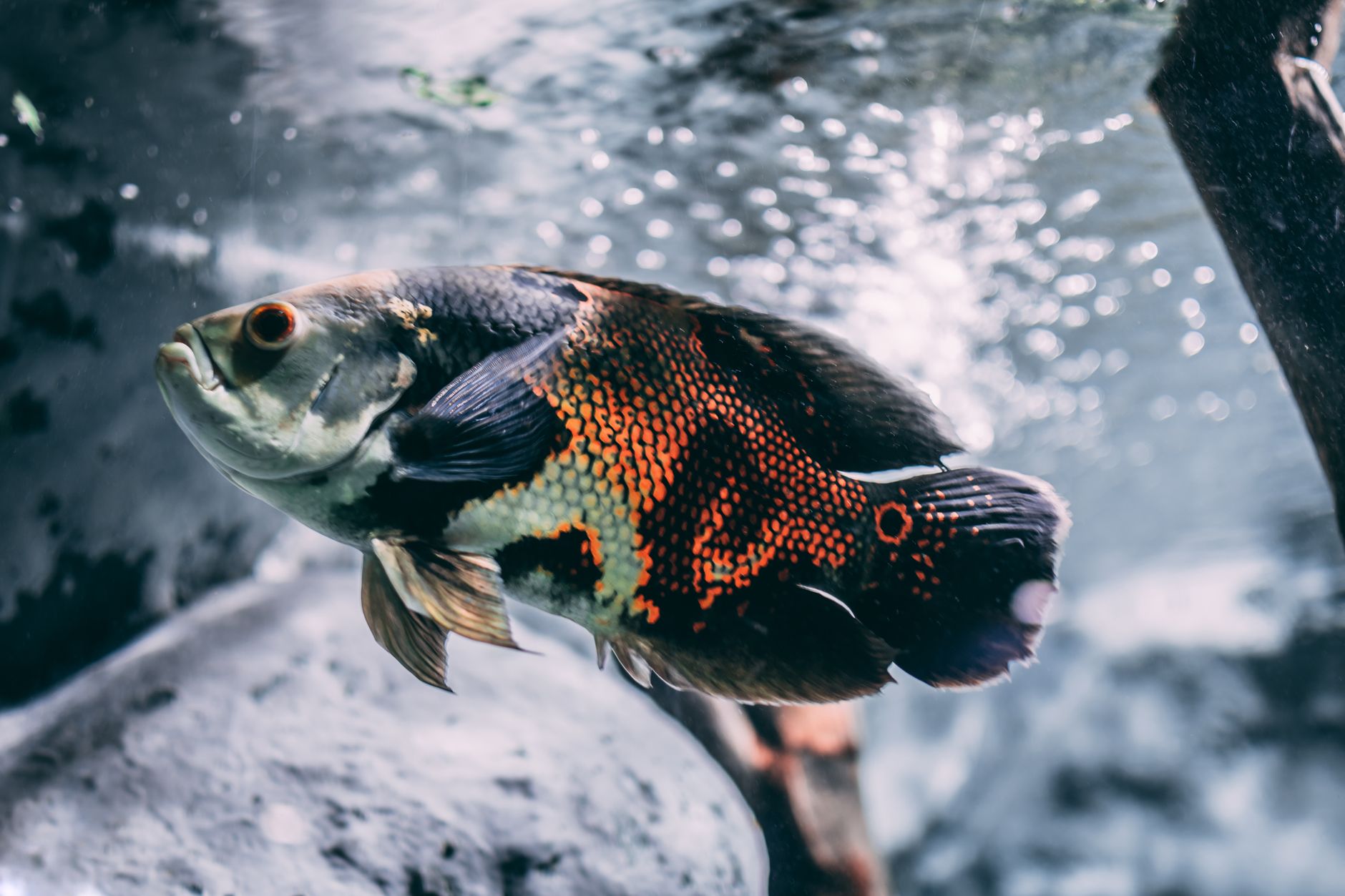
Neon tetras are the default first colorful fish for a reason. They stay around 1.5 inches, they eat almost anything small, and a school of eight moving against a dark background is still one of the best looking things you can put in a 20 gallon tank. Water chemistry is forgiving as long as it stays soft and slightly acidic: 72 to 78°F, pH 6.0 to 7.0, and general hardness under about 10 dGH. Match those numbers and a school will live five to eight years, longer than most beginners expect. The full breakdown sits in our neon tetra care guide.
The species is not bulletproof. Neon tetras fold fast when ammonia or nitrite shows up, and they carry a risk that almost no other common fish has: neon tetra disease, a wasting illness with no cure that spreads through a tank once one fish is infected. That single fact is the strongest argument for quarantining new arrivals and for paying a little more at a store that keeps its systems clean instead of grabbing the cheapest bag on the shelf.
Buy six at an absolute minimum and ten if the tank allows it. A 20 gallon long beats a 10 gallon here because the extra length lets the school swim in a straight line instead of circling. Keep them with other peaceful midwater fish, and avoid anything with a mouth wide enough to swallow a half inch fish. Weekly testing with a liquid kit is not optional with tetras. Check the API Freshwater Master Test Kit on Amazon if you do not already own one.
Key strengths:
- ✅ Stays under 2 inches, so a 20 gallon tank holds a proper school of ten.
- ✅ Gets along with nearly every peaceful community tankmate.
- ✅ Eats flake, micro pellets, and frozen food without any fuss.
- ✅ Lives five years or more in stable water, which is long for a fish this small.
- ✅ Widely available and inexpensive, so mistakes are cheap to correct.
- ❌ Prone to neon tetra disease, which has no cure and spreads through a tank.
- ❌ Color fades badly in hard, alkaline water and under bright white light.
- ❌ Hides and looks washed out in groups smaller than six.
Who it’s for: The keeper setting up a first 20 gallon community tank who wants maximum color for minimum effort.
2. Guppy , Best for Nonstop Color and Easy Breeding
If you want a tank that never looks still, guppies deliver more color per gallon than anything else on this list. Males run about 1.5 inches and come in every pattern the hobby has bred: red mosaic, blue grass, yellow cobra, half black. Females are bigger, duller, and often the reason a new keeper wonders why half the fish in the bag are gray. Water is where guppies separate themselves from tetras. They want 72 to 82°F, pH 6.8 to 7.8, and moderately hard water, which is exactly what comes out of most household taps. No peat filtration and no reverse osmosis unit required. Our guppy care guide goes deeper on sexing and line breeding.
They also breed constantly. A female stores sperm from a single mating and can drop fry every 28 days for months afterward. That is wonderful in a child’s tank and annoying in a display tank where you wanted a fixed number of fish. Plan for it. Either keep males only, or accept that you will be rehoming fry on a regular basis.
A 10 gallon tank holds a trio of one male and two females, and guppies do not need groups of six the way tetras do. Temperature stability matters more than tank volume. A cheap preset heater that swings four degrees overnight is what causes clamped fins and ich outbreaks in guppy tanks. Check the Eheim Jager aquarium heater on Amazon if your current heater has no adjustable dial.
Key strengths:
- ✅ Highest color variety of any freshwater fish this small, with hundreds of named strains.
- ✅ Thrives in ordinary hard tap water with no special treatment.
- ✅ Breeds without help, and the fry are easy to raise to adulthood.
- ✅ Active at every level of the tank, not just the middle.
- ✅ Cheap enough to stock a whole tank for the price of one fancy fish.
- ❌ Females are larger and mostly gray, which surprises buyers of mixed groups.
- ❌ Population explodes fast unless you separate the sexes or rehome fry.
- ❌ Heavily inbred show strains are weaker and shorter lived than plain guppies.
Who it’s for: Anyone who wants a constantly active, constantly breeding tank and does not mind managing fry.
3. Harlequin Rasbora , Best Schooling Fish for a Calm Community
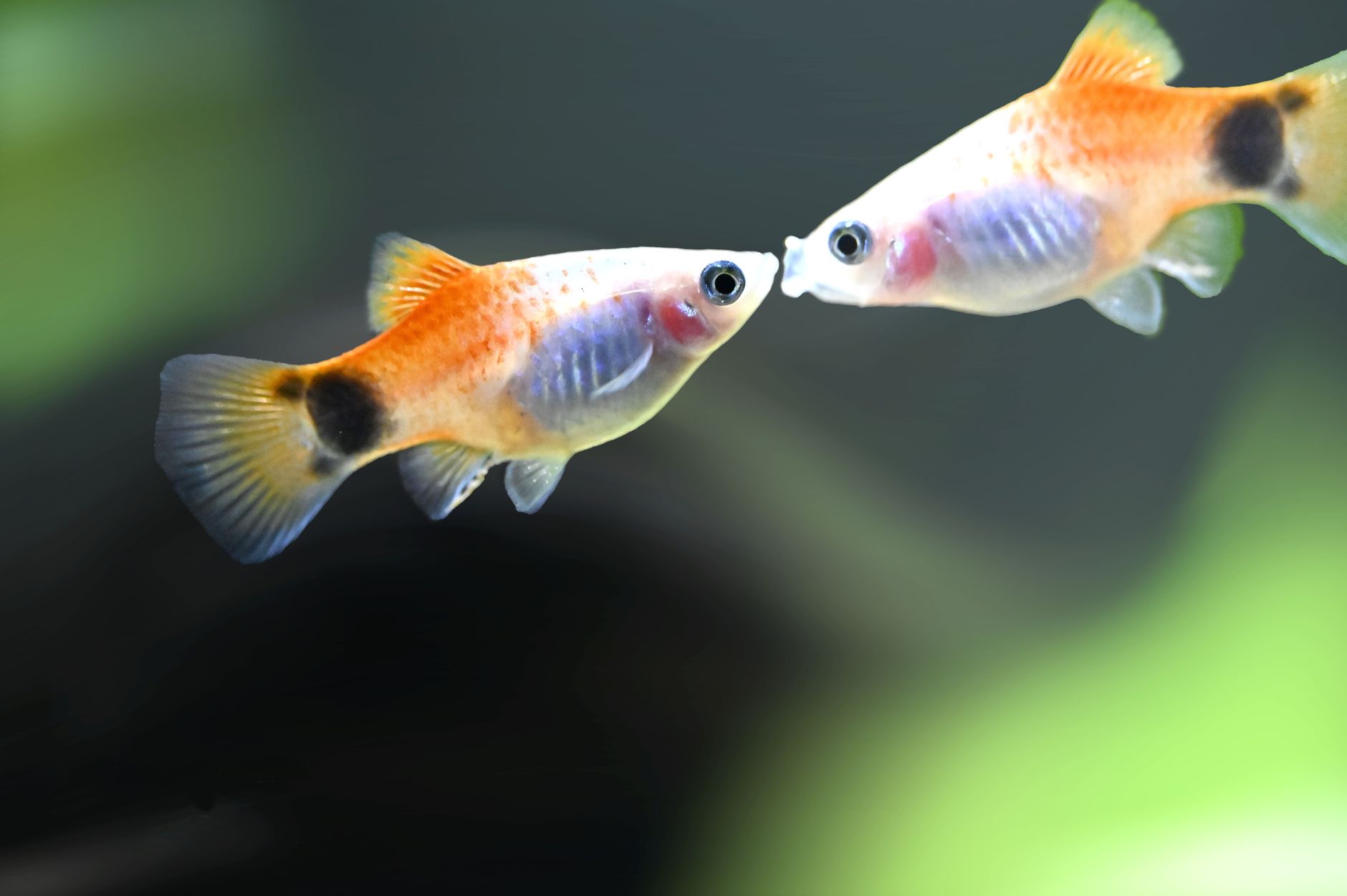
Harlequin rasboras are the fish I recommend when somebody wants a school that actually moves as one. Ten of them will swim in formation across the middle of a 20 gallon long and turn together, and that behavior is what makes a planted tank look alive rather than decorated. They reach about 2 inches, want 72 to 77°F, pH 6.0 to 7.5, and softer water than guppies. The black wedge marking that gives the fish its name is described in Seriously Fish’s species profile, along with notes on the slow forest streams they come from.
The copper orange body reads as a quieter kind of color than a neon tetra, and it holds up better under inexpensive LED lighting. Harlequins also tolerate cooler water than most tropical fish on this list, which makes them a good fit for a tank sitting at room temperature in a cool house. They are one of the few schooling fish that looks good in a 20 gallon without a heater running hard all winter.
Filtration should match the habitat. These fish come from sluggish water, so a sponge filter driven by an air pump suits them better than a high flow canister that pushes them around. Check the Aquarium Co-Op sponge filter on Amazon and pair it with driftwood and floating plants to soften the light from above. A group of eight to ten in a 20 gallon long is the sweet spot; fewer than that and the school breaks into nervous individuals.
Key strengths:
- ✅ Tight schooling behavior that looks better than loose shoaling species.
- ✅ Comfortable at 72°F, so it handles cooler rooms without stress.
- ✅ Peaceful with everything except very small shrimp.
- ✅ Color deepens with age in soft, tannin stained water.
- ✅ Hardy and long lived, often reaching five years in a stable tank.
- ❌ Needs a group of eight or more before it schools properly.
- ❌ The orange body washes out under very bright white lighting.
- ❌ Can jump, so an open top tank is a genuine risk.
Who it’s for: Planted tank keepers who want one species that swims as a group rather than as scattered individuals.
4. Cherry Barb , Best True Red Accent in a Planted Tank
Male cherry barbs are the only fish here that turns genuinely red. Not orange, not pink, red. A conditioned male in soft water goes deep cherry red across the whole body, while females stay tan gold with a dark horizontal stripe. They max out around 2 inches, want 73 to 81°F, pH 6.0 to 7.5, and adapt to a wide range of hardness, which is unusual for a fish that colors up this well. Males in a group of eight will also spar constantly, flaring and circling without doing real damage.
Barbs have a reputation for nipping fins. Cherry barbs are the exception. They are among the calmest fish in the genus and leave long finned tankmates alone, unlike tiger barbs. The trade off is shyness. A group of fewer than six will spend its first weeks behind the plants, and a lone cherry barb hides permanently and never colors up. Buy eight and give them floating cover and the behavior changes within days.
A 20 gallon long with dark substrate and dense stem plants is close to ideal. Males color best when they can see females and when the light is not blinding. Feed a mix of flake, frozen bloodworms, and a spirulina based food to keep the red deep. Cherry barbs are also one of the few small colorful fish that graze soft algae films off leaves and wood, which helps a planted tank look tidy between water changes.
Key strengths:
- ✅ Males show true red, a color few freshwater fish this size produce.
- ✅ Far less nippy than tiger barbs and safe with most long finned tankmates.
- ✅ Handles a wide temperature and hardness range without complaint.
- ✅ Works in a 20 gallon tank with a group of eight.
- ✅ Grazes soft algae films off plants and wood.
- ❌ Females are drab and are usually sold larger than males.
- ❌ Shy for the first couple of weeks and hides without a proper group.
- ❌ Will eat shrimp fry and very small fry from other species.
Who it’s for: Keepers who want one genuinely red fish in a planted 20 gallon and are willing to buy a full group.
5. Dwarf Gourami , Best Single Centerpiece Fish in a Small Tank
Dwarf gouramis are the only fish on this list that works as a centerpiece rather than a school. A single male reaches about 3.5 inches, has a thick body, and comes in powder blue, flame red, or the wild red and teal striped form. They want 72 to 82°F and pH 6.0 to 7.5, and they do best in a calm tank with floating plants overhead. Aquarium Co-Op’s fishkeeping guides are a solid reference for gourami feeding and behavior.
Now the honest part. Dwarf gourami iridovirus is widespread in commercially farmed stock, and there is no treatment for it. Infected fish often look fine for weeks, then stop eating, develop a sunken belly, and die. Buying from a local breeder instead of a mass market chain lowers the risk but does not remove it. Two males in the same tank will also fight, sometimes badly enough to cause open wounds, so plan for exactly one male or a single female group.
One fish in a 10 gallon works. A 20 gallon is better, especially with a peaceful bottom dweller like a group of corydoras catfish working the substrate below. Gouramis are labyrinth fish and gulp air at the surface, so leave a gap between the water line and the lid and keep the room warm. They also learn to recognize the person who feeds them, which is rare in a fish this small, and they will take food directly from your fingers once settled.
Key strengths:
- ✅ Large bodied centerpiece color in a tank too small for angelfish or discus.
- ✅ Breathes air at the surface, so it tolerates low oxygen water.
- ✅ Learns to recognize its keeper and feeds from the surface.
- ✅ Colors up well under floating plants and dim lighting.
- ✅ A single fish is enough, so a 10 gallon tank is workable.
- ❌ Dwarf gourami iridovirus is common in farmed stock and always fatal.
- ❌ Two males cannot share a tank without fighting.
- ❌ Often finicky at first and slow to accept dry pellets.
Who it’s for: A keeper who wants one showpiece fish in a 10 or 20 gallon planted setup instead of a school.
Frequently Asked Questions
What is the best small colorful fish for a beginner?
A guppy is the safest first choice because it thrives in ordinary tap water and shows full color immediately. Neon tetras are the better pick if your tap water is soft and slightly acidic and you want a schooling display instead of a breeding colony.
How many small fish can I keep in a 10 gallon tank?
A 10 gallon tank comfortably holds six small schooling fish or one male guppy trio. For neon tetras or harlequin rasboras, step up to a 20 gallon long so a group of eight to ten fish has room to swim in a straight line.
Why are my neon tetras losing color?
Color loss almost always points to stress from water quality, the wrong temperature, or too small a group. Test ammonia and nitrite, confirm the tank sits between 72 and 78 degrees, and make sure you have at least six tetras together.
Do small tropical fish need a heater?
Yes, if the room drops below about 72 degrees at night. Every species in this list wants a stable 74 to 78 degrees, and an adjustable heater holds that number better than a preset unit.
Can I keep guppies and neon tetras together?
Sometimes, but the water has to sit in the middle of both ranges. Soft acidic water suits tetras while stressing guppies over time, and hard alkaline water dulls tetra color. It is easier to pick one and build around it.
What water temperature is best for a community tank of small colorful fish?
Set the heater to 76 degrees. That falls inside the comfortable band for neon tetras, guppies, harlequin rasboras, cherry barbs, and dwarf gouramis, and it gives the tank room for small swings without stressing any of them.
What Should You Remember?
- Stock in groups, not singles: neon tetras, harlequin rasboras, and cherry barbs hide and wash out when kept alone.
- Match water to the fish first: guppies want hard water at pH 6.8 to 7.8 while tetras and rasboras want soft water below pH 7.0.
- Size the tank to the group: a 20 gallon long fits ten small schooling fish, while a 10 gallon fits a guppy trio or one dwarf gourami.
- Quarantine every new arrival for two to four weeks, especially tetras, which can carry incurable neon tetra disease.
- Buy gear before livestock: an adjustable heater, a sponge or hang on back filter, and a liquid test kit come first.
- Feed for pigment: frozen and live foods keep red and orange color strong in cherry barbs and dwarf gouramis.
- Skip giant tankmates if you want a calm tank, since anything with a mouth wide enough to swallow a one inch fish will.
This article is for general information only and is not a substitute for professional veterinary or aquarium specialist advice. Always research the specific needs of your fish and consult an expert before making care decisions.