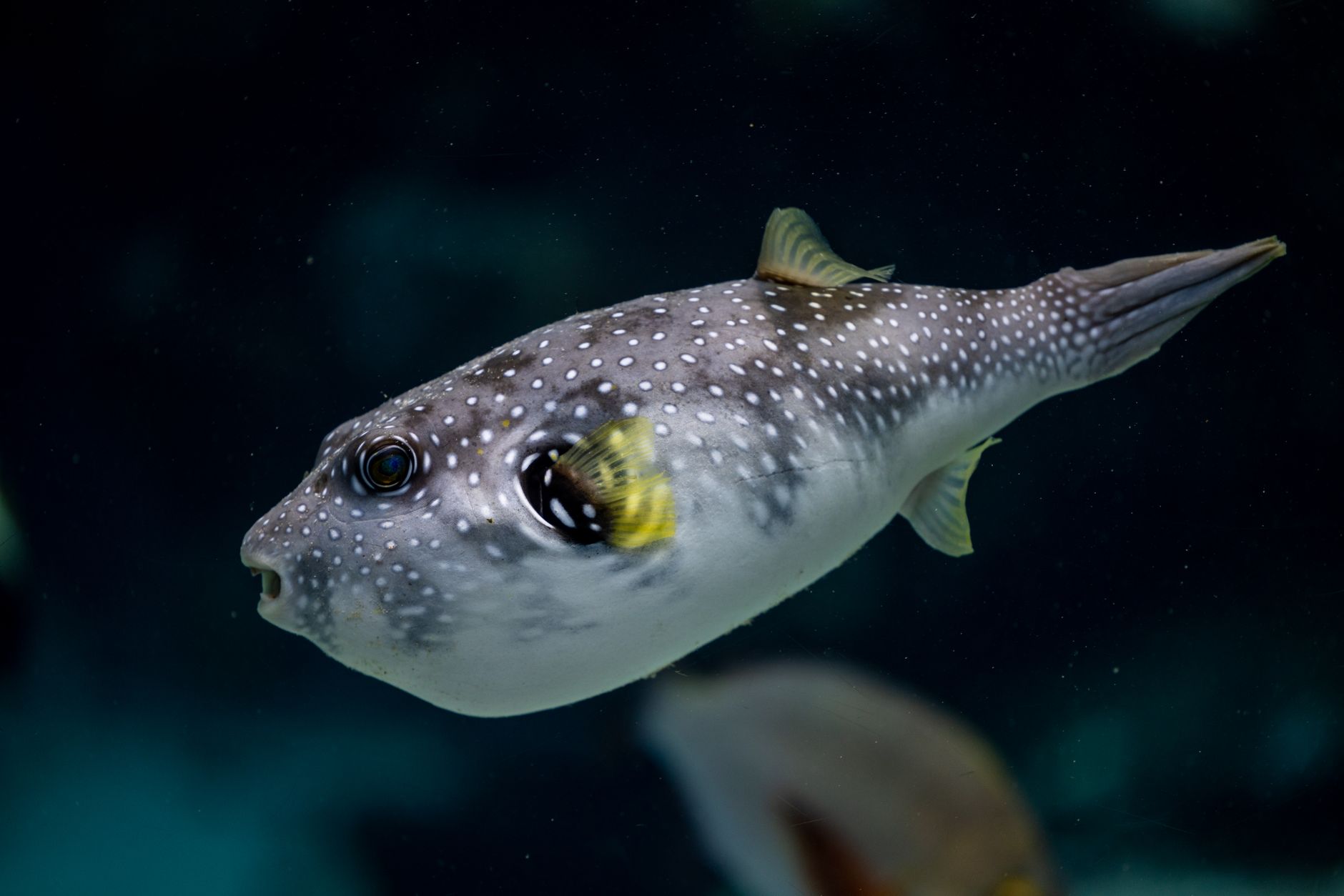
Green spotted puffers (Dichotomyctere nigroviridis, formerly Tetraodon nigroviridis) look adorable with their bright green spots and expressive eyes. But they are not beginner fish, despite often being sold as freshwater puffers. This guide walks through the exact setup, feeding, and compatibility choices that keep one thriving in 2026. Aqueon lists a 30-gallon minimum, which is a helpful starting point but not the final answer for most keepers.
The biggest mistake keepers make is treating this species as a small community fish. A green spotted puffer reaches about six inches and becomes more territorial with age. It also needs brackish water salinity as it matures. If you want a planted South American tank, check best beginner fish tanks first. This fish has a very different set of requirements.
Before bringing one home, understand the nitrogen cycle. A puffer produces heavy waste and is sensitive to ammonia and nitrite. A fully cycled filter is not optional. Review aquarium nitrogen cycle explained before setup. You also need to accept that feeding a green spotted puffer is not about flake food. Puffers need snails, clams, and other hard-shelled foods to wear down ever-growing teeth.
This article covers tank size, water parameters, diet, compatibility, quarantine, and ongoing maintenance. We include links to tested products and trustworthy sources like Aquarium Co-Op. Plan for a species-specific brackish tank, not a mixed reef or a typical freshwater community. The reward is a highly interactive fish with real personality. You will learn exactly how to set up a tank that supports a healthy, active puffer for years.
What You’ll Need
- 30-gallon or larger aquarium, 55 gallons recommended
- Marine salt mix, not aquarium salt
- Refractometer or hydrometer
- Heater rated for tank size
- Canister or hang-on-back filter rated for double tank volume
- API Master Test Kit or similar
- Snail breeding tank
- Aquarium-safe decor and fine substrate
How Do You Care for Green Spotted Puffer Fish (2026 Guide)?
- Set Up a Brackish Aquarium from Day One
Green spotted puffers are born in freshwater or low brackish environments and move toward higher salinity as they grow. Juveniles under two inches can tolerate fresh water for a short time, but adults need brackish water. Set up the tank with marine salt mix, not aquarium salt, because marine salt contains trace elements that aquarium salt lacks. Start at a specific gravity around 1.005 and slowly raise it as the fish grows.
A hydrometer or refractometer is essential. Aquarium Co-Op recommends monitoring salinity with a refractometer because swing-arm hydrometers can be inaccurate. Dissolve marine salt in a bucket before adding it to the tank. Never pour dry salt directly into an occupied aquarium. Weekly water changes help keep salinity stable.
Decorate with driftwood, smooth rocks, and silk or plastic plants. Green spotted puffers explore constantly and may uproot live plants. If you want live plants, use hardy brackish options like Java fern, but expect some damage. Leave open swimming space because this species is active.
This brackish setup connects directly to water changes. Marine salt mix also buffers pH and alkalinity. Before adding the puffer, cycle the filter fully. See how to cycle a fish tank for a step-by-step process. Once salinity is stable, move on to the tank size question.

- Choose a 30-Gallon Minimum Tank, Then Go Bigger
A 30-gallon tank is the absolute minimum for one green spotted puffer according to Aqueon. But adult fish use every inch. A 55-gallon or 75-gallon tank gives better territory and dilutes waste. These fish reach around six inches and are powerful swimmers.
Use a longer tank rather than a tall one. A 36-inch or 48-inch footprint gives the puffer a straight swimming lane. Overcrowding triggers stress and aggression. A single puffer in a 30-gallon is possible with excellent filtration, but upgrading later is common.
Substrate should be sand or fine gravel. Puffers sometimes rest on the bottom and may dig slightly. Sharp or coarse gravel can scratch their skin. Keep decor minimal enough to allow easy cleaning.
This step matters because adult size is often underestimated. A tiny one-inch puffer from the store grows quickly. If you have limited space, consider the smaller pea puffer instead. See pea puffer care guide for a true freshwater dwarf option that stays much smaller.
- Maintain Water Parameters and Heavy Filtration
Target water temperature 78-82°F (25.5-27.8°C), pH 7.5-8.5, and moderate to high alkalinity. Use a reliable heater sized for your tank. Because brackish tanks run warmer, a quality heater is non-negotiable. Check best aquarium heaters 2026 if you are shopping.
Green spotted puffers are messy eaters and high waste producers. Use a filter rated for at least double the tank volume. A canister filter or a sump works well. I have had good results with the Fluval FX4 on 55-gallon setups. Check the Fluval FX4 on Amazon.
Test ammonia, nitrite, nitrate, pH, and salinity weekly. The API Master Test Kit is a solid choice for freshwater and brackish basics. Check the API Master Test Kit on Amazon. Keep nitrate below 20 ppm with water changes.
Do 30-50% water changes weekly or every two weeks depending on nitrate. Pre-mix new saltwater to the same specific gravity and temperature. Sudden salinity swings stress the puffer. Match pH as closely as possible. Heavy filtration plus consistent water changes keeps this messy species healthy.

- Feed a Shell-Heavy Meat Diet
Puffer teeth grow continuously. Without hard foods, the beak can overgrow and prevent eating. Feed snails, small clams, mussels, crab legs, and krill. Ramshorn snails and pond snails are excellent. Frozen foods alone are often too soft.
Offer food every day for juveniles and every other day for adults. Vary the menu with thawed shrimp, bloodworms, and marine fish flesh. Use tongs to avoid accidental bites. Green spotted puffers learn to associate you with food and may splash during feeding.
Avoid feeder goldfish and rosy reds. They are nutritionally poor and can introduce disease. Do not rely on flakes or pellets as the main diet. Some keepers use sinking carnivore pellets as a supplement, but shells must be the core.
Heavy feeding means you will need more frequent water changes. Review how often to change aquarium water to keep nitrates low. If you cannot supply live snails, start a small snail breeding tank. You can also offer frozen clams on the half shell. The puffer scrapes the shell and meat, which helps trim teeth.
- Manage Aggression and Choose Tank Mates Carefully
Green spotted puffers are aggressive and territorial. The safest option is a species-only tank with one puffer. Many long-term keepers report that adding any tank mate is a gamble. A puffer that tolerates a fish for months may suddenly attack.
If you attempt tank mates, use a large tank of 75 gallons or more. Fast, tough brackish fish like monos, scats, or archerfish sometimes work. Avoid slow fish, long-finned fish, and small fish. The puffer will nip fins and may kill fish overnight.
Do not keep with other puffers unless the tank is very large and heavily decorated. Even then, aggression often ends badly. If you want a puffer community, consider multiple tanks instead. A 75-gallon setup with tank mates requires serious filtration. Check best aquarium filters 2026 before mixing species.
Always have a backup plan. A separate 20-gallon or larger hospital tank can save a tank mate if fighting starts. Observe daily. This step ties directly to quarantine and safe introduction in the next step.
- Quarantine and Introduce Your Puffer Safely
Always quarantine new fish for 4-6 weeks. Green spotted puffers are wild-caught in many cases and may carry internal parasites. Treat prophylactically for worms if you see a sunken belly or white stringy feces. Use a separate quarantine tank with matching salinity.
Acclimate slowly using drip acclimation. Puffers are sensitive to sudden changes in salinity and pH. Float the bag first for temperature, then drip water from the display tank for 45-60 minutes.
If adding the puffer to an existing tank, rearrange decor before introduction. This breaks up old territories. Add the puffer first when possible. If you already have fish, use a clear divider until everyone settles.
Internal parasite treatment may require medication like praziquantel. Follow label instructions. A fish that eats well but loses weight likely has internal parasites. Treat in quarantine, not the display, to protect filter bacteria. See how to treat ich in aquarium for external parasite signs, but internal worms are different.
- Maintain Water Quality, Trim Teeth, and Monitor Health
Weekly maintenance keeps a puffer healthy. Siphon uneaten food and waste from the substrate after every heavy feeding. Check salinity because evaporation raises specific gravity. Top off with fresh water, not saltwater, because salt does not evaporate.
Watch the puffer’s teeth. If the beak grows long enough to interfere with eating, you may need to trim it manually with clove oil sedation and a rotary tool. This is advanced and risky. But a proper shell-heavy diet usually prevents it.
Look for common signs of disease: clamped fins, rapid breathing, refusal to eat, cloudy eyes, or white spots. Puffers are scaleless and can be sensitive to some medications. Use half doses of copper-based meds if necessary or choose alternatives. Isolate sick fish promptly.
Keep a log of water test results and feeding. This helps catch trends before problems arise. A bored puffer may pace glass or bite at equipment. Add safe decor or change the aquascape occasionally. Long-term success is about stable brackish conditions and consistent shell feeding.
Red Flags & Warnings
- 🚨 Never keep a green spotted puffer in full freshwater long term. Juveniles may survive for a while, but adult fish need brackish water or they decline.
- 🚨 Do not use aquarium salt instead of marine salt mix. Aquarium salt lacks the minerals and buffers needed for brackish water.
- 🚨 Never house with slow, long-finned, or small fish. Green spotted puffers nip and can kill tank mates, often overnight.
- 🚨 Do not skip hard-shelled foods. Overgrown teeth can prevent eating and require dangerous manual trimming.
- 🚨 Avoid a tank smaller than 30 gallons. A 30-gallon is the minimum for one fish, but 55 gallons or more is far better for long-term health.
- 🚨 Never pour dry salt directly into an occupied tank or raise salinity quickly. Sudden changes shock the puffer and can kill it.
Frequently Asked Questions
Can green spotted puffers live in full freshwater?
They can survive in freshwater as very small juveniles, but long-term freshwater causes health problems and shortens lifespan. Most wild adults live in brackish or marine water. Start at low brackish salinity and increase slowly as the fish matures.
What size tank does a green spotted puffer need?
A 30-gallon tank is the minimum for one puffer according to Aqueon. But a 55-gallon or larger tank is better because adults reach about six inches and produce heavy waste. A larger footprint also reduces territorial stress.
What do green spotted puffers eat?
They need a meaty diet with hard shells to wear down continuously growing teeth. Ramshorn snails, pond snails, clams, mussels, crab legs, and krill all work well. Frozen foods can supplement but should not be the only diet.
Are green spotted puffers reef safe?
No. They will eat or damage many invertebrates, including snails, crabs, shrimp, and small corals. They also need brackish water, which is not suitable for most reef corals. Keep them in a species-specific brackish tank.
Can green spotted puffers live with other fish?
Sometimes in a very large tank with fast, brackish-tolerant fish like monos or scats, but this is risky. Many keepers report sudden aggression even after months of peace. A solo puffer is the safest choice.
How do you trim a green spotted puffer's teeth?
Ideally, regular hard-shelled feeding trims teeth naturally. If teeth overgrow, manual trimming requires sedation and a rotary tool, which is advanced and risky. Consult a fish veterinarian or experienced keeper first.
What Should You Remember?
- Tank size: Provide at least 30 gallons for one, but 55 gallons or larger is better.
- Salinity: Use marine salt mix and raise specific gravity slowly as the puffer grows.
- Water parameters: Keep temperature 78-82°F and pH 7.5-8.5.
- Diet: Feed snails, clams, and crab legs regularly to trim teeth.
- Tank mates: Keep the puffer alone or with fast brackish fish in a large tank.
- Filtration: Install a filter rated for double the tank volume and test water weekly.
- Maintenance: Perform 30-50% water changes weekly and quarantine new fish.
This article is for general information only and is not a substitute for professional veterinary or aquarium specialist advice. Always research the specific needs of your fish and consult an expert before making care decisions.