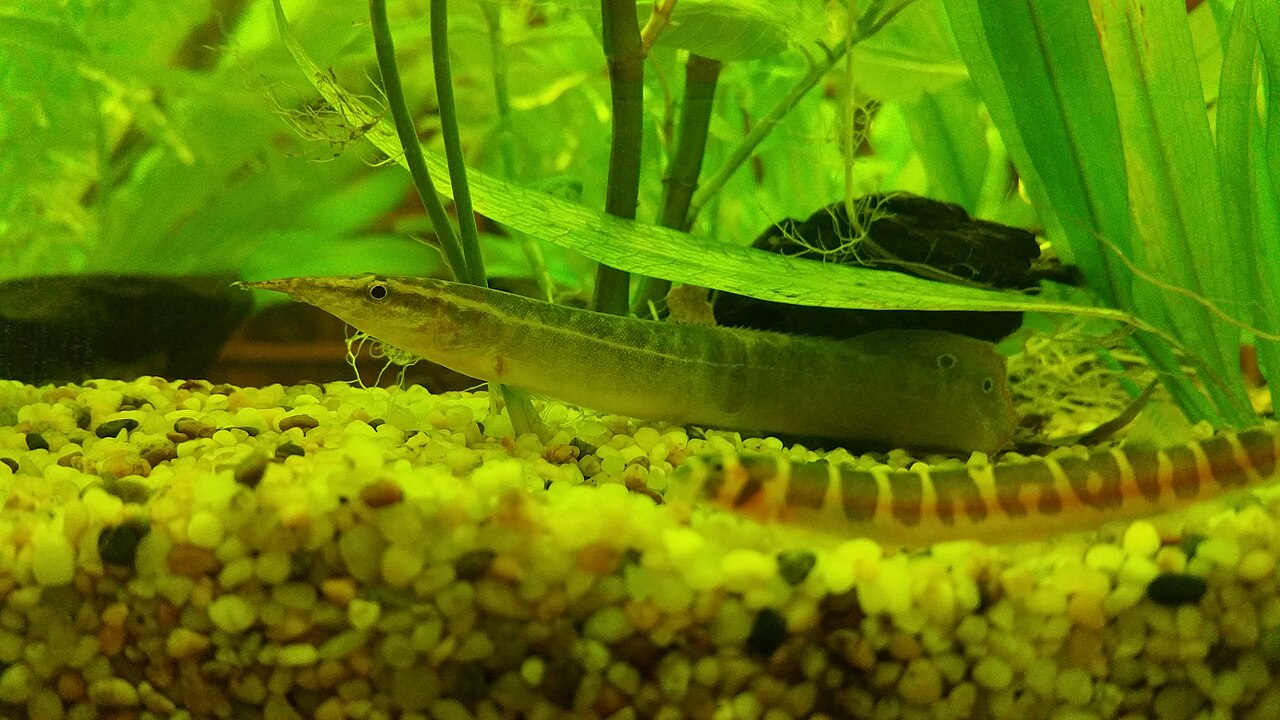
Peacock eels, known scientifically as Macrognathus siamensis, are not true eels. They belong to the spiny eel family from slow-moving waters in Southeast Asia. Hobbyists love their intricate eye spots, long snout, and unusual swimming style. They stay smaller than many other spiny eels, but they still require a spacious tank and careful setup. This guide explains tank size, diet, compatibility, and daily care. If you plan to keep one, start here before you buy. The right environment prevents stress and disease.
Many keepers underestimate how much room these fish need. A peacock eel can reach 12 inches and spends most of its time on the bottom. Cramped tanks lead to stress, poor feeding, and aggression. Before buying one, look at aquarium fishkeeping statistics for 2026 to see how many new fishkeepers start with undersized tanks. Then choose a larger setup than the bare minimum. This fish uses every inch of floor space. It is not a bowl fish.
Correct species identification matters. Some stores sell similar spiny eels under the same common name. According to Seriously Fish, Macrognathus siamensis needs warm, soft, well-oxygenated water and a soft substrate. The short version is simple: an adult reaches about 12 inches, prefers pH between 6.5 and 7.5, and needs a temperature between 75°F and 82°F. Get those numbers right and the fish can thrive for years.
This article walks you through eight practical steps. You will learn how to set up a secure tank, cycle it safely, create hiding spots, acclimate the fish, feed a carnivore diet, choose tank mates, and maintain water quality. Each step includes details from hands-on fishkeeping experience. By the end, you will know whether a peacock eel fits your aquarium and how to keep one healthy long term. Do not skip the warnings and FAQ sections. They answer common mistakes. Read them before you stock the tank.
What You’ll Need
- 55-gallon aquarium or larger
- Secure lid
- Gentle filter
- Heater with thermostat
- Fine aquarium sand
- Driftwood and smooth rocks
- Live or silk plants
- Water test kit
- Dechlorinator
- Frozen or live carnivore foods
- Aquarium siphon
- Quarantine tank
How Do You Care for Peacock Eels?
- Set Up a 55-Gallon Minimum Tank with a Secure Lid
Start with footprint, not just volume. A single adult peacock eel can reach 12 inches (30 cm). That means a 55-gallon tank is the practical minimum for one. A 75-gallon tank with a 48-inch by 18-inch footprint is even better if you plan tank mates. These fish are not constantly active, but they need room to stretch and hunt at night. Cramped quarters increase stress and aggression.
Use a tight-fitting lid. Peacock eels are famous escape artists. They can squeeze through tiny gaps around filter returns, heater cords, and lids. Cover every opening with mesh, plastic canvas, or glass. A fish that escapes can die in a matter of hours. Do not learn this the hard way.
Place the tank away from heavy foot traffic and bright light. These fish are shy. A quiet room helps them feel safe. Pick the largest tank your space and budget allow. The fish will use all the bottom area.

- Install Gentle Filtration and Stable Heating
Peacock eels do not like strong currents. They come from slow-moving waters in Thailand and nearby regions. Use a hang-on-back or canister filter rated for at least twice the tank volume. The AquaClear Power Filter on Amazon is a reliable hang-on-back option. Aim for gentle return flow. You can baffle the output with a sponge or spray bar if needed. Good options appear in our best aquarium filters 2026 roundup. The goal is clean water without blasting the fish around.
Install a reliable heater with a thermostat. Keep the water between 75°F and 82°F. Peacock eels tolerate a range but do poorly with sudden swings. A quality heater prevents overnight drops. Check the Eheim Jager Aquarium Heater on Amazon if you need a dependable model. Place it near the filter outflow for even heat distribution.
Use a thermometer to verify temperature daily. Do not trust the heater dial. Digital and probe thermometers are more accurate than stick-on strips. Stable temperature helps the fish’s immune system. It also keeps metabolism and feeding predictable.
Test your water before adding fish. Peacock eels prefer pH between 6.5 and 7.5 and soft to moderate hardness. Treat tap water with a dechlorinator. Let the system run for at least 24 hours. Then move on to cycling. The API Freshwater Master Test Kit on Amazon makes monitoring simple.
- Cycle the Tank and Establish Biological Filtration
Never add a peacock eel to an uncycled tank. The nitrogen cycle converts ammonia from fish waste into nitrite and then nitrate. Ammonia and nitrite burn gills and cause death. Read the aquarium nitrogen cycle guide for the full process. Plan to cycle for 4 to 6 weeks before buying the fish.
Set up the tank with substrate, decor, and equipment first. Then add an ammonia source. You can dose pure ammonia or use fish food. Beneficial bacteria will grow in the filter media and substrate. Test daily for ammonia, nitrite, and nitrate. The cycle is complete when ammonia and nitrite read 0 ppm and nitrate is under 20 ppm.
Use a liquid test kit, not strips. Strips often miss low levels that still harm fish. During cycling, keep the heater and filter running at all times. Do not change large amounts of water unless ammonia or nitrite spikes above 4 ppm. A small water change can protect the growing bacteria.
Peacock eels are sensitive to poor water quality. A fully cycled tank gives them the best start. Rushing this step causes the most common new-tank deaths. Once the cycle is stable, wait a few days and test again before introducing the eel.
- Create a Soft Sandy Habitat with Hiding Spots
Peacock eels burrow. They need fine sand, not coarse gravel. Gravel scratches their skin and can trap food. Use a 2 to 3 inch layer of soft aquarium sand. Pool filter sand or CaribSea Super Naturals works well. Avoid sharp crushed coral unless you need to raise hardness. Bare bottom tanks make these fish feel exposed.
Add hiding spots at multiple locations. Use driftwood, smooth rocks, PVC pipe sections, and dense plants. Each eel needs at least one dark cave it can use during the day. Without cover, a peacock eel stays stressed and may stop eating. Rearrange decor occasionally to create new territories if you keep more than one.
Live plants help water quality and provide shade. Java fern, Anubias, and Amazon sword are good choices. They tolerate low to medium light and do not need special substrate. See our best aquarium plants for beginners for easy options. Floating plants also dim the light and make the eel more comfortable.
Secure all rockwork. Peacock eels dig under decorations. A heavy rock can collapse and trap or injure the fish. Push rocks down to the bottom glass before adding sand. Then build sand around the base. Test each structure by pressing on it. If it moves, redo it.

- Acclimate a Healthy Peacock Eel Slowly
Buy from a reputable store or breeder. Look for a fish with clear eyes, no white spots, and a rounded belly. Ask what it has been eating. Peacock eels often arrive skinny if they were only fed dry food. Choose a fish that accepts frozen food. Quarantine new arrivals for at least two weeks in a separate tank.
Acclimate slowly using the drip method. Float the bag for 15 minutes to equalize temperature. Then use airline tubing to drip tank water into a bucket at 1 to 2 drops per second. Over 45 to 60 minutes, the water chemistry gradually shifts. This reduces shock. Never pour bag water into your main tank.
Release the fish gently. Dim the lights for the first day. Do not chase or net the eel more than necessary. A peacock eel may hide for several days after introduction. That is normal. Offer food after 24 hours, but do not panic if it refuses at first.
Turn off bright overhead light during the acclimation and first evening. A dim room helps the fish settle. Check the lid after release. Peacock eels often explore the edges and test gaps in the first week.
- Feed a Varied Carnivore Diet at Night
Peacock eels are carnivores. In the wild they eat insect larvae, small crustaceans, worms, and other invertebrates. In the aquarium, offer frozen bloodworms, blackworms, brine shrimp, mysis shrimp, and chopped earthworms. Live blackworms are excellent for conditioning new arrivals. Avoid feeder fish. They carry disease and do not provide balanced nutrition.
Feed once a day, preferably after lights out. Peacock eels use their long snouts to search the substrate. Drop food near their hiding spots with tongs or a turkey baster. Some individuals learn to eat during the day, but many wait for darkness. Remove uneaten food after 30 minutes to protect water quality.
Try sinking pellets designed for carnivores. Soak them in tank water first. Some peacock eels accept them over time. Still, frozen and live foods should remain the core diet. A varied diet supports color, growth, and immune health. If your eel refuses dry food, do not starve it. Go back to meaty frozen options.
Watch feeding competition. Fast tank mates can outcompete a shy eel. Feed the eel directly while other fish eat at the surface. This is similar to feeding kuhli loaches, another shy bottom dweller. Consistent direct feeding prevents slow starvation.
- Choose Peaceful Tank Mates with Similar Water Needs
A peacock eel can live in a community tank, but only with the right fish. Peaceful schooling fish work well, such as rasboras, tetras, and danios. Avoid nippy species like tiger barbs. They will harass the eel’s fins and eyes. Large aggressive cichlids are also a poor match.
Bottom-dwelling tank mates need enough space. Good options include corydoras catfish and small plecos. A bristlenose pleco can work in a 75-gallon setup because it stays small and peaceful. Avoid territorial loaches that compete for caves. Multiple peacock eels can coexist, but give each one its own hiding spot.
Do not keep peacock eels with fish small enough to swallow. Though not aggressive predators, they may eat tiny fish like juvenile neons if hungry. Also avoid fast, boisterous feeders that stress the eel. Aim for calm tank mates that prefer the mid to upper water column. This leaves the bottom for the eel.
Research each potential tank mate before buying. Check adult size, temperature needs, and aggression. A peaceful community at 78°F works well. Add the peacock eel after the other fish have established territories. That avoids the eel being seen as a new intruder.

- Maintain Water Quality and Monitor for Skin Issues
Perform weekly water changes of 25 to 30 percent. Peacock eels are scaleless or have reduced scales, so they react strongly to poor water. Use a gravel vacuum carefully around the sand. Siphon debris without removing too much sand. Match the new water temperature and dechlorinate before adding.
Test nitrate every week. Keep it below 20 ppm. If nitrate climbs, increase water change frequency or amount. Our guide on how often to change aquarium water explains the variables. Clean the filter media in old tank water, not tap water. Replace mechanical media as needed but preserve biological media.
Watch for signs of ich, fungus, or bacterial infection. White spots, clamped fins, red streaks, or rapid breathing need action. Peacock eels are sensitive to many medications. Copper and malachite green can harm them. Start with heat and salt only if the species tolerates it. For detailed disease guidance, check Aquarium Co-Op.
Quarantine all new plants and fish before adding them. Peacock eels bring in few diseases if sourced well, but community tanks introduce risks. Observe the eel daily during feeding. A healthy peacock eel has clear eyes, smooth skin, and a round belly. Any sudden behavior change warrants a water test.
Red Flags & Warnings
- 🚨 Never leave a gap in the lid. Peacock eels can escape through filter cutouts, heater cord openings, and tiny seams.
- 🚨 Do not use medications containing copper on peacock eels without verifying safety. They are scaleless and very sensitive to many treatments.
- 🚨 Avoid sharp gravel. It can scratch the fish’s skin and lead to bacterial or fungal infection.
- 🚨 Do not expect a peacock eel to survive on flake food alone. It needs meaty frozen or live food and direct feeding.
- 🚨 Never add fast or aggressive fish that will outcompete the eel. Slow starvation is a common cause of death.
- 🚨 Do not cycle the tank with a peacock eel inside. Ammonia and nitrite spikes can kill this sensitive species.
Frequently Asked Questions
How big do peacock eels get?
Peacock eels can reach about 12 inches in adulthood. Most stay between 8 and 12 inches in home aquariums with proper care. Plan for the full adult size when choosing a tank.
What size tank do peacock eels need?
A 55-gallon tank is the practical minimum for one peacock eel. A 75-gallon tank is better if you plan to add tank mates. The footprint matters because these fish spend almost all their time on the bottom.
What do peacock eels eat?
Peacock eels are carnivores. Feed frozen or live bloodworms, blackworms, brine shrimp, mysis shrimp, and chopped earthworms. Some accept sinking carnivore pellets, but meaty foods should be the core diet.
Can peacock eels live with other fish?
Yes, they can live in a peaceful community tank. Choose calm mid-water fish like rasboras, tetras, and danios. Avoid aggressive or nippy species that will stress or injure the eel.
Are peacock eels aggressive?
Peacock eels are not aggressive toward fish too large to eat. They are shy and may hide for days. Still, they may eat very small fish like juvenile neons if hungry.
What water parameters do peacock eels need?
Keep the temperature between 75°F and 82°F and pH between 6.5 and 7.5. Soft to moderate hardness works best. Ammonia and nitrite should always be 0 ppm, with nitrate below 20 ppm.
What Should You Remember?
- Tank size: Provide at least 55 gallons for one adult peacock eel, with a larger footprint for tank mates.
- Substrate: Use fine sand to protect the eel’s skin and allow natural burrowing.
- Diet: Feed frozen or live meaty foods at night and supplement with sinking carnivore pellets.
- Tank mates: Choose peaceful mid-water fish and avoid fin nippers or large aggressive species.
- Water quality: Keep ammonia and nitrite at 0 ppm and nitrate below 20 ppm through weekly water changes.
- Secure lid: Cover every gap because peacock eels are expert escape artists.
- Acclimation: Use slow drip acclimation and quarantine all new arrivals for at least two weeks.
This article is for general information only and is not a substitute for professional veterinary or aquarium specialist advice. Always research the specific needs of your fish and consult an expert before making care decisions.