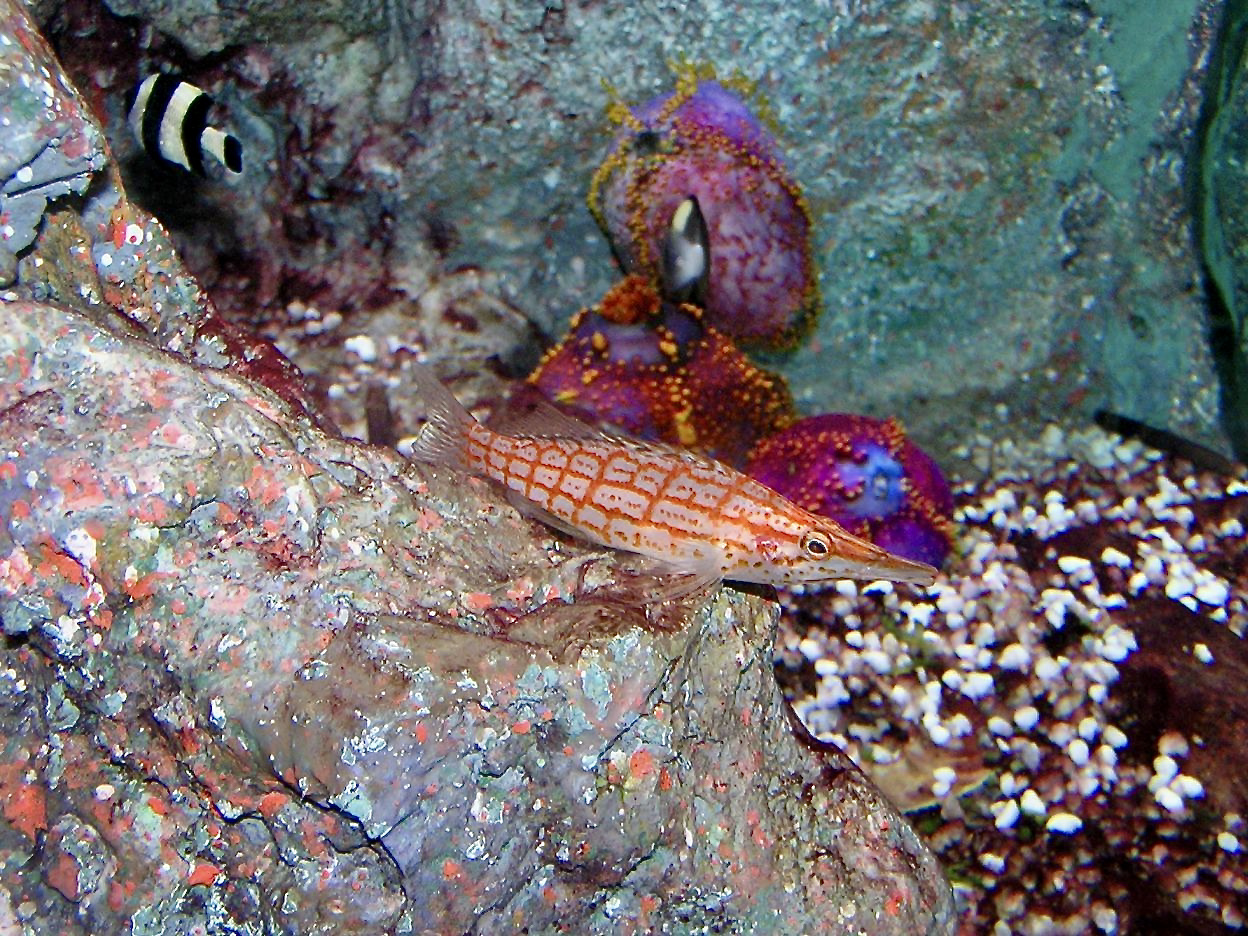
The longnose hawkfish (Oxycirrhites typus) looks like a cross between a hawk and a hovering chess piece. It has a needle-like snout, a white body, and red crosshatch markings that make it one of the most recognizable saltwater fish in the hobby. Unlike many fish that swim constantly, longnose hawkfish spend most of their time perched on rockwork or coral. They watch the tank with big eyes and dart out to grab food. If you have kept a flame hawkfish care guide you will recognize the behavior, but the longnose is longer, slimmer, and often more outgoing once settled.
This species is hardy and rewarding, but it is not a beginner free pass. You need a mature saltwater tank with stable water chemistry, because longnose hawkfish do not tolerate ammonia or nitrite. They also have a strong predatory instinct. Small shrimp and tiny fish become meals, which means compatibility planning has to happen before you bring one home. According to the LiveAquaria longnose hawkfish profile, this fish is best for aquarists with at least some experience keeping marine fish. That said, even intermediate keepers will find it relatively easy if the tank is set up correctly.
This guide walks through everything you need to keep one healthy. You will learn the right tank size, diet, water parameters, acclimation steps, and compatible tank mates. We also cover common mistakes so you can avoid losing a fish or a clean-up crew. If you are setting up a reef tank or a fish-only marine system and want a bold, perching predator, this article will help you decide whether a longnose hawkfish fits your plan.
What You’ll Need
- 30-gallon or larger saltwater aquarium
- Live rock
- Protein skimmer or quality filter
- Heater and thermometer
- Marine salt mix and RO/DI water
- Test kits for ammonia, nitrite, nitrate, pH, salinity
- Frozen marine food
How Do You Care for Longnose Hawkfish?
- Start with a 30-gallon or larger saltwater tank
Longnose hawkfish grow to around 5 inches in length, and they need swimming room despite their perching habit. A single adult requires a minimum tank size of 30 gallons (about 113 liters). If you plan to keep tank mates, a 40-gallon or 55-gallon tank reduces territorial stress and gives other fish space to retreat. Cramped tanks make this species more defensive and more likely to lunge at tank mates.
Arrange live rock before adding the fish. Create several ledges, caves, and overhangs where the hawkfish can perch and observe. They usually pick a favorite high spot and return to it throughout the day. Place the rock directly on the bottom glass, then add sand around it, so the structure stays stable. A fall can crack the tank and kill livestock, so take the extra time now.
Because longnose hawkfish produce significant waste from a meaty diet, avoid overstocking. A 30-gallon tank with a single hawkfish and one or two small but tough tank mates is easier to manage than a 30-gallon tank packed with fish. You can keep this species in a reef tank with corals, but choose corals that can handle a fish landing on them now and then.

- Install strong filtration and stable flow
Longnose hawkfish are carnivores, so leftover food and waste break down quickly. Use a quality hang-on-back filter, canister filter, or a sump with a protein skimmer. A protein skimmer is especially helpful in marine tanks because it removes dissolved organics before they turn into nitrate. See the best aquarium filters for 2026 for options that fit tanks 30 gallons and up.
Flow should be moderate. Longnose hawkfish do not need the high, chaotic current found in some SPS coral tanks. Aim for gentle to moderate movement across the rockwork, with a few calmer areas where the fish can rest. Powerheads placed near the surface help oxygenate the water and keep detritus suspended long enough for the filter to remove it.
Install a heater and a reliable thermometer before adding the fish. Keep the temperature between 72°F and 78°F (22°C to 26°C). Stability matters more than the exact number, so use a heater rated for the tank volume and check it daily for the first week. A API Saltwater Master Test Kit is a good investment for monitoring ammonia, nitrite, nitrate, pH, and alkalinity from the start.
- Cycle the tank and stabilize water chemistry
Never add a longnose hawkfish to an uncycled tank. Ammonia and nitrite spikes cause rapid gill damage, and this species is not forgiving. Follow a fishless cycling method for four to six weeks before buying the fish. You can find detailed steps in how to cycle a fish tank.
Target water parameters are: temperature 72°F to 78°F, pH between 8.1 and 8.4, specific gravity between 1.020 and 1.025, ammonia 0 ppm, nitrite 0 ppm, and nitrate below 20 ppm. Aqueon’s aquarium care resources recommend keeping marine fish in stable pH and salinity, and longnose hawkfish are no exception. Test the water at least twice during the cycle and once more right before adding the fish.
Alkalinity and calcium matter if you keep corals, but the hawkfish itself needs clean, oxygen-rich water more than a specific calcium number. After the cycle finishes, do a large water change to lower nitrate. Then let the tank run for a few days. This gives you time to fix any issues before a live fish enters the system.
- Acclimate your longnose hawkfish slowly
Longnose hawkfish can handle a range of conditions, but sudden changes in salinity or temperature cause shock. Float the sealed bag in the display tank for 15 minutes to equalize temperature. Then use a clean bucket and airline tubing to start a slow drip from the tank into the bucket. Aim for about two to four drops per second.
Dripping for 45 to 60 minutes slowly mixes tank water with the bag water. This is far safer than pouring fish directly into the tank. Test the salinity of the bucket water against the display water before release. If they differ by more than 0.001 specific gravity, keep dripping longer.
Once ready, use a soft net to transfer the fish, or gently scoop it with a clean container. Do not dump the shipping water into your tank, because it can contain ammonia or pathogens. Dim the lights for the first few hours and let the fish find a perch. It may hide for a day or two, which is normal. Offer food the next day and keep traffic near the tank low.
- Feed a varied marine carnivore diet
Longnose hawkfish eat small crustaceans, tiny fish, and zooplankton in the wild. In captivity, they need a high-protein diet with regular frozen offerings. Good options include frozen mysis shrimp, brine shrimp, chopped krill, squid, and finely chopped silversides. You can buy a pack like Omega One frozen mysis shrimp and rotate it with other frozen foods.
Feed once or twice a day, but small portions. A longnose hawkfish will often dart to the food as soon as it hits the water. Use a feeding pipette or turkey baster to target food near its perch. This prevents faster tank mates from stealing every piece. Remove any uneaten food after a few minutes, because leftover meaty food fuels ammonia and algae.
Some individuals learn to accept high-quality marine pellets or flakes, but these should not be the main diet. Dry food alone can lead to nutritional issues over time. If your fish ignores dry food, stick with frozen. Soaking food in a marine vitamin supplement once or twice a week improves color and immune health. Watch the belly. A healthy longnose hawkfish has a slightly rounded but not bloated abdomen.

- Choose tank mates that will not end up as food
This is the step most people get wrong. Longnose hawkfish will eat ornamental shrimp, sexy shrimp, small hermit crabs, and tiny fish that fit in their mouth. Avoid small gobies, small dartfish, and juvenile fish under about 2 inches. Good tank mates include larger clownfish, tangs, dwarf angelfish such as the flame angelfish care guide, and some larger wrasses.
Do not keep two longnose hawkfish in a small tank. In most home aquariums under 100 gallons, they will fight for territory. If you want a pair, you need a very large system with two separate rock structures and careful observation. Some aquarists have kept pairs in big reef tanks, but it is a risk.
Corals are generally safe, but longnose hawkfish may perch on large polyp stony corals or gorgonians. The fish itself is not eating coral, but the constant weight and contact can irritate some polyps. Keep hardy soft corals and stony corals if you want a mixed reef. Snails and larger hermit crabs may survive, but do not count on small shrimp or tiny crabs lasting long.
- Perform regular maintenance and watch behavior
Change 10 to 20 percent of the water every week or two. Use aged or RO/DI water mixed with quality marine salt. Regular water changes keep nitrate low and replenish trace elements. For more on timing and process, see how often to change aquarium water.
During each water change, siphon uneaten food and detritus from the sand and from behind rocks. Longnose hawkfish produce waste that settles in low-flow zones. Leaving it there can lead to cyano or algae problems. Rinse filter socks or sponge media in removed tank water, not tap water, to preserve beneficial bacteria.
After maintenance, observe the fish for a few minutes. A healthy longnose hawkfish is alert, perched upright, and interested in movement outside the tank. If it suddenly hides for days, breathes fast, or shows white spots, test the water immediately. The earlier you catch a problem, the easier it is to treat.

- Quarantine new fish and prevent common diseases
Longnose hawkfish are hardy, but they still carry parasites from the supply chain. Marine ich and marine velvet are the most common issues. A new fish should spend two to four weeks in a separate quarantine tank before entering your display. This protects both the hawkfish and any existing fish. Treatment options are covered in how to treat ich in a saltwater aquarium.
Never use copper-based medications in a reef tank or a tank with live rock. Copper kills invertebrates and contaminates rock and sand. Treat in quarantine with copper or other proven methods only. A separate hospital tank, even a simple 10-gallon with a sponge filter, is the safest way to medicate.
Good nutrition, stable temperature, and low stress keep the immune system strong. If your longnose hawkfish refuses food for more than three days, check water parameters and look for signs of aggression from tank mates. A fish that is constantly harassed will weaken and eventually get sick. Removing the aggressor or rearranging rockwork often fixes the problem before medication is needed.
Red Flags & Warnings
- 🚨 Do not put longnose hawkfish in a tank under 30 gallons. The fish gets about 5 inches long and becomes stressed in small spaces.
- 🚨 Never add this fish to an uncycled tank. Ammonia or nitrite spikes can kill it within hours.
- 🚨 Keep a tight-fitting lid. Longnose hawkfish are strong jumpers, especially when startled.
- 🚨 Do not house them with small shrimp, tiny crabs, or fish under 2 inches. They will be eaten.
- 🚨 Avoid mixing two longnose hawkfish in tanks under 100 gallons. Territorial fighting usually ends badly.
- 🚨 Never treat with copper in a display tank with live rock or invertebrates. Use a quarantine tank only.
Frequently Asked Questions
Are longnose hawkfish reef safe?
They are mostly reef safe with corals. They may perch on corals and can stress some polyps, but they do not eat coral tissue. However, they will eat small ornamental shrimp and tiny fish, so they are not safe for every reef aquarium.
What size tank do longnose hawkfish need?
A single longnose hawkfish needs at least a 30-gallon tank. A 40-gallon or larger tank is better if you keep other medium-sized fish or want more stable water parameters.
What do longnose hawkfish eat?
They are carnivores and do best on frozen mysis shrimp, brine shrimp, chopped krill, squid, and silversides. Some learn to accept marine pellets, but frozen meaty foods should be the staple.
Can you keep two longnose hawkfish together?
Only in very large aquariums with plenty of rockwork. In typical tanks under 100 gallons, two longnose hawkfish will often fight, so keeping one is safer.
Will longnose hawkfish jump out of the tank?
Yes, they can jump, especially when startled or during feeding. A tight-fitting mesh or glass lid is required.
How long do longnose hawkfish live in captivity?
With good care, they can live 5 to 7 years or longer. Stable water quality and a varied diet are the biggest factors.
What Should You Remember?
- Minimum tank size is 30 gallons for one longnose hawkfish, with 40 gallons or more recommended.
- Water parameters should stay at 72°F to 78°F, pH 8.1 to 8.4, and specific gravity 1.020 to 1.025.
- Diet must be meaty. Feed frozen mysis shrimp, krill, squid, and other marine proteins daily.
- Compatibility is the biggest risk. Keep them away from small shrimp, tiny crabs, and fish under 2 inches.
- Tank setup needs live rock ledges, caves, and perching spots, plus a secure lid.
- Quarantine every new fish for two to four weeks before adding it to the display to prevent disease.
This article is for general information only and is not a substitute for professional veterinary or aquarium specialist advice. Always research the specific needs of your fish and consult an expert before making care decisions.