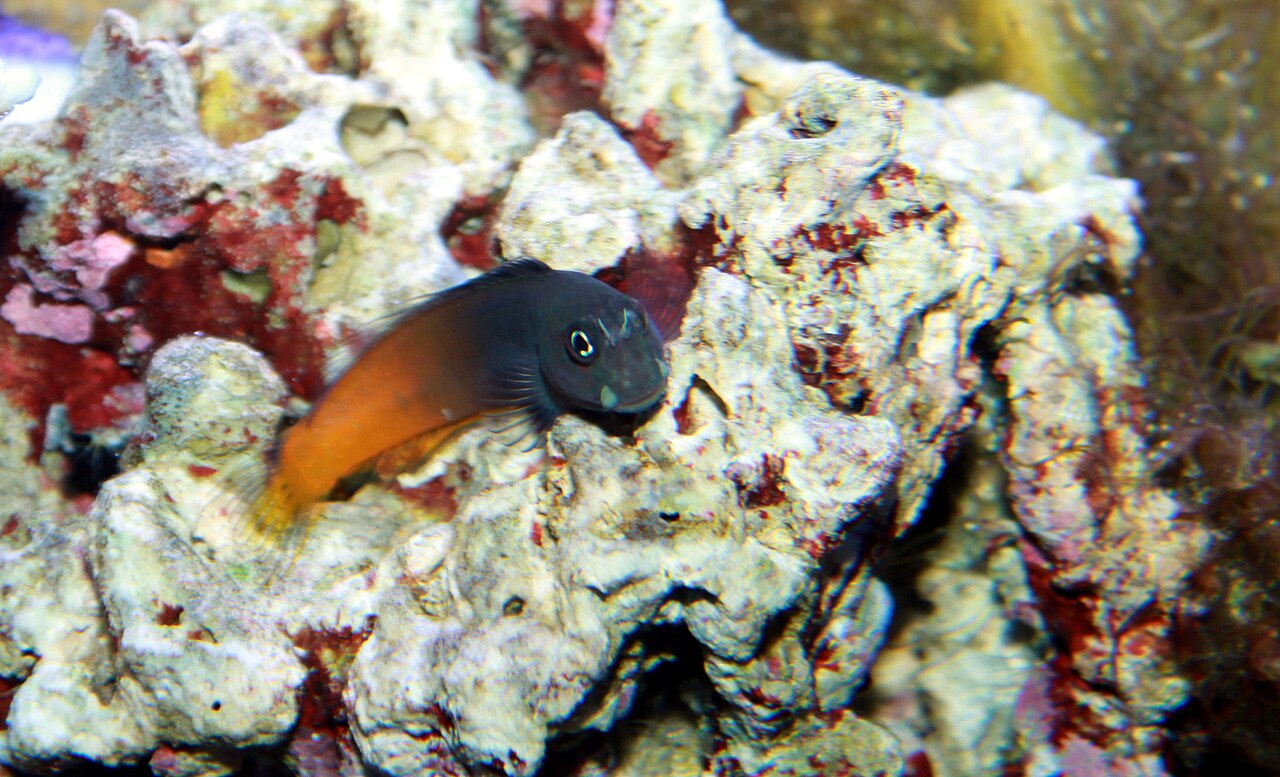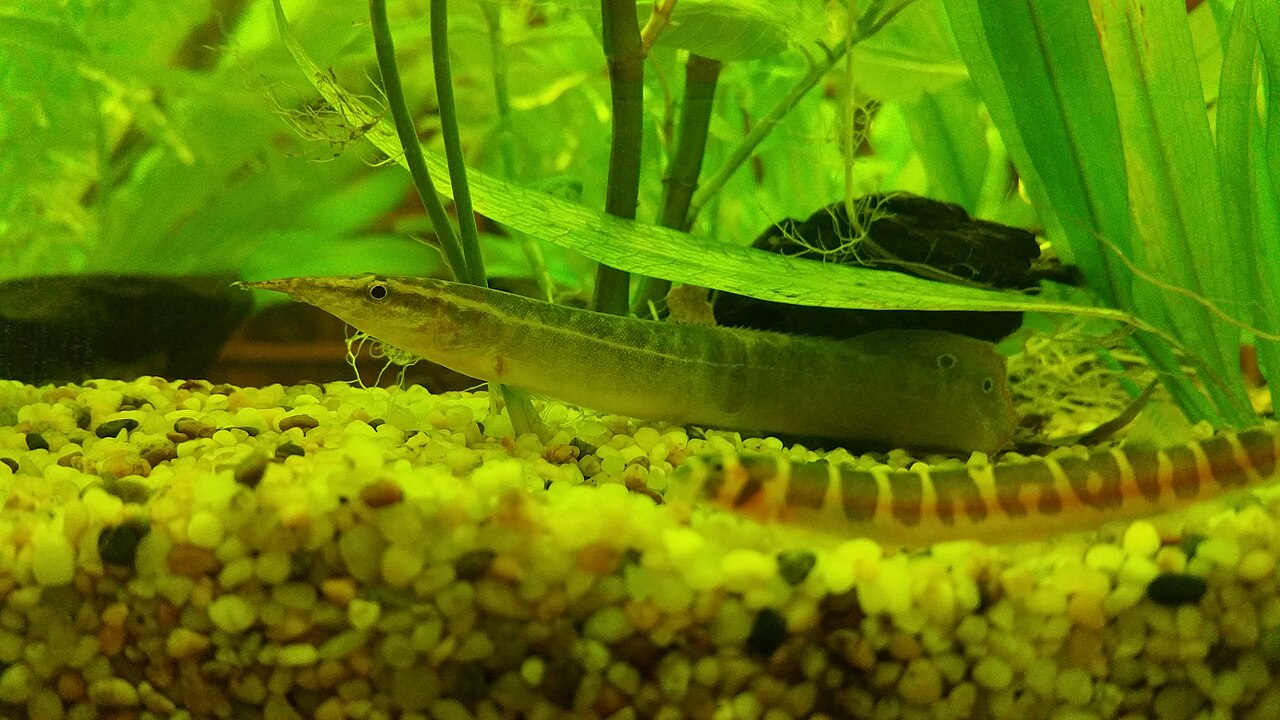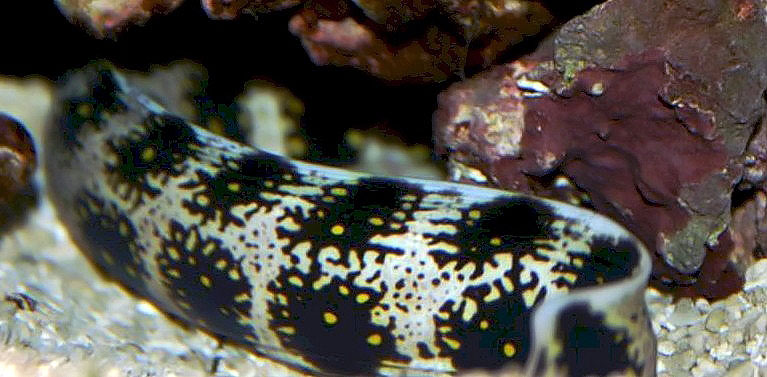
Snowflake moray eels (Echidna nebulosa) are one of the most recognizable marine eels in the aquarium trade. Their cream and brown bodies are covered with black and yellow markings that look like snowflakes. Many aquarists buy them for that pattern. But these are not small, low-maintenance fish. They can reach 24 to 39 inches in captivity depending on the individual. You need a real plan for tank size and long-term care. Before you bring one home, make sure your saltwater system is fully cycled. Cycling a fish tank prepares the biological filtration an eel needs.
The good news is that snowflake morays are more manageable than some other moray species. They have blunt, rounded teeth built for crushing shrimp and crab shells. They are not the aggressive, razor-toothed hunters many people imagine. Still, they are predators. Any fish small enough to fit in their mouth is potential food. They also have poor eyesight. During feeding, they may lunge at a hand or finger by mistake. That makes a long feeding tool a required piece of gear.
This guide walks through tank setup, water chemistry, diet, and compatible tank mates. I have kept snowflake morays for years. The most common mistakes I see are undersized tanks, open lids, and feeding freshwater goldfish. Avoid those three errors and you are halfway to a healthy eel. Use stable saltwater parameters, offer hiding places, and stick to a varied marine diet. The rest of this article covers each step in detail.
What You’ll Need
- 75-gallon or larger tank
- Tight-fitting lid
- Protein skimmer
- Heater and thermometer
- Saltwater test kit and refractometer
- Long feeding tongs
- Caves or live rock
- Marine salt mix
How Do You Care for Snowflake Moray Eels?
- Set up a secure 75-gallon or larger tank
Snowflake morays need floor space more than height. A standard 75-gallon tank is the minimum for one adult. It measures 48 inches long, which gives an eel room to stretch out. A 90-gallon or 125-gallon tank is better. These fish can reach two feet or more and produce a lot of waste. The extra water volume keeps ammonia and nitrate from spiking between water changes. If you already have a smaller tank, upgrade before you buy the eel.
A tight-fitting lid is non-negotiable. Snowflake morays are escape artists. They can squeeze through gaps around filter tubes, heater cords, and lid corners. Use a glass canopy or a screen top with no open spaces. Weigh down the lid if the clips feel loose. A moray on the floor can die in under an hour. Check the lid every time you feed or service the tank. Check the tight-fitting aquarium lid on Amazon.
Filtration should be oversized. These animals are messy eaters and produce heavy waste. A protein skimmer is highly recommended. Use a sump or canister filter rated for at least twice the tank volume. That gives you enough biological filtration and mechanical surface area. Direct flow along the bottom so waste does not settle in dead spots. Position powerheads so the eel has both high-flow and low-flow zones.

- Keep water parameters stable from day one
Snowflake morays need clean, stable saltwater. Keep the temperature between 72°F and 78°F. Specific gravity should stay between 1.020 and 1.025. pH should be 8.1 to 8.4. Ammonia and nitrite must read 0 ppm at all times. Nitrate should stay below 20 ppm. Aqueon’s saltwater care guidance emphasizes that stability matters more than chasing a single perfect number. Aqueon recommends consistent temperature and salinity for marine fish.
The tank must be fully cycled before you add the eel. Snowflake morays are sensitive to ammonia and nitrite. Both can burn their gills and cause rapid death. Read the aquarium nitrogen cycle guide if you need a refresher. A fishless cycle with pure ammonia is the safest method. Test the water for at least a week before introducing the eel. You want zero ammonia and zero nitrite every day.
Use a reliable heater and a backup if possible. Temperature swings stress morays and can trigger disease. Set the heater to 76°F as a middle target. Use a digital thermometer or controller. Check salinity with a refractometer, not a floating hydrometer. Refractometers are more accurate and less prone to user error. Keep a bucket of pre-mixed saltwater ready for water changes.
- Create caves, ledges, and dim lighting
Snowflake morays spend much of the day hidden. They feel secure in dark caves and under overhangs. Provide at least two hiding spots per eel. You can use reef-safe ceramic caves, PVC pipe fittings, or stacked live rock. Arrange rock so it cannot fall. A startled eel can wedge under rock and shift a whole stack. Place the base rocks directly on the glass before adding sand. Use aquarium epoxy if needed.
Leave open sand area in the front. Snowflake morays sometimes move across the bottom to hunt or change caves. Fine aragonite sand is safer than crushed coral. Crushed coral has sharp edges that can scratch the eel’s skin. Sand also lets them rest without pressure points. Keep the sand bed about an inch deep. Too much sand can trap debris.
Lighting can stay subdued. Snowflake morays do not need bright reef lighting. They are often more active in the evening. Use dimmable LEDs or actinic blue lighting. If you keep corals, you can still use reef lights. Just provide shaded caves and overhangs. Macroalgae can add cover and help with nutrient export. Avoid placing powerheads in spots that push the eel out of its cave.

- Feed thawed marine meats with long tongs
Snowflake morays are carnivores. Feed them a varied diet of thawed silversides, squid, shrimp, krill, clam, and mussel. Avoid freshwater feeder fish such as goldfish or minnows. Freshwater feeders lack proper marine fatty acids and can cause liver problems. They also carry diseases that saltwater fish rarely encounter. LiveAquaria’s species profile notes that snowflake morays can be shy at first and may take time to feed. LiveAquaria recommends offering small pieces of meaty food near the eel’s hiding spot.
Feed juveniles about three times per week. Adults do well on two feedings per week. Offer only as much as the eel can eat in a few minutes. A slightly rounded belly is okay. A bulging stomach means you overfed. Overfeeding leads to poor water quality and fatty deposits. Regular feeding also affects how often you need water changes. Uneaten food rots quickly. You can read more about how often to change aquarium water to stay ahead of nitrate.
Use long feeding tongs, never your fingers. Snowflake morays have poor eyesight and a strong feeding response. Check the feeding tongs on Amazon. Wiggle the food near the cave and wait. Some eels take weeks to accept frozen food. You can soak food in garlic or a marine vitamin supplement to stimulate appetite. Remove uneaten pieces after 30 minutes.

- Choose large, fast tank mates only
Snowflake morays are generally peaceful with fish too large to swallow. Good tank mates include large tangs, adult angelfish, triggers, lionfish, groupers, foxface, and squirrelfish. Avoid small gobies, blennies, dartfish, firefish, and tiny wrasses. The eel will eat any fish that fits in its mouth. A yellow tang is a good match. It is fast, grows large, and stays in open water. See yellow tang care guide for its space and diet needs.
Do not keep snowflake morays with ornamental shrimp, crabs, snails, or small lobsters. Their blunt teeth are built to crush these invertebrates. Snowflake morays are not reef safe if you want a clean-up crew. They usually ignore corals and anemones. But a shrimp or crab will disappear overnight. Sea urchins and large starfish may be okay, but watch for fin nipping by the eel.
Only keep one snowflake moray per tank unless the system is very large. Two eels can fight over the best cave. If you want a second eel, add caves out of direct sight from each other. Introduce the eel last after other fish are established. That reduces territorial aggression. Never add a small, slow fish after the eel is already hunting. It will be seen as food.
- Maintain water quality with regular changes
Snowflake morays produce heavy waste. You need a consistent maintenance schedule. Change 10 to 15 percent of the water every two weeks. If you have a heavy bioload, change 20 to 25 percent monthly. Use reverse osmosis deionized water mixed with a quality marine salt. Match the new water’s temperature and salinity to the tank before adding it. Sudden changes stress the eel.
Clean mechanical filtration monthly. A clogged filter reduces oxygen and traps nitrate. Check the best aquarium filters if you need to upgrade. Rinse sponge media in old tank water, not tap water. Replace filter floss as needed. Clean the protein skimmer cup weekly. A skimmer pulls dissolved waste before it becomes nitrate.
Test water every week. Check the saltwater test kit on Amazon. Measure ammonia, nitrite, nitrate, pH, and salinity. Alkalinity and calcium matter if you keep corals. Write down the numbers. A rising nitrate level means you need a larger water change. If ammonia or nitrite appears, stop feeding and check the filter. Morays are sensitive to poor water quality.
- Quarantine new fish and watch for disease
Quarantine every new fish for four to six weeks. This includes tank mates and any new eel. Snowflake morays can carry internal parasites, flukes, and bacterial infections. A separate quarantine tank lets you observe and treat without exposing your display tank. Use a simple bare-bottom tank with a PVC cave and sponge filter.
Common signs of trouble include white spots, rapid breathing, open sores, cloudy eyes, and refusal to eat. Morays can also scrape their noses while exploring. Keep the water clean and add stress-reducing cover. If you see ich or another parasite, consult a saltwater-safe treatment. How to treat ich in aquarium covers the basics, but confirm the medication is safe for eels. Some treatments are harsh on scaleless fish. Hyposalinity or praziquantel may be safer options under veterinary guidance.
Never dump water from a fish store bag into your tank. Acclimate slowly using a drip line. Float the bag for temperature first, then drip acclimate for 30 to 60 minutes. Net the fish out instead of pouring bag water into the display. This reduces disease risk and sudden parameter shock.
- Plan for a 10 to 15 year commitment
Snowflake morays live a long time. Many reach 10 to 15 years in captivity with good care. That is a serious commitment. You need to keep up with tank maintenance even when life gets busy. If you move homes, the tank must move too. The eel cannot be rehomed to a freshwater tank or a small bowl. Plan for the adult size before you buy.
Long-term success comes down to routine. Feed on a set schedule, change water on a set schedule, and test on a set schedule. That stability keeps the eel calm and healthy. If you travel, have a trusted person follow written instructions. Show them how to latch the lid and use feeding tongs. A missed feeding is okay for a healthy adult for a week. An open lid is never okay.
Enjoy the fish. Snowflake morays have real personality. They learn feeding routines and may watch you from their cave. They are not a fish to handle or pet. Give them space, clean water, and proper food. They will thrive for years. If you plan to add corals later, remember the eel’s waste load. Keep the system simple and stable.
Red Flags & Warnings
- 🚨 Never use an open-top tank. Snowflake morays escape through any gap and die on the floor.
- 🚨 Do not feed freshwater goldfish or minnows. They lack marine nutrients and spread disease.
- 🚨 Never keep the eel with shrimp, crabs, snails, or small fish. It will eat them.
- 🚨 Use feeding tongs, not your hands. Snowflake morays have poor eyesight and will bite by mistake.
- 🚨 Do not add a snowflake moray to an uncycled tank. Ammonia burns their gills and can kill them.
- 🚨 Avoid aggressive tank mates that nip fins or steal food. Constant stress weakens the eel.
Frequently Asked Questions
Are snowflake moray eels reef safe?
They are generally safe with corals but not with mobile invertebrates. They will eat ornamental shrimp, crabs, and small fish. Use a fish-only or FOWLR setup if you want a clean-up crew.
What size tank does a snowflake moray eel need?
A single adult needs at least a 75-gallon tank. A 90- to 125-gallon tank is better because these eels reach two feet or more and produce heavy waste.
How often should I feed a snowflake moray eel?
Feed juveniles about three times per week and adults two times per week. Offer thawed marine meats like shrimp, squid, clam, and silversides. Stop when the belly is slightly rounded.
Can a snowflake moray eel live with clownfish?
It depends on size. A large clownfish may be fine, but a small one can become prey. Snowflake morays eat small fish. Use caution and avoid pairing with tiny clownfish.
Do snowflake moray eels bite?
They can bite if frightened or during feeding. Their teeth are blunt for crushing shells, but a bite can still break skin. Always use long feeding tongs.
What water parameters do snowflake moray eels need?
Keep temperature at 72-78°F, specific gravity at 1.020-1.025, and pH at 8.1-8.4. Ammonia and nitrite should be 0 ppm, with nitrate below 20 ppm.
What Should You Remember?
- Tank size: Provide at least a 75-gallon tank with a tight-fitting lid.
- Water parameters: Maintain 72-78°F, specific gravity 1.020-1.025, and pH 8.1-8.4.
- Diet: Feed thawed marine meats like shrimp, squid, and silversides two to three times weekly.
- Compatibility: Choose large, fast fish and avoid shrimp, crabs, and small fish.
- Safety: Use long feeding tongs and never hand-feed.
- Maintenance: Change water regularly and test ammonia, nitrite, and nitrate.
This article is for general information only and is not a substitute for professional veterinary or aquarium specialist advice. Always research the specific needs of your fish and consult an expert before making care decisions.