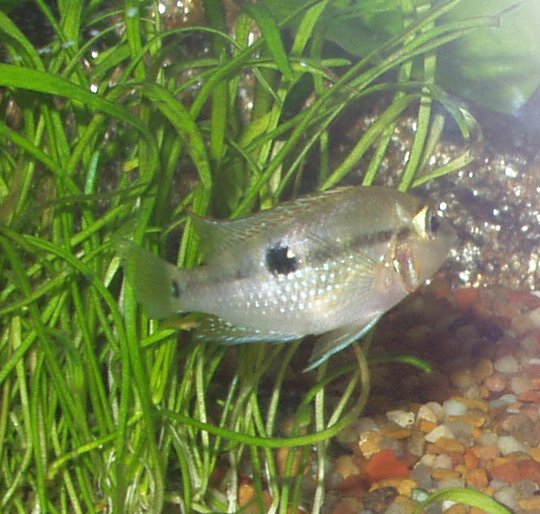
Firemouth cichlids (Thorichthys meeki) are one of the most recognizable Central American cichlids in the hobby. They get their name from the bright red coloring on the throat and lower jaw. Adults usually reach 5 to 6 inches in length, with males growing larger and showing longer fin extensions. That makes them a manageable cichlid for keepers who want personality without a monster fish. Still, they need a proper setup, stable water, and a thoughtful stocking plan.
These fish are often called a gateway to larger cichlids. They are less aggressive than many Central American relatives, but they still guard territory. For a closer look at a similar species, see the convict cichlid care guide. According to Aquarium Co-Op, firemouths are hardy fish that reward keepers who provide stable water and enough floor space. A little planning goes a long way with this species.
This guide explains how to care for firemouth cichlids from tank size to diet and compatibility. You will learn water parameters, feeding routines, tank mate choices, and maintenance habits. The goal is a healthy fish that shows its best red throat and blue spangling. Many keepers find these fish peaceful enough for a carefully chosen community tank. But they do not tolerate cramped conditions or tiny, slow-moving tank mates.
Before you bring one home, know that firemouths are not ideal for every setup. They need warm water, clean conditions, and a tank with visual barriers. Small tanks and tiny tank mates create stress. With the right plan, a firemouth cichlid can live for 8 to 10 years. This guide will help you avoid common mistakes and enjoy this colorful Central American species.
What You’ll Need
- 40-gallon or larger aquarium
- Hang-on-back or canister filter
- Adjustable heater
- API Freshwater Master Test Kit
- Sand or fine gravel substrate
- Rocks, driftwood, and caves
- High-quality cichlid pellets
- Frozen bloodworms and brine shrimp
How Do You Care for Firemouth Cichlids?
- Set up a 40-gallon or larger tank first
Start with a tank that gives firemouths room to claim territory. A single adult can live in a 30-gallon tank, but a pair or a small group needs 40 gallons or more. A 40-gallon breeder has a wider footprint, which is better than a tall tank. Firemouths stay near the bottom and middle, so floor space matters more than height. If you plan to keep other cichlids, use a 55-gallon or larger setup.
Filtration keeps the water clean because cichlids produce a lot of waste. Choose a hang-on-back or canister filter rated for at least 1.5 times the tank volume. For a 40-gallon tank, that means a filter rated for 60 gallons or more. You can compare options in our best aquarium filters guide. A reliable choice is the Fluval AquaClear filter.
Add a heater that can hold the water between 75 and 82 degrees Fahrenheit. Use a thermometer to confirm the temperature. A good heater prevents rapid swings that stress fish. Our best aquarium heaters roundup lists dependable options. Place the heater near the filter outflow so warm water circulates.
Use sand or fine gravel as the substrate. Firemouths like to sift through the bottom, and sharp gravel can damage their gills. Add driftwood, rocks, and a few caves. These items create territories and hiding spots. This step sets up the physical space before you worry about water chemistry or tank mates.

- Cycle the tank completely before adding fish
Never add firemouths to an uncycled tank. A new filter has no beneficial bacteria to process waste. Ammonia and nitrite will climb fast and poison the fish. Fishless cycling is the safest route. Add a small amount of pure ammonia to an empty tank and let bacteria grow. Learn the exact steps in our how to cycle a fish tank guide.
Cycling takes four to six weeks. During that time, test the water every day or two. You need a reliable kit. The API Freshwater Master Test Kit measures ammonia, nitrite, nitrate, and pH. For background on why this matters, read our aquarium nitrogen cycle explained article.
The cycle is finished when ammonia and nitrite read zero after adding ammonia. Nitrate should be below 20 ppm. At that point, do a large water change to lower nitrate before adding fish. If you rush this step, the fish may survive but suffer permanent gill damage.
Once the tank is cycled, add the firemouths slowly. Start with one or two fish and monitor the water for spikes. This is especially important if you choose fish-in cycling, which is not recommended. A stable cycle is the foundation for every other part of firemouth care.
- Keep water warm, slightly alkaline, and stable
Firemouth cichlids tolerate a range of conditions, but they do best in warm, slightly alkaline water. Keep the temperature between 75 and 82 degrees Fahrenheit, or 24 to 28 degrees Celsius. The pH should stay between 6.5 and 8.0. Many keepers target 7.0 to 7.8. Water hardness between 8 and 15 dGH works well.
Stability matters more than hitting perfect numbers. Fish become stressed when pH or temperature swings quickly. Aqueon notes that consistent water quality helps cichlids show better color and behavior. Test the water weekly and after any change. If your tap water is far outside the recommended range, adjust it slowly over several days.
Regular water changes keep nitrate and dissolved organics low. Change 25 to 30 percent of the water every week. This also replaces minerals that fish need. Our how often to change aquarium water guide explains the routine in detail. Use a gravel vacuum to remove waste from the substrate.
Avoid chasing a perfect pH with chemicals. Large pH swings cause more harm than a stable value outside the ideal range. If you need to adjust pH, do it gradually. This step connects to feeding and stocking because clean water supports healthy growth and reduces aggression triggered by stress.

- Feed a varied, protein-rich diet
Firemouth cichlids are omnivores. In the wild, they eat small invertebrates, insect larvae, and plant matter. In the aquarium, use a high-quality cichlid pellet as the staple food. Choose pellets that sink, because firemouths often feed near the bottom. Feed an amount the fish can eat in one to two minutes.
Supplement the pellets with frozen foods two or three times a week. Bloodworms, brine shrimp, daphnia, and mysis shrimp are good choices. These foods bring out red coloration and encourage natural feeding behavior. You can also offer blanched vegetables like spinach, zucchini, or shelled peas once a week. Remove uneaten vegetables after a few hours.
Feed juveniles two or three times a day in small portions. Adults do well with one or two feedings a day. Overfeeding is a common problem. It causes bloating, cloudy water, and high nitrate. If a fish has a rounded belly, skip the next feeding.
A varied diet supports health and color. It also makes the fish less likely to nip at plants or tank mates. The next step is choosing compatible fish, and a well-fed cichlid is usually less aggressive than a hungry one.
- Choose tank mates carefully to avoid aggression
Firemouth cichlids are moderately aggressive. They are not as mean as some Central American cichlids, but they defend territory. A breeding pair becomes very protective. This means tank mates must be chosen carefully.
Good tank mates include medium-sized fish that can hold their own. Convict cichlids, swordtails, larger tetras, and some barbs work in a big tank. For a closer look at one compatible species, see our convict cichlid care guide. Bottom dwellers like corydoras catfish and bristlenose plecos can also work if the tank has enough floor space.
Avoid small, slow fish. Neon tetras, guppies, and shrimp become food. Avoid fish with long flowing fins. Adult firemouths may nip angelfish. If you want angelfish, check the angelfish care guide and plan a very large tank with many sight breaks. Even then, it is a risk.
Stock one firemouth or a bonded pair in most tanks. Two males will fight unless the tank is very large with multiple territories. Introduce tank mates at the same time if possible. Watch for chasing during the first two weeks. Have a backup plan ready in case you need to separate fish.
- Decorate with sight breaks and defined territories
Firemouths need a tank with structure. Rocks, driftwood, and caves break line of sight. This prevents constant chasing and lets weaker fish retreat. Without visual barriers, even peaceful fish can become stressed.
Arrange the decor before adding fish. Create at least two or three distinct hiding spots. Use smooth rocks to build caves. Driftwood adds tannins and creates shade. If you want live plants, choose tough species. Java fern and Anubias can be attached to driftwood. Vallisneria and Amazon swords work in the background. Our best aquarium plants for beginners guide lists easy options.
Leave open swimming space in the front. Firemouths like to dig, so anchor plants and place rocks directly on the glass. A breeding pair will clear a pit near a flat rock. That is normal behavior. If you see digging, it usually means they are preparing to spawn.
This step reduces stress and aggression. It also makes the tank look natural. Decor is not just for you. It gives each fish a place to call its own. Healthy fish show better color and more interesting behavior.

- Change water weekly and watch for signs of stress
Once the tank is set up and stocked, stick to a routine. Change 25 to 30 percent of the water every week. Use a gravel vacuum to remove leftover food and waste from the substrate. Wipe down the glass if algae builds up. This keeps nitrate low and prevents disease.
Watch for signs of stress or sickness. Firemouths should swim with fins open. Clamped fins, rapid breathing, or hiding all day can signal a problem. White spots may mean ich. If you see ich, start treatment quickly. Our how to treat ich in aquarium guide covers safe options.
Quarantine all new fish for two to four weeks before adding them. Firemouths can catch parasites and bacterial infections from new arrivals. A separate quarantine tank does not need to be large. A 10-gallon tank with a sponge filter works well.
Test the water weekly for ammonia, nitrite, nitrate, and pH. Log the results so you notice changes. A stable tank rarely needs emergency fixes. Good maintenance extends the life of your firemouth and keeps the whole community healthy.
Red Flags & Warnings
- 🚨 Do not keep firemouth cichlids in a tank under 30 gallons. A 40-gallon breeder gives a pair enough floor space, and smaller tanks trigger stress and aggression.
- 🚨 Never add small, slow-moving fish like neon tetras or guppies. Firemouths view them as food, especially once they reach adult size.
- 🚨 Avoid keeping two male firemouths in a small tank. They will fight, and one may be killed or constantly stressed.
- 🚨 Do not overfeed protein-rich foods. Excess food fouls the water and leads to bloat and nitrate spikes.
- 🚨 Skip the fish-in cycle. Ammonia and nitrite burns can permanently damage gills, even if the fish survives.
- 🚨 Quarantine all new fish for two to four weeks. Firemouths can catch ich and other parasites from new tank mates.
Frequently Asked Questions
How big do firemouth cichlids get?
Adult firemouths usually reach 5 to 6 inches. Males are larger with longer fin extensions. Females stay slightly smaller. Plan tank size accordingly.
Are firemouth cichlids aggressive?
They are moderately aggressive and territorial, especially when breeding. They are less aggressive than many Central American cichlids but still need space and sight breaks.
What is the ideal water temperature and pH for firemouth cichlids?
Keep temperature between 75 and 82 degrees Fahrenheit. Aim for pH between 6.5 and 8.0, ideally near 7.0 to 7.8. Stability matters more than exact numbers.
Can firemouth cichlids live with angelfish?
It is risky. Angelfish have long fins and slower movements. A breeding firemouth may attack them. A large tank can help, but it is not a safe pairing for everyone.
How often should I change water for a firemouth cichlid tank?
Change 25 to 30 percent of the water weekly. Use a gravel vacuum to remove waste. Test nitrate to stay under 20 ppm.
Can I keep a firemouth cichlid in a 20-gallon tank?
A 20-gallon long may work for a single juvenile, but it is not a long-term home. An adult needs a 30-gallon minimum, and a pair needs 40 gallons or more.
What Should You Remember?
- Tank size: Use a 40-gallon or larger tank for a pair or community. A single adult needs at least 30 gallons.
- Water parameters: Keep water at 75-82°F and pH 6.5-8.0. Stability prevents stress.
- Cycling: Fully cycle the tank before adding firemouths. Ammonia and nitrite must stay at zero.
- Diet: Feed high-quality cichlid pellets plus frozen and vegetable foods. Avoid overfeeding.
- Tank mates: Choose medium-sized, hardy fish. Avoid small tetras, guppies, and slow long-finned species.
- Territory: Use rocks, driftwood, and plants to break sight lines. This lowers aggression.
- Maintenance: Change 25-30 percent of the water weekly. Quarantine new arrivals.
This article is for general information only and is not a substitute for professional veterinary or aquarium specialist advice. Always research the specific needs of your fish and consult an expert before making care decisions.