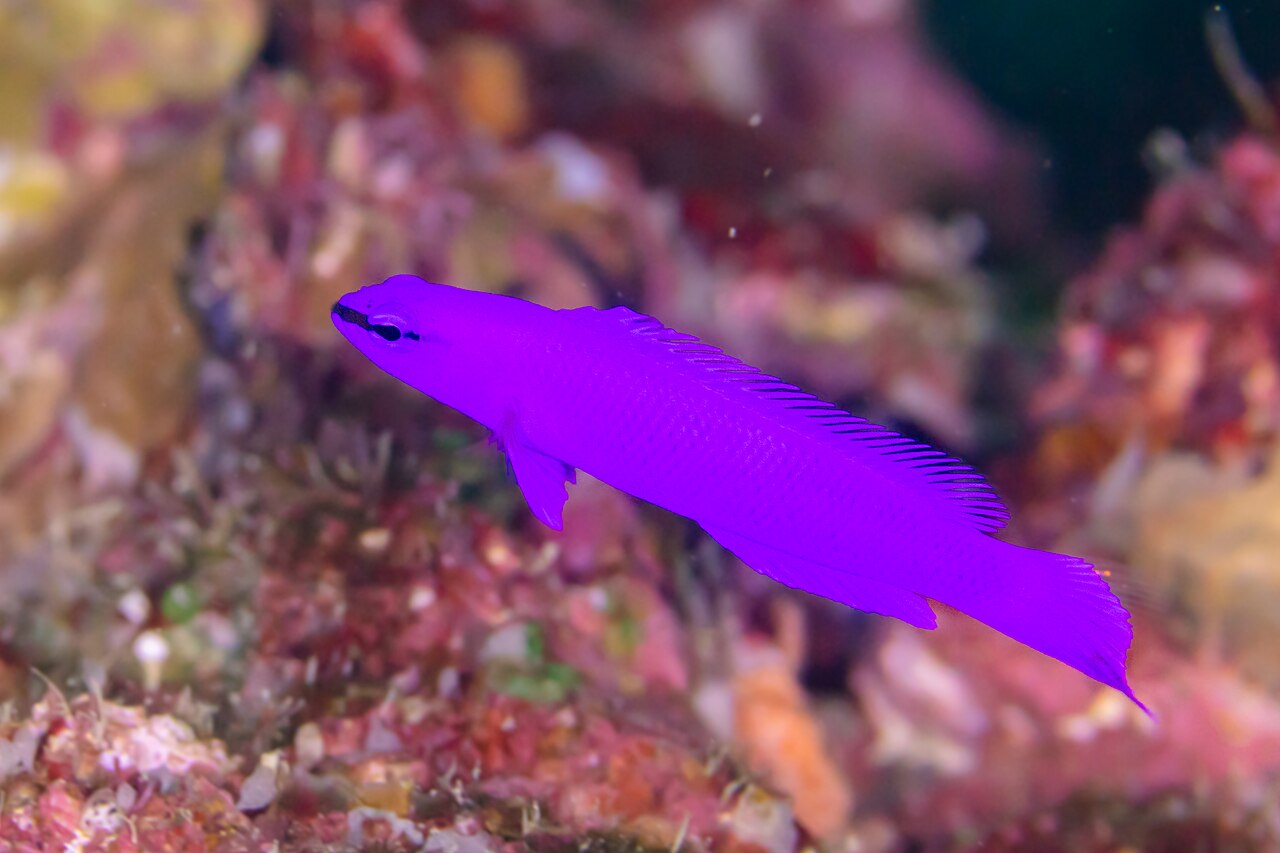
The orchid dottyback (Pseudochromis fridmani) is one of the most eye-catching fish you can add to a saltwater aquarium. Its deep magenta to violet body seems to glow under reef lighting, and that color is the main reason this Red Sea native is so popular. But before you bring one home, you need to understand its behavior. This guide walks through tank setup, feeding, and compatibility so your fish stays healthy. A solid grasp of the aquarium nitrogen cycle also helps, because this fish needs stable, cycled water.
Orchid dottybacks stay small, usually around three inches in length. That compact size makes them tempting for smaller tanks, but they still need room to claim territory. They are hardy fish, yet they can be territorial with other bottom-dwelling or small species. According to Aqueon, dottybacks are relatively easy to keep when given proper hiding places and water conditions. The key is to treat them like a semi-aggressive reef fish, not a shy community species.
Many aquarists assume a small fish means low care. That is not the case with this species. Orchid dottybacks need a mature tank with live rock, stable salinity, and a meaty diet. If you skip the cycle or choose peaceful tank mates, problems will follow. Still, with the right setup, this fish can be a long-lived and fascinating addition. The steps below cover everything from tank size to maintenance routines, plus the mistakes that catch new keepers off guard.
This guide is written for saltwater hobbyists who want a practical, no-nonsense plan. You will learn the exact water parameters, feeding schedule, and tank mate choices that work. We will also cover the behavior quirks that make this fish a love-hate choice for many reef keepers. By the end, you will know whether an orchid dottyback belongs in your reef or fish-only system. Read through all steps before buying any equipment or livestock.
What You’ll Need
- 30-gallon saltwater aquarium
- Protein skimmer
- Aquarium heater
- Powerhead or wavemaker
- Refractometer
- Marine test kits
- Frozen mysis shrimp
- Tight-fitting lid
How Do You Care for an Orchid Dottyback?
- Set Up a 30-Gallon or Larger Saltwater Aquarium
An adult orchid dottyback reaches about three inches, but its territorial nature demands more space than its size suggests. A 30-gallon tank is the practical minimum for a single fish. Smaller tanks force the fish into constant defensive mode, which leads to stress and aggression. If you plan to keep tank mates, start with a 40-gallon or larger system. More water volume also dilutes waste and keeps parameters stable. For a first saltwater build, review options in best beginner fish tanks.
The aquascape matters as much as water volume. Use live rock or dry rock to create caves, overhangs, and broken lines of sight. Orchid dottybacks spend much of their time darting in and out of rockwork. When they have multiple hiding spots, they feel secure and are less likely to harass tank mates. Place rock structures away from the glass so the fish can swim behind them. A sandy substrate is fine, but not strictly required.
Filtration should include a quality protein skimmer. Dottybacks produce moderate waste, and a skimmer removes dissolved organics before they break down. You can also run a sump with mechanical and biological media. If you need a recommendation, check a protein skimmer sized for your tank volume. Match the skimmer rating to your total water volume, not just the display tank.
Finally, choose a sturdy stand and place the tank away from direct sunlight. Direct sun fuels algae and swings temperature. A tight-fitting lid or mesh screen is essential because orchid dottybacks can jump when startled. This step sets the foundation for everything else, so do not rush it.

- Install Reliable Heating, Filtration, and Water Flow
Saltwater fish need stable temperature. For an orchid dottyback, keep the water between 72 and 78 degrees Fahrenheit. A reliable heater with a controller prevents dangerous swings. Sudden temperature drops or spikes weaken the immune system and open the door to parasites. Choose a reliable aquarium heater rated for your tank size and place it near water flow. See best aquarium heaters for solid options.
Filtration for a saltwater tank is different from freshwater. Biological filtration in live rock handles ammonia and nitrite. Mechanical filtration removes particles, and a protein skimmer strips organic waste. You can use a hang-on-back filter on smaller setups or a sump on larger tanks. Whichever you choose, make sure the flow rate turns over the tank volume at least ten times per hour.
Water flow also matters. Orchid dottybacks come from reef slopes with moderate to strong current. Use a powerhead or wavemaker to create gentle, chaotic flow. Avoid aiming a strong jet directly at rock caves. The fish should be able to rest in lower flow areas. Good circulation also keeps detritus suspended so filters can remove it.
Install all equipment and run it for 24 hours before adding any livestock. Check for leaks, adjust the heater, and fine-tune flow. This is also the time to test salinity. A refractometer is more accurate than a swing-arm hydrometer. Once equipment runs smoothly, the next step is cycling the tank.
- Cycle the Tank Before Introducing the Fish
Never add an orchid dottyback to an uncycled tank. The fish is hardy, but ammonia and nitrite burns can kill it quickly. Cycling establishes beneficial bacteria that convert ammonia to nitrite and then to nitrate. Use a fishless cycling method with pure ammonia or a bacterial starter. The process takes four to six weeks. Full instructions can be found in how to cycle a fish tank.
During the cycle, test water every day or every other day. You want ammonia and nitrite to spike and then drop to zero. Nitrate will rise at the end. Only when ammonia and nitrite read zero for several consecutive days is the tank ready. If you already have live rock, some of that rock may bring beneficial bacteria, but do not rely on it alone.
Rushing this step is the most common beginner mistake. Even a small ammonia spike later can stress the fish and cause it to hide, refuse food, or breathe heavily. A cycled tank also supports stable pH and oxygen levels. When in doubt, wait an extra week. The orchid dottyback will be healthier for it.
After cycling, perform a partial water change to lower nitrate before adding fish. Aim for nitrate below 20 ppm, ideally under 10 ppm. This gives your new fish a clean start. Now you can focus on maintaining the right water parameters.
- Match Orchid Dottyback Water Parameters
Orchid dottybacks need stable saltwater conditions. Target a salinity of 1.020 to 1.025 specific gravity. Temperature should stay between 72 and 78 degrees Fahrenheit. pH should remain between 8.1 and 8.4. Alkalinity between 8 and 12 dKH supports stable pH. Test these parameters weekly, especially in a newer tank.
Use a refractometer to measure salinity. Swing-arm hydrometers can be inaccurate if air bubbles stick to the arm. Calibrate your refractometer with calibration fluid, not just tap water. Top off evaporated water with fresh RO/DI water, not saltwater. Salt does not evaporate, so adding saltwater raises salinity over time.
Water changes are part of stable parameters. Change 10 to 20 percent of the water every two weeks. Siphon detritus from the sand bed and vacuum bare areas. Mix new saltwater 24 hours in advance and match temperature and salinity to the display. Aqueon provides useful water care guides that cover mixing and testing basics.
Consistency is more important than chasing perfect numbers. Orchid dottybacks tolerate a reasonable range if changes happen slowly. Avoid large parameter swings. An automatic top-off system helps maintain salinity. If you keep corals, test calcium, magnesium, and alkalinity on a regular schedule as well.
- Feed a Varied Meat-Based Diet
Orchid dottybacks are carnivores. In the wild, they eat small crustaceans, zooplankton, and tiny worms. In captivity, offer a mix of meaty foods. Frozen mysis shrimp is a staple. You can also feed brine shrimp, chopped krill, and finely chopped seafood. Use a high-quality marine pellet or flake to round out vitamins.
Feed once or twice a day, only what the fish can eat in about two minutes. Overfeeding causes nitrate and phosphate spikes. Remove uneaten food with a siphon or turkey baster. When introducing a new fish, it may hide and refuse food for a day or two. Keep offering small amounts until it starts eating. Stock up on frozen mysis shrimp so you always have a staple on hand.
Variety prevents nutritional deficiencies. Rotate between frozen mysis, enriched brine shrimp, and a quality pellet. Soaking frozen food in a vitamin supplement once or twice a week helps. Avoid feeding only dry food. A varied diet also preserves the fish’s bright coloration. Aquarium Co-Op has practical advice on feeding saltwater fish.
Watch the fish’s belly. A healthy orchid dottyback has a slightly rounded but not bloated abdomen. If you see a pinched stomach, increase feeding frequency. If you see stringy white feces, consider internal parasites and adjust food with a binder. Consistent feeding reduces aggression as well. A well-fed fish is less likely to chase tank mates.

- Choose Semi-Aggressive Tank Mates Carefully
Compatibility is the biggest challenge with orchid dottybacks. They are not community fish in the peaceful sense. Small, docile species like firefish, dartfish, and tiny gobies often become targets. The dottyback will chase them out of hiding spots and may injure them. Avoid any fish that looks like a smaller version of itself or competes for the same rock caves.
Better tank mates include semi-aggressive fish that can hold their own. Dwarf angelfish, some tangs, and larger wrasses usually work. Clownfish, especially ocellaris, can coexist in a 40-gallon or larger tank. For a similar but calmer cave-dwelling fish, read the royal gramma care guide. Do not keep orchid dottybacks with other dottybacks or small basslets unless the tank is very large.
Add the orchid dottyback last whenever possible. This prevents it from claiming the entire tank before other fish settle in. When adding new fish after the dottyback, rearrange rockwork to break established territories. Dim the lights for a few hours. Have a backup plan, such as a breeder box or separate tank, if aggression starts.
Invertebrates like cleaner shrimp and small sexy shrimp may be eaten. Larger coral banded shrimp and most snails are usually safe. Corals are generally ignored, making this fish a good reef candidate. Just remember that every fish has an individual personality. Some orchid dottybacks are mild, while others are outright bullies.

- Monitor Behavior and Maintain Water Quality
After your orchid dottyback settles in, watch it daily. A healthy fish explores the rockwork, eats eagerly, and shows bright color. Hiding for long periods, rapid breathing, or clamped fins are red flags. These symptoms often point to water quality problems, aggression, or disease. Early detection gives you the best chance to fix the issue.
Test water weekly for ammonia, nitrite, nitrate, and pH. Ammonia and nitrite must remain at zero. Nitrate should stay below 20 ppm, with lower being better. If nitrate rises, increase water change frequency or reduce feeding. Sudden pH swings can stress the fish. For disease treatment, see how to treat ich in aquarium.
Observe interactions with tank mates. If the dottyback constantly chases other fish, you may need to remove one. A stressed fish stops eating and becomes vulnerable to illness. Sometimes simply adding more rockwork solves the problem. Other times, you must rehome the aggressor. Never let bullying continue for days.
Keep a maintenance log. Record water test results, water changes, and feeding. This helps you spot trends before they become emergencies. Over time, you will learn your tank’s rhythm. A stable, well-maintained aquarium allows an orchid dottyback to live five to seven years or more.
Red Flags & Warnings
- 🚨 Never add an orchid dottyback to an uncycled tank. Ammonia or nitrite spikes can kill even hardy saltwater fish.
- 🚨 Avoid keeping orchid dottybacks with small, peaceful fish like firefish, dartfish, or tiny gobies. The dottyback may bully or injure them.
- 🚨 Do not keep two orchid dottybacks in a tank smaller than 75 gallons. They will likely fight over territory and one may die.
- 🚨 Use a tight-fitting lid or mesh screen. Orchid dottybacks can jump when startled, especially during tank maintenance or after lights out.
- 🚨 Quarantine all new fish and invertebrates before adding them to the display. This prevents introducing ich or other parasites.
- 🚨 Do not overfeed. Leftover food breaks down into ammonia and nitrate, which can destabilize water quality quickly.
Frequently Asked Questions
How big do orchid dottybacks get?
Orchid dottybacks usually reach about three inches in length in home aquariums. Wild specimens may grow slightly larger, but three inches is the typical adult size.
Are orchid dottybacks reef safe?
Yes, they are generally safe with corals and most larger invertebrates. However, they may eat very small ornamental shrimp, so choose invertebrates carefully.
What do orchid dottybacks eat?
They are carnivores and need a meaty diet. Offer frozen mysis shrimp, brine shrimp, chopped krill, and high-quality marine pellets once or twice a day.
Can I keep an orchid dottyback with clownfish?
Often yes, especially in a 40-gallon or larger tank. Pair it with semi-aggressive clownfish like ocellaris and monitor initial aggression to ensure both fish settle in.
How long do orchid dottybacks live?
With proper care, orchid dottybacks can live five to seven years or more. Stable water quality and a varied diet help extend their lifespan.
Do orchid dottybacks jump?
Yes, they can jump when startled. A tight-fitting lid or mesh screen is essential to prevent them from leaping out of the aquarium.
What Should You Remember?
- Tank size: Use a 30-gallon minimum with plenty of rockwork and caves.
- Water parameters: Keep salinity 1.020-1.025, temperature 72-78°F, and pH 8.1-8.4.
- Cycle first: Fully cycle the tank before adding the fish to avoid ammonia burns.
- Diet: Feed meaty foods like mysis shrimp daily for bright color and health.
- Tank mates: Choose semi-aggressive species and avoid tiny, docile fish.
- Maintenance: Change 10-20% of water every two weeks and test weekly.
- Behavior: Provide multiple hiding spots and watch for bullying or stress.
This article is for general information only and is not a substitute for professional veterinary or aquarium specialist advice. Always research the specific needs of your fish and consult an expert before making care decisions.