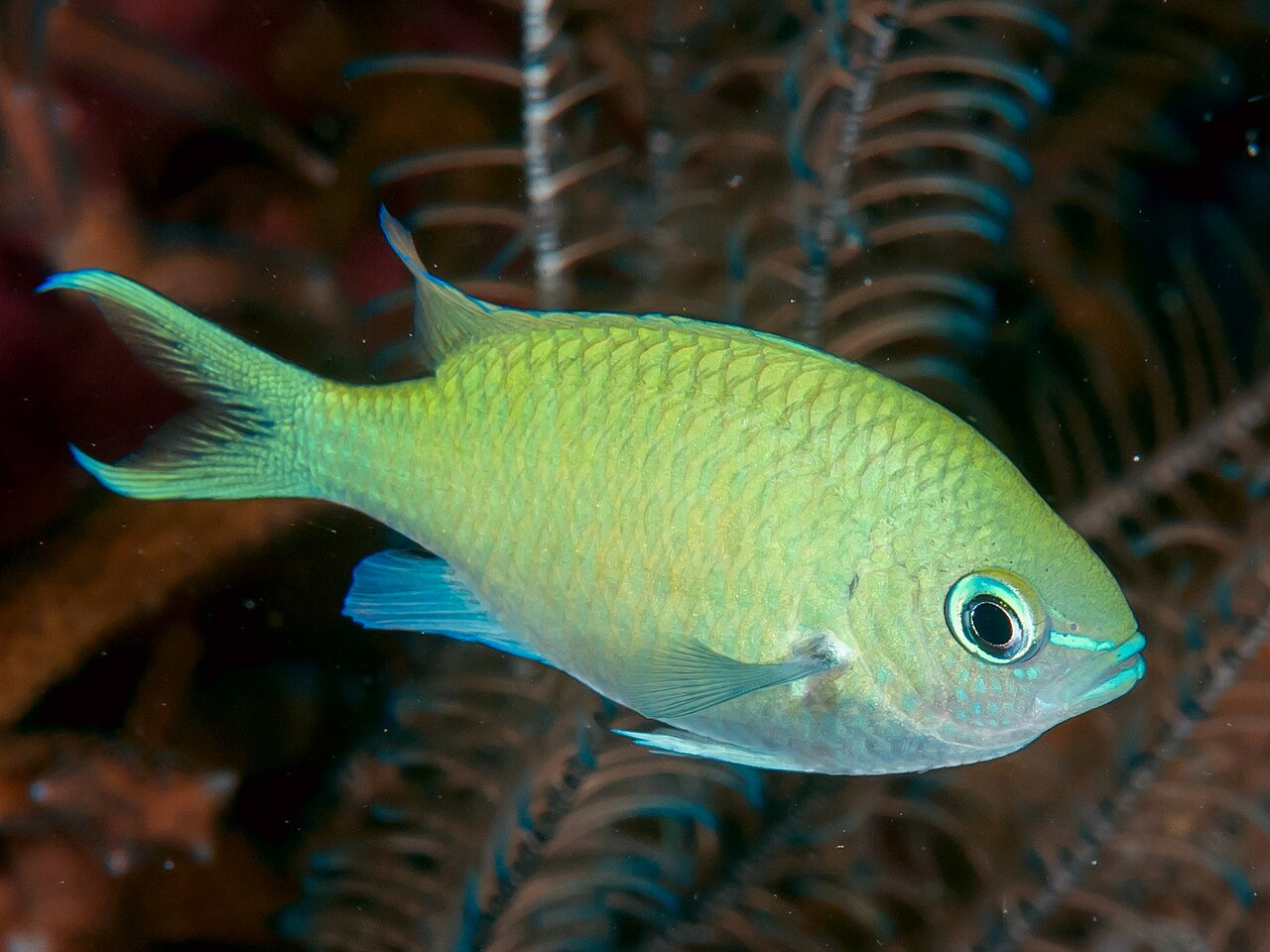
Green chromis are one of the most approachable saltwater fish for new keepers. Their blue-green shimmer, peaceful nature, and hardiness make them popular in community tanks. They stay small, usually around 3 inches, and they tolerate a range of conditions better than many other marine species. If you have a cycled tank and want a schooling fish that brings constant motion, green chromis deserve a close look. They are not, however, a zero-care fish. You still need to manage water quality and choose tank mates carefully. Before you add them, read through this guide so you know what to expect from day one.
The green chromis, Chromis viridis, belongs to the damselfish family. That family has a bad reputation for aggression, but green chromis are the exception. They do well in groups, which is unusual for damsels. Still, that does not mean you can toss a handful into any tank. They need space, stable parameters, and a diet that keeps their colors bright. If those needs are met, they reward you with active, peaceful behavior. For more on cycling a tank before adding any fish, see our aquarium nitrogen cycle guide. A strong cycle is the foundation of all saltwater success.
This guide covers tank size, water chemistry, feeding, schooling behavior, and compatible tank mates. You will learn how to avoid the common mistakes that lead to stress, disease, and early death. Green chromis are often sold as starter fish, and they are good at that job. But they still need a mature, stable environment. If you are new to saltwater, consider reviewing our list of best fish for beginners to see how green chromis compare to other hardy species.
By the end, you will know exactly how to set up, stock, and maintain a tank for green chromis. We will also cover red flags like uronema, aggression, and sudden die-off. The more you prepare, the longer your chromis will live. Most keepers can expect several years of healthy activity from a well-cared-for group.
What You’ll Need
- 30-gallon or larger saltwater aquarium
- Live rock and open swimming space
- Marine test kits for ammonia, nitrite, nitrate, pH
- Heater and thermometer
- Protein skimmer or quality mechanical filter
- Quarantine tank with spare heater and filter
- Marine pellet and frozen food
How Do You Care for Green Chromis?
- Set Up a Properly Sized Tank
Start with a tank of at least 30 gallons for a small group. Green chromis reach an adult size of about 3 inches, and they need horizontal swimming room. A 30-gallon tank can house five or six chromis if filtration is strong and maintenance is regular. But bigger is always better. A 55-gallon or 75-gallon tank gives a larger school room to move and reduces stress. Avoid nano tanks under 20 gallons. They are too tight for a schooling fish that thrives in open water.
Before adding any fish, the tank must be fully cycled. That means ammonia and nitrite read zero and nitrate stays under 20 ppm. If you have never cycled a saltwater tank, read this step-by-step guide on how to cycle a fish tank. A cycled tank processes waste safely. Green chromis are hardy, but they will still suffer from ammonia burns and nitrite poisoning if added too early. Slow down and let the cycle finish.
Decorate with live rock arches and branching rockwork, but leave open space. Green chromis like to dart through rock gaps when startled. They also sleep in crevices at night. Use cured live rock or dry rock that you seed with bottled bacteria. Arrange the rock so there are caves and overhangs, but keep the front two-thirds of the tank open. That open water column is where your chromis will spend most of the day.
Match the tank to your long-term plan. If you want a reef tank with corals, green chromis are reef safe. They will not nip at corals or sessile invertebrates. If you want a fish-only system, keep the same water quality standards. The tank size and cycle are not negotiable. Set up well, and the next steps become much easier.

- Quarantine New Green Chromis Before Adding
Quarantine is not optional for green chromis. They are frequently collected and shipped in large groups, which means disease spreads fast. Uronema marinum and marine velvet are common in this species. A 10-gallon quarantine tank works for a small group. Use a sponge filter, heater, PVC pipe pieces for hiding, and no live rock or sand. Keep the quarantine tank simple so you can clean it and monitor medication if needed.
Observe new fish for two to four weeks before adding them to your display. Look for red sores, ragged fins, rapid breathing, white spots, or loss of color. Green chromis often hide these signs until stress peaks. If any fish shows symptoms, treat in quarantine, not in the display. Aqueon’s saltwater fish care guidance recommends quarantine for all new marine fish. That practice protects your existing tank.
During quarantine, feed small meals and check ammonia daily. A quarantine tank may not be fully cycled, so use a liquid test kit and do water changes as needed. Keep specific gravity stable at 1.020 to 1.025. Temperature should stay between 72 and 78 degrees Fahrenheit. Add an airstone for oxygen. Good gas exchange helps fish recover from shipping stress.
After quarantine, acclimate slowly. Drip acclimate for 45 minutes to an hour. Match temperature and salinity before release. Turn off tank lights for the first few hours. Then add the group all at once. Adding them together reduces the chance that an established fish bullies a lone newcomer. Quarantine may feel like extra work, but it saves your entire display from a wipeout.
- Maintain Stable Water Parameters
Green chromis need stable saltwater conditions. Keep temperature between 72 and 78 degrees Fahrenheit. A heater with a reliable thermostat is necessary. For larger tanks, consider two smaller heaters instead of one large unit. Redundancy helps if one fails. You can compare options in our guide to the best aquarium heaters. Stable temperature is more important than hitting one exact number.
Target a pH of 8.1 to 8.4 and specific gravity of 1.020 to 1.025. Test alkalinity regularly because it buffers pH. Use a quality marine test kit, not dip strips. The API Saltwater Master Test Kit measures pH, ammonia, nitrite, and nitrate. You also need separate kits for alkalinity and calcium if you keep corals. Write down your results. Tracking trends catches problems before fish show symptoms.
Ammonia and nitrite must always read zero. Nitrate should stay below 20 ppm, and lower is better for long-term health. Weekly water changes of 10 to 20 percent keep nutrients in check. Use reverse osmosis or deionized water mixed with quality salt. If you need a refresher on the cycle and why those numbers matter, see our aquarium nitrogen cycle guide. Strong filtration also helps. A protein skimmer pulls organic waste before it breaks down. Pair it with quality mechanical media. See our best aquarium filters for saltwater-rated options.
Feeding and lighting affect parameters too. Overfeeding leads to nitrate spikes. Intense lighting can raise temperature in small tanks. Check temperature and salinity daily for the first month. After that, check twice a week. Green chromis forgive minor slips, but they will not survive prolonged parameter swings. Consistency is the goal.
- Feed a Varied Omnivore Diet
Green chromis are planktivores in the wild. They eat zooplankton, small crustaceans, and algae bits. In a tank, feed a mix of high-quality marine pellets, frozen foods, and occasional veggie matter. A varied diet keeps their colors bright and their immune systems strong. Feed small amounts two to three times per day. Only offer what they can eat in about two minutes. Remove uneaten food to protect water quality.
A good dry food is Omega One Marine Pellets. These pellets sink slowly, which suits mid-water feeders. Supplement with frozen mysis shrimp, enriched brine shrimp, and cyclops. Thaw frozen cubes in tank water, then use a turkey baster or pipette to target feed. Green chromis learn quickly and will gather at the surface when they see you. That makes feeding fun, but it also means they can be outcompeted by faster fish.
Include small amounts of spirulina or algae-based flake. Even though they are not strict herbivores, plant matter aids digestion. You can also offer finely chopped nori once or twice a week. Avoid large food particles. Their mouths are small. If pellets are too big, crush them between your fingers. Soaking dry food in a few drops of garlic extract or amino acid supplement can boost appetite in new arrivals.
Skip feeder fish and raw seafood from the grocery store. Those bring parasites and bacteria. Use marine-specific frozen foods from a reputable shop. If you keep corals, green chromis will not steal coral food unless it is tiny and drifting. That said, they will happily grab prepared coral foods like zooplankton mixes. Feed the fish first, then target feed corals. This helps every animal get its share.
- Keep Them in a Small School or Group
Green chromis are one of the few damselfish species that naturally school. In the ocean, they gather by the hundreds above branching corals. In a home tank, a group of five to seven is ideal. Odd numbers often work well. A group provides security and spreads out minor aggression. A lone green chromis may become skittish or spend too much time hiding. It is not a happy long-term setup.
Start with a group of at least five. If you have a very large tank, you can keep nine or more. But avoid overstocking. A 30-gallon tank can handle five or six small chromis if filtration is strong. For a group of seven or more, upgrade to a 55-gallon or larger tank. More fish means more waste. You will need a bigger water change schedule or better filtration.
Watch the social dynamics in the first few weeks. Green chromis establish a pecking order. The largest fish may chase the others during feeding. This is normal as long as no fish is hiding constantly, losing weight, or showing torn fins. Provide multiple hiding spots and break line of sight with rockwork. If aggression becomes severe, remove the bully or add more fish to spread the behavior. But adding more fish only works if the tank is large enough.
Some keepers report gradual loss in green chromis groups over the first year. This often happens because the group was too small or one fish was already sick. A healthy group in a properly sized tank should remain stable for years. If you lose one or two, do not rush to replace them immediately. Quarantine new additions first, then add at least three at a time so the social balance resets.

- Choose Compatible Tank Mates
Green chromis are peaceful and reef safe. They mix well with many community saltwater fish. Good tank mates include clownfish, royal grammas, firefish, cardinals, blennies, gobies, and small wrasses. Avoid aggressive damsels like domino damsels, three-stripe damsels, and sergeant majors. Those fish will chase and nip green chromis. They can also monopolize food and hiding spots.
For example, clownfish generally coexist well with green chromis in tanks over 30 gallons. Royal grammas are also good choices because they prefer rockwork while chromis stay in open water. That spatial separation reduces conflict. Small wrasses like six-line wrasses can work, but some six-lines become territorial as they age. Watch them closely. Avoid large predatory fish such as lionfish, groupers, and large angelfish. They will see green chromis as food.
Corals and invertebrates are safe with green chromis. They will not pick at polyps, clams, or shrimp. This makes them ideal for mixed reef tanks. Still, add chromis after your clean-up crew has settled if possible. That way the chromis learn to share the tank without disrupting the sand bed. Green chromis do not dig, so they will not bury corals on the substrate.
Think about water flow and feeding zones. Green chromis prefer moderate flow and open water. Fish that need very low flow or that are extremely shy may not do well with a fast-moving school. Also consider your tank size. In a 30-gallon tank, keep the total fish number modest. For more ideas on community saltwater fish, check our guide to the best fish for beginners. Compatibility is about behavior, not just size.
- Provide Open Swimming Space and Rockwork
Green chromis need both open water and shelter. That sounds contradictory, but both are essential. Set up the tank with rockwork along the back and sides. Leave the front two-thirds open. Use tall rock formations or branching coral decorations to create vertical structure. The fish will swim in the open area and dart into the rock when frightened. This layout mimics a reef slope, their natural habitat.
Good flow helps green chromis feel at home. Use a powerhead or wave maker to create gentle to moderate current. They naturally feed in moving water. Flow also carries food particles past them, which triggers their feeding response. Aim for 10 to 20 times tank volume per hour in total flow, including your return pump. Avoid a laminar jet that pins fish against the glass. Broad, chaotic flow is best.
Lighting matters less for green chromis than for corals, but a bright tank shows their colors. A standard reef LED with blue and white channels works well. If you are planning a reef system, see our guide to best aquarium lighting for options. Green chromis will not damage corals, so you can run lighting schedules that suit your corals. Start with a shorter photoperiod in the first week to reduce stress.
At night, chromis seek a crevice to sleep. They often wedge themselves into a rock branch or hover near a pump intake. This is normal. Dim the lights gradually or use a moonlight mode. Sudden darkness can cause them to dart. Once they learn the tank layout, they will settle into a favorite sleeping spot. Keep that area stable. Do not rearrange rockwork often. Consistency reduces stress.
- Watch for Stress, Disease, and Aggression
Green chromis are hardy, but they are not invincible. The most serious disease you will likely encounter is uronema marinum. It shows as red sores, often near the anus or along the flank. The fish may breathe fast, act lethargic, or stop eating. Uronema kills quickly. If you see these signs, remove the fish to a hospital tank immediately. Treatment options include formalin-based medication or metronidazole, but success is not guaranteed. Early action is the best tool.
Marine velvet and ich also affect green chromis. White spots, flashing, or labored breathing are red flags. Since green chromis are often kept in groups, one sick fish can infect all. This is why quarantine is so important. If a fish shows ich, our guide on how to treat ich in aquarium fish outlines safe steps. Never use copper in a reef tank with invertebrates. It will kill corals, shrimp, and snails. For fish-only systems, copper can work at precise doses. But follow product instructions exactly.
Watch for social stress. A fish that hides all day, refuses food, or has tattered fins may be bullied. Identify the aggressor. Sometimes a single green chromis turns into a tyrant. This can happen when a group loses too many members. Adding more chromis, increasing tank size, or rehoming the bully are possible solutions. Do not let long-term stress continue. It suppresses immunity and invites disease.
Keep a log of water parameters and behavior. If something changes, you will catch it early. Do not chase perfect numbers by dumping chemicals. Make small adjustments. Large pH or salinity swings cause more harm than a slightly off reading. Feed well, keep the water clean, and let the fish settle. Green chromis are forgiving, but they respond best to a patient keeper. If you ever doubt a diagnosis, consult a saltwater-savvy vet or an experienced local fish store.

Red Flags & Warnings
- 🚨 Never add green chromis to an uncycled tank. Ammonia and nitrite spikes can kill an entire group within days.
- 🚨 Do not keep a single green chromis long term. They are schooling fish and need a group of five or more to feel secure.
- 🚨 Avoid aggressive damsels like domino damsels or three-stripe damsels. These fish will harass and injure green chromis.
- 🚨 Never use copper-based medications in a reef tank with corals or invertebrates. Copper is toxic to them.
- 🚨 Watch for uronema signs such as red sores, rapid breathing, and lethargy. Remove affected fish to quarantine immediately.
- 🚨 Do not skip quarantine. Green chromis often carry marine velvet or uronema from the supply chain, and one sick fish can infect your display.
Frequently Asked Questions
What size tank do green chromis need?
A 30-gallon tank is the minimum for a small group of five or six green chromis. A 55-gallon or larger tank is better for a larger school or a mixed community. They need open swimming space, so long tanks work better than tall or cube shapes.
Are green chromis aggressive?
Green chromis are among the most peaceful damselfish. They may show mild chasing within their own group, especially during feeding, but they rarely damage other fish. Avoid aggressive tank mates that may bully them.
How big do green chromis get?
Green chromis usually reach about 3 inches in length. Some may reach 4 inches in very large tanks. Their small adult size makes them suitable for medium aquariums, but they still need group space.
What do green chromis eat?
Green chromis are omnivores that eat zooplankton, small crustaceans, and algae. Feed a mix of marine pellets, frozen mysis shrimp, brine shrimp, and spirulina flake. Offer small meals two to three times per day.
Can green chromis live in a reef tank?
Yes, green chromis are reef safe. They will not nip at corals, clams, or ornamental shrimp. They prefer open water above the rockwork, which keeps them away from most sessile invertebrates.
How many green chromis should I keep together?
Keep at least five green chromis together. A group of five to seven works well in a 30-gallon or larger tank. Odd numbers often reduce aggression. More fish require a bigger tank and stronger filtration.
What Should You Remember?
- Tank size: Use a 30-gallon or larger tank for a school of five to seven green chromis.
- Water parameters: Keep temperature 72-78°F, pH 8.1-8.4, and specific gravity 1.020-1.025.
- Diet: Feed a varied mix of marine pellets, frozen mysis, brine shrimp, and algae-based foods.
- Schooling: Keep green chromis in groups of at least five to prevent skittishness and chronic stress.
- Compatibility: Pair with peaceful community fish like clownfish and royal grammas, not aggressive damsels or predators.
- Quarantine: Always quarantine green chromis for 2 to 4 weeks before adding them to a display tank.
- Disease watch: Learn the signs of uronema and marine velvet, and never treat a reef tank with copper.
This article is for general information only and is not a substitute for professional veterinary or aquarium specialist advice. Always research the specific needs of your fish and consult an expert before making care decisions.