Molly is not one fish. Walk into any store and you will see at least five named varieties sharing a tank label: sailfin, black, dalmatian, balloon, and lyretail. They are all livebearers in the Poecilia genus and they all drop live fry instead of laying eggs, but the differences in size, fin shape, water tolerance, and long-term health are big enough to matter. A balloon molly and a sailfin molly might sit three feet apart on the same shelf and need completely different tanks at home.
This comparison breaks down the five varieties you are most likely to find, using the parameters that actually decide whether the fish thrives: minimum tank size in gallons, temperature in Fahrenheit, pH, general hardness in dGH, and adult size in inches. If you are new to the species overall, our molly fish care guide covers the basics of feeding and housing before you get into variety-specific quirks.
The pattern I see over and over with beginners is that they buy the wrong body type for their tank. Water chemistry is rarely the problem. Mollies actually prefer the harder, more alkaline water that most community tanks drift away from, which makes them easier to keep than tetra or angelfish keepers expect. Care references from Aqueon list similar ranges for livebearers: warm water in the mid 70s to low 80s, pH at or above neutral, and moderate to hard water.
The scoring here is simple. Each variety gets rated on tank footprint, flexibility on water parameters, temperament with tankmates, adult size, and the health problems baked into its genetics. I flag the trade-offs plainly, because a balloon molly’s body shape is a deformity rather than a designer feature, and pretending otherwise does the fish no favors.
Timing matters too. Livebearers have stayed near the top of beginner fish sales for years, and molly varieties keep multiplying, with another color morph every season. Freshwater tanks still dominate household setups, and the market data in our 2026 fishkeeping statistics roundup shows that trend holding. More new tanks means more mollies sold into water that is too soft and too cool for them.
One more thing before the table. Every variety below is a livebearer, so every variety below will breed whether you plan for it or not. A single female can store sperm for months and produce multiple batches of fry from one contact with a male. Cycle the tank fully first with our nitrogen cycle walkthrough, because a molly tank fills up fast.
Test the water before you buy anything. Mollies tolerate hard, alkaline water and they do far worse in soft, acidic tanks, so a five-minute hardness and pH check saves a lot of dead fish. A liquid test kit beats strips every time, and the API Freshwater Master Test Kit covers pH, ammonia, nitrite, and nitrate in one box: Check the API Freshwater Master Test Kit on Amazon. Pair it with a separate hardness test for the dGH number, since most master kits skip that reading.
How Do the Top Options Compare?
| Variety | Best For | Adult Size | Min Tank Size | Temp Range | pH / Hardness |
|---|---|---|---|---|---|
| Sailfin Molly | Large hard-water show tanks | 4-6 in | 30 gal | 75-82°F | 7.2-8.4 / 12-25 dGH |
| Black Molly | Beginner community tanks | 2.5-3.5 in | 20 gal | 72-80°F | 7.0-8.2 / 10-25 dGH |
| Dalmatian Molly | All-round starter fish | 3-4 in | 20-30 gal | 72-82°F | 7.0-8.2 / 10-25 dGH |
| Balloon Molly | Calm nano displays | 2-3 in | 20 gal | 75-80°F | 7.2-8.2 / 12-25 dGH |
| Lyretail Molly | Fin-focused show tanks | 3-5 in | 30 gal | 75-82°F | 7.0-8.4 / 12-25 dGH |
The parameters listed are practical ranges for long-term health, not the extremes a molly can survive for a few days. Sailfin and lyretail varieties need larger tanks than the short-finned types, so budget for the footprint before the fish. Every variety here is a livebearer, which means every variety here will produce fry you have to house or rehome.
1. Sailfin Molly , Best for big hard-water show tanks
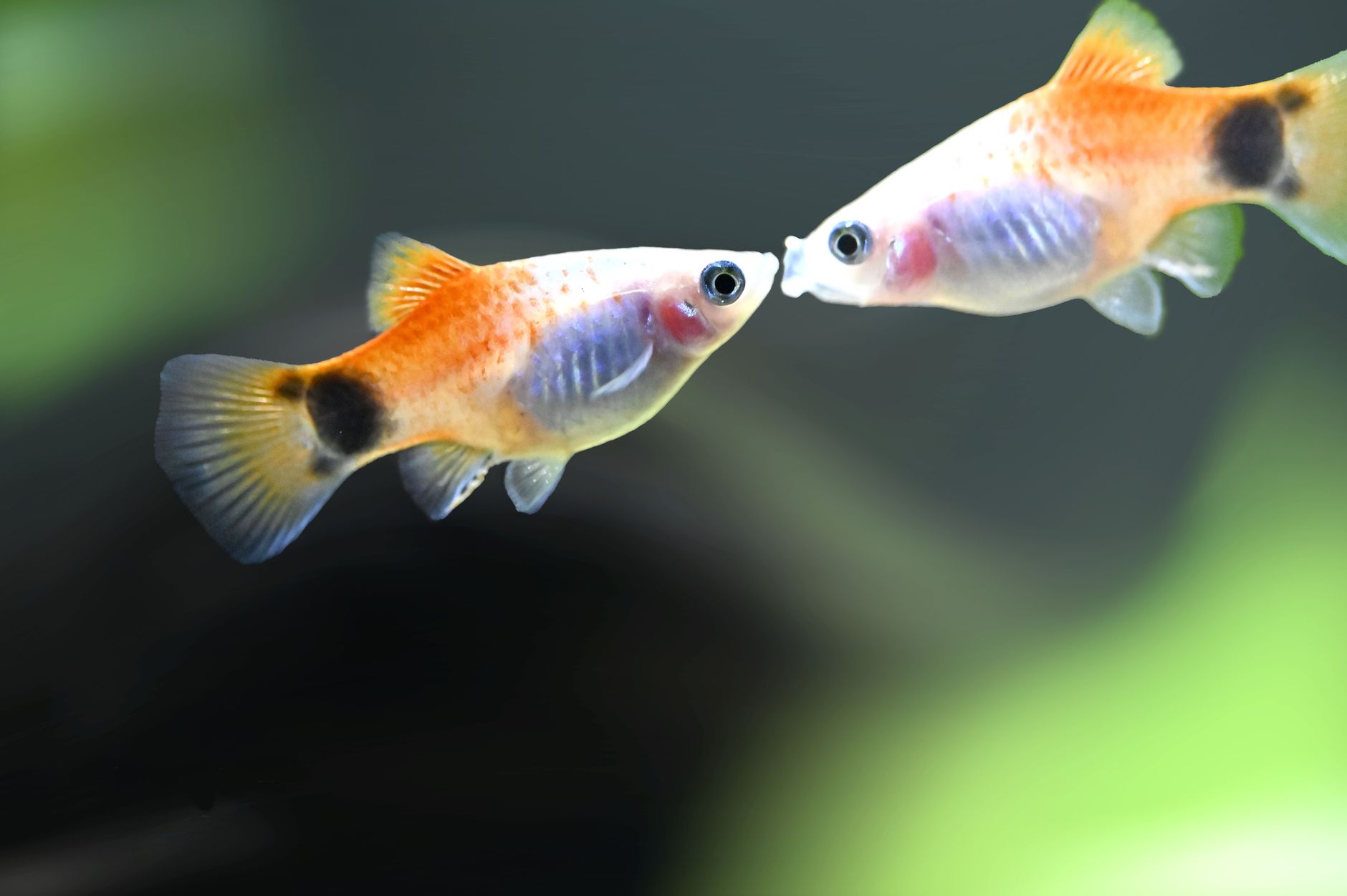
Sailfin mollies are the largest and showiest variety in the group. A mature male carries a dorsal fin that can reach nearly the height of his body, and he flares it at rivals and at his own reflection all day. Fish sold as sailfin molly in most shops are hybrids of Poecilia latipinna and Poecilia velifera. True velifera from the Yucatan grow the biggest sail, with males reaching 6 inches. Most store-bought sailfin males top out at 4 to 5 inches, and females stay closer to 3.5 inches.
Plan on 30 gallons as the absolute floor, and 40 gallons or more if you want a group with more than one male. Water should sit between 75 and 82°F at pH 7.2-8.4 with hardness of 12-25 dGH. Seriously Fish’s species profiles note that sailfin mollies come from coastal habitats and tolerate brackish conditions, which explains their comfort in hard water. A stable heater matters more than a warm one, so a 100-watt adjustable unit with a separate thermometer is the safer buy: Check the adjustable aquarium heater on Amazon. Our aquarium heater comparison covers sizing for a 40-gallon tank.
Temperament is where sailfins get complicated. Males chase hard, and two males in a small tank spend the day posturing instead of eating. Keep one male with two or three females. They also eat plants. Soft-leaved species like hornwort and cabomba get chewed down to bare stems, and the damage gets worse in a tank where there is no algae to graze on.
Key strengths:
- ✅ Biggest visual payoff of any molly: a flaring male sailfin dominates the tank.
- ✅ Thrives in hard, alkaline water that kills a lot of community fish.
- ✅ Tolerates lightly brackish water, so it fits salted livebearer setups.
- ✅ Hardy and long-lived once acclimated, often reaching 3 to 5 years.
- ✅ Easy to sex and breed, which makes it a good species for learning livebearer genetics.
- ❌ Needs 30 to 40 gallons, more space than any other molly variety.
- ❌ Chews soft-leaved plants down to the stems.
- ❌ Males harass females constantly if the ratio is off.
Who it’s for: Choose a sailfin molly if you have a 40-gallon or larger tank with hard water and want a big, active centerpiece fish.
2. Black Molly , Best for beginners who want a bold, high-contrast community fish
Black mollies are short-finned hybrids, usually from Poecilia sphenops lines, and they are the version most first-time keepers walk out with. Adults reach 2.5 to 3.5 inches, so a group of three fits a 20-gallon tank without crowding. Temperature is flexible at 72 to 80°F, with pH 7.0-8.2 and hardness of 10-25 dGH. Keep them on the warm end of that range and the fish stay active. Drop below 72°F and they go still and stop feeding.
The color is the selling point and also the weak point. A solid black molly looks excellent against light substrate and green plants, but the pigment fades to gray or mottled brown under chronic stress, low temperatures, or a diet of nothing but flake food. Genetics play a role too, since many commercial black lines carry melanin traits that also produce weak fry. Buy from a store that keeps them warm and feeds them well, and the black holds.
Health-wise, black mollies are the variety most likely to come home with ich. Farm-raised fish move through several tanks before they reach your local shop, and temperature swings during that trip trigger outbreaks. Ich shows up as distinct white grains against the black body, which makes early detection easy. Treat fast with the steps in our ich treatment guide, and Practical Fishkeeping’s health and disease guides are a solid second reference for follow-up treatment.
Key strengths:
- ✅ Fits a 20-gallon tank, the smallest footprint of any standard molly.
- ✅ Solid black body gives strong contrast in a planted tank.
- ✅ Handles 72 to 80°F, so it matches most community tankmates.
- ✅ White spot disease shows up early against the black body.
- ✅ Hardy and forgiving of beginner mistakes once the filter is fully cycled.
- ❌ Color fades under stress, cold water, or a poor diet.
- ❌ Extremely prone to ich after shipping and temperature swings.
- ❌ Sensitive to ammonia and nitrite, so it needs a mature biological filter.
Who it’s for: Pick a black molly if you have a cycled 20-gallon tank and want a hardy, high-contrast fish for a beginner community setup.
3. Dalmatian Molly , Best all-rounder for first-time molly keepers
The dalmatian molly is the middle-of-the-road choice, and that is a compliment. It comes from the same short-finned hybrid lines as the black molly but carries a white or silver base with scattered black spots. Adults run 3 to 4 inches, so a trio wants a 20 to 30 gallon tank. Temperature tolerance is the widest in the group at 72 to 82°F, with pH 7.0-8.2 and hardness of 10-25 dGH.
The spots are not fixed. Young dalmatians often show only a few marks and gain more as they grow, while older fish can lose pattern entirely and turn almost solid white. Brood patterns vary with the parents, so a dalmatian paired with a black molly throws everything from solid black to lightly speckled fry in the same drop. If pattern stability matters to you, buy adults rather than juveniles.
Filtration carries more weight with this variety than most people expect. Mollies graze all day and produce a heavy waste load for their size, so a 20-gallon molly tank needs more biological filtration than a 20-gallon tank of tetras. A large sponge filter driven by an air pump handles a breeding trio and gives fry a safe place to hide: Check the sponge filter on Amazon. Feed blanched zucchini, spirulina flake, and a quality pellet, and skip the all-protein diet that causes constipation in livebearers.
Key strengths:
- ✅ Hardiest of the patterned molly varieties, with the widest temperature range.
- ✅ Individual spots make each fish easy to identify.
- ✅ Fits a 20-gallon starter tank as a trio.
- ✅ Breeds readily, with fry showing visible spots within a few weeks.
- ✅ Eats algae and accepts a wide range of prepared foods.
- ❌ Spot pattern is unstable and often fades with age.
- ❌ Heavy bioload for its size, so filtration has to be oversized.
- ❌ Interbreeds with every other molly variety in the tank.
Who it’s for: Go with dalmatian mollies if you want one variety that handles a wide temperature range and looks good in a 20-gallon community tank.
4. Balloon Molly , Best for calm nano displays, with health trade-offs worth knowing
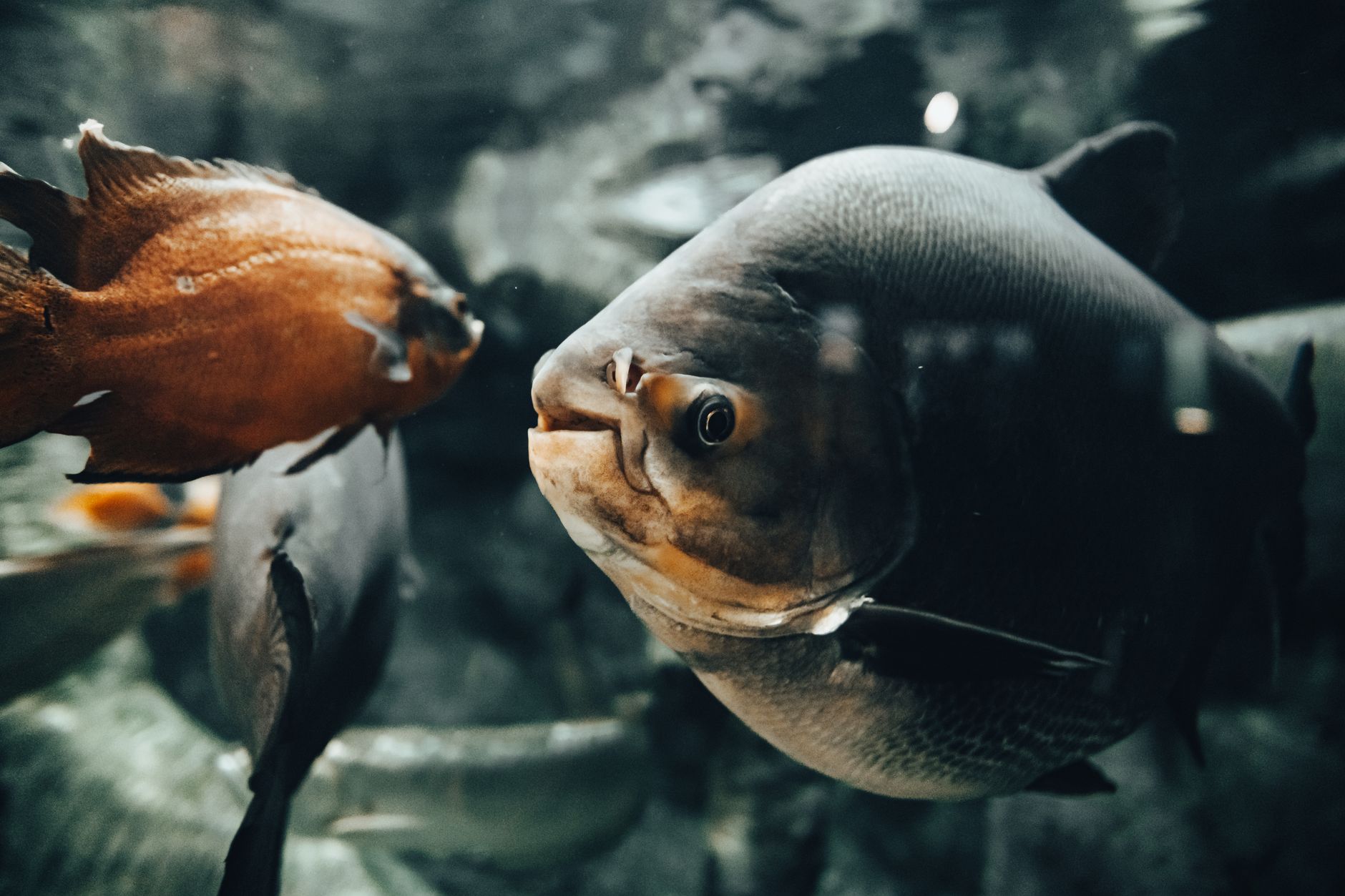
Balloon mollies are short-bodied morphs. The spine curves downward, the body cavity compresses, and the fish ends up with a round silhouette that looks like a small balloon. The shape is genetic, not the result of overfeeding. Adults stay small at 2 to 3 inches, but the compressed body means the fish still needs a 20-gallon tank with 75 to 80°F water, pH 7.2-8.2, and hardness of 12-25 dGH. Do not crowd them.
Here is the trade-off stated plainly. The shortened spine crowds the swim bladder and digestive organs, so balloon mollies are the most likely molly variety to develop buoyancy problems, chronic constipation, and spinal curvature as they age. Lifespan is usually 2 to 3 years against 3 to 5 for a standard molly. Feed small amounts several times a day, lean hard on vegetable matter, and keep nitrate low, because all three reduce the odds of a swim bladder flare-up.
Tankmates need to be calm. Balloon mollies swim slowly and get outcompeted at feeding time by fast eaters, so keep them with other livebearers, corydoras, or small rasboras. If you want the small size without the compressed body, our platy care guide covers a livebearer that fits the same tank and eats the same food.
Key strengths:
- ✅ Distinctive round silhouette that stands out in any tank.
- ✅ Small adult size of 2 to 3 inches, so a trio fits a 20-gallon tank.
- ✅ Peaceful and slow-moving, safe with other calm livebearers.
- ✅ Comes in the full molly color range: black, dalmatian, silver, and cream.
- ❌ The body shape is a genetic deformity that compresses internal organs.
- ❌ High rate of swim bladder and buoyancy problems, with a lifespan closer to 2 to 3 years.
- ❌ Slow swimmers that lose the race for food against fast tankmates.
Who it’s for: Choose balloon mollies only if you accept the health trade-offs and can keep them in a calm, clean, well-filtered 20-gallon tank.
5. Lyretail Molly , Best for planted show tanks with calm tankmates
The lyretail molly is a fin morph rather than a separate species. The upper and lower rays of the tail extend into long streamers, and the dorsal fin runs longer than a standard molly’s. Adults reach 3 to 5 inches including the streamers, so 30 gallons is the practical minimum for a group. Water parameters sit at 75 to 82°F, pH 7.0-8.4, and 12-25 dGH, the same hard, alkaline range the rest of the genus wants.
Those fins cost the fish some durability. Streamers snag on rough driftwood, sharp rock edges, and plastic plants, and torn edges invite fin rot once nitrate creeps up. Fast, nippy tankmates make it worse. Skip tiger barbs, serpae tetras, and anything else known for fin nipping, and keep nitrate low with regular partial water changes.
Breeding is the other catch. Breeders report that pairing two lyretail mollies produces a share of fry with spinal deformities and shortened bodies, because the lyretail gene behaves badly when doubled up. Most serious breeders cross a lyretail with a normal-finned molly and accept that only part of the drop shows streamers. If you plan to raise fry, plant the tank heavily so newborns have cover. Our beginner plant list covers species that survive constant molly grazing.
Key strengths:
- ✅ Long, flowing fin streamers that no short-finned molly can match.
- ✅ Handles hard, alkaline water as well as any other molly.
- ✅ Available in black, dalmatian, gold, and silver color forms.
- ✅ Reaches the standard 3 to 5 year molly lifespan in clean water.
- ❌ Streamers snag on decor and tear easily.
- ❌ Far more prone to fin rot than short-finned varieties.
- ❌ Pairing two lyretails produces a percentage of deformed fry.
Who it’s for: Pick a lyretail molly if you keep a 30-gallon or larger tank with calm tankmates and want the most dramatic fins in the molly family.
Frequently Asked Questions
Can different molly varieties live together in one tank?
Yes. All the common varieties belong to the same Poecilia group, share the same water parameters, and interbreed freely. Mixing them is fine for a display tank, but if you plan to raise or sell fry, keep one variety per tank so you can track the genetics.
What is the minimum tank size for mollies?
Twenty gallons for a trio of short-finned mollies such as black or dalmatian. Sailfin and lyretail varieties need 30 to 40 gallons because of their adult size and fin length. Balloon mollies stay small but still need 20 gallons because of their heavy waste load.
Do mollies need salt in their water?
No. Mollies tolerate brackish water and many farms raise them in slightly salty conditions, but they live and breed in plain freshwater with a hardness of 10 to 25 dGH. Adding salt is optional and can harm plants and other community fish that share the tank.
Why is my molly sitting at the bottom of the tank?
Cold water, a sudden temperature drop, ammonia, or a swim bladder problem are the usual causes. Check the temperature and test ammonia and nitrite first. Balloon mollies sit on the bottom more often than other varieties because of their compressed body shape.
Will mollies eat my aquarium plants?
They graze on soft-leaved plants, algae, and any decaying plant tissue. Hornwort and cabomba suffer the most. Tough plants like java fern, anubias, and amazon sword usually survive, especially when the fish get blanched vegetables in their diet.
How long do molly fish live?
Three to five years in a well-maintained tank with stable temperatures and hard, alkaline water. Balloon mollies often live only two to three years because of the organ compression caused by their body shape.
What Should You Remember?
- Match fin type to tank size. Short-finned mollies fit a 20-gallon tank, while sailfin and lyretail varieties need 30 gallons or more.
- Keep the water hard and alkaline. Aim for pH 7.0-8.4 and 10-25 dGH, since mollies do poorly in soft, acidic community water.
- Plan for fry before you buy. A trio of mollies can drop dozens of babies every four to six weeks, and females store sperm for months.
- Use a 1:2 or 1:3 male-to-female ratio. Two males in a small tank fight, and a single male with one female will harass her constantly.
- Feed vegetable matter daily. Blanched zucchini, spirulina flake, and algae keep molly digestion moving and head off constipation.
- Quarantine every new molly for 14 days. Farm-raised mollies arrive prone to ich and velvet, and a quarantine tank stops the outbreak from reaching your display.
- Know what a balloon molly costs the fish. The round body is a genetic deformity linked to swim bladder problems and a shorter lifespan.
This article is for general information only and is not a substitute for professional veterinary or aquarium specialist advice. Always research the specific needs of your fish and consult an expert before making care decisions.