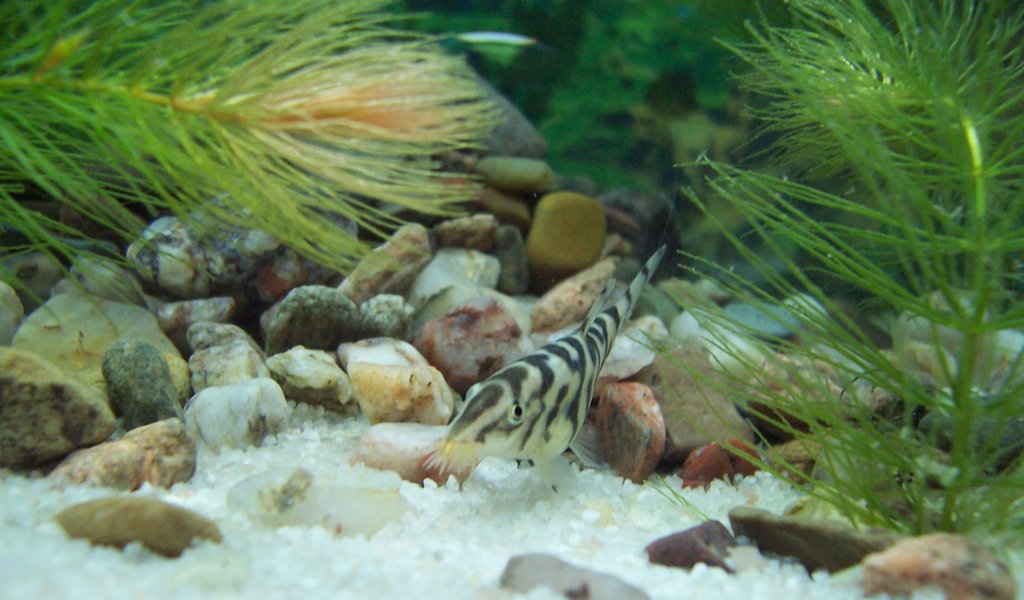
Yoyo loaches (Botia almorhae) are active, social freshwater fish that bring constant movement to the lower level of a tank. They have golden-brown bodies with dark chain-like markings, and many keepers say the pattern sometimes looks like the letters Y-O-Y-O. These fish click when excited, root through sand, and hunt snails with real enthusiasm. They are not hard to keep once you understand their needs, but they are also not ideal for every community setup. This guide covers the setup, feeding, tank mates, and health practices that working fishkeepers use in 2026.
One of the first things to understand is that yoyo loaches are not tiny snail-eating gadgets. A juvenile may be two inches long at the store, but adults commonly reach five to six inches. They are also social and need to live in groups of five or more. A single yoyo loach in a small tank often becomes shy, nippy, or stressed. If you have kept other loaches before, the clown loach care guide shows similar group dynamics, but yoyo loaches stay smaller and are easier to house.
Yoyo loaches come from clear, flowing streams and rivers in South Asia. In the home aquarium they want warm, oxygen-rich water, a soft sand substrate, and plenty of hiding places. They dig constantly, so sharp gravel and unstable rock piles are common sources of injury. According to Aquarium Co-Op, bottom-dwelling loaches do best when keepers focus on clean water and natural behavior rather than a perfectly manicured aquascape. That means driftwood, caves, and open swimming lanes matter more than heavy planting.
This how-to guide will walk you through every step, from choosing the right tank size to diagnosing early signs of disease. You will learn which water parameters to target, how to acclimate yoyo loaches safely, and which tank mates fit their behavior. The goal is not just to keep them alive, but to create a setup where a group of yoyos can live for a decade or more. Follow the steps in order and you will avoid the most common mistakes.
What You’ll Need
- 40-gallon or larger aquarium with a tight-fitting lid
- Fine sand substrate
- Driftwood, smooth rocks, and caves
- Canister filter or strong sponge filter
- Fully submersible adjustable heater
- API Freshwater Master Test Kit
- Sinking pellets and frozen foods
- Quarantine tank with cycled sponge filter
How Do You Care for Yoyo Loaches?
- Plan for a 40-gallon tank and a group of five or more
Start with the adult size, not the store size. Yoyo loaches reach five to six inches and spend most of the day swimming, digging, and chasing each other. That means a 40-gallon tank is the practical minimum for a group of five. A 40-gallon breeder is even better than a tall tank because it offers more floor space. More room reduces territorial stress and gives weaker fish a place to retreat.
These fish form a social hierarchy. When you keep fewer than five, the dominant individual often bullies the others. A group of five or more spreads out the aggression and lets the fish act naturally. You will see clicking, playful chasing, and confident foraging instead of hiding. If you have space, start with a 55-gallon or 75-gallon tank and keep six to eight yoyo loaches.
A common mistake is buying one yoyo loach to control snails in a small community tank. Yes, they eat snails, but a lone yoyo loach often turns reclusive or begins nibbling the fins of slow tank mates. Serious fishkeepers at Seriously Fish also note that these loaches need clean water and stable conditions, which are harder to maintain in tanks that are too small. Plan the group size first, then add tank mates later.
- Set up sand, caves, driftwood, and a strong filter
Use fine sand as the substrate. Yoyo loaches dig constantly and have sensitive barbels near their mouths. Sharp gravel can wear those barbels down and lead to infection. A one to two inch layer of smooth sand is ideal. You can push sand into gentle slopes, but avoid deep piles where waste can build up and rot.
Add driftwood, smooth rocks, and caves to create hiding places. Yoyo loaches sleep in tight spaces and need cover when they feel threatened. Mopani wood and rounded river stones work well. Arrange them so there are no unstable stacks. You can also use aquarium-safe PVC pipe sections or coconut caves. Best aquarium filters include canister filters that provide strong mechanical and biological filtration, which helps because yoyo loaches produce a fair amount of waste.
Use a dependable heater to keep the water between 75 and 82 degrees Fahrenheit. A check the Aqueon Pro heater on Amazon is one option, but any fully submersible adjustable heater rated for your tank size works. The tank also needs a tight-fitting lid. Yoyo loaches jump when startled, especially during water changes or after lights-out. A lid with small gaps for filters and cords will prevent a sad escape.
Add plants, but do not make them the main feature. Java fern, anubias, and crypts can be attached to wood or placed in sand. Yoyos may uproot stem plants while digging. Floating plants help dim the light and make the fish feel more secure. Connect this setup to a proper nitrogen cycle before adding fish.

- Cycle the tank before adding yoyo loaches
Yoyo loaches are sensitive to ammonia and nitrite. A new tank must be cycled before fish go in. The aquarium nitrogen cycle explained guide breaks down how beneficial bacteria convert fish waste into less harmful nitrate. Without a cycle, ammonia spikes can burn gills and cause death within days.
Use a fishless cycling method. Add a small amount of pure ammonia or fish food and test the water daily. When ammonia and nitrite both read zero and nitrate appears, the tank is cycled. A liquid test kit is more accurate than strips. The API Freshwater Master Test Kit tests pH, ammonia, nitrite, and nitrate in one box. If you need a deeper walkthrough, follow a fishless cycling guide.
Target water parameters for yoyo loaches are 75 to 82 degrees Fahrenheit, pH between 6.5 and 7.5, and soft to moderately hard water. They can adapt to a broader range, but stability matters more than exact numbers. Big pH swings are dangerous. During cycling, do not change water constantly chasing a number. Let the cycle establish, then do regular maintenance.
Once cycled, add the loaches slowly. Adding a full group at once can overload a newly cycled filter. If you bought six yoyos, you can add them all if the filter is mature, but watch ammonia for the first two weeks. Keep a bottle of dechlorinator on hand for water changes.
- Acclimate yoyo loaches slowly to avoid shock
Acclimation is not just floating the bag for five minutes. Yoyo loaches react poorly to sudden changes in temperature, pH, and hardness. When you bring them home, dim the tank lights and float the sealed transport bag for 15 minutes. This lets the water temperature equalize.
After floating, open the bag and add a small amount of tank water every five to ten minutes. A clean cup or airline tubing works well. Over 30 to 45 minutes, the bag water gradually becomes tank water. Do not pour the transport water into your display tank. Store water may contain ammonia, medications, or pathogens.
Even better, use a quarantine tank for two to four weeks. A bare-bottom 10 to 20 gallon tank with a cycled sponge filter gives you a controlled space to observe new yoyos. Watch for skin spots, rapid breathing, and weight loss. Quarantine prevents new fish from introducing ich or internal worms to your main tank.
Once acclimated, release the fish gently and keep the lights off for several hours. Offer a small feeding the next day. The fish may hide for a day or two, which is normal. Do not keep checking or tapping the glass, because stress lowers their immune response.
- Feed a varied sinking diet on a regular schedule
Yoyo loaches are omnivores that eat at the bottom, but they also rise into midwater for food. Feed a high-quality sinking pellet or wafer as the staple. Choose one with protein and plant matter, not just filler. Two small feedings per day work well, but only offer what the group can finish in two or three minutes.
Add frozen foods two to four times per week. Bloodworms, brine shrimp, daphnia, and mysis shrimp are all good. Yoyos go crazy for these and will click and chase each other. You can also offer blanched zucchini, cucumber, or shelled peas once or twice a week. Remove uneaten vegetables after 24 hours so they do not foul the water.
Do not rely on snails alone. Yoyo loaches do eat pest snails, which is helpful, but a group of five will not survive on the occasional snail. They also may ignore larger snails with tough shells. If you keep them with bottom feeders, make sure everyone gets food. The kuhli loach care guide shows similar feeding habits, but kuhlis are smaller and less competitive at feeding time.
Watch body shape. A healthy yoyo loach has a rounded belly but still moves easily. Overfeeding causes bloat and dirty water. Underfeeding makes the fish look thin behind the head. Adjust portions based on how the group responds. Younger fish need daily protein for growth. Adult yoyos can handle slightly less.

- Choose peaceful tank mates and avoid fin nippers
Yoyo loaches are generally peaceful, but their energy can be too much for slow, long-finned fish. Avoid bettas, angelfish, and fancy guppies. Yoyos may nip those flowing fins, especially if the loach group is too small or the tank is crowded. Aggressive cichlids are also poor choices because they will fight for bottom territory.
Good tank mates include fast, peaceful schooling fish. Harlequin rasboras, cardinal tetras, rummy nose tetras, and zebra danios stay in the upper half and ignore the loaches. Bottom level company can include corydoras catfish and some peaceful dwarf cichlids like rams, as long as there is enough floor space for both groups.
Think carefully before adding shrimp or snails. Yoyo loaches are effective snail hunters and may eat small shrimp. Large Amano shrimp might be okay in a heavily planted tank with lots of hiding spots, but there is no guarantee. If you want a cleaner crew, choose larger snails with trapdoors and monitor them.
Keep at least five yoyos before adding other bottom fish. A group of six yoyos in a 55-gallon tank can share space with a school of rasboras and a small group of corydoras. The key is to avoid overcrowding and provide multiple caves so every fish has a resting spot. Rearrange décor if you see constant chasing near one cave.

- Monitor water quality and watch for ich
Yoyo loaches show stress through disease quickly. The most common problem is ich, a parasite that looks like white salt grains on the fins and body. It often appears after temperature swings, transport, or poor water quality. If you see spots, act fast. How to treat ich in an aquarium explains heat, salt, and medication options.
Loaches are scale-less or have very small scales, so they can be sensitive to some medications. Read labels carefully and do not overdose. Copper-based treatments can be risky for loaches. Many keepers prefer raising the temperature gradually to 82 degrees Fahrenheit and using an ich treatment designed for scaleless fish. Always increase aeration during treatment.
Prevent disease with weekly water tests. Use a liquid test kit and log the numbers. Ammonia and nitrite must stay at zero. Nitrate should stay under 20 to 40 ppm. When nitrate climbs, perform a water change. Follow a regular water change schedule based on your stocking level.
A healthy yoyo loach is active, has clear eyes, and eats eagerly. It may click and chase food. Lethargy, clamped fins, heavy breathing, or hiding all week are red flags. Check temperature, ammonia, and look for bullying. The faster you address stress, the less likely it becomes a serious infection.
- Observe behavior and adjust the tank setup
Yoyo loaches are not a set-and-forget fish. They need regular observation, especially in the first month. Watch how the group spreads out. If one fish hides all day while others chase it, add more caves or move the décor. Simple changes break up territories and reduce aggression.
Listen for clicking. Yoyo loaches click when feeding, exploring, or competing. Occasional clicking is normal. If you hear constant clicking near a hiding spot, two fish may be fighting over a cave. Add another cave or rearrange the hardscape. Groups usually settle after a few days, but you should not let one fish become a target.
Keep track of growth and body condition. Young yoyos grow quickly with good food and clean water. If one fish stays small while others grow, it may be outcompeted or carrying internal parasites. Quarantine and treat if needed. Healthy yoyos can live eight to twelve years or more, so long-term consistency matters.
Finally, adjust your setup as the fish grow. A group that was comfortable in a 40-gallon breeder as juveniles may need a 75-gallon tank as adults. Larger fish produce more waste and need more swimming room. If you see more chasing, higher nitrate, or more hiding, upgrade the tank or reduce tank mate numbers.
Red Flags & Warnings
- 🚨 Never keep yoyo loaches on sharp gravel. Their barbels can wear down and become infected.
- 🚨 Do not keep a single yoyo loach as a snail remover. A lone fish often hides or becomes nippy.
- 🚨 Use caution with copper-based medications. Yoyo loaches are scaleless and sensitive to overdoses.
- 🚨 Always use a tight-fitting lid. Yoyo loaches jump when startled and can escape through small gaps.
- 🚨 Quarantine new yoyos for two to four weeks. They often carry ich or internal parasites after transport.
- 🚨 Do not add them to a tank with slow, long-finned fish like bettas or angelfish. Yoyos may nip their fins.
Frequently Asked Questions
How big do yoyo loaches get?
Adult yoyo loaches reach five to six inches in length. Juveniles start small, but they grow quickly with good food and clean water. Plan the tank around adult size, not store size.
What size tank do yoyo loaches need?
A 40-gallon tank is the minimum for a group of five. A 55-gallon or 75-gallon tank is better if you add other fish. These loaches are active and need more floor space than height.
Are yoyo loaches aggressive?
They are usually peaceful in a group of five or more. A single yoyo loach can become shy or nip the fins of slow tank mates. They may also chase each other to establish a pecking order.
What do yoyo loaches eat?
They eat sinking pellets, frozen bloodworms, brine shrimp, daphnia, and blanched vegetables like zucchini. They also eat pest snails. Feed a varied diet once or twice a day.
Can yoyo loaches live with shrimp?
Yoyo loaches may eat small shrimp. Larger shrimp might survive in a heavily planted tank, but there is no guarantee. It is safer to avoid shrimp if you want a stable population.
How long do yoyo loaches live?
With good care, yoyo loaches can live eight to twelve years or more. Stable water, a varied diet, and a low-stress group setup help them reach their full lifespan.
What Should You Remember?
- Tank size: Provide at least 40 gallons for a group of five yoyo loaches.
- Group size: Keep five or more to prevent bullying and stress.
- Substrate: Use fine sand to protect their sensitive barbels.
- Diet: Feed sinking pellets, frozen foods, and vegetables, not just snails.
- Tank mates: Choose peaceful schooling fish and avoid long-finned or aggressive species.
- Water quality: Test weekly and change 25 to 30 percent when nitrate climbs.
- Health: Quarantine new fish and treat ich early with scaleless-fish-safe methods.
This article is for general information only and is not a substitute for professional veterinary or aquarium specialist advice. Always research the specific needs of your fish and consult an expert before making care decisions.