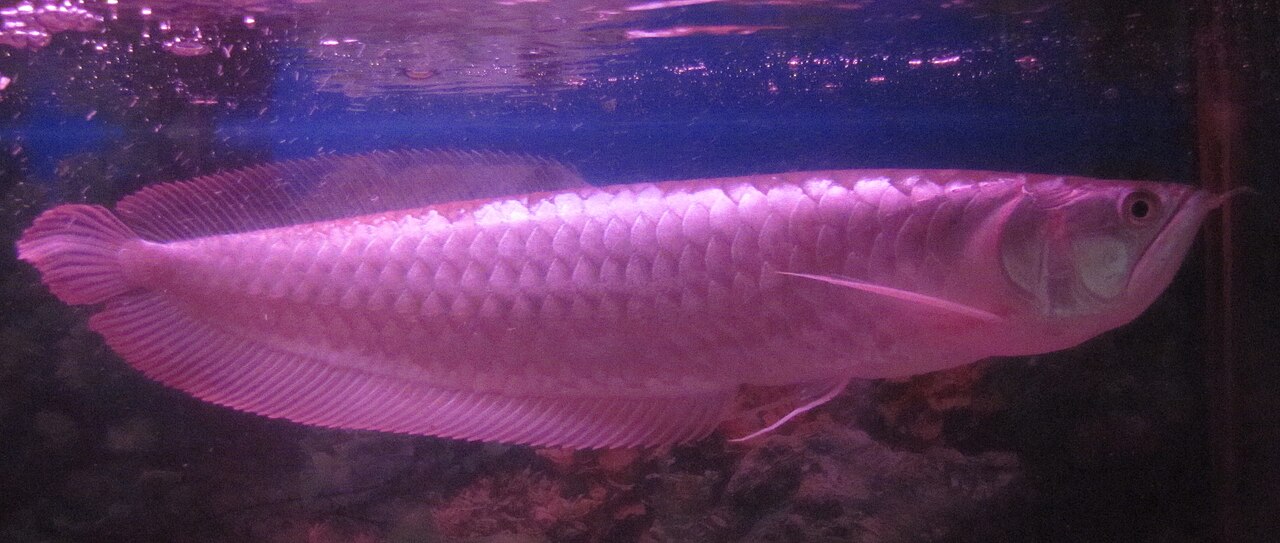
The silver arowana (Osteoglossum bicirrhosum) is one of the most recognizable freshwater fish in the aquarium hobby. It has a long, silver body, large scales, and a pair of chin barbels. Native to South American river basins, it often reaches 28 to 36 inches in captivity. That size makes it a true monster fish. Experienced keepers prize it for its predatory grace. But this is not a beginner fish. Before you buy one, understand the commitment. Arowanas need space, clean water, and a secure lid. This guide covers tank size, diet, and compatibility for 2026. Aquarium nitrogen cycle explained will help you set up the biological side.
Most arowana problems start with an undersized tank. A juvenile looks manageable at a fish store. Still, it grows fast. A silver arowana can add an inch per month during its first year. Within two years, it may outgrow a 75-gallon tank. That is why the minimum adult tank size is far larger than many sources suggest. Best aquarium filters 2026 shows heavy-duty options. The filter must handle a huge bioload. If you cannot provide a tank of at least 240 gallons, choose a different fish. There is no shortcut.
Water quality matters more than decoration. Arowanas are sensitive to ammonia and nitrite spikes. Their large size produces a lot of waste. Regular water changes and strong biological filtration keep them healthy. According to Aqueon, large carnivorous fish require diligent maintenance and ample swimming room. We will cover specific parameters later. For now, know that a silver arowana is a long-lived pet. Many live 10 to 15 years with proper care. Some reach 20 years. That means your setup must be stable for the long haul.
Compatibility is trickier than with community fish. Arowanas are predators. They eat anything that fits in their mouth. They can also be skittish and injure themselves on tank walls. This guide breaks down the process into eight steps. Each step builds on the last. You will learn how to choose a tank, set up filtration, cycle, feed, pick tank mates, secure the lid, and prevent disease. Let’s get started. Your silver arowana will live a long time if you follow these steps.
What You’ll Need
- 240-gallon aquarium or larger
- Heavy-duty canister filter or sump system
- Two 300-watt aquarium heaters with controller
- API Freshwater Master Test Kit
- Tight-fitting glass canopy or screen top
- Water conditioner and siphon for water changes
How Do You Care for Silver Arowana?
- Choose a 240-gallon tank or larger from day one
Many sellers say a 180-gallon tank works. It does not. Adult silver arowanas can reach 36 inches. They need a tank at least 8 feet long and 2 feet wide. A 240-gallon aquarium measures about 8 feet by 2 feet by 2 feet. That allows the fish to turn around without bending. A 180-gallon may be only 6 feet long. A full-grown arowana can barely move. Choose the largest tank you can afford and fit. If you must start smaller, use a grow-out tank. But plan to upgrade within 6 to 12 months. The catch is that upgrading a large tank is expensive and disruptive.
A long tank matters more than height. Silver arowanas mostly swim near the surface. They hunt insects and small fish from above. Your tank footprint should be at least 8 feet by 2 feet. Height can be 24 to 30 inches. Standard 240-gallon tanks work well. Acrylic tanks are lighter but scratch easier. Glass tanks are heavier but hold up better. Place the tank on a reinforced floor. A 240-gallon setup can weigh over 2,500 pounds when filled. Check your floor joists before setup.
Some keepers use indoor ponds or large stock tanks. These can work. They give arowanas more surface area. Still, you need a sturdy cover. Arowanas jump. Without a tight lid, they will end up on the floor. If you go the stock tank route, use a solid screen top. Also check local building codes for weight. When in doubt, hire a structural engineer. This step is the foundation for everything else. Move to filtration next.

- Install high-capacity filtration and strong surface flow
Arowanas produce enormous waste. A single adult can dirty a 240-gallon tank quickly. You need a filter rated for at least twice the tank volume. For a 240-gallon tank, choose a filter that handles 480 gallons per hour or more. Canister filters like the Fluval FX6 are popular. They hold lots of biological media. You can also use a sump system. Sumps add water volume and make maintenance easier. Best aquarium filters 2026 compares top-rated options. Check the Fluval FX6 canister filter on Amazon.
Biological filtration is the most important part. Arowanas are sensitive to ammonia and nitrite. You need a large colony of beneficial bacteria. Use ceramic rings, bio balls, or foam pads. Avoid replacing all filter media at once. Rinse media in old tank water, not tap water. This preserves the bacteria. Mechanical filtration removes floating debris. Arowanas often spit out scales and food bits. Pre-filter sponges help keep the water clear.
Surface flow matters for oxygen. Silver arowanas prefer well-oxygenated water. Position the filter outflow to create gentle surface agitation. Do not point a strong jet directly at the fish. Arowanas can get stressed by heavy current if they have no calm area. Use a spray bar or direct flow along the back wall. Add an air stone for extra oxygen, especially in warm water. Warm water holds less oxygen. This step connects to cycling because the filter must be ready before fish. Move to Step 3.

- Cycle the tank completely before adding your arowana
Cycling builds the beneficial bacteria that process fish waste. Without a cycle, ammonia and nitrite will spike and kill your arowana. The process takes four to eight weeks. You can cycle with pure ammonia, fish food, or a bacteria starter. Do not add a silver arowana to an uncycled tank. These fish are expensive and sensitive.
To start, add a small amount of pure ammonia to bring the level to 2 ppm. Test daily with a liquid test kit. The API Freshwater Master Test Kit is a solid choice. After a week, nitrite will appear. Then nitrate will appear. The cycle is complete when ammonia and nitrite read 0 ppm within 24 hours of adding ammonia. That usually takes four to six weeks. Keep the water temperature around 80°F during cycling. Bacteria grow faster in warm water.
Common mistakes include adding fish too early, using test strips, and doing water changes during the cycle. Test strips are less accurate than liquid kits. Water changes during a fishless cycle can slow bacteria growth. Let the ammonia and nitrite stay present. Patience is hard but necessary. Arowanas cost hundreds of dollars. Do not risk one in an uncycled tank. Once the cycle is stable, you can add the arowana. Move on to water parameters.
- Maintain warm, soft, stable water parameters
Silver arowanas come from warm South American rivers. Keep water temperature between 75°F and 82°F. The ideal range for most keepers is 78°F to 80°F. Use a reliable heater with a controller. For a 240-gallon tank, you may need two 300-watt heaters. Place them at opposite ends for even heat. Best aquarium heaters 2026 lists dependable models. Avoid temperature swings. Arowanas get stressed by sudden changes.
pH should stay between 6.0 and 7.0. They can adapt to slightly higher pH up to 7.5, but neutral to slightly acidic is best. Hardness should be low to moderate, around 5 to 12 dGH. Do not chase perfect numbers. Stability matters more than exact pH. Use a water conditioner to remove chlorine and chloramines. Aged water helps if your tap water is very hard. You can use reverse osmosis water mixed with tap water to lower hardness. But do not let pH crash. Test weekly with a liquid kit.
Water changes are essential. Change 30% to 40% of the water every week. For large tanks, this is a lot of work. Use a Python water changer or a submersible pump to drain and refill. Vacuum the substrate to remove uneaten food. Arowanas are messy eaters. They often leave bits of fish or pellets. Rotting food causes ammonia spikes. Clean water prevents fin rot and bacterial infections. Next is diet.
- Feed a varied, high-protein carnivorous diet
Silver arowanas are surface-feeding predators. In the wild, they eat insects, small fish, crustaceans, and even birds or bats that fall into the water. In an aquarium, they need a protein-rich diet. Offer a mix of high-quality pellets, frozen foods, and occasional live foods. Pellets designed for large carnivores should be the staple. They provide vitamins and minerals. Do not feed only goldfish or minnows. Feeder fish carry disease and lack complete nutrition.
Good frozen foods include silversides, krill, shrimp, and bloodworms. Thaw frozen food before feeding. Drop food at the surface, but do not overfeed. Adult arowanas do well with one feeding per day. Juveniles need two smaller feedings per day. A good rule is to feed an amount the fish can eat in two minutes. Remove uneaten food after five minutes. Arowanas can become obese. Overfeeding also pollutes the water fast.
Live foods can trigger a strong feeding response. Crickets, mealworms, and earthworms are good options. Feeder fish like rosy reds or goldfish are risky. They often carry parasites and have low nutritional value. If you use live fish, quarantine them for two weeks first. Better yet, stick to insects and pellets. The predatory strike is exciting to watch. But live feeding can lead to aggression and injury. A well-fed arowana is calmer. Move to tank mates next.

- Choose tank mates carefully, or keep it solo
Silver arowanas are not community fish. They will eat any fish that fits in their mouth. Even fish half their size are at risk. Arowanas have large mouths that extend. Good tank mates are large, peaceful fish that stay near the bottom. Large plecos, oscars, and silver dollars can work. But there is always risk. Oscar care guide details a possible tank mate. Still, arowanas sometimes attack even large plecos.
Avoid small tetras, barbs, danios, and guppies. They become food. Also avoid fin nippers like tiger barbs. They may nip the arowana’s long fins. Aggressive cichlids can stress or injure the arowana. Large catfish can work if they are not too territorial. The tank must be huge to give each fish space. A 240-gallon tank with a silver arowana and two oscars is heavily stocked. You may need 300 gallons or more for multiple large fish.
The safest choice is a species tank. Arowanas are impressive on their own. With no competition, they are less stressed and more likely to eat. If you want companionship, choose one or two large, peaceful bottom dwellers. Watch for aggression during the first month. Have a backup tank or divider ready. Never add a new fish directly to the main tank without quarantine. Arowanas can catch diseases from new arrivals.
- Secure the lid and minimize reflective stress
Arowanas are powerful jumpers. In the wild, they leap out of the water to catch insects. In an aquarium, they often jump when startled. A tight-fitting lid is mandatory. Use a glass canopy or a screen top weighted down. Arowanas can knock off lightweight hoods. Leave no gaps larger than half an inch. Even small gaps near filter cutouts allow escapes. Many arowanas have died on the floor. Check the lid after each water change.
Reflections can cause stress. Arowanas patrol the surface. A mirrored glass or bright lighting may make them see their own reflection. They may swim up and down the glass for hours. This can damage their snout and barbels. Reduce reflection by dimming the lights, adding floating plants, or using a background on three sides. Floating plants like hornwort or water lettuce help. But arowanas may eat some plants. Use plants that are tough or cheap.
Decor should be minimal and smooth. Arowanas need open swimming space. Driftwood and rocks can cause injury if the fish bolts. If you add decor, place it along the back or bottom. Avoid sharp edges. A bare tank is easier to clean and safer. Some keepers add a sandy substrate. Sand is safe and looks natural. Just vacuum it weekly. This step prepares the tank for long-term health. Move to monitoring.
- Monitor health and prevent common arowana problems
Arowanas are prone to a few specific issues. Drop eye is common when the fish spends too much time looking down. Feeding floating food helps reduce drop eye. Avoid sinking pellets. Also avoid placing bright lights near the bottom. Arowanas that constantly look down may develop one eye that points downward. It is mostly cosmetic but can affect vision. Keep food at the surface to encourage upward glances.
Arowanas can also damage their barbels by rubbing against the glass or lid. Barbel damage is usually reversible with clean water. Keep ammonia and nitrite at 0 ppm. Add aquarium salt at a low dose if needed, but arowanas tolerate salt well only in small amounts. How to treat ich in aquarium explains common parasite treatment. Quarantine any new fish. Do not use medications with copper unless you know the species tolerance.
Cloudy eye, fin rot, and bacterial infections often result from poor water quality. Test water weekly. If you see symptoms, do a large water change first. Then identify the cause. Overfeeding is a common cause. Reduce feeding for a day or two. A healthy arowana is active, has clear eyes, and eats with gusto. If it refuses food, check temperature and water parameters. Arowanas can fast for a few days without harm, but longer fasts signal stress. Keep a log of water tests and behavior. That helps you spot trends early.
Red Flags & Warnings
- 🚨 Never keep a silver arowana in a tank smaller than 240 gallons as an adult. A 75-gallon tank stunts growth and causes stress, aggression, and early death.
- 🚨 Always use a tight-fitting lid. Arowanas jump when startled and can leap several feet out of the water.
- 🚨 Do not feed live feeder fish from unknown sources. They can introduce parasites and bacterial infections that kill your arowana.
- 🚨 Quarantine all new tank mates for 2 to 4 weeks before adding them. Arowanas are sensitive to ich and other diseases.
- 🚨 Avoid overfeeding. Uneaten food rots quickly and causes ammonia spikes in a large tank.
- 🚨 Never add arowanas to an uncycled tank. Ammonia and nitrite will cause severe gill damage and likely death.
Frequently Asked Questions
How big do silver arowanas get in an aquarium?
Silver arowanas commonly reach 28 to 36 inches in home aquariums. In the wild they can grow slightly larger, but aquarium specimens usually top out around 3 feet. Plan for at least a 240-gallon tank, and know they can live 10 to 15 years or longer.
Can a silver arowana live in a 75-gallon tank?
No. A juvenile can start in a 75-gallon grow-out tank, but it will outgrow it within a year. Adult silver arowanas need at least 240 gallons and a footprint of 8 feet by 2 feet. A 75-gallon tank causes stunting and stress.
What do silver arowanas eat?
They are carnivores. Feed a staple of high-quality carnivore pellets, plus frozen foods like krill, silversides, and shrimp. You can offer insects such as crickets and earthworms. Avoid a diet of only feeder fish, which lack complete nutrition and may carry disease.
Do silver arowanas need a lid on the tank?
Yes, absolutely. Arowanas are powerful jumpers and frequently escape from uncovered tanks. Use a heavy, tight-fitting glass canopy or screen top with no gaps larger than half an inch.
What fish can live with a silver arowana?
Large, peaceful bottom dwellers like common plecos, oscars, and silver dollars can sometimes work in a very large tank. However, arowanas eat any fish that fits in their mouth. The safest option is a species-only tank or one or two large bottom dwellers with close monitoring.
How often should I feed a silver arowana?
Feed juveniles twice a day and adults once a day. Give only what the fish can eat in about two minutes. Remove uneaten food quickly to keep water quality high.
What Should You Remember?
- Minimum tank size: Provide at least a 240-gallon aquarium with an 8-foot by 2-foot footprint for an adult silver arowana.
- Water parameters: Keep temperature at 75°F to 82°F, pH between 6.0 and 7.0, and ammonia and nitrite at 0 ppm.
- Filtration: Use high-capacity biological filtration rated for at least twice the tank volume.
- Diet: Feed a varied, high-protein carnivorous diet and avoid relying on live feeder fish.
- Lid: Secure a heavy, tight-fitting lid to prevent jumping escapes.
- Tank mates: Keep arowanas solo or with large, peaceful bottom dwellers only, and quarantine new fish.
This article is for general information only and is not a substitute for professional veterinary or aquarium specialist advice. Always research the specific needs of your fish and consult an expert before making care decisions.