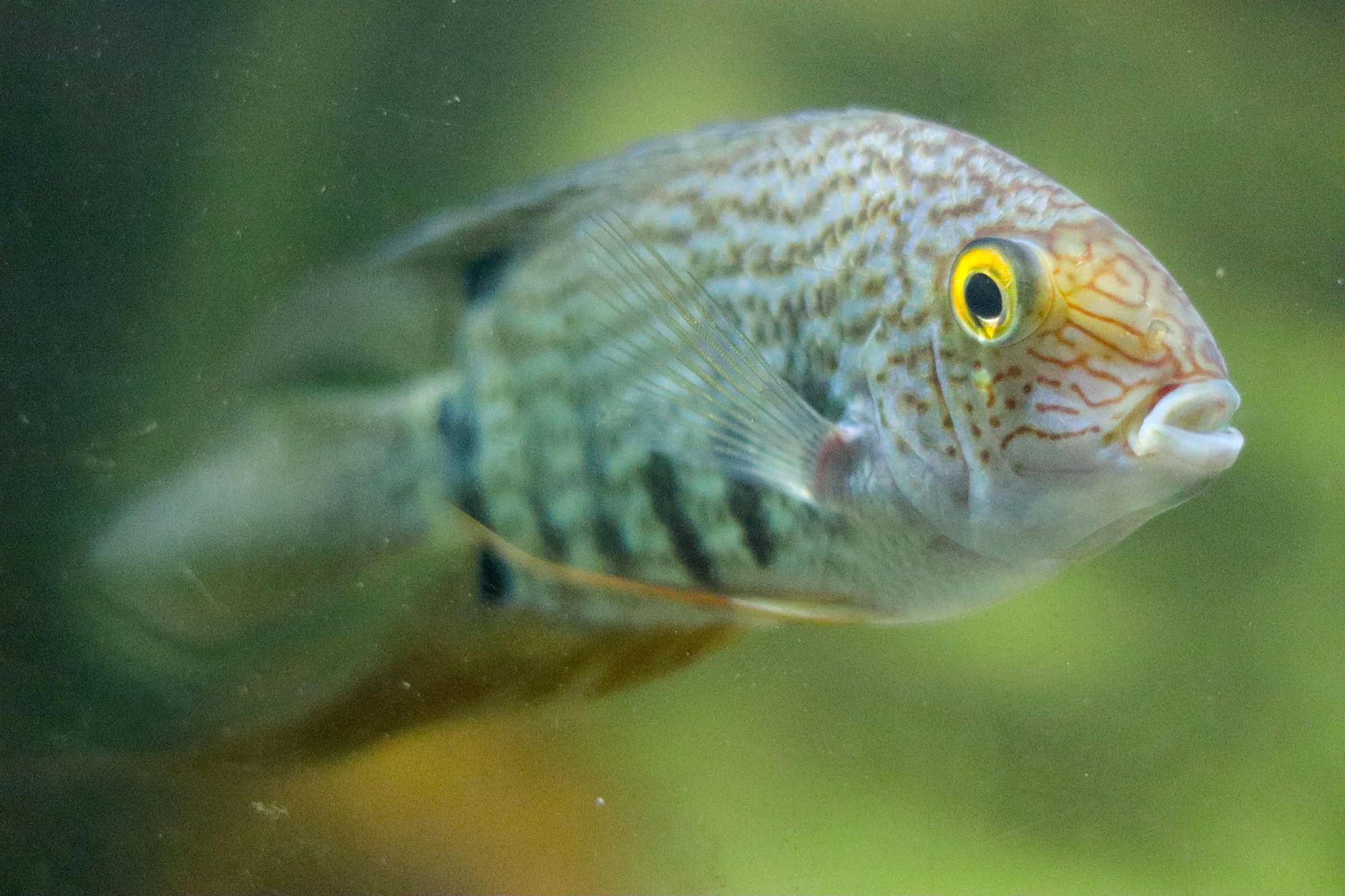
Ram cichlids (Mikrogeophagus ramirezi) are among the most colorful dwarf cichlids in the freshwater hobby. Their electric blue spots, gold heads, and black eye stripes make them a favorite for planted tanks. Many new keepers try them after keeping hardier fish like neon tetras or guppies. Still, rams are not beginner fish. They demand stable water and low nitrates. This guide explains the care routine I use for long-term success.
These fish stay small at about 2 to 3 inches. That size makes them ideal for a 20-gallon tank. However, small size does not mean they tolerate poor conditions. According to Aqueon, ram cichlids prefer warm, soft, acidic water. Many keepers fail because they treat rams like typical community fish. Instead, you should plan the tank around their needs from day one. That planning prevents most health issues.
Water temperature, diet, and tank mates all connect. A stressed ram stops eating and loses color. A well-kept ram may even spawn in a community tank. This guide walks through the setup steps in order. You will learn how to choose tank size, maintain water, feed, and select compatible species. The links in each step point to deeper guides on important topics.
The 2026 care advice still centers on stability. Rams are more available in the hobby than ever, with wild and captive-bred color forms. Still, captive-bred fish usually do better than wild imports. Start with healthy stock from a trusted local store or breeder. Pair that with a mature aquarium, and you can enjoy these little cichlids for three to four years. Let’s get into the steps.
What You’ll Need
- 20-gallon long aquarium or larger
- Adjustable aquarium heater
- Sponge filter or hang-on-back filter with gentle flow
- API Freshwater Master Test Kit
- Fine sand or smooth gravel substrate
- Driftwood and flat stones
- Live plants such as Java fern and Anubias
- Frozen and micro pellet foods
How Do You Care for Ram Cichlids?
- Choose a 20-gallon long tank with soft substrate
A single pair of ram cichlids needs at least 20 gallons. Use a 20-gallon long rather than a 20-gallon high. The long footprint gives more bottom space, which rams use constantly. If you plan to keep a larger community, start with 29 gallons or more. The extra water volume dilutes waste and keeps parameters steady. Many health issues start with a tank that is too small or too newly set up.
Pick fine sand or smooth rounded gravel as substrate. Rams sift sand through their gills when looking for food. Sharp gravel can damage their mouths and gill covers. Add driftwood and flat stones to create caves and territory markers. Live plants also help, but rams are not heavy plant eaters. A planted setup with open sandy areas matches their natural habitat.
Filtration should be gentle but effective. A sponge filter or a hang-on-back filter with adjustable flow works well. Rams are weak swimmers compared to larger cichlids. High flow pushes them into corners and causes chronic stress. Aim for about 5 to 8 times tank volume per hour in flow. Place the filter output against the glass or use a baffle if needed. You can find effective options in best aquarium filters 2026.
A reliable heater is a must. Rams need temperatures between 78°F and 85°F. Most homes sit below that range. Choose an adjustable heater rated for the tank volume. A Check the Fluval E Electronic Heater on Amazon gives precise control. Use a separate thermometer to confirm the reading. This step sets the foundation for water quality and behavior.

- Maintain soft, acidic water at 78°F to 85°F
Water parameters matter more for rams than many community fish. Keep temperature from 78°F to 85°F. The ideal pH is 5.0 to 7.0, with soft water between 2 and 10 dGH. These fish come from warm, tannin-stained streams in Venezuela and Colombia. Tap water in many regions is too hard and alkaline. You can lower pH with driftwood, Indian almond leaves, or reverse osmosis water. More detail is in how to lower pH in aquarium.
Stability beats chasing a perfect number. If your tap water is 7.2 pH and stable, captive-bred rams often adapt. Wild rams may not. Sudden pH shifts are worse than a slightly high reading. Make changes over several days or during water changes. Test new water before adding it to the tank. A liquid test kit gives more accurate results than strips. The API Freshwater Master Test Kit is a common choice.
Perform small weekly water changes of 20 to 30 percent. Vacuum the substrate lightly where detritus settles. Rams are sensitive to nitrate above 20 ppm in the long term. Consistent water changes keep nitrate low without large parameter swings. Match the new water temperature to the tank. I use a bucket heater or mix warm and cold tap water to reach the same reading.
Some keepers use chemical buffers or peat to acidify water. These can work but require monitoring. Peat turns the water amber and releases tannins. It also softens water and can drop pH too fast if you use too much. Start with half the recommended amount and test daily for a week. This careful approach prevents shock. Water condition and temperature connect directly to disease resistance.
- Cycle the tank fully before adding rams
Never add ram cichlids to an uncycled tank. Ammonia and nitrite burn their gills even at low levels. Complete the nitrogen cycle before you buy fish. This process grows beneficial bacteria that convert waste into less toxic nitrate. A fishless cycle using pure ammonia is the most humane method. It takes four to six weeks but saves you from losing sensitive rams. Read the aquarium nitrogen cycle explained for the full process.
To cycle, dose ammonia to 2 ppm daily until nitrite appears. Then wait for nitrate to rise and ammonia and nitrite to read zero within 24 hours after dosing. Only then is the tank ready. Some hobbyists speed the process with used filter media from a healthy tank. That introduces the bacteria directly. Still, test for several days before adding fish.
After cycling, add rams gradually. Start with a pair and wait two weeks before adding more fish. This allows the biofilter to adjust to the new bioload. Watch ammonia and nitrite daily during this period. If you see any rise, perform a 30 percent water change and reduce feeding. This step also connects to quarantine. New fish often carry parasites or ich that can overwhelm a fresh tank.
A mature tank with live plants and stable bacteria makes ram care much easier. Plants like Java fern and floating plants absorb nitrate and provide cover. They also create microhabitats for tiny food organisms. Even if you cannot keep plants alive, use smooth rocks and wood for surface area. The more biological filtration surfaces, the better. This step sets rams up for health before they arrive.
- Create a natural planted layout with hiding spots
Rams settle in faster when the tank feels safe. Use live plants like Amazon sword, Java fern, Anubias, and floating frogbit. These plants do not require intense lighting and tolerate warm water. Dense plantings along the back and sides leave an open foreground for swimming. Add a few caves made from coconut shells or stacked flat stones. Each ram should have a place to retreat after a chase. See best aquarium plants for beginners for low-maintenance options.
Driftwood is important for these fish. It releases tannins that soften water and lower pH. It also provides a natural feeding surface for biofilm. Rams pick at wood and leaves for tiny organisms. Malaysian driftwood and Indian almond leaves work well. Boil or soak driftwood before adding it to remove excess tannins and prevent floating. The tannins will still tint the water slightly, which rams appreciate.
Lighting should be moderate. Bright light makes rams skittish, especially in a new tank. Use floating plants to diffuse the light and create shaded areas. A simple LED fixture on a timer works fine. Run the light 7 to 8 hours per day to avoid excessive algae. Combine this with your plant choices. Anubias and Java fern grow slowly and do not need high light. The tank looks like a dim tropical stream when set up well.
Open sand areas are just as important as hiding spots. Rams feed by sifting sand and will spend hours picking at the bottom. Avoid carpet plants that cover the entire substrate. Leave at least 40 percent of the bottom open. This balance gives you the best of both worlds: cover near the edges and feeding space in the middle. Step 6 will build on this layout by adding tank mates that use different zones.

- Feed small meals of varied high-quality foods
Ram cichlids are omnivores with a strong preference for small meaty foods. In the wild, they eat insect larvae, tiny crustaceans, and detritus. In the aquarium, offer a mix of frozen, live, and dry foods. Baby brine shrimp, daphnia, cyclops, and blackworms are excellent. Avoid large bloodworms too often because the chitinous skins can cause digestive issues. Feed no more than they can eat in two minutes, twice daily.
Choose a high-quality micro pellet or flake as the staple. It should list whole fish or insect meal as first ingredients. Avoid foods with heavy grain fillers and artificial colors. Soak dry food in tank water for a few seconds before feeding so it sinks slowly. Rams often refuse floating food because they feed low in the water column. A Check the Fluval Bug Bites Cichlid Formula on Amazon gives good insect-based nutrition. Seriously Fish also notes that small live and frozen foods are valuable for this species.
Frozen foods help trigger spawning and keep colors bright. Feed frozen brine shrimp or daphnia once per day. Thaw the cube in a small cup of tank water, then use a pipette to target feed. This reduces waste and lets shy rams get their share. If you keep rams with faster tank mates, target feeding becomes important. Watch that each fish gets a few mouthfuls. Remove uneaten food after five minutes to protect water quality.
Diet ties directly to water quality. Overfeeding is a common cause of nitrates and bloat in dwarf cichlids. Fast your rams one day per week to let their digestive systems clear. This is safe for healthy adults. During that day, the tank still provides biofilm and microfauna to graze. A consistent feeding schedule with variety prevents fading color and fin issues. Healthy rams should look alert and round, not pinched or bloated.
- Choose peaceful tank mates of similar size
Rams are peaceful but territorial during breeding. Choose tank mates that will not outcompete them for food or nip their fins. Small tetras like cardinal tetras, rummy nose tetras, and pencilfish work well. Dwarf corydoras and otocinclus also share the lower level without conflict. Avoid large barbs, aggressive cichlids, and fast schooling fish that stress them. The general rule is to match size and energy level.
Larger peaceful fish can work if the tank is big enough. Discus and angelfish share similar water needs, but they can intimidate rams. An angelfish may outcompete rams at feeding time. If you try this mix, use a 55-gallon or larger tank with visual barriers. Still, the safest route is a species tank or a tank with small, calm dither fish. This avoids most compatibility problems.
Keep rams as a single pair for best results. Two males may fight in a 20-gallon tank. Multiple pairs need at least 30 gallons and clear sight breaks. A bonded pair will claim a territory around a flat rock or cave. The female defends it with the male. Other fish that swim too close may get chased, but the aggression is usually short. If chasing becomes constant, rearrange the decor to reset territories.
Use dither fish to make rams feel secure. A school of 8 to 10 rummy nose tetras swims in the upper half and signals water quality by their red noses. That combination works in a 29-gallon tank. Avoid boisterous bottom dwellers that compete for the same space. Step 7 will cover how to watch for problems in this community.

- Monitor health and treat common diseases early
Rams are sensitive to poor water, so many health problems trace back to stress. Ich shows as white spots on fins and body. Flashing against objects and clamped fins are early signs. Raise the temperature gradually to 86°F and treat with a commercial ich medication. Do not combine treatments blindly. Follow the label and increase surface agitation because medications reduce oxygen. See how to treat ich in aquarium for a step-by-step approach.
Hole-in-the-head and lateral line erosion also affect some rams. This presents as small pits on the head or along the lateral line. Poor water quality, stressed immune systems, and nutritional gaps are common causes. Improve water changes and add vitamins to food. Some keepers use metronidazole medicated food under a vet’s guidance. Catch it early, because advanced lesions may scar. Regular observation is your best tool.
Quarantine all new fish for two to four weeks before adding to a ram tank. This prevents introducing ich, velvet, or internal parasites. It also lets the new fish recover from shipping stress. Use a simple 10-gallon quarantine tank with a sponge filter and heater. Match the main tank’s temperature and pH before transfer. This practice protects the whole community, not just the rams.
Watch feeding behavior daily. A ram that hides for more than a day or stops eating may be sick or bullied. Test water immediately. Ammonia or nitrite should read zero, and nitrate should stay under 20 ppm. If water is fine, check for aggression from tank mates. Move the stressed fish to a breeder box or separate tank. Quick action often saves sensitive rams. Step 8 is optional but health and conditioning lead into breeding.
- Condition and breed ram cichlids if you want fry
Breeding rams is rewarding but requires precise care. A bonded pair will clean a flat stone, leaf, or cave. The female lays 100 to 300 eggs, and the male fertilizes them. Both parents guard the eggs and fan them with their fins. Eggs hatch in about 40 to 60 hours at 82°F. The fry become free-swimming four to five days later. If you want to raise them, a separate spawning tank helps.
Condition the pair with live and frozen foods for two weeks. Baby brine shrimp and blackworms are excellent. Perform more frequent water changes of 20 percent every other day. A slight temperature rise to 82°F often triggers spawning. Use very soft water with a pH around 6.0. The pair may spawn on a terra cotta saucer or broad leaf. Provide several flat surfaces so they have options.
Parental care is usually good in stable pairs, but young pairs may eat the first spawn. Do not disturb the tank during spawning and the first few days. If the parents eat eggs, you can try artificial hatching. Move the spawn site to a small tank with an air stone and methylene blue. This is more work and not for beginners. Many keepers allow pairs to learn over several spawns.
Raising fry requires tiny first foods. Infusoria, liquid fry food, and newly hatched brine shrimp work. Feed small amounts four times daily and change 10 percent of the water daily. Keep the tank bottom clean with a gentle air-driven sponge filter. Fry grow slowly and reach juvenile size in two to three months. Breeding success is a sign that your ram care is on point. If you never breed, the same conditions still produce long-lived, colorful fish.
Red Flags & Warnings
- 🚨 Never add rams to an uncycled tank. Even low ammonia or nitrite burns their gills and can kill them within days.
- 🚨 Do not keep rams with aggressive or much larger fish. Convict cichlids, large barbs, and many Central American cichlids will stress or injure them.
- 🚨 Avoid rapid water changes. A sudden pH or temperature shift causes shock faster than slightly off parameters.
- 🚨 Do not overfeed meaty foods. Large bloodworms and excess frozen food cause bloat and nitrate spikes.
- 🚨 Quarantine new fish before adding them to a ram tank. Ich and internal parasites can wipe out sensitive rams quickly.
- 🚨 Do not use hard alkaline water for wild rams. Captive-bred fish may adapt, but wild imports often fail in hard water.
Frequently Asked Questions
What size tank do ram cichlids need?
A pair needs at least 20 gallons. A 20-gallon long is best because it offers more bottom space. For a community, use 29 gallons or larger to keep water stable and reduce territory fights.
What should I feed ram cichlids?
Feed a mix of micro pellets, frozen baby brine shrimp, daphnia, cyclops, and occasional live foods. Avoid large bloodworms as a staple. Feed small portions twice daily and remove uneaten food after a few minutes.
Can ram cichlids live with angelfish?
They can in a large tank, but angelfish may outcompete them for food and become territorial while spawning. A 55-gallon tank with sight breaks works better. Small peaceful tetras and corydoras are safer tank mates.
Are ram cichlids hard to keep?
They are moderately difficult. They need stable warm, soft, acidic water and low nitrates. Newly cycled tanks or hard tap water cause most failures. Experienced keepers who maintain water quality usually succeed.
How can I tell male and female ram cichlids apart?
Males have longer dorsal and pelvic fin extensions and often a more pointed dorsal tip. Females have a pink or red belly, especially when ready to spawn. The black spot on the side may have blue spangling in both sexes.
How long do ram cichlids live?
With good care, they live about three to four years. Wild imports may have shorter lifespans. Stable water, good diet, and low stress help them reach the upper range.
What Should You Remember?
- Tank size: Give a pair at least 20 gallons with a long footprint and gentle filtration.
- Water parameters: Keep temperature at 78°F to 85°F and pH between 5.0 and 7.0 with soft water.
- Cycle first: Fully cycle the aquarium before adding rams to avoid ammonia and nitrite burns.
- Diet: Feed a varied mix of micro pellets and frozen foods in small meals twice daily.
- Tank mates: Choose peaceful, small species like cardinal tetras and corydoras; avoid large aggressive fish.
- Observation: Check fish and water parameters weekly to catch stress and disease early.
This article is for general information only and is not a substitute for professional veterinary or aquarium specialist advice. Always research the specific needs of your fish and consult an expert before making care decisions.