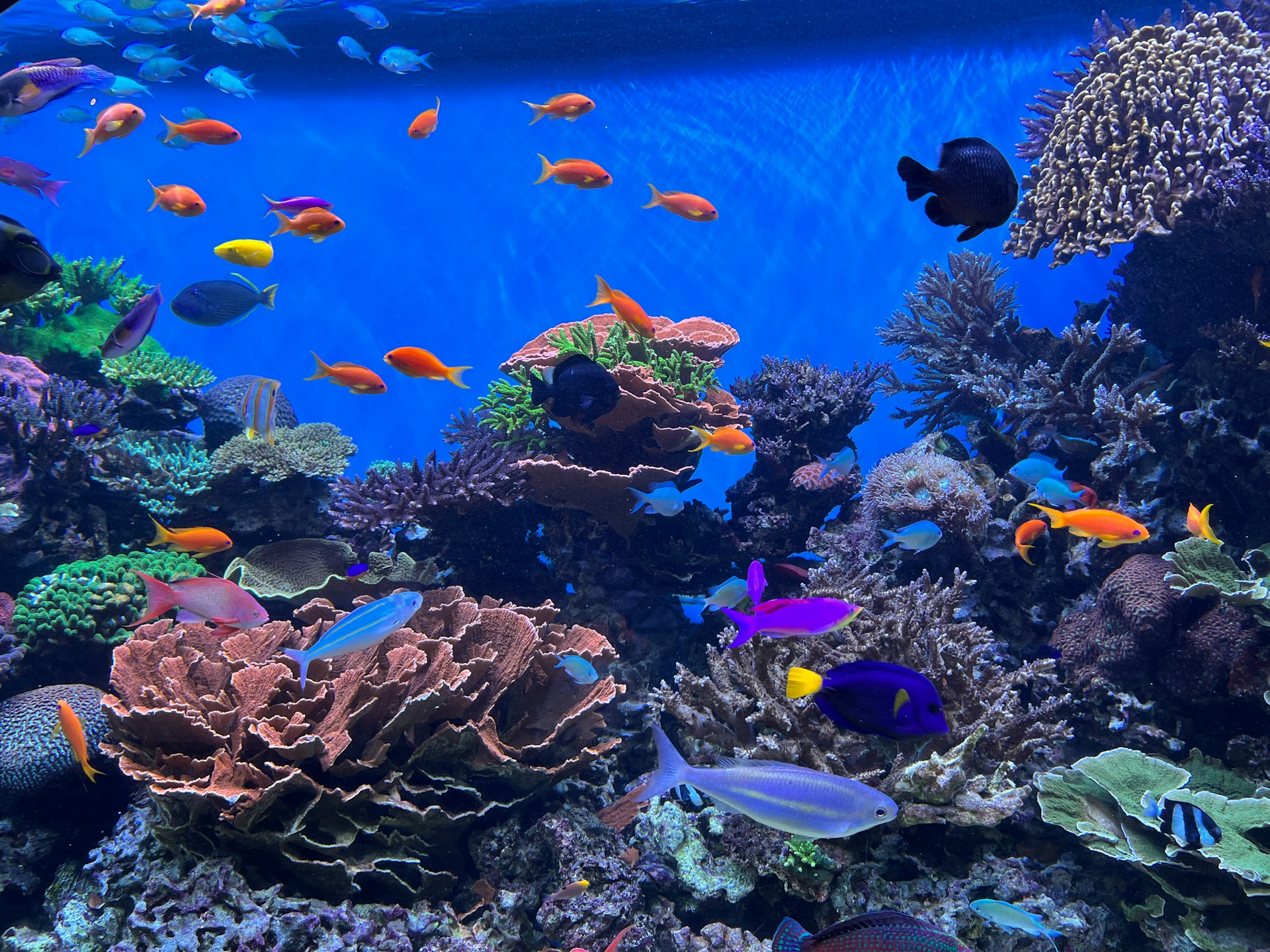
$5.85BGlobal reef aquarium market value in 2024 — growing at 9.7% CAGR to $13.46B by 2033— SkyQuestt, 2024
The reef aquarium hobby is the most technically demanding, most expensive, and fastest-growing segment of the global aquarium industry. A successful reef tank replicates the complex chemistry, lighting, and biological diversity of a natural coral reef — requiring sophisticated equipment, carefully maintained water parameters, and a working knowledge of marine invertebrate biology. Despite these barriers, millions of hobbyists worldwide maintain reef systems, and the market for reef livestock, equipment, and consumables is growing at nearly 10% per year — faster than any other segment of the pet industry. This page compiles 40 statistics on the reef aquarium market covering market size and growth, coral trade volumes, global hobbyist counts, captive breeding trends, conservation intersections, and per-hobbyist spending behavior. Data is sourced from SkyQuestt, Grand View Research, CORAL Magazine, the Marine Aquarium Council (MAC), OFI, and peer-reviewed conservation research.
Reef Market Size & Projections
Multiple research firms have tracked the reef aquarium market, all pointing to the same conclusion: it is growing faster than the overall ornamental fish market, driven by hobbyist upgrades, new entrants, and expanding captive coral supply.
$5.85BGlobal reef aquarium market value in 2024— SkyQuestt, 2024
$13.46BProjected reef aquarium market value by 2033— SkyQuestt, 2024
9.7%Reef aquarium market CAGR 2024–2033 — fastest in the aquarium industry— SkyQuestt, 2024
$4.9BReef aquarium market value in 2020 (Grand View Research) — confirming 19% total growth to 2024— Grand View Research, 2021
$11.0BGrand View Research projection for reef aquarium market by 2028 at 10.7% CAGR— Grand View Research, 2021
10.7%Reef aquarium market CAGR 2020–2028 per Grand View Research — consistent with SkyQuestt's 2024 estimate, confirming sustained growth trajectory— Grand View Research, 2021
Global Hobbyist Counts
Exact global reef hobbyist count data is difficult to obtain — unlike US household surveys, no single global survey exists. Estimates derive from trade volume data, association membership, and community-based research.
2 MillionEstimated number of reef aquarium hobbyists worldwide — the core demand base for the reef market— Journal of Conservation Letters / OFI
1.9MUS households owning saltwater fish in 2024–2025 — not all are reef systems, but the majority of saltwater hobbyists eventually set up reef-style tanks— APPA National Pet Owners Survey, 2024–2025
2.9MPeak US saltwater fish household count, recorded in the 2021–2022 post-pandemic NPOS— APPA National Pet Owners Survey, 2021–2022
77%Saltwater fish owners planning to purchase new fish in the next 12 months — the highest repurchase intent of any pet fish category— APPA Fish & Reptile Insight Report, 2024
~20%Share of all aquarium hobbyists who maintain saltwater or reef systems (vs. 80% freshwater)— Global Growth Insights, 2024
Coral Trade Volume & Value
Live coral is the defining element of a reef aquarium and the most valuable — and most conservation-sensitive — component of the reef trade. Its sourcing and pricing are shaped by both market dynamics and regulatory frameworks.
50MTotal coral reef animals (fish + corals + invertebrates) sold to hobbyists annually worldwide— Journal of Conservation Letters
CITES listedAll stony corals (Order Scleractinia) are listed under CITES Appendix II, meaning international trade requires permits — providing a regulatory baseline for global coral commerce— CITES Secretariat, 2024
IndonesiaIndonesia is the world's largest exporter of live coral for the aquarium trade — the country's reefs contain some of the highest marine biodiversity on earth— Marine Aquarium Council (MAC), 2024
FijiFiji is a significant coral export nation with government-managed aquaculture programs specifically for ornamental coral production, providing a sustainability model for the industry— Marine Aquarium Council (MAC), 2024
$10–$500+Price range per coral frag/colony at retail — SPS (small polyp stony) designer morphs regularly sell for $100–$500+ per small frag to collector hobbyists— CORAL Magazine / Reef2Reef, 2024
PropagationCoral fragmentation ("fragging") by hobbyists has created a thriving secondary market where keepers trade and sell captive-propagated fragments — reducing pressure on wild collection— CORAL Magazine, 2024
US ban historyThe US has periodically restricted or imposed conditions on coral imports from certain countries (Indonesia, Philippines) over collection practice concerns — demonstrating regulatory impact on trade flows— NOAA / CITES, 2024
Marine Fish in the Reef Trade
Reef tanks are primarily coral systems, but marine fish are an essential component — both for aesthetics and for the biological function they serve in reef ecosystems. Fish selection for reef compatibility is a major driver of hobbyist purchasing decisions.
ClownfishClownfish (Amphiprioninae) are the best-selling marine aquarium fish globally — demand surged after Finding Nemo (2003) and has remained elevated for two decades— OFI / CORAL Magazine, 2024
1,800+Marine fish species traded as ornamentals globally — approximately 10% of all known marine fish species— Journal of Conservation Letters
~50%Estimated share of marine ornamental fish still collected from wild reefs — the other ~50% is now captive-bred, a significant shift from 10–15 years ago— Marine Aquarium Council (MAC), 2024
Rare angelsRare marine angelfish species (Peppermint, Interruptus, Conspicillatus) regularly sell for $500–$3,000+ per fish in the collector market— CORAL Magazine, 2024
Captive Breeding Trends
Advances in marine captive breeding have been one of the most significant positive developments in the reef hobby over the past decade — both for sustainability and for hobbyist success rates.
Growing ↑The proportion of marine ornamental fish that are captive-bred has grown significantly over the past decade as breeding techniques improve for previously difficult species— Marine Aquarium Council (MAC), 2024
Mandarin dragonetsCaptive-bred mandarin dragonets — previously considered nearly impossible to breed commercially — are now available from specialty breeders and command significant premiums— CORAL Magazine, 2024
SeahorsesCaptive-bred seahorses (Hippocampus spp.) now dominate the trade for CITES-listed species — commercial breeding operations in multiple countries supply the global market— Marine Aquarium Council / CITES, 2024
15–30%Price premium captive-bred marine fish typically command over wild-caught equivalents — hobbyists pay more for improved hardiness, disease resistance, and ethical sourcing— CORAL Magazine, 2024
ORA, BiotaUS-based marine aquaculture companies (Oceans, Reefs & Aquariums / ORA; Biota Marine Life Nursery) have pioneered commercial captive breeding of species previously thought unbreedarble— CORAL Magazine, 2024
Equipment & Technology Spending
Reef tanks are equipment-intensive. A serious reef system can include more active technology than any other hobby in the pet space — and the equipment segment is growing rapidly alongside the hobbyist base.
$500–$3,000+Price range for premium LED reef lighting fixtures (Radion XR30, Orphek Atlantik, Kessil AP9X)— Retail pricing, 2024
$300–$2,000Price range for aquarium controllers (Neptune Apex, GHL Profilux, Hydros) — increasingly popular in reef systems— Retail pricing, 2024
$100–$1,500+Price range for protein skimmers — an essential reef filtration component not used in freshwater setups— Retail pricing, 2024
$5,000–$50,000+Total build cost range for mid-to-high-end reef systems — including tank, sump, skimmer, return pump, lighting, controller, dosing, and initial livestock— Reef2Reef / CORAL Magazine, 2024
Smart tech ↑Smart aquarium controllers and automated dosing systems (for calcium, alkalinity, magnesium) are among the fastest-growing product categories in the reef equipment market— Reef2Reef, 2024
Conservation & Reef Health Context
The reef aquarium hobby intersects directly with coral reef conservation — both as a potential stressor through wild collection and as a potential contributor through captive propagation and conservation funding.
50%Estimated percentage of the world's coral reefs that have been significantly degraded since the 1950s — a conservation backdrop that increasingly shapes hobbyist ethics and sourcing choices— NOAA Coral Reef Watch, 2024
BiodiverseCoral reefs cover less than 1% of the ocean floor but support approximately 25% of all marine species — making reef conservation a disproportionately high-value priority— NOAA, 2024
Frag swapHobbyist "frag swaps" — events where reef keepers trade captive-propagated coral cuttings — have grown into major community events, reducing wild collection demand while building community— CORAL Magazine, 2024
SECOREOrganizations like SECORE International partner with hobbyists and public aquariums on coral restoration efforts — the reef aquarium community is increasingly engaged in conservation advocacy— SECORE International, 2024
Public aquariumsLarge public aquariums (Georgia Aquarium, Shedd, Monterey Bay) increasingly partner with hobbyists on coral captive breeding and reef restoration research — blurring the line between hobby and conservation— CORAL Magazine, 2024
Frequently Asked Questions
How large is the reef aquarium market in 2026?
The global reef aquarium market was valued at $5.85 billion in 2024 (SkyQuestt) and is growing at a CAGR of 9.7% — the fastest growth rate in the aquarium industry. By 2033 the market is projected to reach $13.46 billion. Grand View Research's earlier estimate of $4.9 billion in 2020 at 10.7% CAGR confirms the consistency of this growth trajectory across multiple research methodologies.
How many reef aquarium hobbyists are there worldwide?
Estimates suggest approximately 2 million reef aquarium hobbyists worldwide, based on trade volume data and community research cited in the Journal of Conservation Letters. In the US specifically, the APPA reports 1.9 million saltwater fish-owning households as of 2024–2025. Not all saltwater tanks are full reef systems, but the majority of committed marine hobbyists eventually transition to reef setups.
How much does it cost to set up a reef aquarium?
Reef aquariums are significantly more expensive than freshwater systems. A basic beginner reef setup typically costs $500–$2,000, while a mid-level system runs $2,000–$10,000. Serious and advanced systems can cost $10,000–$50,000+ when accounting for tank, sump, protein skimmer, lighting (up to $3,000 for premium LED fixtures), controller, dosing equipment, live rock, and initial coral and fish livestock. Ongoing costs include RO/DI water, salt mix, test kits, and replacement animals.
Are reef aquarium corals wild-caught or captive-bred?
Both. Wild-collected coral fragments are regulated under CITES Appendix II and require export permits from origin countries. A growing proportion of the hobby's coral supply comes from captive propagation — both commercial coral farms and hobbyist fragging operations. Indonesia and Fiji are the largest wild coral export nations; the US, Australia, and several Pacific island nations have commercial coral aquaculture operations. Captive-propagated corals are increasingly preferred by environmentally conscious hobbyists and retail chain stores.
Is the reef aquarium hobby good or bad for coral reefs?
The relationship is complex. Wild collection does create collection pressure in some origin reef areas, particularly where unregulated or using harmful methods. However, the hobby community also generates significant conservation value: reef hobbyists fund coral research, participate in captive breeding programs, advocate for reef protection, and have developed propagation techniques now used in reef restoration science. The industry-wide shift toward captive-bred livestock and certified sustainable sourcing is reducing net wild reef impact, while hobbyist engagement in conservation organizations has grown substantially.