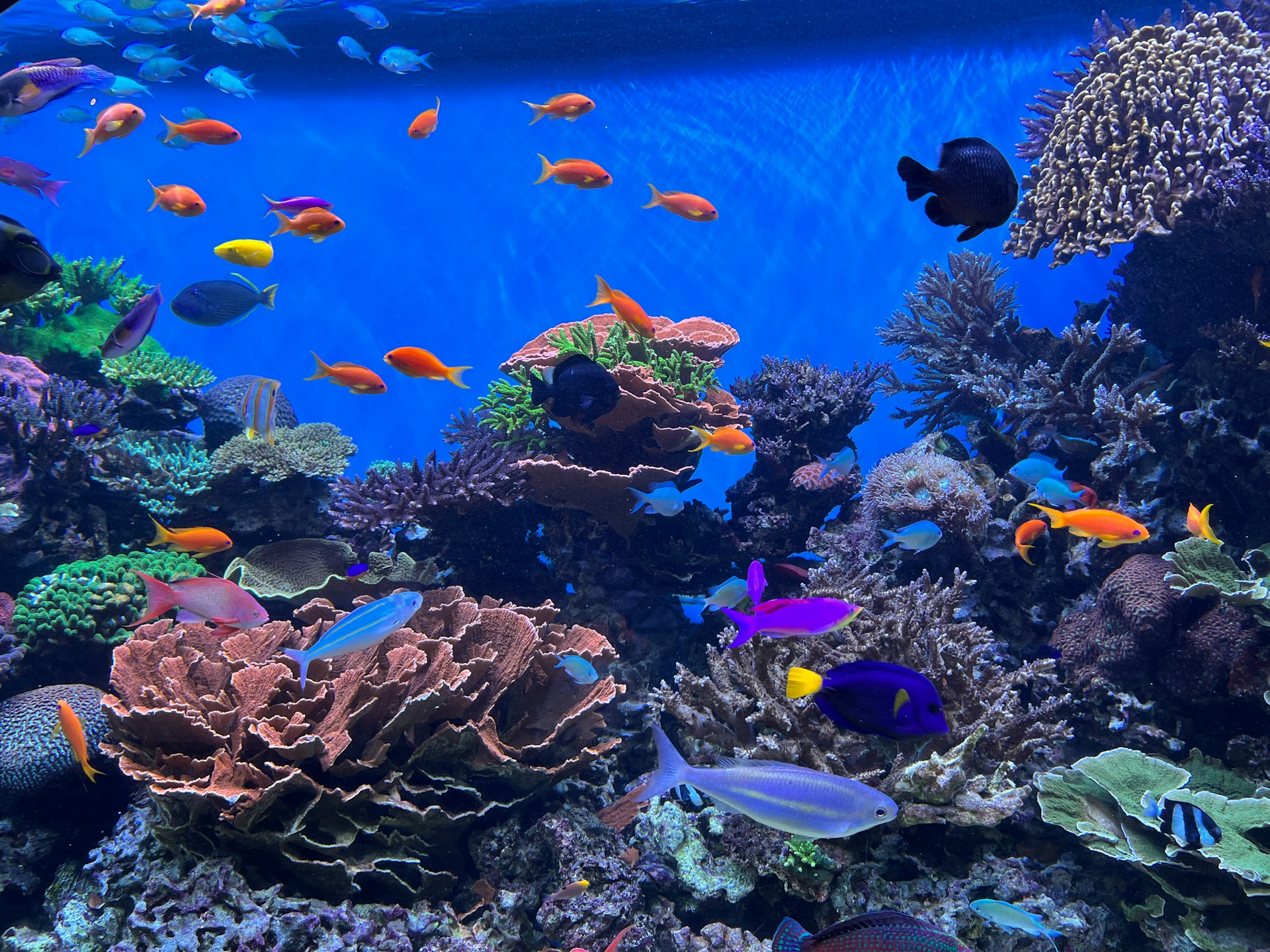
Ornamental Fish Trade Statistics 2026: Global Import/Export Volume & Value
Updated April 2026 · 13 min read
Last Updated: April 2026
$6.41BGlobal ornamental fish trade market value in 2024 — spanning 125+ countries of import and export— Straits Research, 2024
The global ornamental fish trade is one of the most complex and far-reaching sectors of international wildlife commerce. Spanning hundreds of freshwater and marine species, thousands of commercial breeders and wild collectors, and a supply chain connecting remote tropical origin countries to suburban pet stores on six continents, the trade is simultaneously a multi-billion dollar industry and a subject of active conservation scrutiny. This page compiles 38 statistics on ornamental fish trade volumes, import/export values, key trading nations, species composition, and the growing transition from wild-caught to captive-bred supply. Data sources include Ornamental Fish International (OFI), the USDA, Grand View Research, Straits Research, the Marine Aquarium Council, and the Journal of Conservation Letters. Understanding this trade is essential context for anyone engaged in the aquarium hobby — as a hobbyist, industry professional, or conservation advocate.
Global Trade Overview
The ornamental fish trade operates across more countries than almost any other animal commodity. Its scale is enormous in terms of specimen counts, though dollar value trails other pet animal categories.
$6.41BGlobal ornamental fish market value in 2024— Straits Research, 2024
$12.61BProjected global ornamental fish trade value by 2033— Straits Research, 2024
125+Countries involved in the international ornamental fish trade as exporters or importers— Ornamental Fish International (OFI), 2023
BillionsIndividual fish specimens traded annually across global supply chains — exact figures are difficult to compile due to varied national reporting standards— OFI / FAO, 2023
50MCoral reef animals (marine fish + corals + invertebrates) sold to reef hobbyists annually worldwide— Journal of Conservation Letters
Key Exporting Nations
The ornamental fish export trade is dominated by Southeast Asian and South American nations — geographies with both the biodiversity and the aquaculture infrastructure to supply global demand.
Country
Export Role
Key Species
Singapore
World's largest ornamental fish exporter by value
Wide range of tropical freshwater & marine species
Thailand
Major exporter; dominant betta fish producer globally
Betta splendens, discus, goldfish varieties
Indonesia
World's largest wild marine ornamental exporter
Marine fish, corals, invertebrates
Philippines
Major marine fish and invertebrate exporter
Clownfish, damsels, marine invertebrates
Malaysia
Significant freshwater exporter; arowana hub
Arowana, discus, tetras
Brazil
Key South American exporter
Cardinal tetra, discus, Amazonian species
Sri Lanka
Growing freshwater exporter
Danios, rasboras, gouramis
China
Major producer and exporter of goldfish and koi
Goldfish varieties, koi, freshwater species
Source: Ornamental Fish International (OFI) / Market.us, 2024.
Singapore #1Singapore is consistently ranked as the world's largest exporter of ornamental fish by dollar value — acting as a major transshipment hub for regional production— Ornamental Fish International (OFI), 2024
IndonesiaIndonesia is the world's largest exporter of wild-collected marine ornamental fish — a position that also makes it central to marine sustainability discussions— Marine Aquarium Council (MAC), 2024
ThailandThailand dominates global betta fish production — the betta was formally recognized as Thailand's national aquatic animal in 2019— OFI / Thai government sources, 2024
Key Importing Nations & US Imports
Consumer markets in North America, Europe, and increasingly Asia-Pacific drive the demand side of the trade. The United States is among the world's largest importers.
USUnited States is one of the world's largest importers of ornamental fish — supplementing domestic Florida production with Southeast Asian, Chinese, and South American species— Market.us, 2024
16.3%Europe's share of the global ornamental fish market by value in 2023— Market.us, 2024
Asia-PacificAsia-Pacific is the fastest-growing import market as well as the dominant export source — regional internal trade is growing alongside international flows— Straits Research, 2024
#1 MarketNorth America holds the largest regional market share for ornamental fish by total spending, reflecting high discretionary income and deep hobbyist culture— Market.us, 2024
JapanJapan is a major ornamental fish consumer with particularly strong demand for koi, goldfish, and marine species — domestic koi breeding is a centuries-old tradition— OFI, 2024
US Domestic Production
The United States is unusual among major import markets in also having a substantial domestic aquaculture sector, centered almost entirely in Florida.
45%Share of all ornamental fish sold in the US that are produced domestically in Florida— USDA / Industry Research, 2024
57M+Ornamental fish produced by Florida aquaculture operations in 2023— Industry Research, 2024
109Registered ornamental aquaculture operations in Florida as of 2023— Industry Research, 2024
HundredsNumber of species produced by Florida aquaculture — ranging from guppies and tetras to cichlids, koi, and specialty freshwater species— USDA / Florida Dept. of Agriculture, 2024
Southeast USFlorida's warm climate and abundant water sources make it uniquely suited to outdoor aquaculture ponds — the state dominates US production with no close competitor— USDA, 2024
Wild-Caught vs. Captive-Bred
The ratio of wild-caught to captive-bred fish in the trade has important implications for sustainability, disease resistance, and long-term supply security.
~90%Estimated share of freshwater ornamental fish that are captive-bred — freshwater species are much easier to breed commercially than marine species— Ornamental Fish International (OFI), 2023
~50%Estimated share of marine ornamental fish that are still wild-collected — though captive-bred proportion has grown significantly in the past decade— Marine Aquarium Council (MAC), 2024
GrowingCaptive-bred proportion of marine fish trade is growing year-over-year as breeding technology improves for previously impossible species (mandarins, seahorses, clownfish)— CORAL Magazine / MAC, 2024
Premium priceCaptive-bred marine fish typically command a 15–30% price premium over wild-caught equivalents — hobbyists pay more for improved disease resistance, reef-adaptedness, and ethical sourcing— CORAL Magazine, 2024
ClownfishClownfish are the success story of marine captive breeding — captive-bred specimens now dominate retail globally, supported by the relative ease of breeding Amphiprion species in captivity— Marine Aquarium Council (MAC), 2024
Species Composition & Volume
Different species dominate different trade corridors, reflecting both origin biodiversity and consumer demand patterns in importing markets.
2,000+Estimated number of freshwater fish species commercially traded as ornamental fish globally— OFI / FAO, 2023
1,800+Estimated number of marine fish species traded as ornamentals — representing approximately 10% of known marine fish species— Journal of Conservation Letters
TetrasCardinal tetras (Paracheirodon axelrodi) are among the most traded freshwater fish globally by volume — Brazil exports millions annually from Amazonian wild collection— OFI, 2024
Betta splendensBetta fish are the most traded single aquarium fish species by individual unit count — Thailand produces and exports tens of millions annually to markets worldwide— OFI / Straits Research, 2024
Trade Sustainability & Regulation
The ornamental fish trade intersects with conservation policy, CITES regulations, and growing consumer demand for ethically sourced livestock. Sustainability is an increasingly important commercial — not just ethical — consideration.
CITESOrnamental fish trade is regulated under CITES (Convention on International Trade in Endangered Species) for protected species — including all seahorses, all corals, all arowanas, and selected marine angels— CITES Secretariat, 2024
MACThe Marine Aquarium Council (MAC) operates a certification program for sustainably collected marine ornamentals — certification commands retail price premiums and growing retailer adoption— Marine Aquarium Council, 2024
Cyanide-freeCyanide fishing — used to stun fish for collection in some regions — remains a significant concern in certain Indo-Pacific collection areas. Certified cyanide-free sourcing is increasingly demanded by premium retailers— Marine Aquarium Council (MAC), 2024
LivelihoodsThe ornamental fish trade provides livelihoods for an estimated 1–2 million people in exporting countries — including collectors, transporters, breeders, and exporters — making sustainability both an economic and conservation issue— OFI / World Bank, 2023
Reef-safe trendConsumer awareness of reef impact has driven growing demand for certified sustainable marine livestock and captive-bred species, with some major US retailers committing to sourcing policies— CORAL Magazine, 2024
Frequently Asked Questions
Which country exports the most ornamental fish?
Singapore is consistently ranked as the world's largest exporter of ornamental fish by dollar value, functioning as both a producer and a major transshipment hub for regional aquaculture output. For specific categories: Thailand dominates betta fish exports; Indonesia leads wild marine ornamental exports; and China dominates goldfish and koi production and export.
How many ornamental fish are traded globally each year?
Reliable global count figures are difficult to compile due to inconsistent national reporting, but estimates suggest billions of individual freshwater fish specimens and tens of millions of marine fish are traded annually. The Marine Aquarium Council estimates approximately 50 million coral reef animals (including fish, corals, and invertebrates) are sold to hobbyists worldwide each year.
Are most aquarium fish wild-caught or captive-bred?
Approximately 90% of freshwater ornamental fish sold globally are captive-bred — freshwater species are generally easier to spawn commercially. Marine species present a different picture: an estimated 50% of marine ornamentals are still wild-collected, though this proportion is declining as captive breeding technology improves for previously difficult species like mandarins, seahorses, and marine angelfish.
Which US state produces the most ornamental fish?
Florida produces approximately 45% of all ornamental fish sold in the United States, with 109 registered aquaculture operations generating over 57 million fish annually across hundreds of species. The state's warm climate, access to spring water, and established industry infrastructure make it the dominant domestic production hub with no close competitor among other US states.
Is the ornamental fish trade regulated for conservation?
Yes. The trade is subject to CITES regulations for protected species — including all seahorses, all corals, all arowanas, and certain marine angelfish species. The Marine Aquarium Council (MAC) provides voluntary certification for sustainable marine collection practices. Many importing nations (including the US and EU member states) enforce CITES documentation requirements at the border for regulated species.
Cite This Page:
AquariumLab. "Ornamental Fish Trade Statistics 2026: Global Import/Export Volume & Value." AquariumLab.co, April 2026. https://aquariumlab.co/stats/ornamental-fish-trade-statistics-2026