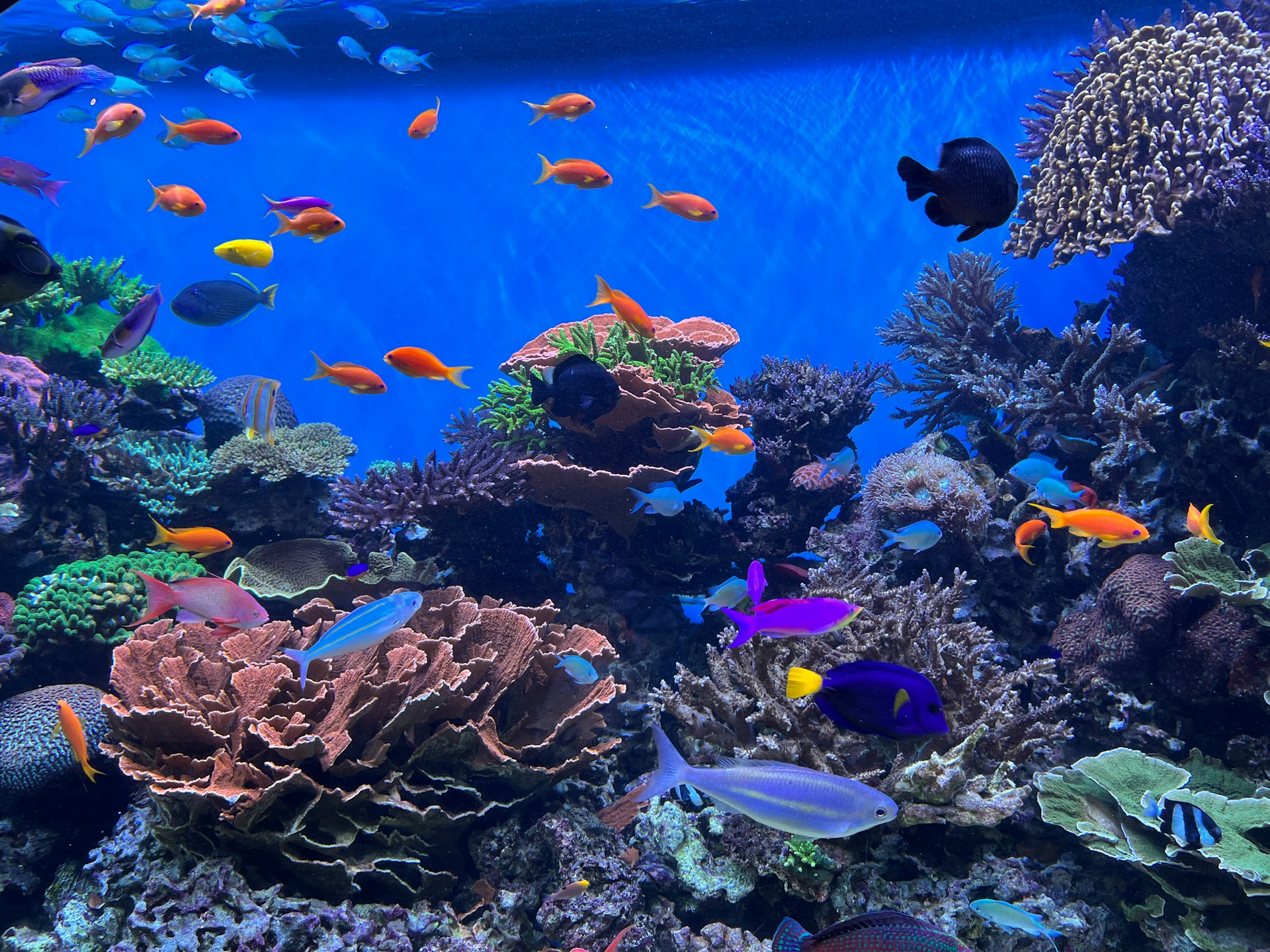
The marine aquarium trade sits at an uneasy intersection. On one hand, it provides livelihoods for tens of thousands of collectors in developing nations, generates hundreds of millions in annual revenue, and — when well-managed — has been shown to remove less than 1% of target species from reef ecosystems. On the other hand, destructive practices like cyanide fishing persist, the vast majority of marine fish are still wild-caught, and the regulatory frameworks meant to ensure sustainability cover a tiny fraction of trade volume. This page compiles the key conservation statistics for the marine aquarium industry in 2026: wild capture vs captive-breeding rates, reef impact data, trade volumes, certification coverage, and the trajectory of an industry under increasing pressure to prove its sustainability.
Global Marine Trade Volume
The marine ornamental trade — encompassing fish, corals, live rock, and invertebrates — is a substantial segment of the broader aquarium industry. While exact tracking is complicated by the volume moving through informal channels, the major research organizations converge on a range of 20–24 million marine fish per year, plus significant coral and invertebrate shipments.
Wild Capture vs Captive-Bred Rates
The split between wild-caught and captive-bred marine fish is the central conservation metric for the industry. Overall progress has been slow but concentrated in a few flagship species, with clownfish serving as the best-case demonstration of what's possible when aquaculture economics align with demand.
Cyanide Fishing Prevalence
Cyanide fishing is the most destructive collection method in the ornamental trade and its continued use is the industry's most difficult ethical problem. While awareness and enforcement have improved, the practice persists because it is fast, cheap, and difficult to police across thousands of kilometers of coastline in the Philippines and Indonesia — the two dominant source countries.
Coral & Live Rock Trade
The coral trade operates under CITES regulation — all Scleractinia (stony corals) are listed under Appendix II, requiring export permits from source countries. Despite this oversight, the scale of the trade remains significant and enforcement capacity varies enormously between exporting nations.
Source Countries & Volume
The marine ornamentals trade is heavily concentrated in just two countries — the Philippines and Indonesia — which together supply over 80% of the world's wild-caught marine ornamental fish. This concentration creates both opportunity (focused conservation efforts can have outsized impact) and risk (disruption in either country affects the entire global supply).
Reef Ecosystem Impact
The conservation impact of ornamental collection on coral reefs is hotly debated. Proponents point to well-managed fisheries that take far less than 1% of target populations annually. Critics argue that any destructive collection method is unacceptable on ecosystems already under immense pressure from climate change, ocean acidification, and overfishing. The truth — as with most environmental debates — depends heavily on location, species, and collection method.
Certification & Sustainability Programs
Efforts to certify sustainable ornamental collection have existed for decades but have struggled to gain traction. The Marine Aquarium Council (MAC) — launched in the late 1990s with ambitious goals — certified only a fraction of the trade before its operating model proved unsustainable. Newer programs show more promise but still cover a tiny share of global volume.
Aquaculture Trajectory & Growth
The long-term trajectory of the marine aquarium industry is toward captive breeding — but the speed of that transition depends on economic and technological factors. Where captive breeding is commercially viable (clownfish, dottybacks), the transition happens at market speed. Where it is not (most tangs, angelfish), wild collection will continue for the foreseeable future.
Frequently Asked Questions
What percentage of marine aquarium fish are wild-caught?
Approximately 90% of marine ornamental fish are still wild-caught. The exception is clownfish, which are now over 90% captive-bred thanks to advances in aquaculture following the demand surge from Finding Nemo. Most tangs, angelfish, and wrasses remain wild-caught due to the difficulty and expense of captive breeding. Dottybacks, seahorses, and certain gobies are making progress but still represent a small fraction of total trade volume.
How many marine fish are traded globally each year?
The global marine ornamental fish trade moves an estimated 20–24 million fish annually, according to CORAL Magazine and OFI data. This does not include the substantial coral and live rock trade, which accounts for an additional 1.5 million kg of coral traded each year. Over 1,400 species are represented in the trade, sourced from more than 45 countries.
How common is cyanide fishing in the aquarium trade?
An estimated 20–30% of wild-caught ornamental fish are collected using sodium cyanide — an illegal but widespread practice in the Philippines, Indonesia, and parts of Southeast Asia. Cyanide stuns fish for easy capture but causes delayed mortality in 50% or more of collected fish and destroys coral polyps on contact. The practice has declined from an estimated 50%+ in the 1990s but remains a significant conservation and animal welfare concern.
Does the ornamental fish trade damage coral reefs?
The impact varies enormously by location and management quality. Well-managed collection areas remove less than 1% of target species populations annually — a negligible ecological impact. However, poorly managed areas — particularly those where cyanide fishing occurs — can see population reductions of 50–80%. The trade's total environmental footprint is small compared to climate change, overfishing, and coastal development, but localized damage is real and concentrated in the poorest-governed source areas.
Is the marine aquarium trade moving toward sustainability?
Yes, but slowly. The captive-bred marine fish market is growing at 15–20% annually, driven by LED lighting and recirculating aquaculture systems that make commercial breeding more viable. Certification programs like the Marine Aquarium Council (MAC) and the Better Sourcing Program (BSP) cover less than 5% of trade volume, but both are expanding. Hobbyist-level coral propagation has become a significant source of aquarium corals. The industry generates over $330 million annually, though only a small fraction is directed toward reef conservation.
More aquarium statistics:
Aquarium Industry Statistics 2026 ·
Reef Aquarium Statistics 2026 ·
Aquarium Fish Survival Statistics 2026
AquariumLab. "Marine Aquarium Conservation Statistics 2026: Wild Capture vs. Captive-Bred Fish." AquariumLab.co, May 2026. https://aquariumlab.co/stats/marine-aquarium-conservation-statistics-2026