Quick Answer
The Porcupine Pufferfish is a intermediate-level saltwater fish needing at least a 100-gallon tank, 72-79°F water, and pH 8.1-8.4. Porcupine Pufferfishs require consistent water quality and some experience to keep successfully.
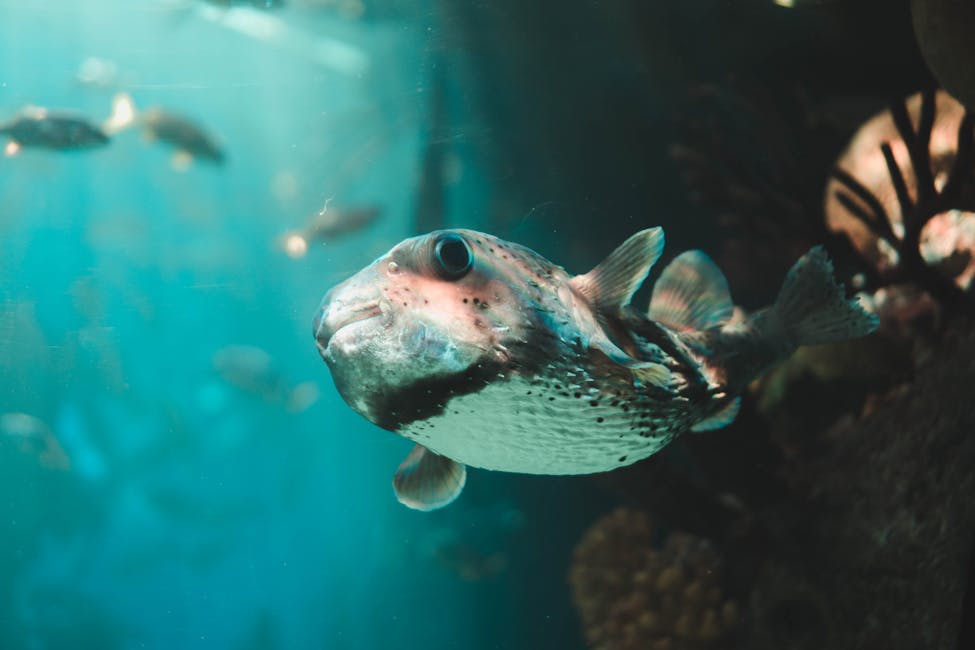
Porcupine Pufferfish Overview
The Porcupine Pufferfish (Diodon holocanthus) is a rewarding species suited to aquarists with some experience, native to Circumtropical. As a saltwater carnivore, this species has earned its place as a staple in reef aquariums and FOWLR (fish-only with live rock) setups worldwide. The Porcupine Pufferfish can be semi-aggressive, especially when establishing territory or during breeding. With proper care and appropriate water conditions, Porcupine Pufferfishs can live for several years and become a rewarding centerpiece — or supporting cast — of your aquarium.
According to FishBase's species profile, the Diodon holocanthus is widely distributed across Circumtropical and has been selectively bred in captivity for decades, resulting in a robust trade fish that typically adapts well to aquarium conditions. That said, replicating natural water parameters as closely as possible always produces the healthiest fish.
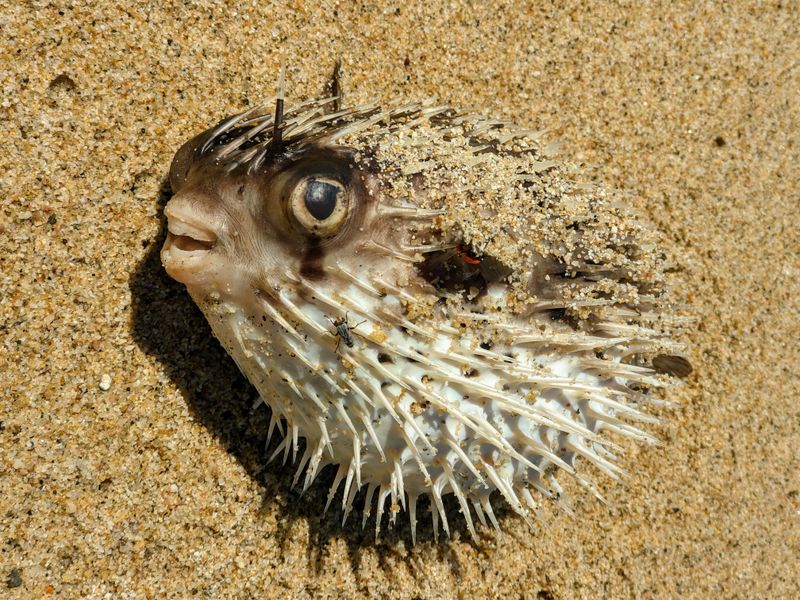
Tank Requirements
The Porcupine Pufferfish requires a 100-gallon or larger aquarium — this is a non-negotiable minimum. Crowding this species into too-small quarters leads to stress, aggression, and disease — the most common cause of failure with this fish. Budget for a high-capacity canister filter or sump system to keep the water clean and well-oxygenated.
- Minimum Tank Size: 100 gallons
- Temperature: 72-79°F (ideal: ~75°F)
- pH: 8.1-8.4 To maintain higher pH, use crushed coral substrate or aragonite sand. Regular water changes help stabilize pH.
- Filtration: A high-capacity canister filter or sump system
Live rock provides essential biological filtration and hiding spaces in saltwater setups. Maintain salinity at 1.023–1.025 specific gravity and ensure adequate protein skimming. Once your tank is fully cycled, perform 20–30% water changes weekly to maintain stable parameters. Stability matters more than hitting exact numbers — sudden swings cause far more harm than gradual drift.
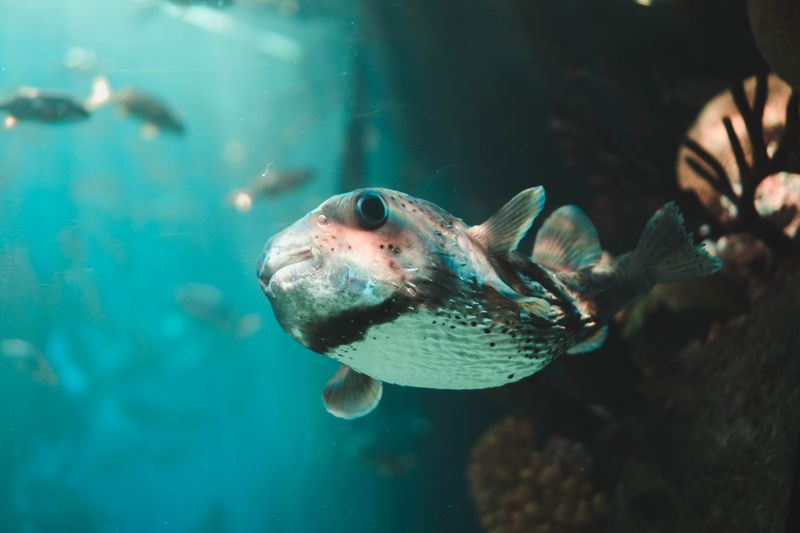
Diet & Feeding
In the wild, Porcupine Pufferfishs are predators that hunt live prey. In captivity, replicate this with high-protein foods. High-quality carnivore pellets, frozen bloodworms, frozen brine shrimp, mysis shrimp, and occasional live foods are all excellent choices for this species.
Feed once or twice daily, offering only what they can consume in 2–3 minutes. Remove uneaten food promptly. Variety is key — rotate between different protein sources to prevent nutritional deficiencies.
Compatibility & Tank Mates
The Porcupine Pufferfish is semi-aggressive and can be territorial, especially in smaller tanks. It generally coexists with robust, similarly-sized fish that won't back down or get bullied.
Good tank mate options from our database include Anthias (Lyretail), Bangaii Cardinalfish, and Bi-Color Blenny. Avoid timid, small, or long-finned fish that may become targets. Don't keep two males together in smaller tanks.
Common Health Issues
The Porcupine Pufferfish is susceptible to disease when conditions are suboptimal, but no aquarium fish is immune to illness. Prevention through clean water and a varied diet is always better than treatment. For detailed species-specific health notes, SeriouslyFish has an excellent care sheet for the Porcupine Pufferfish.
Marine Ich (Cryptocaryon)
White spots similar to freshwater ich but caused by a different parasite. Treat in a separate quarantine tank with copper medication or hyposalinity. Never treat in a reef tank.
Marine Velvet (Amyloodinium)
More aggressive than marine ich, causing rapid breathing and golden shimmer. Requires immediate copper treatment in quarantine — mortality is high without quick action.
Brooklynella
A ciliated parasite causing mucus buildup and rapid gill damage. Common stress-related disease. Treat with formalin-based medication in a hospital tank.
Recommended Products
Frequently Asked Questions
What size tank does a Porcupine Pufferfish need?
The Porcupine Pufferfish requires a minimum of 100 gallons. Smaller tanks cause stress, reduce lifespan, and increase disease susceptibility. If you can afford a larger tank, always go bigger — fish generally thrive with extra space.
What do Porcupine Pufferfishs eat?
The Porcupine Pufferfish is a carnivore. Feed high-protein foods: frozen bloodworms, mysis shrimp, carnivore pellets, and occasional live foods. Feed once or twice daily, only what they can eat in 2–3 minutes.
What water temperature and pH does the Porcupine Pufferfish need?
Maintain water temperature between 72-79°F and pH between 8.1-8.4. Use a reliable aquarium thermometer and test your water weekly. Stability is more important than hitting exact numbers — sudden parameter swings are more dangerous than gradual drift.
What fish can live with a Porcupine Pufferfish?
The Porcupine Pufferfish can coexist with Anthias (Lyretail), Bangaii Cardinalfish, Bi-Color Blenny, among others with similar temperament and water requirements. Avoid pairing with timid small fish that will be stressed by this species.
Is the Porcupine Pufferfish suitable for intermediate aquarists?
Yes — the Porcupine Pufferfish is a good step up for aquarists moving beyond beginner species. It requires more consistent water quality and some knowledge of the nitrogen cycle, but rewards careful keeping with impressive behavior and appearance.
Get weekly guides from AquariumLab
No spam. Unsubscribe anytime.